ART
BEAUTY & WELLNESS
CRAFT
CULTURE & HISTORY
ENTERTAINMENT
ENVIRONMENT
FOOD & DRINKS
REVERSE ENGINEERING
SCIENCES
SPORTS
TECHNOLOGY
WEARABLES
English
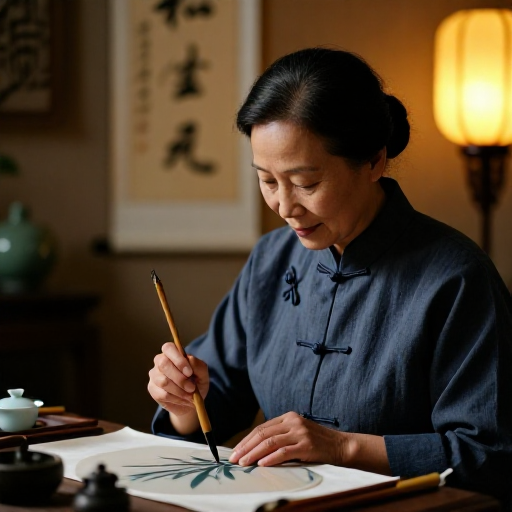

Hand-Roasted Longjing Green Tea — Traditional West Lake Kill-Green and Hui-Guo Technique
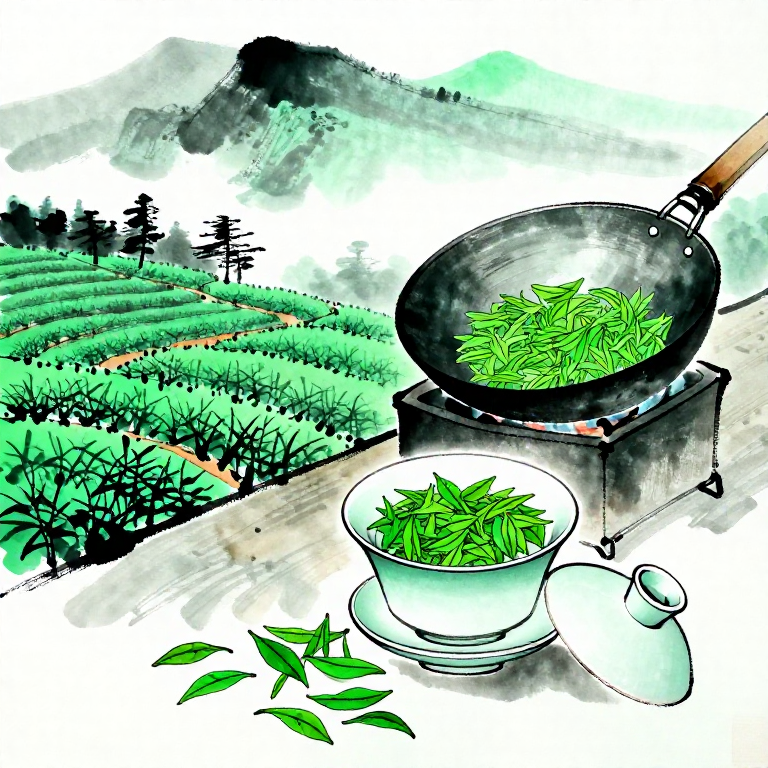
Complete guide to hand-roasting Longjing (Dragon Well) green tea using the traditional West Lake kill-green (sha-qing) and hui-guo pan-firing technique.
Intermediate
Instructions
1
1
Understanding the origin and varieties of Longjing tea
Understanding the origin and varieties of Longjing tea
Longjing tea is produced in the West Lake district and surrounding areas of Hangzhou, Zhejiang Province, and is the foremost of China's ten famous teas. Authentic West Lake Longjing is divided into five core production areas: Shi (Lion Peak), Long (Dragon Well), Yun (Cloud Rest), Hu (Tiger Run), and Mei (Mejiawu). The main tea tree varieties are Longjing 43 and the group cultivar (old tea trees), of which the group cultivar has a more complex flavor. Longjing tea belongs to the unfermented green tea category, where high-temperature kill-green processing stops the activity of polyphenol oxidase in the leaves, preserving the fresh green color.
2
2
Choosing the optimal picking time
Choosing the optimal picking time
Longjing tea is divided into four grades by picking time: Pre-Qingming tea (before the Qingming Festival on April 5th) is the highest quality, with tender buds and leaves, high amino acid content, and low bitterness; Pre-Guyu tea (before the Grain Rain on April 20th) is next in quality; tea picked afterward gradually declines in quality. Pre-Qingming tea accounts for only about 5% of annual production, making it extremely precious. The best picking time is after the morning dew evaporates and before 10 AM, when the tea leaf moisture content is optimal.
3
3
Hand-picking fresh leaves
Hand-picking fresh leaves
Longjing tea is hand-picked, with the standard being "one bud and one leaf" or "one bud and two leaves just unfolding." Use the thumb and index finger to gently snap the tea stem — do not pinch with fingernails, as the broken surface will oxidize and turn red. Pick with a lifting motion, never strip or grab. Fresh leaf length should be 2-3 centimeters. Approximately 30,000-40,000 buds are needed per 500 grams of dried tea. Immediately after picking, gently place the fresh leaves in a breathable bamboo basket without compressing, to prevent heat buildup and spoilage.
Materials for this step:
 Fresh Longjing Tea Shoots2 kg
Tools needed:
 Bamboo Harvesting Basket
4
4
Spreading and withering the fresh leaves
Spreading and withering the fresh leaves
Spread the picked fresh leaves thinly on bamboo winnowing trays, no more than 3 centimeters thick, and place in a cool, ventilated area for natural withering. Spreading time is 6-12 hours, during which the leaves lose some moisture (from about 75% to 68-70%), the leaf texture softens, the grassy smell dissipates, and a floral aroma begins to emerge. Gently turn the leaves every 2-3 hours during spreading for even withering. Withering is complete when the leaf edges begin to curl slightly and the leaves feel soft to the touch.
Tools needed:
 Round Bamboo Winnowing Tray
 Ventilated Drying Rack
5
5
Preheating the tea-roasting iron wok
Preheating the tea-roasting iron wok
Traditional Longjing tea roasting uses a specially made flat-bottom iron wok (approximately 60 cm in diameter with smooth walls). Heat the wok to 250-300 degrees Celsius, and gauge the temperature by hand — when your palm is about 10 cm from the wok surface, you should feel distinct heat but be able to hold your hand there for 1-2 seconds. The wok surface must be clean and oil-free. Apply a thin layer of tea-processing oil (usually roasted tea seed oil) to the wok surface and wipe evenly with a clean cotton cloth to make the surface smooth and prevent tea leaves from sticking.
Materials for this step:
 Tea Seed Oil10 ml
Tools needed:
 Flat-Bottom Iron Wok (60cm)
 Cotton Wipe Cloth
 Infrared Thermometer
6
6
Qingguo kill-green — first stage of roasting
Qingguo kill-green — first stage of roasting
Qingguo is the most critical step in Longjing roasting. Add approximately 100-150 grams of withered fresh leaves into the 250-300 degrees Celsius hot wok. Immediately after adding the leaves, rapidly toss and scatter them with your palm and fingers to ensure even heating. This step is called kill-green — the high temperature rapidly destroys the polyphenol oxidase (PPO) in the tea leaves, stopping enzymatic oxidation, which is the key process distinguishing green tea from oolong and black tea. For the first 2-3 minutes, focus on shaking (tossing the leaves up to scatter them), allowing moisture to evaporate quickly and the grassy smell to dissipate. When the leaves begin to soften and darken to deep green, transition to the pressing technique.
Materials for this step:
 Withered Tea Leaves150 g
Tools needed:
Flat-Bottom Iron Wok (60cm)7
7
Qingguo pressing and shaping
Qingguo pressing and shaping
After kill-green is complete, reduce the wok temperature to 200-220 degrees Celsius and begin pressing the tea leaves against the wok wall with your palm, pushing forward in a sliding motion to gradually flatten the leaves into the signature flat needle shape of Longjing tea. The technique alternates between four basic movements: da (placing leaves against the wok wall), ya (pressing with the palm to flatten), dou (shaking to prevent clumping), and shuai (flicking leaves against the wok wall to stretch them). The entire qingguo process takes about 12-15 minutes, until the moisture content drops to approximately 30-35%. When complete, the leaves are flat, dark green in color, and slightly sticky to the touch.
Tools needed:
Flat-Bottom Iron Wok (60cm)8
8
Cooling and moisture redistribution
Cooling and moisture redistribution
Pour out the tea leaves after qingguo is complete and spread them on a bamboo winnowing tray to cool naturally for 40-60 minutes. This step is called hui chao (moisture redistribution) — the moisture inside the leaves and on the surface redistributes evenly. Spread to a thickness of about 2 centimeters and do not turn. Redistribution allows residual moisture from inside the leaves to migrate to the surface, preparing for the next step of huiguo. Skipping this step and proceeding directly to huiguo causes the leaves to be scorched on the outside while still moist inside, resulting in a dull color.
Tools needed:
Round Bamboo Winnowing Tray9
9
Sieving and sorting
Sieving and sorting
After moisture redistribution, sieve the tea leaves through a bamboo sieve (approximately 3 mm mesh) to remove broken pieces and overly small tea fragments. Group leaves of similar size together to ensure even heating during huiguo. Leaves of different sizes must be roasted separately, otherwise small leaves will scorch while large leaves remain under-dried. Also pick out any yellowed, reddened, or visibly defective leaves.
Tools needed:
 Bamboo Sieve (3mm mesh)
10
10
Huiguo — second stage of roasting
Huiguo — second stage of roasting
Huiguo is the final shaping and drying process for Longjing tea. Control the wok temperature at 150-180 degrees Celsius, lower than the qingguo temperature. Add the redistributed tea leaves (approximately 200-250 grams) to the wok, using primarily grasping, pressing, and rubbing techniques. Grasp the tea leaves with your palm and five fingers, then press them against the wok wall and gently rub — this makes the tea leaf surface smoother and flatter. Slightly reduce the wok temperature every 2-3 minutes. As moisture decreases, gradually increase the pressure to set the leaves into their final flat, smooth form. The entire huiguo process takes about 20-25 minutes.
Materials for this step:
 Pan-Fired Tea Leaves (from Step 8)250 g
Tools needed:
Flat-Bottom Iron Wok (60cm)11
11
Final huiguo and determining dryness
Final huiguo and determining dryness
In the later stage of huiguo, reduce the wok temperature to 120-130 degrees Celsius, using light grasping and pressing to avoid excessive force that could break the leaves. To test dryness: take a few leaves and gently rub between thumb and index finger — if the leaves crumble into powder, the moisture content has dropped to 5-6%, meeting the standard dryness for Longjing tea. If the leaves bend without breaking, the moisture content is still too high and huiguo must continue. The finished tea leaves should be jade green or yellow-green, with a smooth surface and a distinct roasted chestnut or orchid aroma.
Tools needed:
Flat-Bottom Iron Wok (60cm)12
12
Removing from the wok and cooling
Removing from the wok and cooling
After huiguo is complete, quickly pour the tea leaves out of the iron wok and spread them on a bamboo winnowing tray to cool naturally to room temperature. Spread thickness should not exceed 1 centimeter to prevent residual heat from yellowing the leaves. The cooling process takes about 30-40 minutes. Do not use a fan to cool — rapid cooling causes the leaf surface to contract, affecting subsequent moisture redistribution uniformity. The cooled tea leaves should feel dry and smooth with a crisp texture.
Tools needed:
Round Bamboo Winnowing Tray13
13
Fine selection and picking
Fine selection and picking
Spread the cooled tea leaves on white paper or a light-colored bamboo tray and inspect each piece. Pick out tea stems (yellow, hard stalks), tea fragments (broken leaf pieces), yellow leaves (leaves that have over-oxidized and turned yellow), and old leaves (large, dark leaves). Premium Longjing requires complete buds and leaves, uniform size, and consistent color. Tea stem content should not exceed 0.5% per 100 grams of finished tea. This step is entirely manual and requires experienced tea workers with patience.
Tools needed:
 White Inspection Paper
 Bamboo Tweezers
14
14
Sealed storage
Sealed storage
Immediately place the selected Longjing tea into dry tin canisters or aluminum foil sealed bags. The traditional method uses a lime jar for storage: place quicklime (calcium oxide) packets at the bottom of a ceramic jar, put the tea wrapped in cotton paper on top, and seal the jar mouth. The quicklime absorbs moisture from the air, keeping the humidity inside the jar below 5%. The modern method involves vacuum-sealing the bags and refrigerating (0-5 degrees Celsius). Longjing tea maintains freshness for 12-18 months under sealed, low-temperature conditions. After opening, it should be consumed within 2-3 weeks to avoid moisture absorption and spoilage. Approximately 500 grams of fresh leaves yields 100-125 grams of dried tea.
Materials for this step:
 Tin Tea Storage Canister1 piece
 Quicklime Desiccant Pack2 pieces
 Cotton Wrapping Paper5 sheets
Tools needed:
 Ceramic Storage Jar with Lid
Materials
7- Placeholder
- 10 mlPlaceholder
- 150 gPlaceholder
- Placeholder
- 1 piecePlaceholder
- 2 piecesPlaceholder
- 5 sheetsPlaceholder
Tools Required
10- Placeholder
- Placeholder
- Placeholder
- Placeholder
- Placeholder
- Placeholder
- Placeholder
- Placeholder
- Placeholder
- Placeholder
CC0 Public Domain
This blueprint is released under CC0. You are free to copy, modify, distribute, and use this work for any purpose, without asking permission.
Support the Maker by purchasing products through their Blueprint where they earn a Maker Commission set by Vendors, or create a new iteration of this Blueprint and include it as a connection in your own Blueprint to share revenue.