Collaboration
ART
BEAUTY & WELLNESS
CRAFT
CULTURE & HISTORY
ENTERTAINMENT
ENVIRONMENT
FOOD & DRINKS
REVERSE ENGINEERING
SCIENCES
SPORTS
TECHNOLOGY
WEARABLES
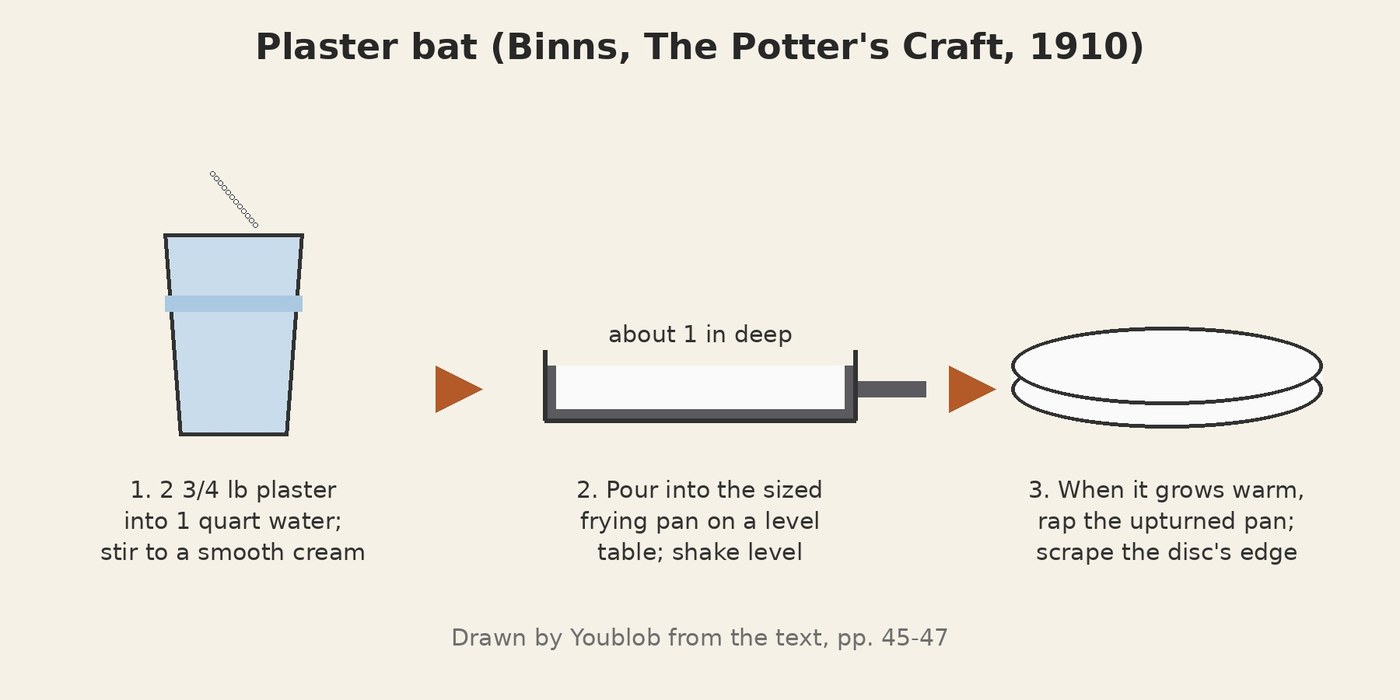


Plaster Bat: a Round Slab Poured in a Frying Pan (Binns, 1910)
A plaster bat is a round slab of plaster that potters use to hold work while making or drying it, and to stiffen wet clay. Binns makes his first one in a frying pan.
Variable: plaster per quart of water. 2 3/4 lb is his standard; less gives a softer bat, more a harder one.
Source: Charles F. Binns, The Potter's Craft (1910), pp. 43-47. Picture: drawn by Youblob from the text.
Beginner
Unknown
Instructions
1
1
Make the size
Make the size
Put a quart of water in a kettle with a piece of soft soap the size of an egg. Simmer about an hour, until the soap has dissolved, and let it cool. Cold, it should be like maple syrup. The size keeps plaster from sticking to a surface.
Tools needed:
 Water
 Unknown Material
 Saucepan
2
2
Size the frying pan
Size the frying pan
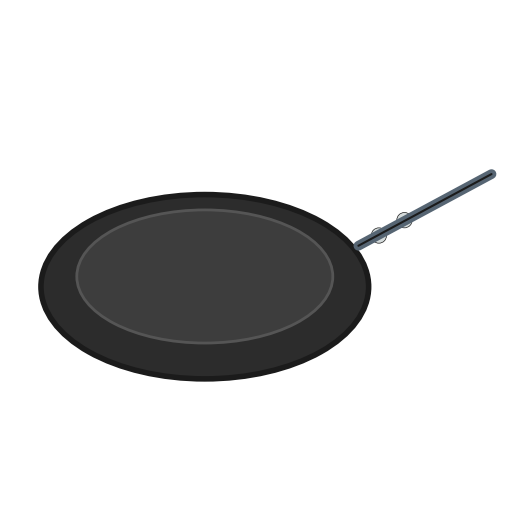
Brush size onto the inside of the pan, wipe it off with a sponge, then wash with a second sponge and clean water. On metal one coat often does; repeat until the surface rejects water like grease. On the last coat don't wash: polish with the size sponge. Set the pan on a level table.
Tools needed:
 Carbon Steel Pan
 Fine Brushes
 Sponge
3
3
Mix the plaster
Mix the plaster
Take as much water as fills the pan about 1 in deep; Binns supposes a quart. Weigh 2 3/4 lb of dry potters' plaster for each quart and let it trickle through your fingers into the water in a jug. After about two minutes, when it has soaked up all the water it will take, stir with your hand to a smooth cream, breaking all lumps and removing air bubbles.
Materials for this step:
 Plaster of Paris2.75 lbsWater1 quart
Tools needed:
 Measuring Jug
 Scale
4
4
Pour at the right moment
Pour at the right moment
Keep stirring gently until the mix thickens and leaves a white coating on your hand that won't shake off. Then pour it into the pan and shake gently to level it. Poured right, it sets smooth and mat, like sugar icing. Poured too late, it is stiff and hard to level; too soon, it curdles with water on top. Wash the jug at once in a tub, never down a sink: plaster chokes the drain.
Tools needed:
Carbon Steel Pan Tub
5
5
Turn out and scrape the bat
Turn out and scrape the bat
After about ten minutes the bat grows warm: setting is complete. Hold the pan upside down by the handle and rap its edge smartly on a brick or stone. The disc falls out. Scrape its edge and set it aside. Binns suggests making half a dozen for practice.
Tools needed:
Carbon Steel Pan Steel Scraper
Connected Blueprint Materials
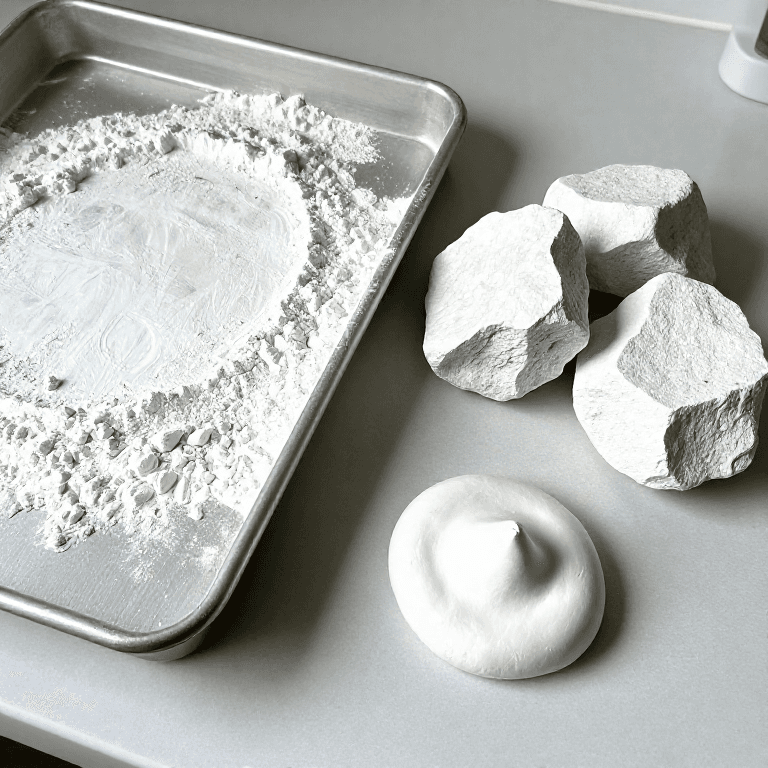

This blueprint makes

CC0 Public Domain
This blueprint is released under CC0. You are free to copy, modify, distribute, and use this work for any purpose, without asking permission.
Support the Maker by purchasing products through their Blueprint where they earn a Maker Commission set by Vendors, or create a new iteration of this Blueprint and include it as a connection in your own Blueprint to share revenue.