Collaboration
ART
BEAUTY & WELLNESS
CRAFT
CULTURE & HISTORY
ENTERTAINMENT
ENVIRONMENT
FOOD & DRINKS
REVERSE ENGINEERING
SCIENCES
SPORTS
TECHNOLOGY
WEARABLES
English

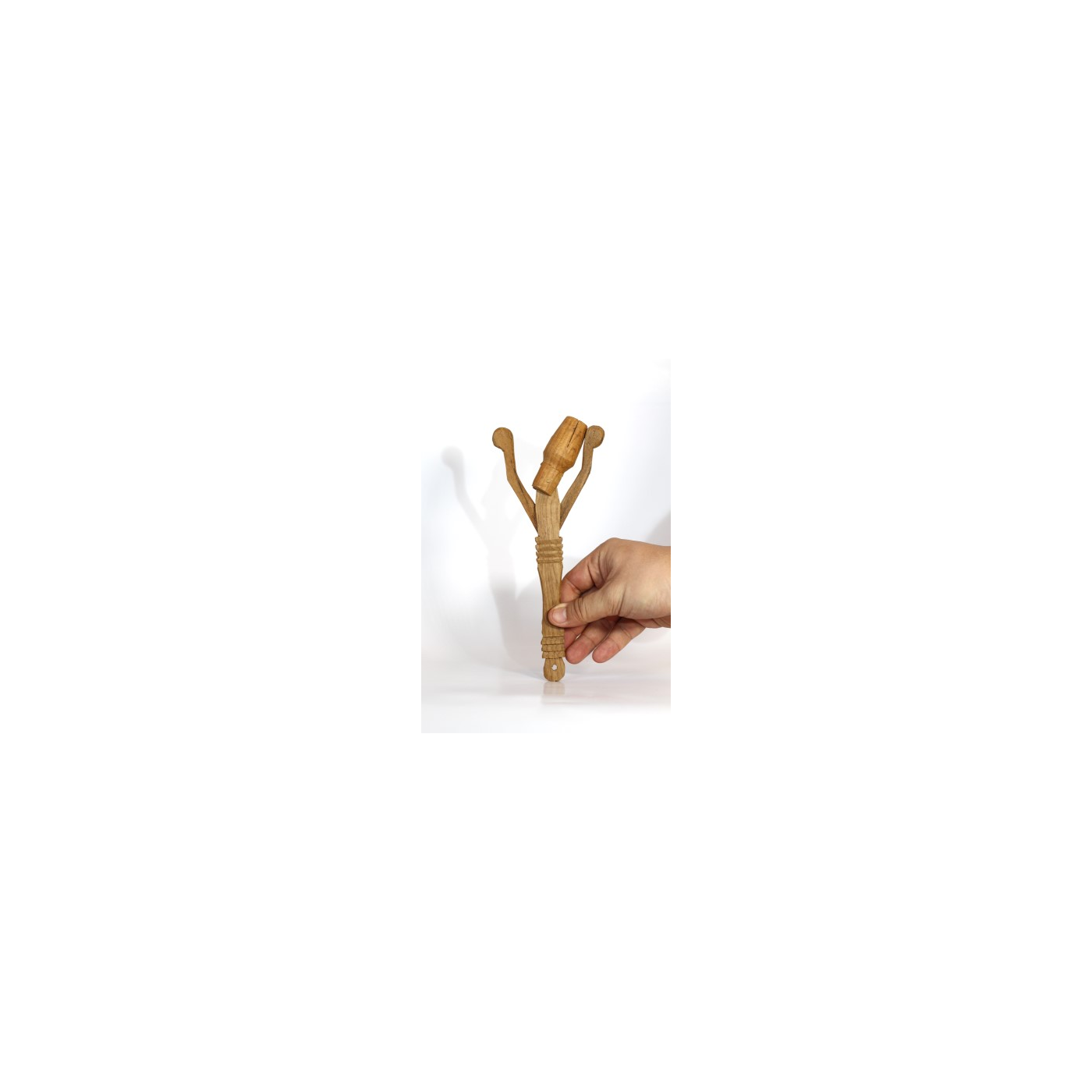
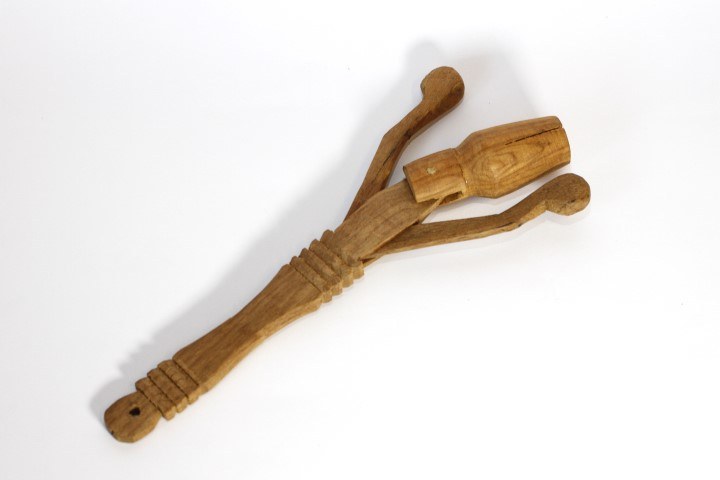
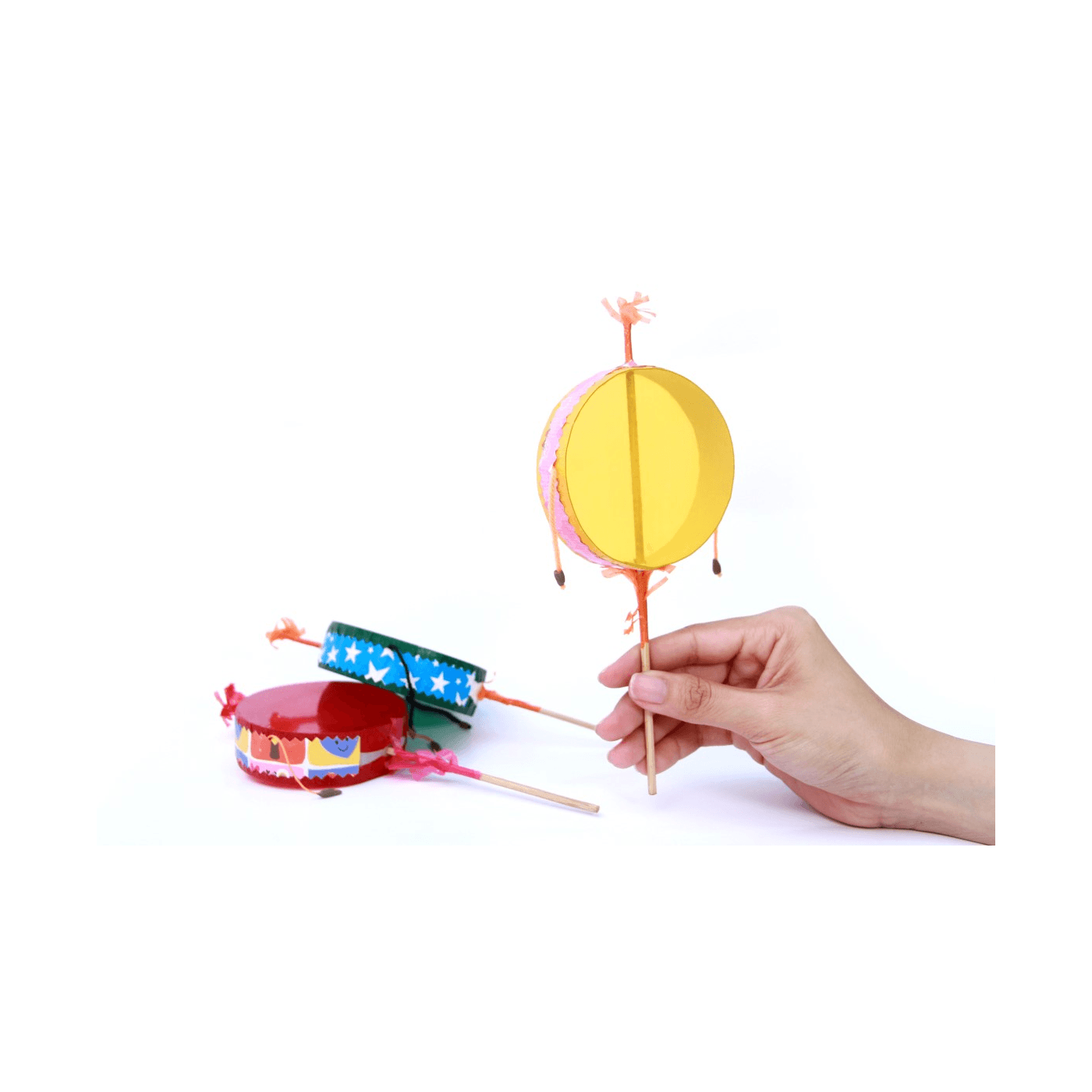
Pok-pek — hardwood handle 15 cm. Two arms in 2 cm grooves, round hollow head secured with a pin so it can move. When shaken, the head strikes the arms, producing a pok-pek sound.
Pok-pek is a toy made of hardwood for children to shake and play with. Its name comes from the sound of the wood knocking together when shaken.
This blueprint makes a real pok-pek at the dimensions given in the source.
Intermediate
About half a day
Instructions
1
1
Actual size
Actual size
Loading Jupyter Notebook...
2
2
Shake toys that make sounds before this
Shake toys that make sounds before this
Pong-paeng uses beads to hit the drum face; Pok-paek uses the wooden head to strike the wooden arm
3
3
Read from the source
Read from the source
"Choose hardwood so that it resonates with a clear sound when shaken" (Sirindhorn Anthropology Centre, author not specified, CC BY 4.0)
4
4
Handle and arms
Handle and arms
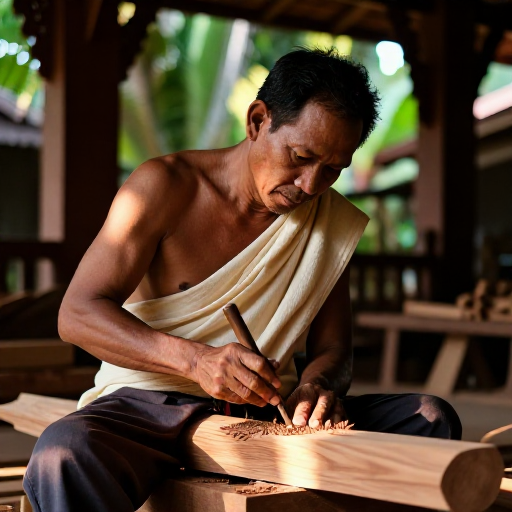
Carve a comfortable hardwood handle about 15 cm long. Cut grooves on both sides about 2 cm long to fit the arms. Carve the 2 arms from hardwood into an attractive shape. Drill holes and insert pins to secure both arms to the handle firmly.
Materials for this step:
 Hardwood Block1 piece
 Nails1 piece
Tools needed:
 Knife
5
5
Head
Head
Shape the head into a round form sized appropriately for the handle and arm, and hollow out the inside so it produces a loud sound.
6
6
Secure the head so it can move
Secure the head so it can move
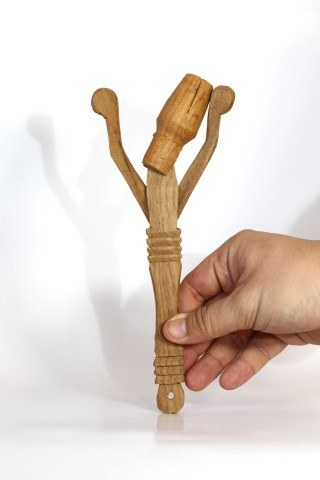
Cut a groove in the top of the handle that is larger than the head. Fasten the head to the handle with a wooden pin so the head can move left and right easily.
7
7
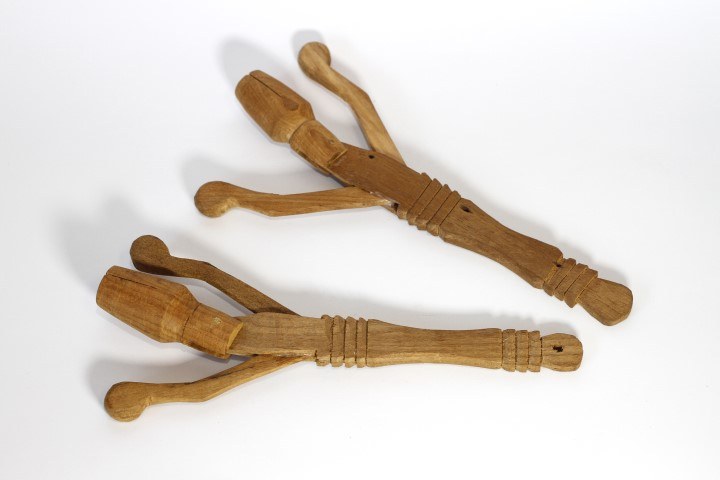
Real image
Real image
Real image (Sirindhorn Anthropology Center, author not specified, CC BY 4.0)
8
8
How to play
How to play
Grip the handle and shake it back and forth; the head will strike against the arm, producing a loud sound.
9
9
Troubleshooting
Troubleshooting
Pok Pok troubleshooting
Flow
Loading...
10
10
History and Limitations
History and Limitations
The name "ป๊อกแป๊ก" (Pok Paek) comes from the sound the wood makes when shaken. Be careful with knives while whittling and hollowing.
Source: Sirindhorn Anthropology Centre, Thai Folk Tools and Implements Database "ป๊อกแป๊ก" (author not specified) (licensed CC BY 4.0)
**Limitations** The source does not give the size of the arms or head. The materials list includes pointed wire and nails, but the steps do not specify where they are used.
This blueprint makes
Related Blueprints
These blueprints share knowledge with this one — techniques, materials, or principles that connect them in the learning graph.
CC0 Public Domain
This blueprint is released under CC0. You are free to copy, modify, distribute, and use this work for any purpose, without asking permission.
Support the Maker by purchasing products through their Blueprint where they earn a Maker Commission set by Vendors, or create a new iteration of this Blueprint and include it as a connection in your own Blueprint to share revenue.