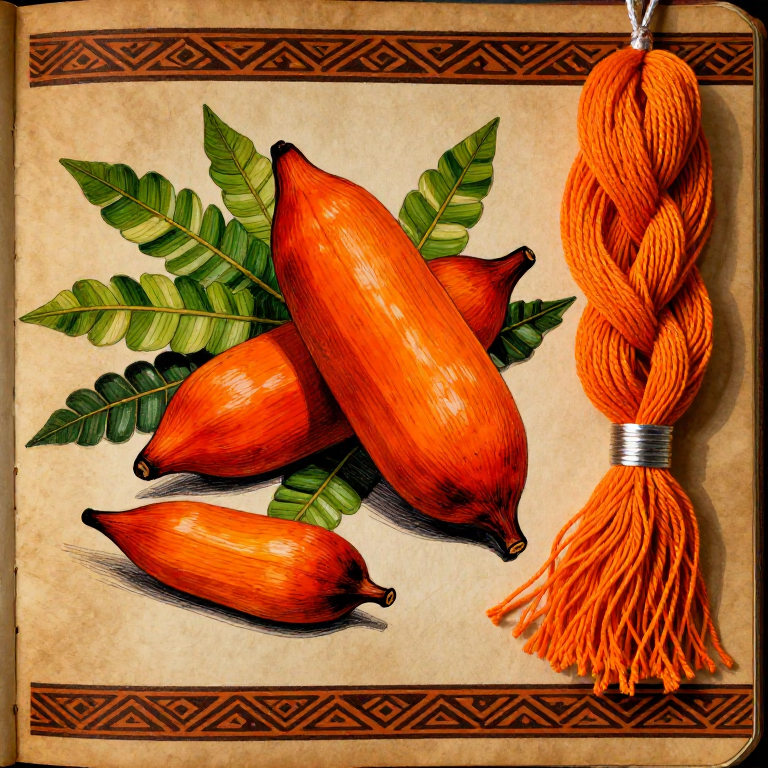


Dyeing with Annatto — Orange-Red of Indigenous Peoples
Instructions
Select the seeds
Select the seeds
Choose dry annatto seeds (Bixa orellana) with intact orange-red aril. Use approximately 50-100% of the fiber weight (for example, 100g of seeds for 100g of fiber).
Materials for this step:
 Sementes de Urucum100 g
Prepare the fiber (degum)
Prepare the fiber (degum)
Wash the fiber or fabric in hot water with neutral soap to remove oils, waxes and gum. Rinse well until the water runs clean.
Materials for this step:
 Wool Yarn Skein (Undyed)100 g
Prepare the mordant bath (alum)
Prepare the mordant bath (alum)
Dissolve alum (aluminum and potassium sulfate) in hot water, using 12-15% of the fiber weight. For 100g of fiber, use 12-15g of alum in 4 liters of water.
Materials for this step:
 Alum (Potassium Alum)15 g
 Water4 liters
Tools needed:
Mordant the fiber
Mordant the fiber
Immerse the wet fiber in the alum bath. Heat slowly until low boil (80-90°C) and maintain for 1 hour, stirring occasionally. Do not wring — simply stir gently.
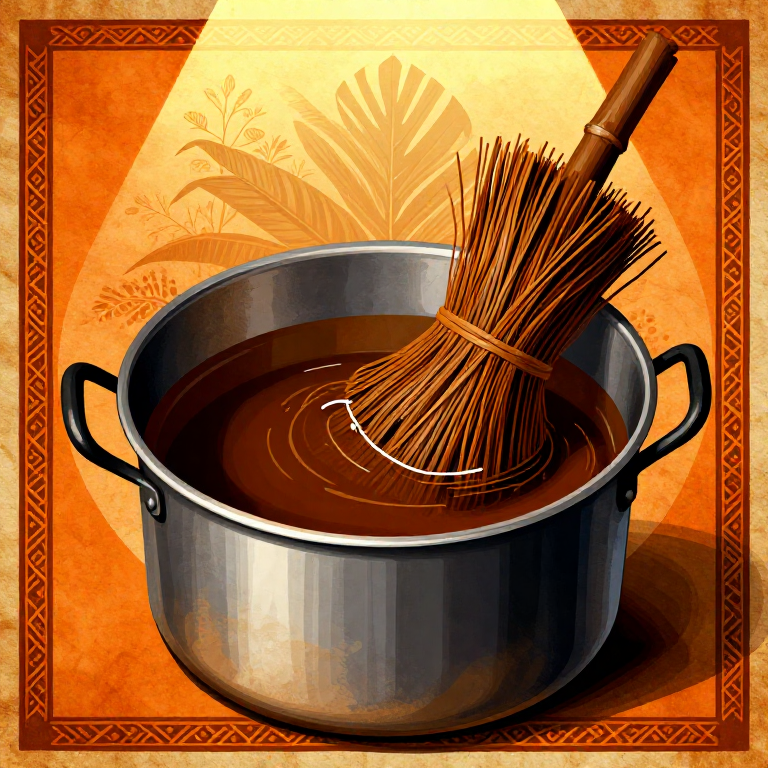
Tools needed:
Cool in the mordant
Cool in the mordant
Turn off the heat and let the fiber cool inside the mordant bath. Ideally, soak overnight for better fixation.
Prepare the annatto bath
Prepare the annatto bath
In a separate pot (stainless steel or enameled — NUNCA aluminum or iron), place the annatto seeds in 4-5 liters of water.
Materials for this step:
Water5 litersTools needed:
Extract the dye
Extract the dye
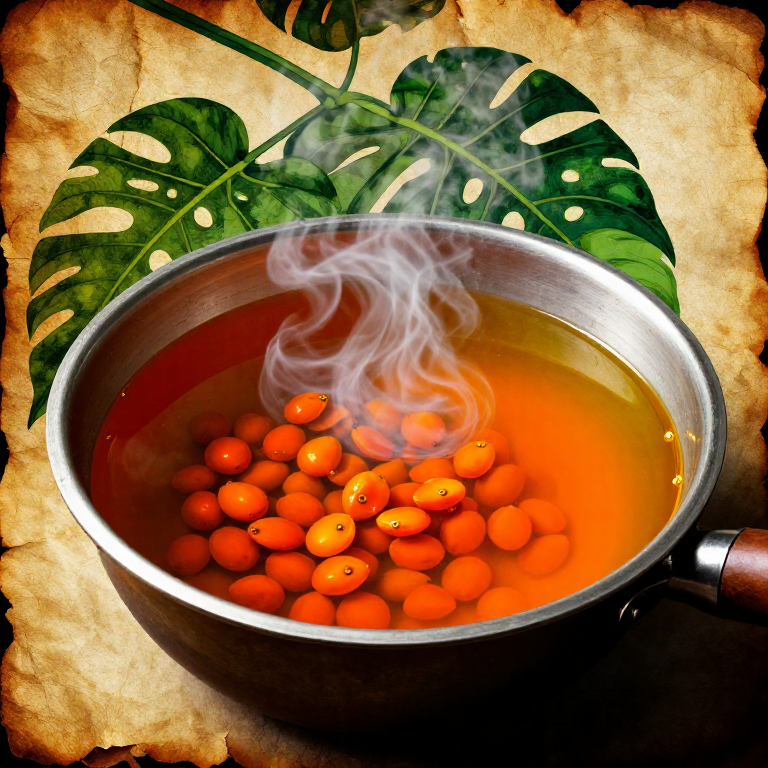
Heat the seeds over medium-low heat, maintaining a gentle boil for 1 hour. The water will become intensely orange-red as the bixin dissolves.
Tools needed:
Strain the dye bath
Strain the dye bath
Strain the liquid through a fine cloth or sieve, removing all seeds. The dye bath should be clear and intensely colored.
Materials for this step:
 Cloth (Straining)1 piece
Tools needed:
Remove the fiber from the mordant
Remove the fiber from the mordant
Remove the fiber from the alum bath. Squeeze out excess gently, but DO NOT rinse — the mordant must remain on the fiber.
Immerse the fiber in the annatto bath
Immerse the fiber in the annatto bath
Place the mordanted fiber (still damp) in the strained annatto bath. Make sure the fiber is completely submerged.
Dye over low heat
Dye over low heat
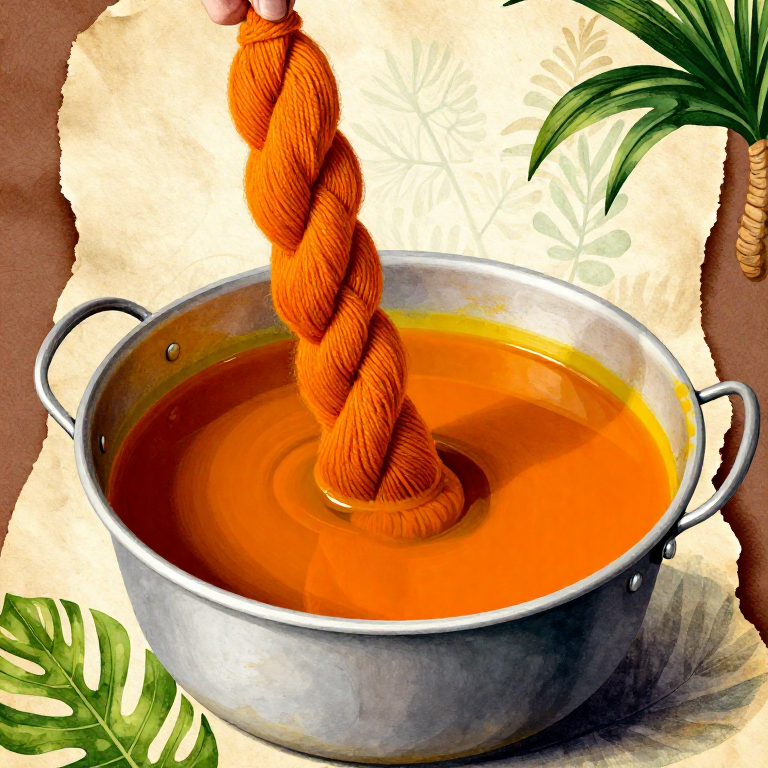
Heat the annatto bath with the fiber to 70-80°C (DO NOT boil). Maintain this temperature for 1 hour, stirring regularly to ensure even color.
Tools needed:
Overnight soak
Overnight soak
Turn off the heat and let the fiber cool inside the annatto bath overnight. The longer the soak, the more intense the color.
Rinse and dry
Rinse and dry
Remove the fiber from the bath and rinse gently in cold water until the water runs relatively clean. Dry in the shade — NUNCA in direct sun, as annatto has low light fastness.
Assess the final color
Assess the final color
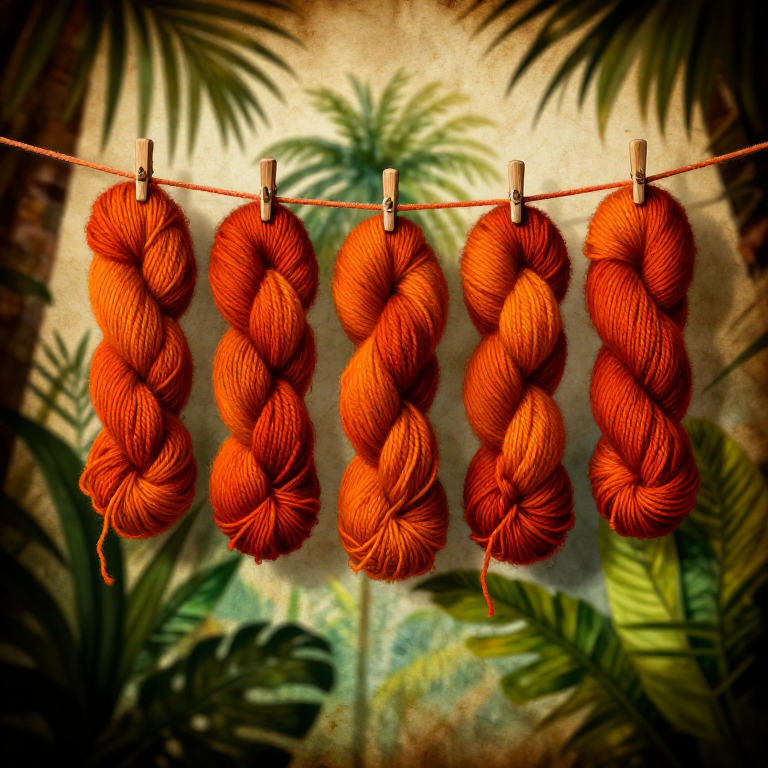
The result should be a vibrant orange to orange-red, depending on the seed concentration and soak time. Note: annatto has limited light fastness — ideal for pieces stored when not in use.
Materials
5- 100 gPlaceholder
- Placeholder
- Placeholder
- 1 piecePlaceholder
Tools Required
1- None required
CC0 Public Domain
This blueprint is released under CC0. You are free to copy, modify, distribute, and use this work for any purpose, without asking permission.
Support the Maker by purchasing products through their Blueprint where they earn a Maker Commission set by Vendors, or create a new iteration of this Blueprint and include it as a connection in your own Blueprint to share revenue.