
Genipa Tincture — Blue-Black of Indigenous Peoples
Instructions
Select green fruits
Select green fruits
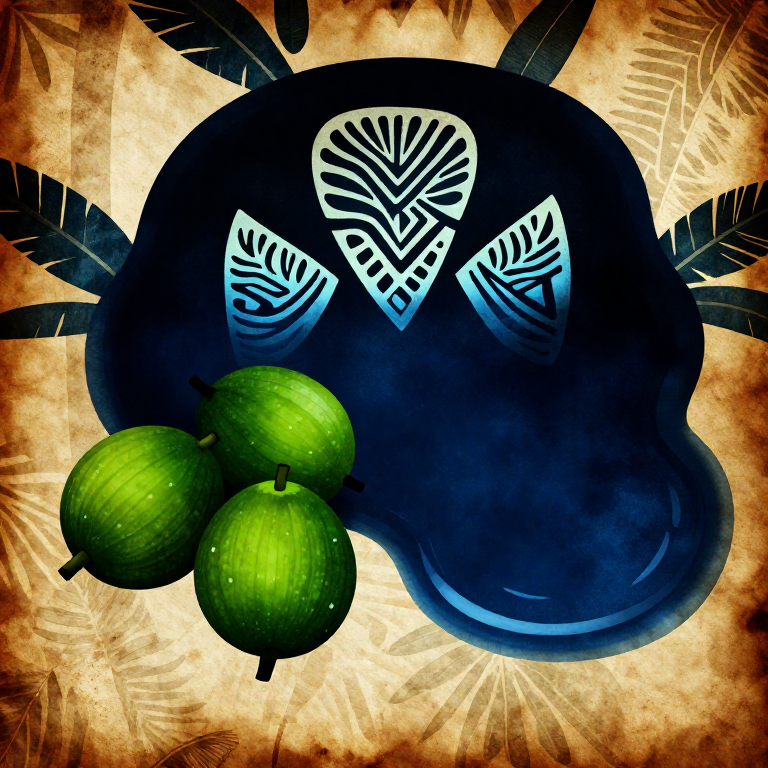
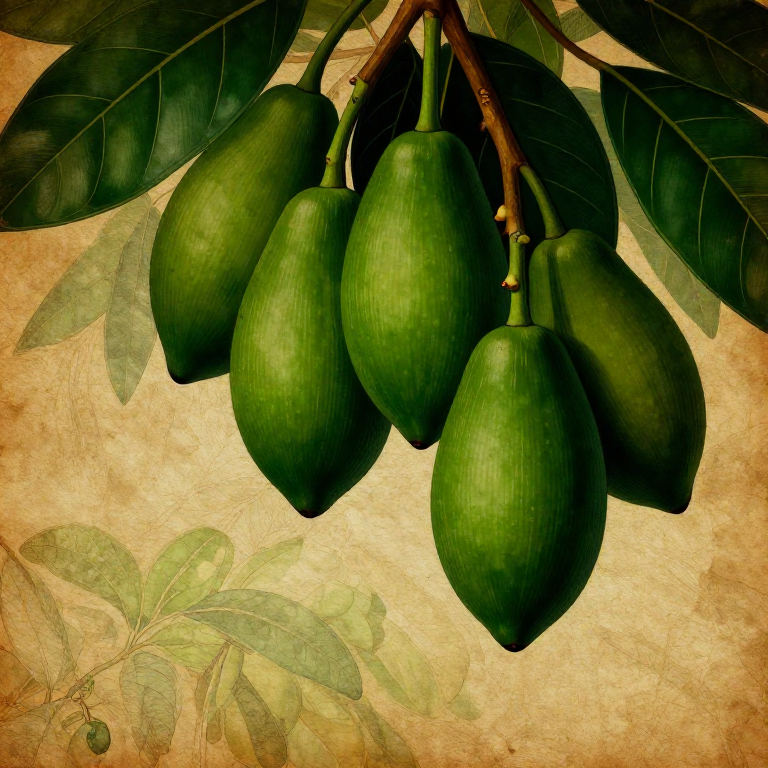
Harvest genipa fruits (Genipa americana) VERDES and immature. The ripe fruit is edible, but has much less genipin — the active compound. The fruit should be hard and dark green.
Materials for this step:
 Jenipapo Verde3-5 pieces
Extract the juice
Extract the juice
Cut the fruits in half and squeeze or grate to extract the juice. Wear gloves — the juice stains intensely any surface. The liquid will be almost colorless to pale green.
Tools needed:
Strain the juice
Strain the juice
Pass the juice through a fine sieve or cloth to remove pulp and seeds. The filtered liquid is your genipa dye.
Materials for this step:
 Cloth (Straining)1 piece
Tools needed:
Body application (traditional method)
Body application (traditional method)
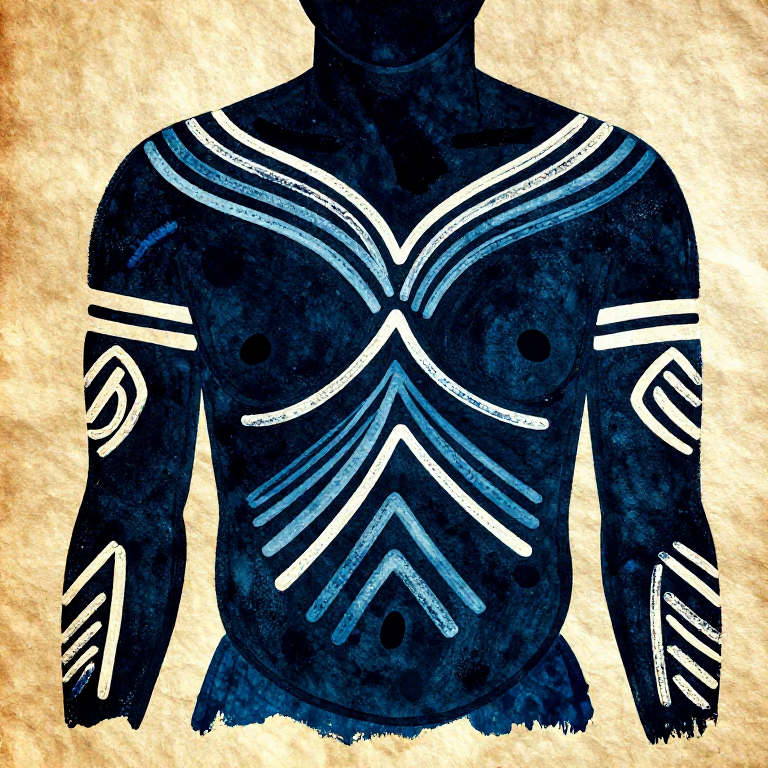
For body painting: apply the juice directly to clean skin using fingers, twigs or brushes. The Kayapó create geometric patterns representing animals and spirits. The juice is nearly invisible when applied.
Wait for the chemical reaction
Wait for the chemical reaction
The genipin in the juice reacts with amino acids in skin proteins in the presence of oxygen. In 2-4 hours, the mark begins to darken. Full color in 24-48 hours — a deep blue-black.
Duration of the painting
Duration of the painting
The genipa mark lasts 1-2 weeks, disappearing naturally as the epidermis renews. It cannot be removed with water or soap — it is a covalent bond with skin proteins.
Prepare fiber for textile dyeing
Prepare fiber for textile dyeing
For dyeing fabrics: works best on protein fibers (wool, silk) because genipin naturally binds to amino acids. For cotton, first treat with tannin to create binding points.
Materials for this step:
 Wool Yarn Skein (Undyed)50 g
 Tanino (Mordente Natural)4 g
Prepare the mordant (for cotton)
Prepare the mordant (for cotton)
If using cotton or linen: dissolve tannin (8% of fiber weight) in hot water, soak the fiber for 1 hour. Then mordant with alum (12% of weight). For wool/silk, this step is optional.
Materials for this step:
 Alum (Potassium Alum)6 g
Tools needed:
Genipa dye bath
Genipa dye bath
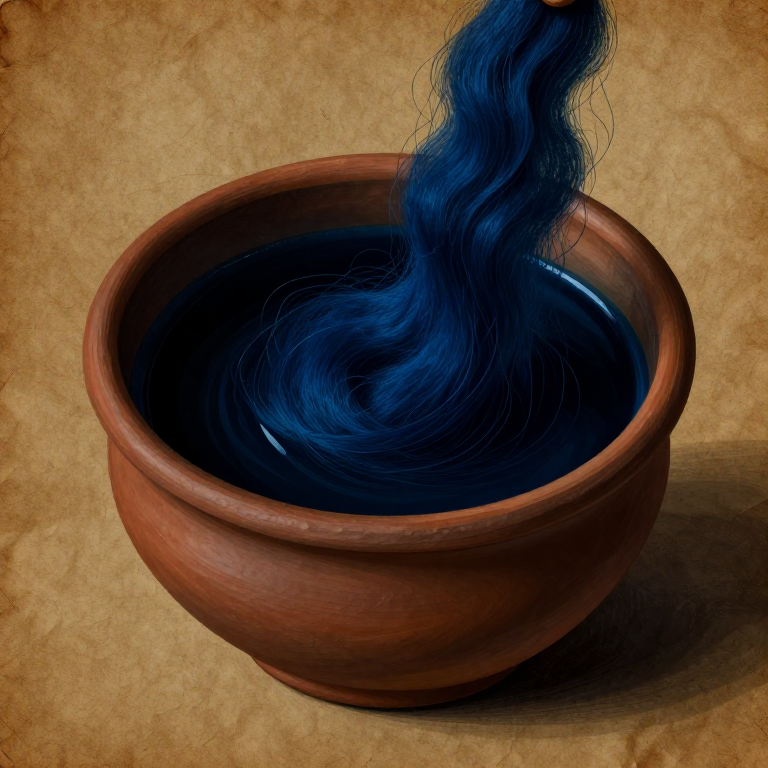
Submerge the prepared fiber in genipa juice. No heating is necessary — the reaction occurs at room temperature. Leave submerged for 2-4 hours.
Tools needed:
Oxidation phase
Oxidation phase
Remove the fiber from the bath and hang to air dry. The color develops during drying as genipin oxidizes. Wait 24-48 hours for full color.
Rinse and assess
Rinse and assess
After complete oxidation, rinse gently in cold water. The result on wool/silk is intense blue with a slight violet tone. On mordanted cotton, lighter shades of blue.
Kayapó tradition: genipa and annatto
Kayapó tradition: genipa and annatto
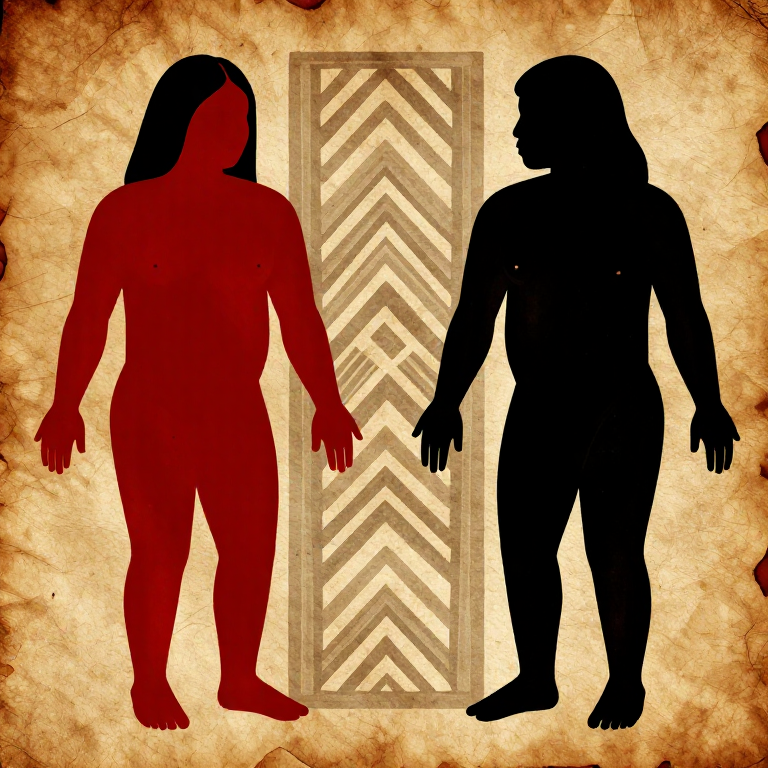
In Kayapó tradition, genipa (black) and annatto (red) are the two fundamental colors of body painting. Black represents wisdom and connection with spirits; red, vital force and readiness for war. Together, they express the duality of Kayapó cosmovision.
Materials
5- 3-5 piecesPlaceholder
- 1 piecePlaceholder
- Placeholder
- Placeholder
- Placeholder
Tools Required
1- None required
CC0 Public Domain
This blueprint is released under CC0. You are free to copy, modify, distribute, and use this work for any purpose, without asking permission.
Support the Maker by purchasing products through their Blueprint where they earn a Maker Commission set by Vendors, or create a new iteration of this Blueprint and include it as a connection in your own Blueprint to share revenue.