
Birch bark harvesting — Removing bark from birch trees for crafts
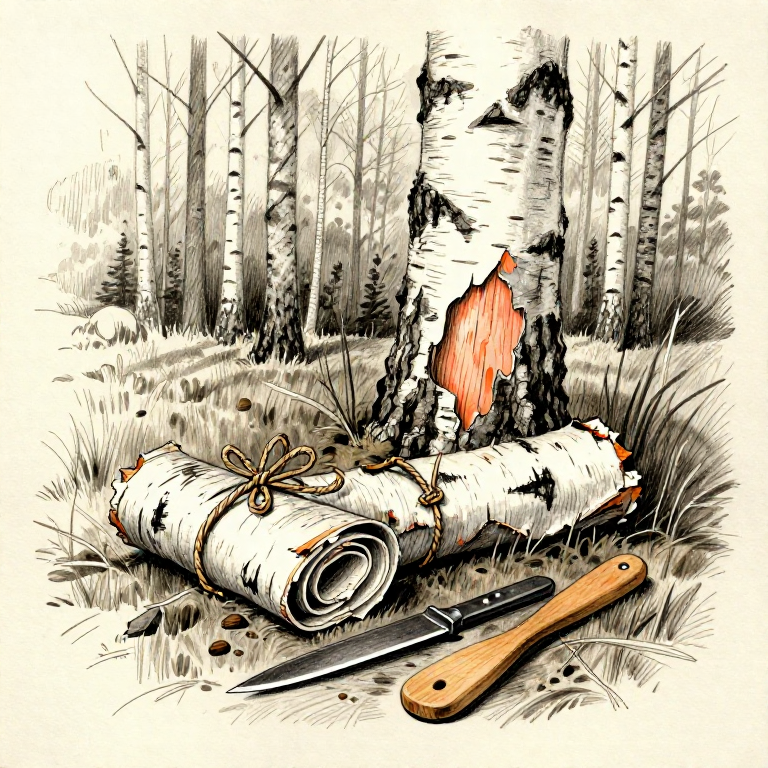
A detailed guide to harvesting birch bark (Betula pendula bark) for traditional Russian crafts. From selecting trees and determining the right timing to bark removal, layering, and drying. Birch (Betula pendula) is the primary material for birch bark containers (tueski), boxes, bast shoes (lapti), and folk crafts.
Instructions
Select a suitable birch tree
Select a suitable birch tree
Silver birch (Betula pendula) or downy birch (Betula pubescens) with a trunk diameter of at least 20 cm are suitable for birch bark harvesting. The bark should be smooth, without growths or cracks. Young trees (20-40 years old) yield the softest and most even bark.
Determine the harvesting time
Determine the harvesting time
Birch bark is harvested from late May to early July, when sap flow is active and the bark separates easily from the bast. During this period, a layer of moisture forms between the bark and the bast. Attempting to remove bark in autumn or winter damages the tree, and the bark tears.
Check bark readiness
Check bark readiness
Tools needed:
 Sharp Knife
Make a vertical cut
Make a vertical cut
Tools needed:
Sharp KnifePeel back the edge of the birch bark
Peel back the edge of the birch bark
Tools needed:
 Wooden Spatula or Bark Lifter
Remove the sheet of birch bark
Remove the sheet of birch bark
Avoid harming the tree
Avoid harming the tree
Clean the birch bark of growths
Clean the birch bark of growths
Delaminate the birch bark (if needed)
Delaminate the birch bark (if needed)
Roll the birch bark into a scroll
Roll the birch bark into a scroll
Materials for this step:
 Binding Twine2 meters
Dry in the shade for 1-2 weeks
Dry in the shade for 1-2 weeks
Tools needed:
 Drying Rack
Check readiness
Check readiness
Store birch bark correctly
Store birch bark correctly
Store dry rolls in a dark, dry place. Birch bark contains betulin (a natural antiseptic), so it does not rot or mold. Properly dried birch bark is stored for decades. Birch bark documents from Novgorod have been preserved for more than 800 years.
Materials
1- 2 metersPlaceholder
Tools Required
3- Placeholder
- Placeholder
- Placeholder
CC0 Public Domain
This blueprint is released under CC0. You are free to copy, modify, distribute, and use this work for any purpose, without asking permission.
Support the Maker by purchasing products through their Blueprint where they earn a Maker Commission set by Vendors, or create a new iteration of this Blueprint and include it as a connection in your own Blueprint to share revenue.