कला
सुन्दरता र कल्याण
हस्तकला
संस्कृति र इतिहास
मनोरञ्जन
वातावरण
खाना र पेय
रिभर्स इन्जिनियरिङ
विज्ञान
खेलकुद
प्रविधि
पहिर्न मिल्ने
Understanding Polonium from Uranium Ore — The Deadly Discovery That Launched Nuclear Science
मध्यम
निर्देशनहरू
1
1
Understand Polonium's Discovery
Understand Polonium's Discovery
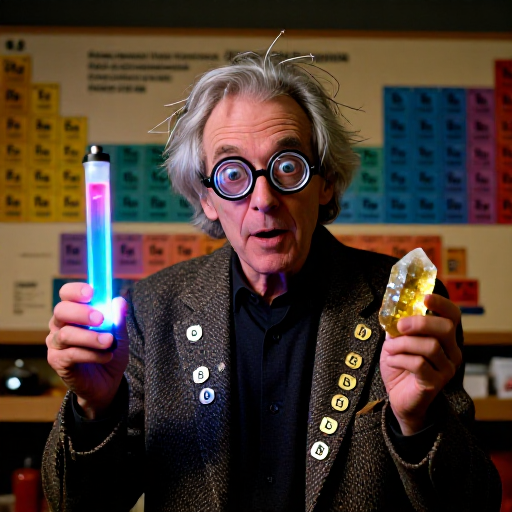
Marie and Pierre Curie discovered polonium in July 1898 while processing tonnes of pitchblende (uranium ore) residue at the École de Physique in Paris. They detected an element far more radioactive than uranium in the bismuth fraction of the ore. Marie named it polonium after her homeland Poland, which was then partitioned between Russia, Prussia, and Austria — making this the first element named to highlight a political cause. It was the first element discovered through its radioactivity.
2
2
Examine Polonium's Radioactive Properties
Examine Polonium's Radioactive Properties
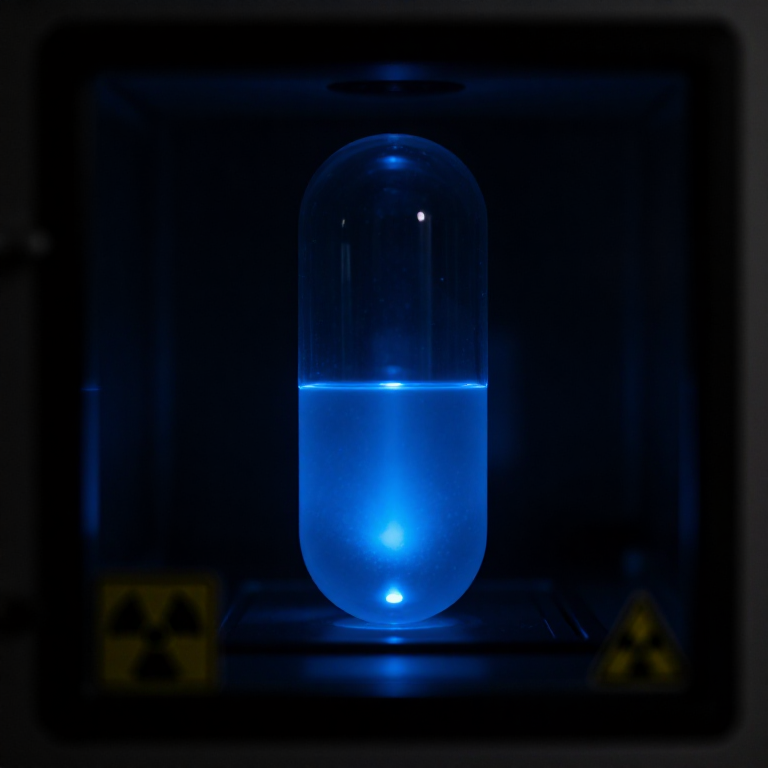
Polonium-210 (half-life 138.4 days) is an intense alpha emitter — a microgram produces 166 billion alpha decays per second. It generates 140 watts of thermal power per gram, enough to raise its temperature to over 500°C through self-heating. A capsule of polonium visibly glows blue from excitation of surrounding air molecules. Polonium-210 decays to stable lead-206 in a single alpha emission. It is approximately 250,000 times more toxic than hydrogen cyanide per unit mass.
3
3
Trace Production Methods
Trace Production Methods
Modern polonium-210 is produced by neutron irradiation of bismuth-209 in a nuclear reactor. The reaction Bi-209 + neutron → Bi-210 → Po-210 (by beta decay, half-life 5 days) yields milligram quantities. Russia's Avangard facility in Sarov is believed to be the primary global producer, making approximately 85 grams annually. Natural polonium exists in uranium ore at roughly 100 micrograms per tonne — the Curies processed tonnes of ore to isolate barely visible traces.
4
4
Discover the Manhattan Project Role
Discover the Manhattan Project Role
Polonium-210 was a critical component of the first atomic bombs. The 'Urchin' initiator at the center of the Fat Man implosion bomb used polonium-210 and beryllium — when compressed by the conventional explosive lens, alpha particles from Po-210 struck beryllium, releasing a burst of neutrons that initiated the nuclear chain reaction. The Dayton Project, led by Charles Thomas at Monsanto, secretly produced the polonium initiators. This application remained classified until 1960.
5
5
Understand Static Elimination Applications
Understand Static Elimination Applications
Polonium-210 alpha sources were used in industrial static eliminators that ionize air to neutralize static charges on photographic film, textile manufacturing, paper production, and precision machinery. The alpha particles create ion pairs in air within millimeters of the source without penetrating the device housing. Staticmaster brushes containing Po-210 were used in darkrooms to remove dust from negatives. NRC licensing requirements and the short half-life have limited modern use.
6
6
Examine Heat Source Applications
Examine Heat Source Applications
Polonium-210's enormous power density (140 W/g) made it attractive for radioisotope thermoelectric generators (RTGs) in early space missions. The Soviet Lunokhod lunar rovers used Po-210 heat sources to keep their electronics warm during lunar nights. However, Po-210's short half-life (138 days) limits mission duration — plutonium-238 (half-life 87.7 years) replaced it for long-duration missions like Voyager and Cassini. Polonium RTGs are now used only for short-duration applications.
7
7
Survey the Litvinenko Poisoning Case
Survey the Litvinenko Poisoning Case
Alexander Litvinenko, a former Russian FSB officer and critic of the Kremlin, died in London on November 23, 2006, after ingesting polonium-210 — likely placed in his tea at the Millennium Hotel. Investigators traced a trail of Po-210 contamination across London on aircraft, in hotels, and at restaurants visited by the two Russian suspects. The 2016 British inquiry concluded that the assassination was 'probably approved' by Vladimir Putin. It remains the most high-profile radiological poisoning in history.
8
8
Understand Biological Hazards
Understand Biological Hazards
Polonium-210 is extraordinarily dangerous when ingested or inhaled — alpha particles destroy tissue at the cellular level. A lethal dose is estimated at 1-10 micrograms (invisible to the naked eye). External exposure is minimal because alpha particles cannot penetrate skin or even paper. Polonium accumulates in the spleen, kidneys, and liver. It is present in tobacco smoke — Po-210 from phosphate fertilizers concentrates in tobacco trichomes and contributes to lung cancer risk in smokers.
9
9
Explore Polonium in Nature and Detection
Explore Polonium in Nature and Detection
Polonium-210 exists naturally in the uranium-238 decay chain: U-238 → ... → Rn-222 → Po-218 → Pb-214 → Bi-214 → Po-214 → Pb-210 → Bi-210 → Po-210 → Pb-206 (stable). It is present in soil, air, and food at trace levels — the average person carries about 37 becquerels of Po-210. Detection requires alpha spectrometry, as Po-210 emits minimal gamma radiation. This near-invisibility to standard radiation detectors is what made it an effective assassination weapon.
चाहिने औजार:
 सूक्ष्म तराजु
10
10
Document Findings and Historical Impact
Document Findings and Historical Impact
Record polonium's key data: atomic number 84, density 9.196 g/cm³, melting point 254°C, silvery-gray metal. Polonium launched the age of nuclear science — its discovery by the Curies opened the door to understanding radioactive decay, atomic structure, and eventually nuclear energy and weapons. From the Urchin initiator that detonated the first atomic bomb to the assassination of a dissident in London, polonium is the element that embodies both the power and the peril of nuclear knowledge.
11
11
Half-life: what is left, and when
Half-life: what is left, and when
Jupyter नोटबुक लोड हुँदैछ…
आवश्यक उपकरणहरू
1- प्लेसहोल्डर
जोडिएका खाकाका सामग्री
10% एट्रिब्युसन
Extracting Bismuth from Bismuthinite — The Rainbow Metal from Sulfide Ore
Peter द्वारा
धातु काम
६६
०
०
०
२
०
10% एट्रिब्युसन
Understanding Tellurium from Calaverite — The Rarest Stable Metalloid from Gold Ore
Peter द्वारा
खानी
२०
०
०
०
१
०
खतरनाक
10% एट्रिब्युसन
Extracting Lead from Galena — Humanity's Oldest Smelted Metal
Peter द्वारा
धातु काम
७५
०
०
०
१२
०
10% एट्रिब्युसन
Understanding Thallium from Pyrite Smelting — The Poisoner's Element
Peter द्वारा
खानी
१२
०
०
०
१
०
खतरनाक
10% एट्रिब्युसन
Understanding Uranium from Uraninite — The Element That Changed Everything
Peter द्वारा
खानी
७०
०
०
०
८
०
सम्बन्धित ब्लुप्रिन्ट
यी ब्लुप्रिन्टहरूले ज्ञान साझा गर्छन् — प्रविधि, सामग्री वा सिद्धान्त
खतरनाक
Recovering Selenium from Copper Refinery Anode Slime — The Photoconductor That Sees Light
Peter द्वारा
खानी
६०
०
०
०
२
०
Extracting Iron from Hematite — Bloomery Smelting from Ore to Bloom
Peter द्वारा
धातु काम
१४३
०
०
०
१२
०
खतरनाक
Understanding Thorium from Monazite — The Nuclear Fuel That Could Replace Uranium
Peter द्वारा
खानी
१४
०
०
०
४
०
CC0 सार्वजनिक डोमेन
यो ब्लुप्रिन्ट CC0 अन्तर्गत जारी गरिएको छ। तपाईं अनुमति नसोधी प्रतिलिपि, परिमार्जन, वितरण र प्रयोग गर्न सक्नुहुन्छ।
ब्लुप्रिन्ट मार्फत उत्पादनहरू किनेर सिर्जनाकर्तालाई सहयोग गर्नुहोस् सिर्जनाकर्ता कमिसन विक्रेताले तोकेको, वा यो ब्लुप्रिन्टको नयाँ संस्करण बनाउनुहोस् र आम्दानी बाँड्न आफ्नो ब्लुप्रिन्टमा जडानको रूपमा समावेश गर्नुहोस्।