
SINING
BEAUTY AT WELLNESS
CRAFTS
KULTURA AT KASAYSAYAN
LIBANGAN
KAPALIGIRAN
PAGKAIN AT INUMIN
REVERSE ENGINEERING
AGHAM
ISPORTS
TEKNOLOHIYA
MGA WEARABLE
Hand-Sewn Welted Boot: Last, Welt, Sole, Heel and Finish (Hasluck, Boot Making and Mending, 1898)
Tex

Nilikha ni

Tex

13. Nobyembre 2026FO
20
0
0
0
0

Hand-Sewn Welted Boot: Last, Welt, Sole, Heel and Finish (Hasluck, Boot Making and Mending, 1898)

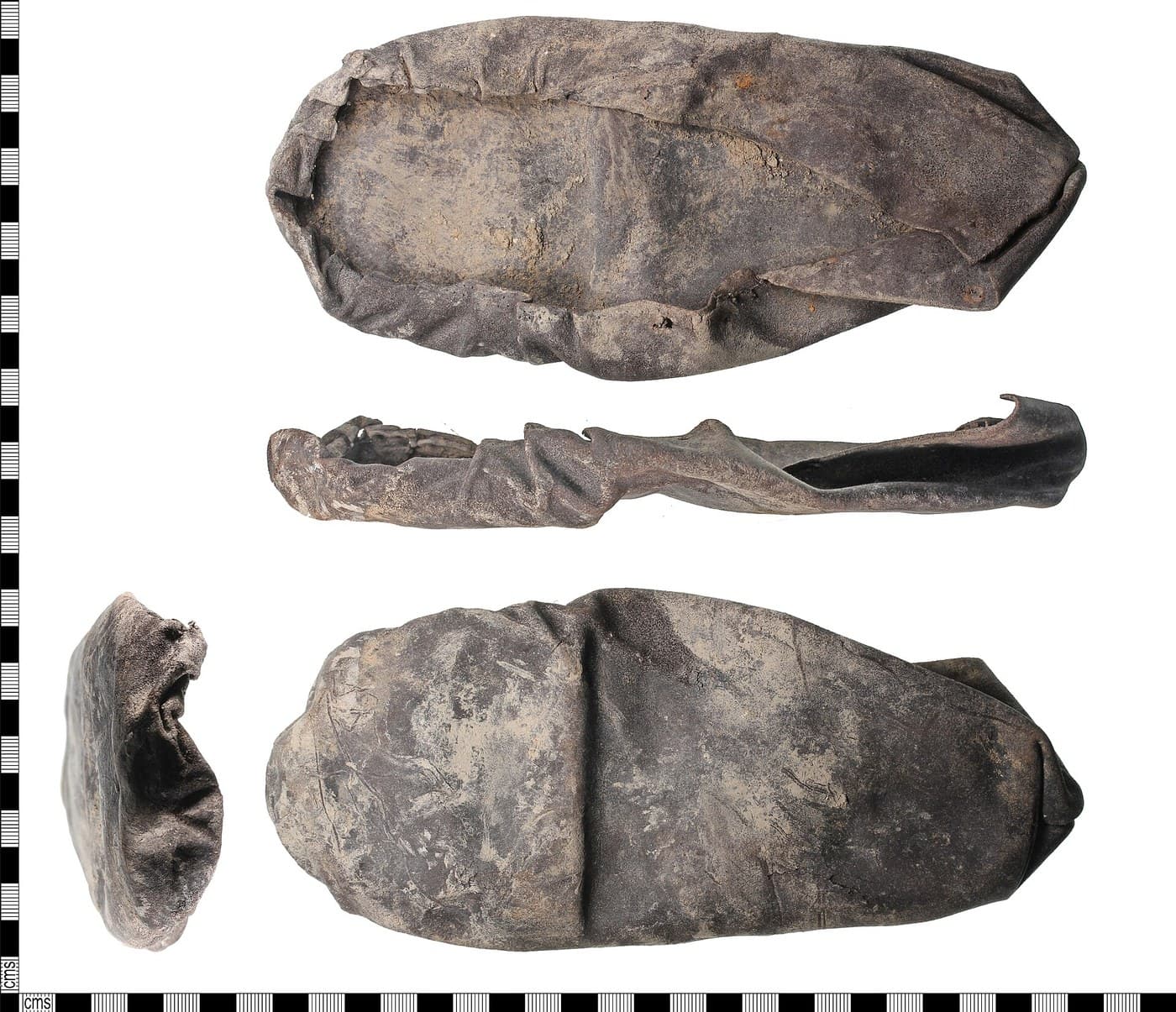
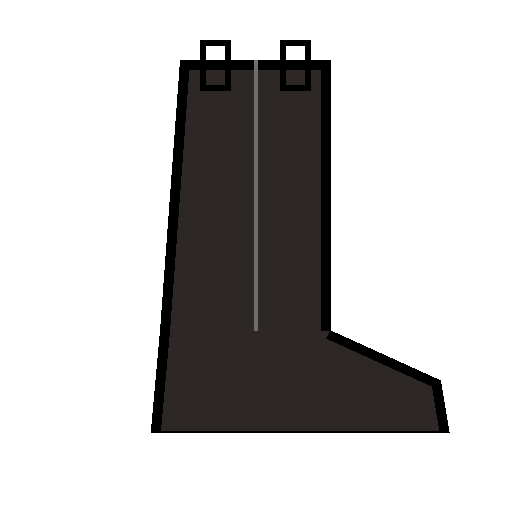
How a closed boot upper becomes a hand-sewn welted boot, from Paul N. Hasluck's Boot Making and Mending (1898): measure the foot and fit up the last, block and feather the insole, last the upper tight, sew in the welt and the seat, fill and lay the sole, round it, channel and stitch it to the welt, build and sew the heel, then knife, iron, ink and heel-ball the edges. All sizes are his. The upper here is the Wellington leg from Leno's book (the previous blueprint).
Abantado
About 1 week

Mga Tagubilin

1

Sizes, lasts and heel

Naglo-load ng Jupyter notebook…
2

Read Boot Making and Mending, ch. IV

"In choosing the materials, it should be remembered that a boot, like a house, depends upon the foundation, for which reason the leather should be good of its class, and every care exercised to fit it properly."
3

Measure the foot

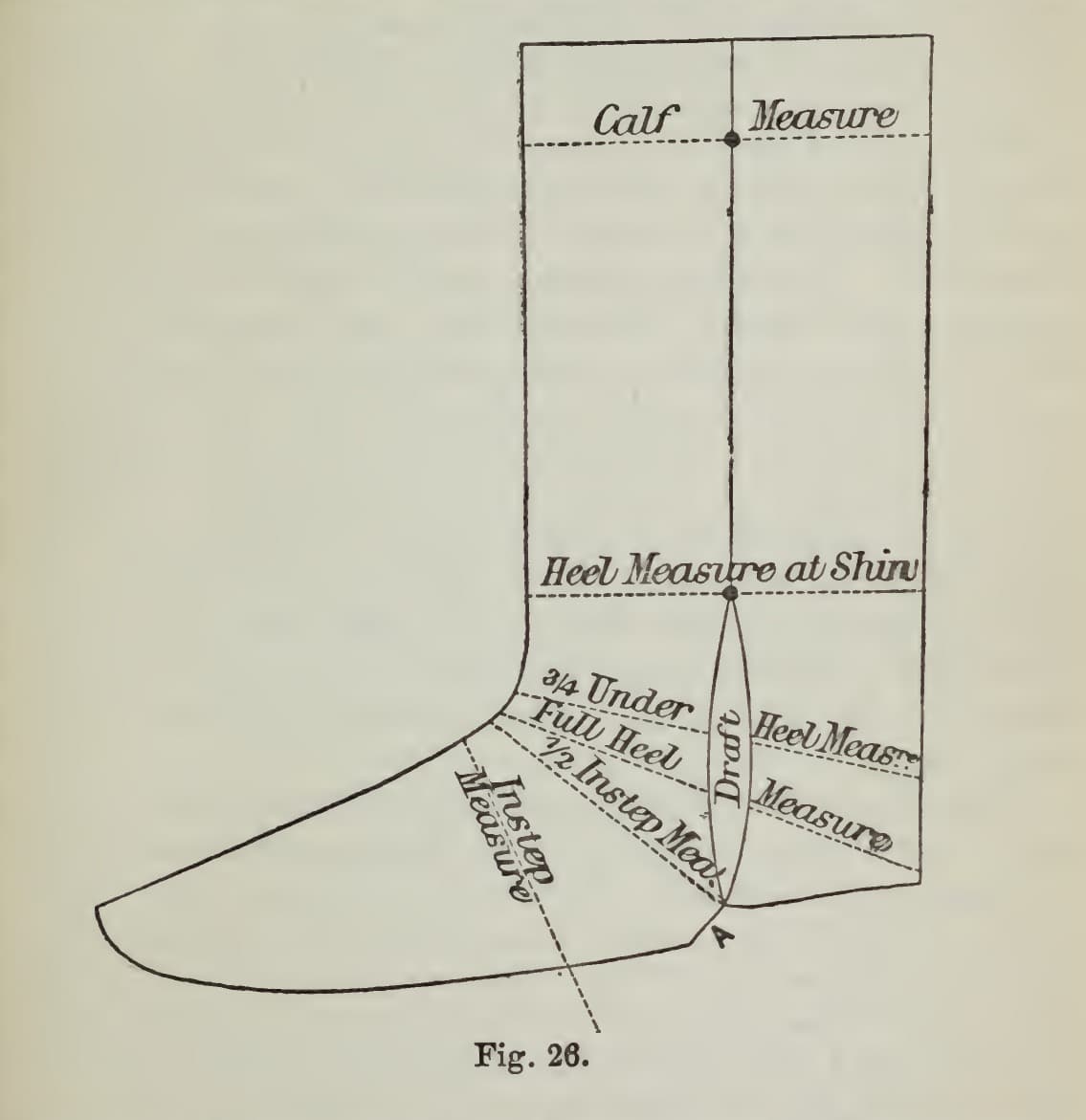
Have the person stand full weight on a sheet of paper and draw round the foot with the pencil quite upright, then the lines of the waist. Take the length on the drawing. With a tape take, in inches and only just tight: the joint (under the foot, over the great-toe joint and little-toe knuckle), the second joint round the ball, the instep, the heel measure (round the heel, under the ankle bone, across the throat) and the leg about 1½ in above the ankle bone. Mark each on the drawing.

Mga materyales para sa hakbang na ito:

Parisukat na pirasong papelParisukat na pirasong papel1 piraso

Mga kailangang kasangkapan:

LapisLapis
Panukat na TapePanukat na Tape
Panukat ng sukat ng sapatosPanukat ng sukat ng sapatos
4

Fit up the last

Choose a last whose toe is nearest the shape wanted; set it on the drawing and check the lines and girths. Rasp off any surplus so the bottom is shaped as his Fig. 69, leaving room for the great toe. If it is too small, make fittings from wetted, stretched flank leather (long leather, joint, toe-pin, heel-pin), skive them thin to the edge, tack them on wet and let each dry before blocking and trimming. Peg bunion pieces with fine ½ in pegs in holes made with the peg awl. An old shoe worn to the foot is "the safest guide": put the last in it to see where it is short.

Mga materyales para sa hakbang na ito:

Katad para sa gamit ng kabayoKatad para sa gamit ng kabayo1 piraso
Mga tarugong kahoyMga tarugong kahoy1 piraso
Pakong panghawak sa hulmahanPakong panghawak sa hulmahan1 piraso

Mga kailangang kasangkapan:
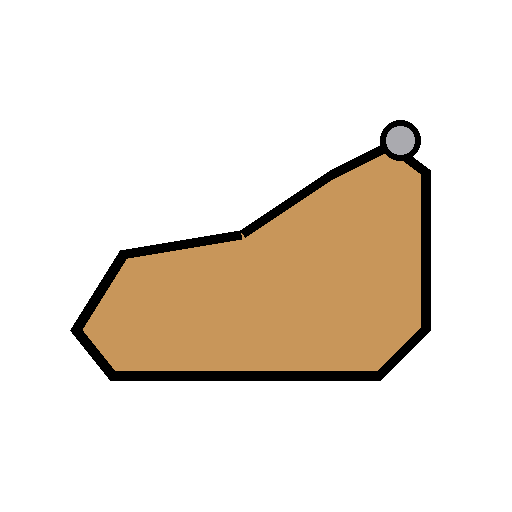
Hulmahan ng sapatos (last)Hulmahan ng sapatos (last)
Kikil na magaspangKikil na magaspang
Skiving knifeSkiving knife
Pambutas ng tarugoPambutas ng tarugo
Martilyong may kukoMartilyong may kuko
5

Prepare the stuff

Soak insoles, outer soles, stiffeners, lifts and top-pieces in clean water. Mark the welts down the centre with compasses, cut them to equal widths and put them in the water too; they are used wet. Dry the rest in a draught, not near a fire. When the soles are just mellow, buff off the grain lightly and skive the flesh off the back; do the same to lifts and top-pieces. Hammer them evenly all over on the lap iron, grain down, from the centre; the lifts less hard than soles and top-pieces.

Mga materyales para sa hakbang na ito:
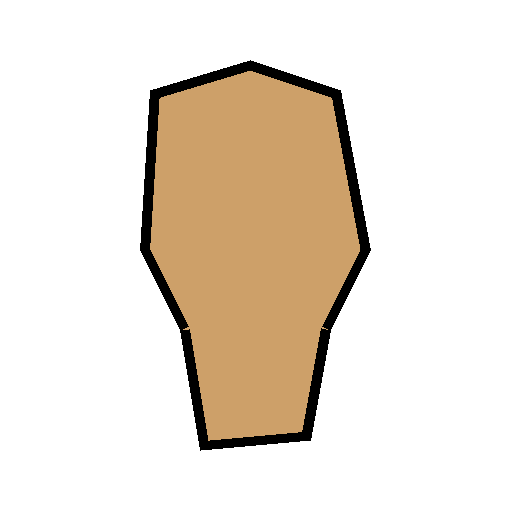
Katad ng suwelasKatad ng suwelas1 piraso
Welting na katadWelting na katad1 piraso
TubigTubig1 piraso

Mga kailangang kasangkapan:

Kompas na dalawang tulisKompas na dalawang tulis
Kutsilyo sa katadKutsilyo sa katad
Kutsilyong pangkayod ng sapateroKutsilyong pangkayod ng sapatero
Bakal na pangkandunganBakal na pangkandungan
Martilyong may kukoMartilyong may kuko
6

Block, feather and hole the insole

Mark the insole to the last, cut it out, buff the grain and tack it grain down with four tacks in the middle; stretch the sides with pincers and tack it tight till nearly dry (blocking). Round it to the last, narrower in the waist. Rub with soap, draw a margin ¼ to ⅓ in from the edge with compasses, wider at the waist, cut it about one-third through with the knife upright, open it with the prick-stitch and cut away the strip to leave the feather. Gauge a second line the same distance in and pass the sewing awl from it to the edge of the feather. Take the sharp edge off the grain side.

Mga materyales para sa hakbang na ito:
Katad ng suwelasKatad ng suwelas1 piraso
Pakong panghawak sa hulmahanPakong panghawak sa hulmahan1 piraso
Bareta ng sabonBareta ng sabon1 piraso

Mga kailangang kasangkapan:

Hulmahan ng sapatos (last)Hulmahan ng sapatos (last)
Kutsilyo sa katadKutsilyo sa katad
Pinsang panghila sa hulmahanPinsang panghila sa hulmahan
Kompas na dalawang tulisKompas na dalawang tulis
Pangmarka ng tahiPangmarka ng tahi
Pambutas sa pananahiPambutas sa pananahi
7

Stiffeners and side linings

Cut the stiffeners from good leather, used wet; a gentleman's 1¾ in high at the back. Skive them all round on both sides, little on the grain side, the top to a feather edge, the bottom to half its substance. Cut side linings, best of oil-dressed calf.

Mga materyales para sa hakbang na ito:

Katad ng suwelasKatad ng suwelas1 piraso
Katad ng guyaKatad ng guya1 piraso

Mga kailangang kasangkapan:

Skiving knifeSkiving knife
8

Last the upper

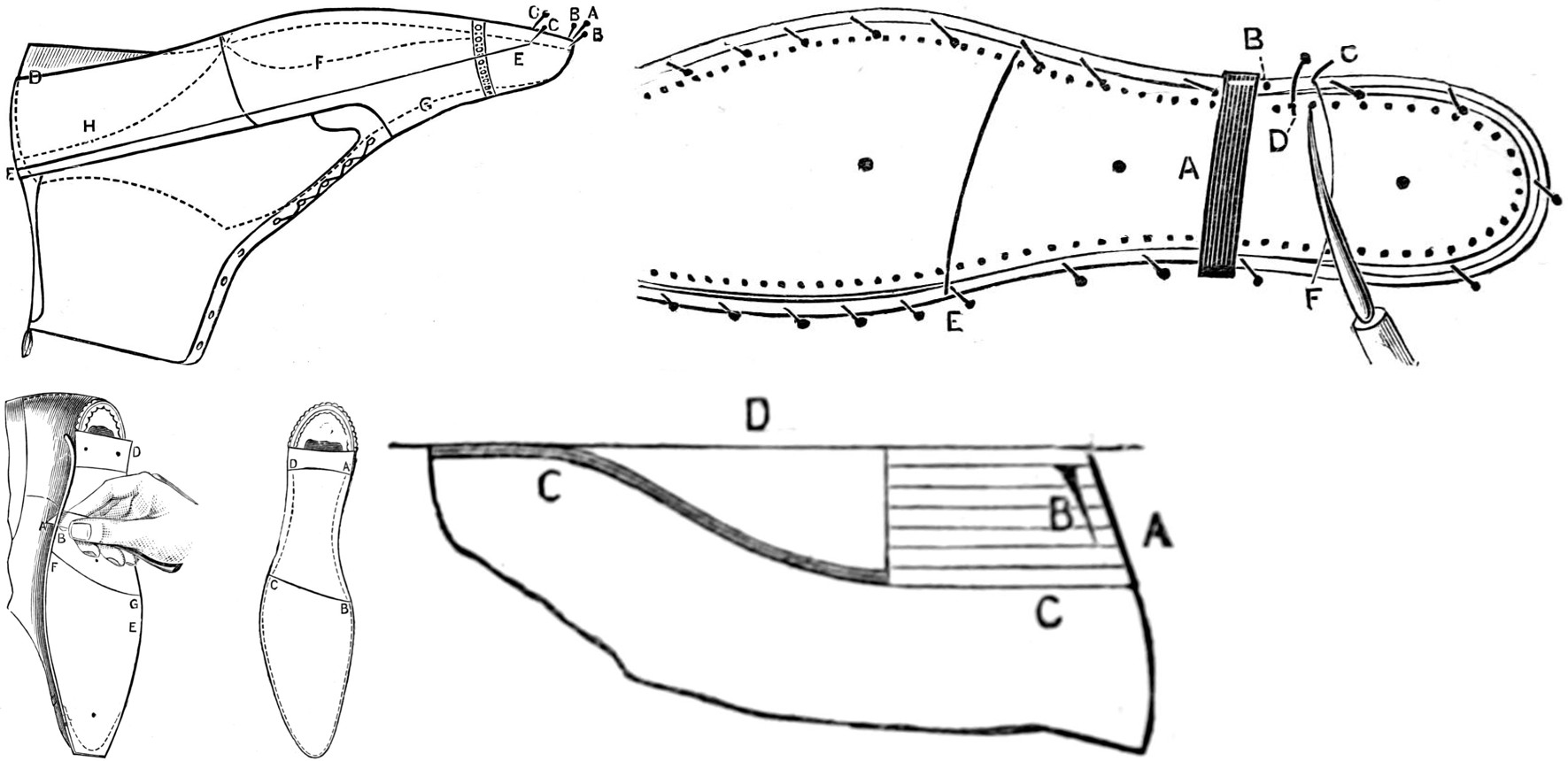
Paste the stiffener on both sides and put it between lining and leather at the back seam. With the last on your knees, pull the upper down at the toe and set the back seam on the centre of the last, covering about two-thirds of it at the back ("horsing"). Draw the toe tight with the pincers and tack at A, then B and B, then the draft tacks C and C, pulling hard to put a draft in. Put the side linings in unpasted and tack D and D, lasting the lining tight. Last the sides till all fulness is gone, knock the heel of the last in, and last waist and seat, less hard. Last the toe last, drawing stuff to the toe and tapping out every pipe and wrinkle with the hammer; never cut V-pieces out of the pipes.

Mga materyales para sa hakbang na ito:

Itaas na bahagi ng botaItaas na bahagi ng bota1 piraso
Pandikit na harinang trigoPandikit na harinang trigo1 piraso
Pakong panghawak sa hulmahanPakong panghawak sa hulmahan1 piraso

Mga kailangang kasangkapan:

Hulmahan ng sapatos (last)Hulmahan ng sapatos (last)
Pinsang panghila sa hulmahanPinsang panghila sa hulmahan
Martilyong may kukoMartilyong may kuko
Pambutas sa pananahiPambutas sa pananahi
9

Prepare the welts

Take a fine shaving off the grain side of the wet welts and, if needed, reduce them from the flesh side. Cut an angular piece about ³⁄₁₆ in wide, about two-thirds through, along one corner of the grain side, by pulling the welt past a knife dug into the cutting-board. Choose the width from the notebook.

Mga materyales para sa hakbang na ito:

Welting na katadWelting na katad1 piraso

Mga kailangang kasangkapan:

Kutsilyo sa katadKutsilyo sa katad

Tablang pinoTablang pino
10

Make the threads and sew in the welt

Make waxed threads of hemp with cobbler's wax and a bristle at each end, nicely twisted and smooth. Damp the boot over the holes. Starting at the left corner of the seat, toe toward you, held with a strap under your foot over the waist, skive the welt to half its substance for the waist length. Pass the sewing awl through the insole hole and the welt, put both bristles through from opposite sides, pull the stitch through in quick strokes and set it with a hard tightening pull, the thread round the hand leather and the awl handle. Hammer the seam every five or six stitches; wax the ends as you go. Draw each lasting tack as you reach it. Skive the welt again at the other joint, sew to F and cut it off under the last stitch. Trim the surplus upper close to the stitch and hammer the seam down.

Mga materyales para sa hakbang na ito:

Welting na katadWelting na katad1 piraso
Hibla ng hempHibla ng hemp1 piraso
Pagkit ng sapateroPagkit ng sapatero1 piraso
Bulbol ng baboy-ramoBulbol ng baboy-ramo1 piraso

Mga kailangang kasangkapan:

Pambutas sa pananahiPambutas sa pananahi
Katad na pangkamayKatad na pangkamay
Panaling KatadPanaling Katad
Martilyong may kukoMartilyong may kuko
Kutsilyo sa katadKutsilyo sa katad
11

Sew the seat

Wax the ends well; use one thread long enough to go right round. Sew the heel seat the same way but with no welt, the stitch lying on the insole one side and on the upper the other. Make very solid stitches, pull the last end through to the insole and tie the two ends in a good knot. Take out the four tacks.

Mga materyales para sa hakbang na ito:

Hibla ng hempHibla ng hemp1 piraso
Pagkit ng sapateroPagkit ng sapatero1 piraso
Bulbol ng baboy-ramoBulbol ng baboy-ramo1 piraso

Mga kailangang kasangkapan:

Pambutas sa pananahiPambutas sa pananahi
Katad na pangkamayKatad na pangkamay
12

Fill the bottom

Rub chalk on the stitches and tap a piece of felt on the insole to mark its size; paste the insole, lay the felt on, hammer it and trim it level with the welt when dry. Peg a piece of good solid leather in the waist with about four pegs, skived thin at the ends and sides, paste it and cover it with thin split felt; add another layer if the bottom is hollow, until it is level with the welt. Rub in powdered French chalk.

Mga materyales para sa hakbang na ito:
Peltrong lanaPeltrong lana1 piraso
Pandikit na harinang trigoPandikit na harinang trigo1 piraso
Katad para sa gamit ng kabayoKatad para sa gamit ng kabayo1 piraso
Mga tarugong kahoyMga tarugong kahoy1 piraso
Tisa ng Pransiya (talc na pulbos)Tisa ng Pransiya (talc na pulbos)1 piraso

Mga kailangang kasangkapan:

Pambutas ng tarugoPambutas ng tarugo
Martilyong may kukoMartilyong may kuko
Kutsilyo sa katadKutsilyo sa katad
13

Lay the sole

Wet the sole leather, dry it till just mellow, scrape the grain, flesh the back and hammer it from the centre out. Mark it round to the boot and cut off the spare toe piece. Paste the sole's flesh side and the bottom of the boot, chalk the felt, and fix the sole with sole tacks at the toe, at B and two at C. Tap it all over; for an ordinary waist skive the sole's flesh side at the waist, leaving it thicker next the welt; for riding boots it may be left full (a square waist). Run a blunt bone round between upper and welt to set the welt flat.

Mga materyales para sa hakbang na ito:

Katad ng suwelasKatad ng suwelas1 piraso
Pandikit na harinang trigoPandikit na harinang trigo1 piraso
Tisa ng Pransiya (talc na pulbos)Tisa ng Pransiya (talc na pulbos)1 piraso
Pakong panghawak sa hulmahanPakong panghawak sa hulmahan1 piraso

Mga kailangang kasangkapan:

Kutsilyo sa katadKutsilyo sa katad
Martilyong may kukoMartilyong may kuko
Bakal na pangkandunganBakal na pangkandungan
Pantiklop na butoPantiklop na buto
14

Round up and channel the sole

Hold the boot on its side on the knees and pare the sole round to shape with a very sharp knife, the point overhanging the guiding finger only by the sole's thickness, little by little, closer at the toe and wider toward the waist, leaving stuff at the seat; keep the edge even and square. Mark the channel about ¹⁄₁₆ in from the edge in the fore part and about ¼ in in the waist; cut it with the knife at about 50 degrees to the welt, nearly half-way through, and open it with the prick-stitch, throwing the grain back.

Mga kailangang kasangkapan:

Kutsilyo sa katadKutsilyo sa katad
Kompas na dalawang tulisKompas na dalawang tulis
Pangmarka ng tahiPangmarka ng tahi
15

Stitch the sole

Make the stitching thread of yellow flax waxed with white wax or beeswax, twisted lighter and wiry. Run the fudge wheel round the welt to mark the stitches. With the strap over the waist, thrust the stitching awl through welt and sole into the channel in one quick, straight jerk, never wriggled, and set each stitch the same way. Rub the stitches down with the bone, paste the channel thinly and lay it down with the smooth side of an old file, trim the burr level, damp the sole and rub it down with the long-stick; hammer it all over.

Mga materyales para sa hakbang na ito:

Sinulid na linenSinulid na linen1 piraso
Pagkit ng BubuyogPagkit ng Bubuyog1 piraso
Bulbol ng baboy-ramoBulbol ng baboy-ramo1 piraso
Pandikit na harinang trigoPandikit na harinang trigo1 piraso
TubigTubig1 piraso

Mga kailangang kasangkapan:
Gulong pangmarka ng weltGulong pangmarka ng welt
Pambutas ng tahi ng suwelasPambutas ng tahi ng suwelas
Panaling KatadPanaling Katad
Pantiklop na butoPantiklop na buto
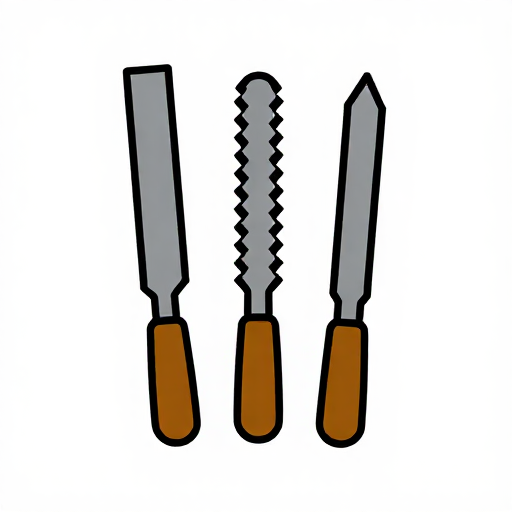
Hanay ng KikilHanay ng Kikil
Kutsilyo sa katadKutsilyo sa katad
Pangkuskos na patpatPangkuskos na patpat
Martilyong may kukoMartilyong may kuko
16

Fit the seat-piece

Cut the seat-piece straight on one edge, file it, paste both pieces, butt the edges, nail at A and peg about five pegs in the seat-piece and two in the sole, about ½ in from the edge. Pare it to shape, overhanging the stitches ¼ in, and take the angle off round for a third or bare half of the thickness. Draw the nail, cut off the peg tops, cut the grain away round them and rasp the top rough.

Mga materyales para sa hakbang na ito:

Katad ng suwelasKatad ng suwelas1 piraso
Pandikit na harinang trigoPandikit na harinang trigo1 piraso
Mga tarugong kahoyMga tarugong kahoy1 piraso

Mga kailangang kasangkapan:

Hanay ng KikilHanay ng Kikil
Pambutas ng tarugoPambutas ng tarugo
Martilyong may kukoMartilyong may kuko
Kutsilyo sa katadKutsilyo sa katad
Kikil na magaspangKikil na magaspang
17

Make the split-lift and first lifts

Cut a piece of first-cut butt leather about 7 in x 1 in and, wet, split it on the slant into two wedge-shaped strips; bend each round on the lap iron and hammer the puckers flat. Rasp and paste the seat and the split-lift, lay it flush at the back of the seat and peg it, the pegs toward the centre; pare it round. Rough and paste the first whole lift, peg it on with about five pegs, rasp it and trim it; lay the second lift with two ¾ in rivets.

Mga materyales para sa hakbang na ito:

Katad ng suwelasKatad ng suwelas1 piraso
Pandikit na harinang trigoPandikit na harinang trigo1 piraso
Mga tarugong kahoyMga tarugong kahoy1 piraso
Remats ng sapateroRemats ng sapatero1 piraso

Mga kailangang kasangkapan:

Kutsilyo sa katadKutsilyo sa katad
Bakal na pangkandunganBakal na pangkandungan
Kikil na magaspangKikil na magaspang
Pambutas ng tarugoPambutas ng tarugo
Martilyong may kukoMartilyong may kuko
18

Sew down the heel

Cut a V-groove channel in the top lift. Rub the seat with the bone. With a thread four to six strands stouter than sewing thread and the heel awl dipped in soap, sew the heel down from corner to corner, each stitch passing through the loop of the seat stitch, hammering every few stitches, and knot the last. Pene the heel all round with the pene of the hammer to drive the leather over the stitches, trim the seat with the knife and a metal guard, sweep the seat-breaker round, and smooth the edge with a welt file.

Mga materyales para sa hakbang na ito:

Hibla ng hempHibla ng hemp1 piraso
Pagkit ng sapateroPagkit ng sapatero1 piraso
Bulbol ng baboy-ramoBulbol ng baboy-ramo1 piraso
Bareta ng sabonBareta ng sabon1 piraso

Mga kailangang kasangkapan:

Pambutas ng takongPambutas ng takong
Katad na pangkamayKatad na pangkamay
Martilyong may kukoMartilyong may kuko
Pantiklop na butoPantiklop na buto
Kutsilyo sa katadKutsilyo sa katad
Pampakinis ng upuan ng takongPampakinis ng upuan ng takong
Hanay ng KikilHanay ng Kikil
19

Finish the heel

For a 1¼ in heel add two more lifts and the top piece: rough and paste each, rivet the third lift nearly in the centre, then the last lift, and hold the top piece with headless rivets so it can be rounded. Round it up, longer and squarer on the outside corner; put the remaining rivets in, slanting outward, not near the edge. Check with a straight-edge that the top piece is level with the flat of the sole.

Mga materyales para sa hakbang na ito:

Katad ng suwelasKatad ng suwelas1 piraso
Pandikit na harinang trigoPandikit na harinang trigo1 piraso
Remats ng sapateroRemats ng sapatero1 piraso

Mga kailangang kasangkapan:

Kikil na magaspangKikil na magaspang
Martilyong may kukoMartilyong may kuko
Kutsilyo sa katadKutsilyo sa katad
20

Knife up, rasp and buff

Round the top piece, then pare the heel all round with the knife, dropping the hand and raising the knife, going round again and again until no bumps can be felt; a piece of horn or bone between upper and seat guards the upper. Knife up the sole edge, rasp it, damp it and scrape it with the buffing knife, keeping it hollow, and sandpaper.

Mga materyales para sa hakbang na ito:

Papel de LihaPapel de Liha1 piraso
TubigTubig1 piraso

Mga kailangang kasangkapan:

Kutsilyo sa katadKutsilyo sa katad
Kikil na magaspangKikil na magaspang
Kutsilyong pangkayod ng sapateroKutsilyong pangkayod ng sapatero
Batong PanghasaBatong Panghasa
21

Iron, ink and heel-ball

Warm the irons over a spirit lamp, only just warm, wiping each on a rag. Damp the edges and run the forepart, welt, waist and top-piece irons and the seat wheel round, holding each upright and firm. Rub weak ammonia-and-water on the parts to be blacked, then ink them with shoemaker's ink diluted with an equal part of water; when just dry, iron again. Melt heel-ball over the lamp, dab it on the ironed parts and iron it in with the irons a degree cooler, then rub it off with a cloth to a smooth, even gloss. Fudge or prick up the welt.

Mga materyales para sa hakbang na ito:

Tina para sa balatTina para sa balat1 piraso
Solusyon ng ammonia - manipisSolusyon ng ammonia - manipis1 piraso
Pagkit ng takong (heel ball)Pagkit ng takong (heel ball)1 piraso
TubigTubig1 piraso

Mga kailangang kasangkapan:

Lamparang alkoholLamparang alkohol
Bakal na pang-ayos ng gilidBakal na pang-ayos ng gilid
Gulong ng upuan ng takongGulong ng upuan ng takong
Gulong pangmarka ng weltGulong pangmarka ng welt
22

Take out the last and finish inside

Take out the block screw, hook the last hook into its hole over the heel, put your feet on the handle and pull the boot off. Paste a seat-sock on its wrong side to within ⅛ in of the edge and put it in. Tap the insole feather down lightly on either side with a smooth-headed hammer. A thin coat of weak paste and a first blacking, sleeked with bone while on the last, save trouble in cleaning calf.

Mga materyales para sa hakbang na ito:

Katad ng guyaKatad ng guya1 piraso
Pandikit na harinang trigoPandikit na harinang trigo1 piraso

Mga kailangang kasangkapan:

Kawit ng hulmahanKawit ng hulmahan
Martilyong may kukoMartilyong may kuko
Pantiklop na butoPantiklop na buto
23

Troubleshooting

Welted boot troubleshooting.

Flow

Loading...
24

History and honest limits

From **Boot Making and Mending**, edited by Paul N. Hasluck, Cassell and Company, London, 1898 (Project Gutenberg #78854), chapters IV-VIII. His lasting chapter describes a laced boot; here the upper is the Wellington leg of the previous blueprint. Not made here: the pegged seat and waist, the flexura steel waist spring, riveted work, and the black, buff and white bottom finishes beyond the edges. All sizes are his; the metric figures are ours.

Mga Materyales

23

Mga Kinakailangang Kasangkapan

30

Ang blueprint na ito ay gumagawa ng

Kaugnay na Blueprint

Ang mga blueprint na ito ay nagbabahagi ng kaalaman — mga teknik, materyales, o prinsipyo
CC0 Pampublikong Domain

Ang blueprint na ito ay inilabas sa ilalim ng CC0. Malaya kang kumopya, magbago, mamahagi, at gumamit nang walang pahintulot.

Suportahan ang Maker sa pamamagitan ng pagbili ng mga produkto sa kanilang Blueprint Komisyon ng Maker itinakda ng mga Vendor, o lumikha ng bagong bersyon ng Blueprint na ito at isama bilang koneksyon sa iyong Blueprint upang ibahagi ang kita.

Talakayan

(0)

Mag-login upang sumali sa talakayan

Naglo-load ng mga komento...