

Retting Flax to Produce Linen Fiber — From Plant to Thread
Mga Tagubilin
Harvest the Flax
Harvest the Flax
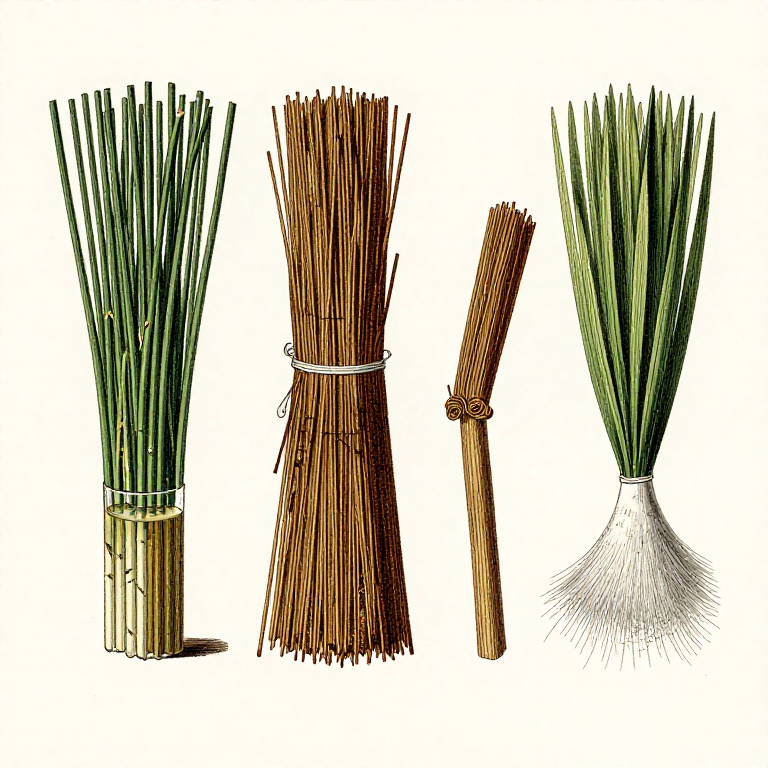
Pull the flax plants from the ground by hand — do not cut them, as cutting loses the valuable fiber length in the lower stem. Harvest when the stems have turned from green to golden-yellow and the seed bolls are beginning to brown, typically about 100 days after planting. Bundle the pulled stems into sheaves and stand them upright to dry for a few days. Remove the seed bolls by pulling the stems through a coarse comb (rippling). The seeds can be saved for replanting or pressed for linseed oil. Flax bast fibers run the full length of the stem, so longer stems produce longer, more valuable fibers.
Mga materyales para sa hakbang na ito:
 Tubigenough to submerge flax piraso
Ret the Stems
Ret the Stems
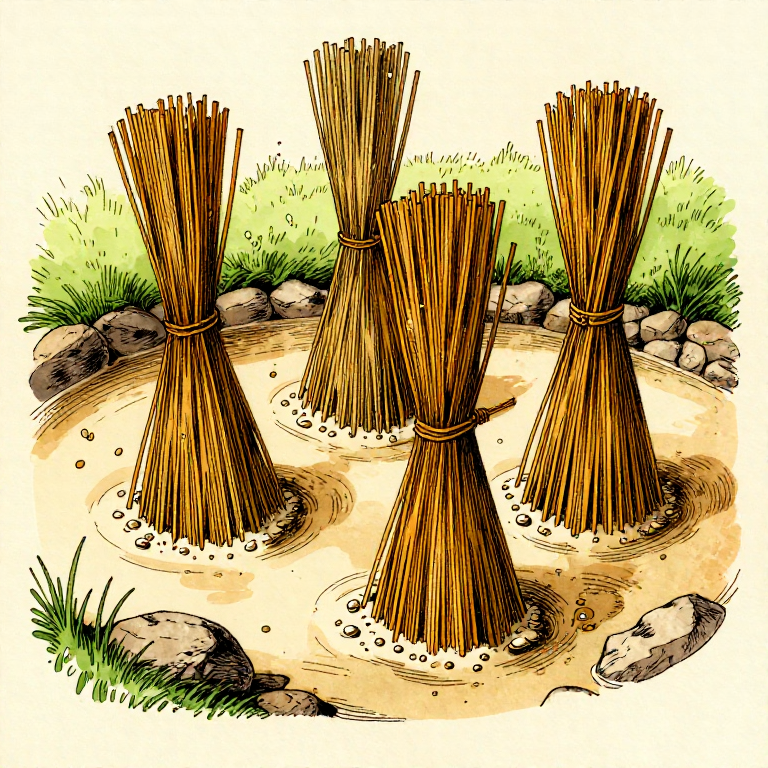
Submerge the bundled flax stems in a still or slow-moving body of water — a pond, ditch, or purpose-built retting pool. Weight the bundles with stones to keep them fully submerged. Over 1-3 weeks (depending on water temperature), anaerobic bacteria (primarily Clostridium species) decompose the pectin and lignin that bind the bast fibers to the woody core of the stem. Check the retting progress daily after the first week by pulling a stem apart — when the outer fiber layers peel away from the core easily, retting is complete. Over-retting weakens the fibers; under-retting makes them difficult to separate. The retting water develops a foul smell from the bacterial decomposition — ancient retting ponds were located downstream of settlements.
Mga materyales para sa hakbang na ito:
Tubigpond or trough full pirasoDry and Break
Dry and Break
Remove the retted flax from the water and spread the stems out to dry thoroughly in the sun. Once completely dry, the woody core becomes brittle. Break the stems by passing them through a flax break — a simple hinged wooden tool with interlocking jaws. The impact of the jaws shatters the brittle woody core (the shive) into small fragments while leaving the flexible bast fibers intact. Work along the full length of each stem bundle, breaking repeatedly until most of the shive has been crushed away. This step is called breaking or braking.
Mga kailangang kasangkapan:
 Pambasag ng lino
Scutch and Hackle
Scutch and Hackle
Scutch the broken stems by holding a bundle vertically and scraping it with a flat wooden blade to knock away the remaining shive fragments. Then draw the fibers through a hackle — a board studded with rows of upright nails, thorns, or wire pins. Start with a coarse hackle (widely spaced pins) and progress to finer hackles. Hackling straightens the fibers, removes remaining shive, and separates the long line fibers (the premium product) from the short tangled tow fibers (a coarser byproduct used for rope and rough cloth). Well-hackled flax fiber is pale golden, silky, and surprisingly strong — linen fiber has a tensile strength of approximately 1500 MPa, stronger than cotton.
Mga kailangang kasangkapan:
 Suklay ng himaymay — magaspang
Spin into Linen Thread
Spin into Linen Thread
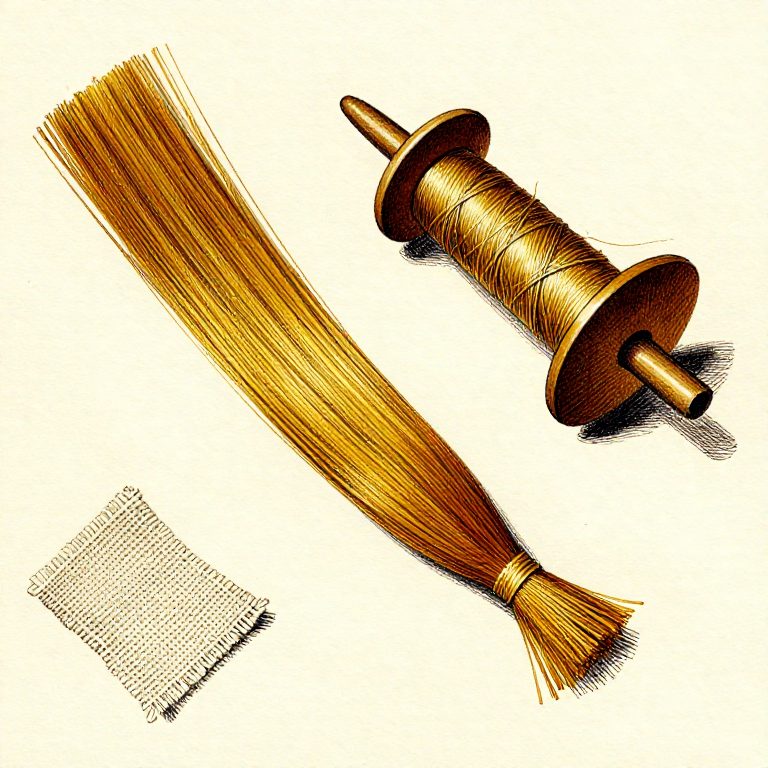
Spin the prepared flax fiber into linen thread using a drop spindle. Unlike wool, flax fibers do not have natural crimp and are difficult to spin dry — ancient Egyptian spinners wetted the fiber during spinning to make it more cohesive. A small bowl of water beside the spinner allowed moistening the fibers as they were drafted. Wet-spun linen produces a smooth, lustrous yarn. The finest linen yarns from ancient Egypt (discovered in tombs dating to circa 1500 BCE) achieved thread diameters of 0.1 mm — approaching the physical limit of what can be spun by hand. Linen fabric becomes softer with washing and wear, improving with age unlike most other natural fibers.
Mga kailangang kasangkapan:
 Sulirang bitin
Mga Materyales
2- enough to submerge flax pirasoPlaceholder
- several large bundles pirasoPlaceholder
Mga Kinakailangang Kasangkapan
5- Placeholder
- Placeholder
- Placeholder
- Placeholder
- Placeholder
CC0 Pampublikong Domain
Ang blueprint na ito ay inilabas sa ilalim ng CC0. Malaya kang kumopya, magbago, mamahagi, at gumamit nang walang pahintulot.
Suportahan ang Maker sa pamamagitan ng pagbili ng mga produkto sa kanilang Blueprint Komisyon ng Maker itinakda ng mga Vendor, o lumikha ng bagong bersyon ng Blueprint na ito at isama bilang koneksyon sa iyong Blueprint upang ibahagi ang kita.