SINING
BEAUTY AT WELLNESS
CRAFTS
KULTURA AT KASAYSAYAN
LIBANGAN
KAPALIGIRAN
PAGKAIN AT INUMIN
REVERSE ENGINEERING
AGHAM
ISPORTS
TEKNOLOHIYA
MGA WEARABLE



Trigonometry — Build a Clinometer and Measure a Tree's Height
A hands-on maths project: make a simple clinometer from a protractor, a straw and a weighted string, use it to measure the angle to the top of a tree or building, and then calculate the height you cannot reach. A Python cell does the trigonometry, and a compendium shows why sine waves run through all of science.
Baguhan
30 minutes
Mga Tagubilin
1
1
Turning an angle into a height
Turning an angle into a height
Ancient astronomers invented trigonometry to turn the ANGLES they measured into the LENGTHS of triangles. You will use it to measure the height of something too tall to reach.
2
2
Build a clinometer
Build a clinometer
Tape a drinking straw along the straight edge of a protractor to sight through. Tie a short string to the centre of the protractor with a small weight on the end, so it hangs down and shows the angle. That is a clinometer -- it measures how steeply you are looking up.
Mga materyales para sa hakbang na ito:
 Cardstock Assorted Pack (50 sheets)1 piraso
 Cotton Kitchen String1 piraso
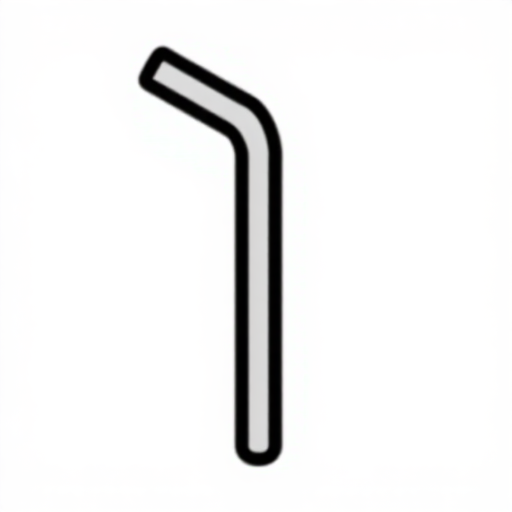 Stainless Steel Straw Set (8-Pack)1 piraso
Mga kailangang kasangkapan:
 Protractor/Angle Finder
3
3
Sight the treetop and measure
Sight the treetop and measure
Stand back from a tree or building and look through the straw at its very top. Read the angle the hanging string marks on the protractor (this tells you the angle above horizontal). Then measure your distance from the base with a tape measure. Write down the angle and the distance.
Mga kailangang kasangkapan:
 Measuring Tape 3m
4
4
Calculate the height
Calculate the height
Naglo-load ng Jupyter notebook…
Mga kailangang kasangkapan:
 Desktop Computer
 Calculator
5
5
Compendium: the mathematics of waves
Compendium: the mathematics of waves
What your clinometer teaches. (1) In a right triangle the sine, cosine and tangent are ratios of the sides that depend ONLY on the angle, so a single table of them works for every triangle -- Ptolemy tabulated them around 150 AD, and Indian mathematicians shaped them into the 'sine' we use (the word comes from Sanskrit jya). (2) The tangent turns an angle you can see into a length you cannot reach -- the everyday tool of surveyors and sailors. (3) As an angle turns full circle, sine and cosine trace smooth repeating WAVES. (4) Those sine waves describe sound, light, radio, tides and alternating current, and underlie GPS, music synthesis and the Fourier analysis that compresses every image and song on your phone.
Mga Materyales
4- 1 pirasoPlaceholder
- 1 pirasoPlaceholder
- 1 pirasoPlaceholder
- 1 pilyegoPlaceholder
Mga Kinakailangang Kasangkapan
5- Placeholder
- Placeholder
- Placeholder
- Placeholder
- Placeholder
Kaugnay na Blueprint
Ang mga blueprint na ito ay nagbabahagi ng kaalaman — mga teknik, materyales, o prinsipyo

CC0 Pampublikong Domain
Ang blueprint na ito ay inilabas sa ilalim ng CC0. Malaya kang kumopya, magbago, mamahagi, at gumamit nang walang pahintulot.
Suportahan ang Maker sa pamamagitan ng pagbili ng mga produkto sa kanilang Blueprint Komisyon ng Maker itinakda ng mga Vendor, o lumikha ng bagong bersyon ng Blueprint na ito at isama bilang koneksyon sa iyong Blueprint upang ibahagi ang kita.