SINING
BEAUTY AT WELLNESS
CRAFTS
KULTURA AT KASAYSAYAN
LIBANGAN
KAPALIGIRAN
PAGKAIN AT INUMIN
REVERSE ENGINEERING
AGHAM
ISPORTS
TEKNOLOHIYA
MGA WEARABLE
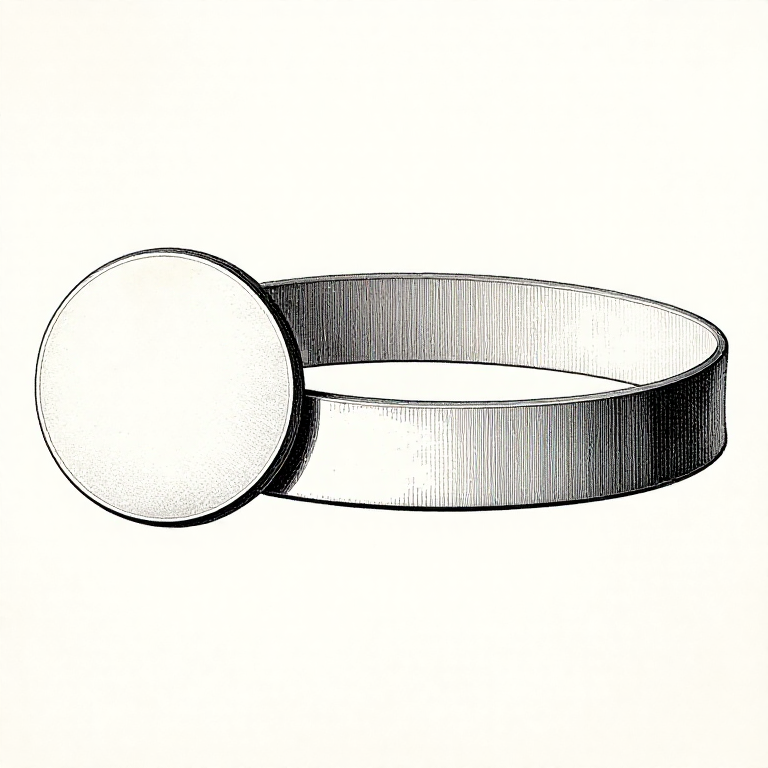


Belts and Chains: Tension, Wrap, and Why Too Tight Kills the Bearings
A slipping belt is obvious and annoying, so people tighten belts. An over-tight belt is not obvious at all, and it destroys the bearings at both ends — slowly, invisibly, and far more expensively than a slipping belt ever would.
The tension a belt needs is the tension that stops it slipping, and that depends on how much of the pulley it wraps around, not on how hard it feels. Grip rises exponentially with wrap angle, which is the whole reason a jockey pulley works.
Chains are the opposite case. A chain does not need tension to grip — the teeth do that — so a chain is deliberately run SLACK, and a tight chain is simply a chain being worn out faster than necessary.
Katamtaman
3 hours
Mga Tagubilin
1
1
Why wrap angle decides everything
Why wrap angle decides everything
Naglo-load ng Jupyter notebook…
Mga kailangang kasangkapan:
 Desktop na Kompyuter
 Kalo
Kalo Ruler
Ruler Sinturong may ngipin
2
2
Setting tension by deflection
Setting tension by deflection
Measure the span between the two pulley centres. Press the belt at the midpoint with a known force and measure how far it moves. The specification is a deflection of roughly 1.6 mm per 100 mm of span, at a force the belt maker states.
That gives a number instead of a feeling, and it is repeatable by somebody else — which is the same argument as weighing salt rather than measuring it in spoons.
Re-tension after the first few hours of running. A new belt seats into the pulley grooves and stretches, so it loses a noticeable fraction of its tension almost immediately. Most belt drives that slip were tensioned once, when new, and never again.
Mga kailangang kasangkapan:
Ruler Tumpak na TimbanganSinturong may ngipin
3
3
Chains want slack, and they want oil
Chains want slack, and they want oil
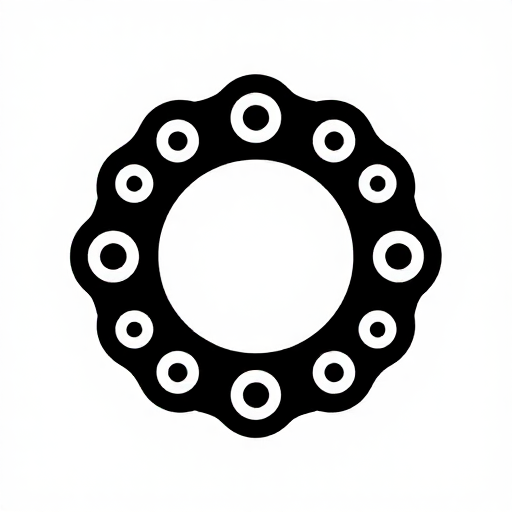
A roller chain transmits force through the engagement of rollers and teeth, so it needs no tension to grip. Leave roughly 2% of the span as sag on the slack side — for a 500 mm span, about 10 mm.
A tight chain loads the bearings exactly as a tight belt does, and it also forces the rollers hard into the sprocket teeth, so both wear faster. A chain that 'stretches' has not stretched: the pins and bushes have worn, and the pitch has grown.
Oil is what prevents that wear, and it has to reach INSIDE the rollers where the pins turn. Oil applied to the outside of a chain lubricates nothing that matters; it goes on the inner edge of the slack run, where the links open slightly and draw it in.
Mga materyales para sa hakbang na ito:
 Kadenang de-rolyo1 piraso
Mga kailangang kasangkapan:
Ruler Gwantes na Gomang Nitrile
4
4
Alignment matters as much here as at a coupling
Alignment matters as much here as at a coupling
Two pulleys that are not in the same plane make the belt run onto the flange, rub, heat up and wear on one edge. The same misalignment on a chain drive makes it climb the sprocket teeth and eventually jump.
Check with a straightedge across both pulley faces, or a string line. On a V-belt drive the tolerance is about half a degree; on a timing belt or chain it is tighter still.
A belt that wears on one side only, or a chain that is bright on one face of its plates, is reporting misalignment rather than bad luck. That is the diagnostic habit the last rung of this batch is about — the wear pattern names the fault.
Mga materyales para sa hakbang na ito:
Kadenang de-rolyo1 pirasoMga kailangang kasangkapan:
 PanuwidRulerSinturong may ngipin
Mga Materyales
1- 1 pirasoPlaceholder
Kaugnay na Blueprint
Ang mga blueprint na ito ay nagbabahagi ng kaalaman — mga teknik, materyales, o prinsipyo

CC0 Pampublikong Domain
Ang blueprint na ito ay inilabas sa ilalim ng CC0. Malaya kang kumopya, magbago, mamahagi, at gumamit nang walang pahintulot.
Suportahan ang Maker sa pamamagitan ng pagbili ng mga produkto sa kanilang Blueprint Komisyon ng Maker itinakda ng mga Vendor, o lumikha ng bagong bersyon ng Blueprint na ito at isama bilang koneksyon sa iyong Blueprint upang ibahagi ang kita.