

Setting Clay Movable Type — Bi Sheng's Printing Revolution
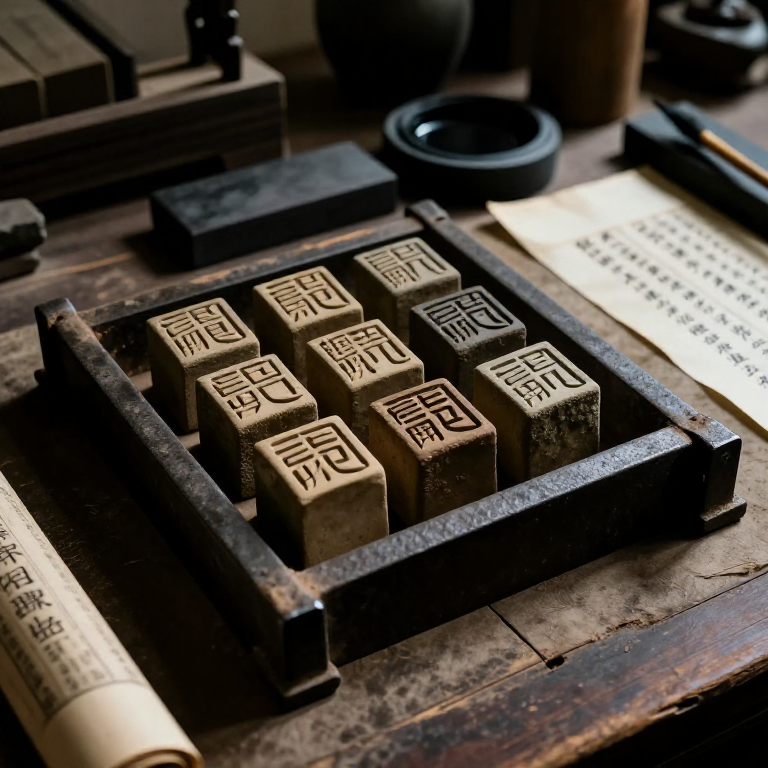
Around 1040 AD during the Song dynasty, a commoner named Bi Sheng (毕昇) invented movable type printing — 400 years before Johannes Gutenberg would independently develop the same concept in Europe. According to the contemporary account by scholar Shen Kuo in his Dream Pool Essays (1088 AD), Bi Sheng carved individual Chinese characters into small blocks of clay, fired them in a kiln to harden them, then arranged them in an iron frame to compose a page for printing.
The genius of movable type over woodblock printing (which China had used since the 7th century) is reusability: a woodblock page takes days to carve and can only print that specific page. Movable type characters can be rearranged to compose any page, then disassembled and reused for the next. For documents that change frequently — government edicts, commercial contracts, calendars — movable type was vastly more efficient.
Bi Sheng's clay type had a limitation that kept woodblock printing dominant in China: the Chinese writing system uses thousands of unique characters (compared to 26 in Latin alphabets), requiring enormous type sets. Korean artisans solved this by developing bronze movable type around 1230 AD, and by 1443, King Sejong's invention of the Hangul alphabet (with only 24 letters) made movable type fully practical in Korea — the first true mass printing culture. Gutenberg's innovation was combining movable type with a screw press, oil-based ink, and the 26-letter Latin alphabet to create the first high-throughput printing system.
Mga Tagubilin
Prepare the clay for type blocks
Prepare the clay for type blocks
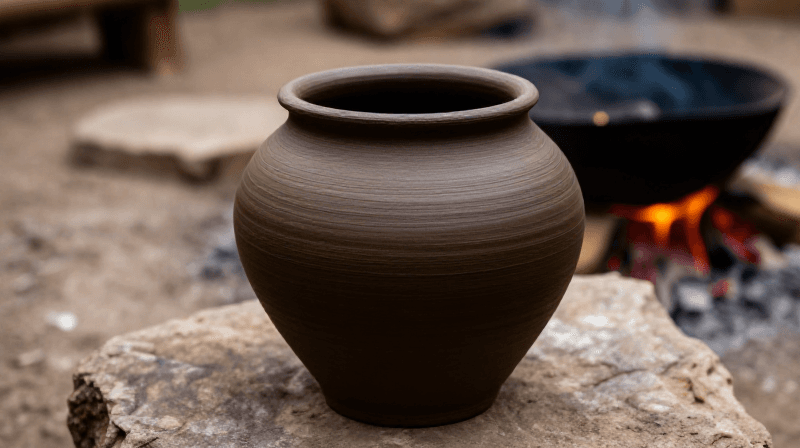
Select a fine-grained, low-shrinkage clay suitable for detailed carving — porcelain clay (kaolin) or stoneware clay works well. The clay must hold sharp edges when carved and survive kiln firing without warping or excessive shrinkage. Mix the clay with approximately 10% fine sand (as a temper to reduce shrinkage) and knead thoroughly to remove air bubbles.
Roll the clay into a slab approximately 8-10 mm thick and cut it into uniform squares of approximately 15 × 15 mm. These squares will become individual type blocks, each bearing one character. The uniformity of block size is critical — uneven blocks will not sit flat in the composing frame, causing some characters to print too dark and others too light. Prepare at least 100-200 blocks for a basic set.
Mga materyales para sa hakbang na ito:
 Pulbos na luwad na kaolin2 kg
 Pinong Buhangin200 g
Mga kailangang kasangkapan:
 Kutsilyo
Carve the characters in reverse
Carve the characters in reverse
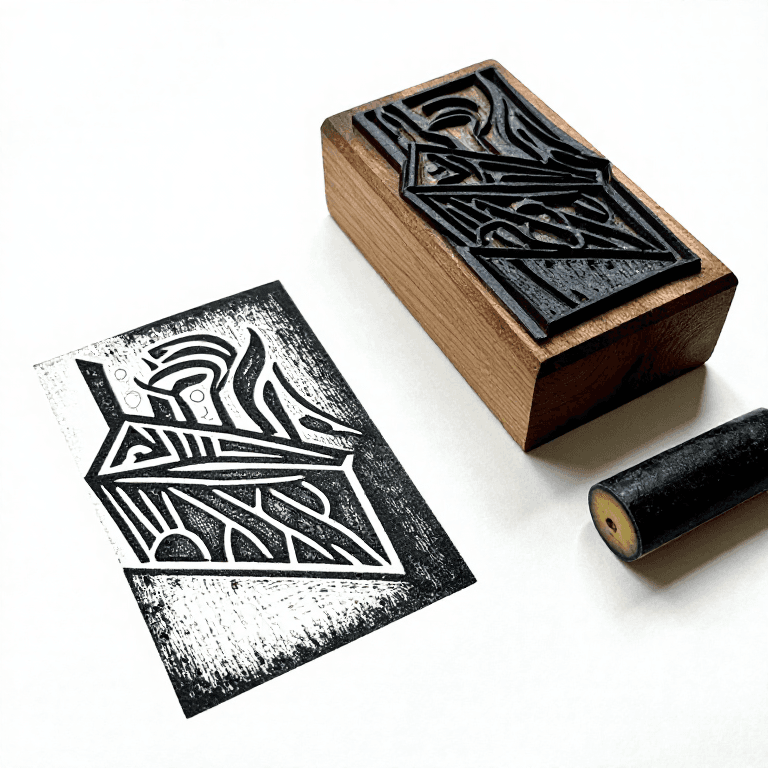
Using a fine pointed stylus or needle, carve each Chinese character into the face of a clay block in mirror image — the character must read correctly when pressed onto paper, which means it must be carved backwards on the type block. Carve the character in relief (raised above the surface) by cutting away the background clay around the strokes, leaving the character standing approximately 2-3 mm proud of the block face.
This is the most time-consuming step — each character requires 10-30 minutes of precise carving depending on complexity. For Bi Sheng's original system, the most frequently used characters were carved in multiple copies (Shen Kuo records that common characters had 20+ duplicates each) while rare characters needed only one copy. Allow the carved blocks to dry slowly in shade for 2-3 days before firing.
Mga kailangang kasangkapan:
 Panundot
 Kasangkapan sa paghubog
Fire the type blocks in a kiln
Fire the type blocks in a kiln
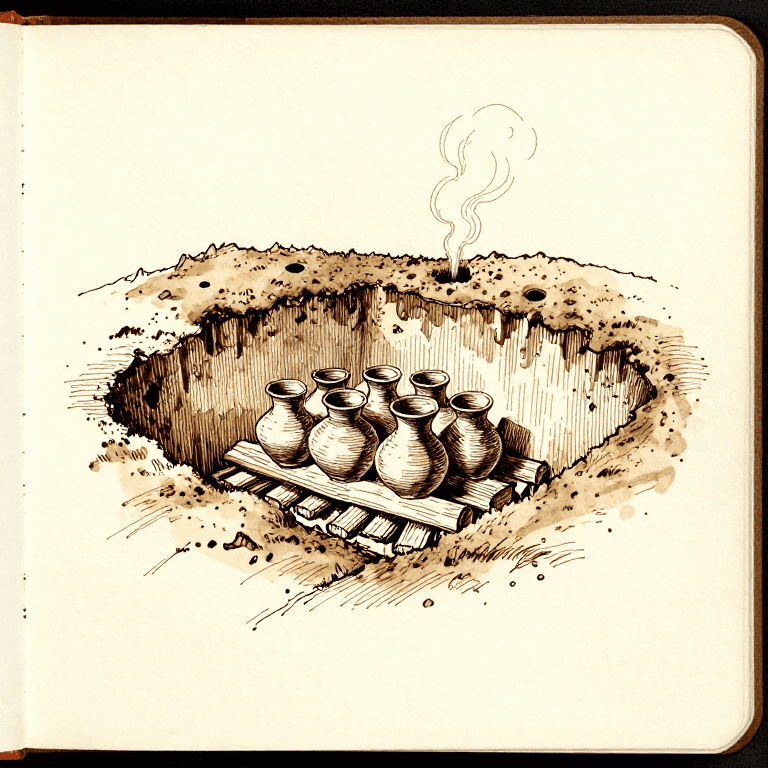
Fire the dried type blocks in a kiln at stoneware temperature (approximately 1100-1200°C) to make them permanently hard and durable. The firing transforms the soft clay characters into ceramic — hard enough to withstand repeated pressing against paper without wear, and resistant to the moisture in water-based Chinese ink.
Pack the blocks carefully in the kiln with small gaps between them for even heat circulation. Fire slowly (raise temperature over 6-8 hours) to prevent thermal shock from cracking the fine character details. Cool slowly over 24 hours. After firing, inspect each block: characters with broken strokes, chips, or warped faces must be discarded. Bi Sheng kept a large reserve inventory of fired type to compensate for firing losses and to have multiple copies of common characters.
Mga materyales para sa hakbang na ito:
 Uling na Tipak10 kg
Mga kailangang kasangkapan:
 Salamin Laban sa Tilamsik ng Kemikal
Build the composing frame
Build the composing frame
The composing frame is an iron plate with raised edges on three sides, forming a tray approximately 20 × 30 cm. The fourth side is left open for inserting and removing type blocks. Bi Sheng's innovation was coating the bottom of this frame with a mixture of pine resin, wax, and paper ash — a thermoplastic adhesive that holds the type blocks firmly when cool but releases them when heated.
Warm the iron frame over a low fire until the resin mixture softens. Set the fired type blocks into the frame, arranging them character by character to compose the text, pressing each block down into the warm adhesive. Fill empty spaces at the end of lines with blank spacer blocks to create even pressure across the page. When the frame cools, the resin hardens and locks all blocks firmly in position, creating a printing surface as solid as a woodblock.
Prepare the ink
Prepare the ink
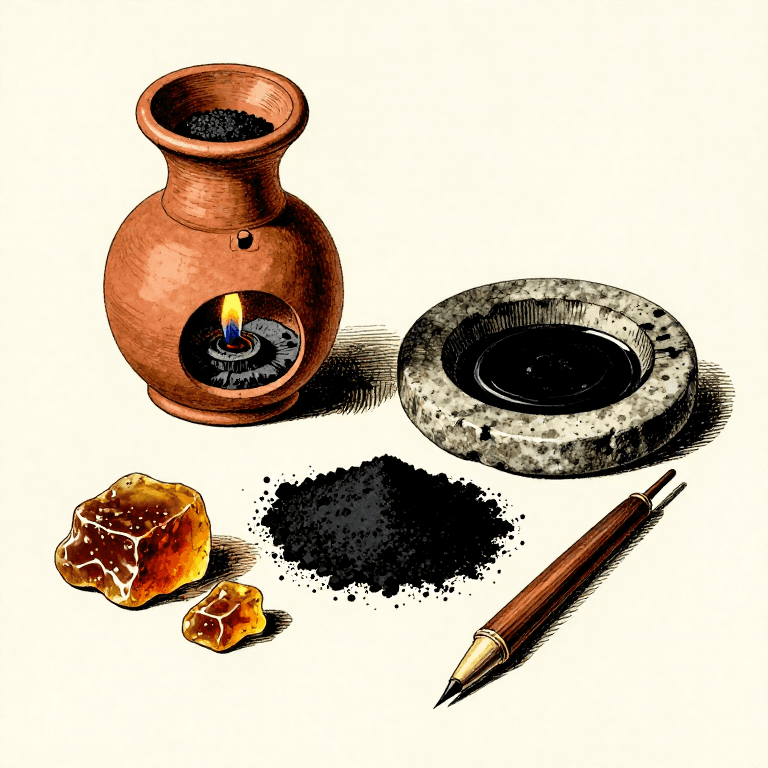
Chinese printing ink is made from pine soot (lampblack) ground with animal glue and water. Collect soot from burning pine wood in a restricted-air chamber — the soot deposits on the chamber walls as a fine, pure carbon powder. Mix the soot with animal hide glue solution (approximately 3 parts soot to 1 part glue by weight) and grind the mixture on a flat stone until perfectly smooth.
The ink must be thick enough to coat the raised character surfaces without running into the recessed areas between characters, but fluid enough to transfer cleanly to the paper. Test the consistency by inking a single type block and pressing it onto paper — the impression should be sharp and black with clean edges. Water-based Chinese ink works well with the absorbent mulberry bark paper used for printing.
Mga kailangang kasangkapan:
 Batong Almires at Panghalo
Ink the type and print
Ink the type and print
Apply ink to the composed type surface using a flat silk pad or soft brush, coating the raised character faces evenly. Place a sheet of paper over the inked type and press firmly with a flat rubbing pad (a baren — a disc of bamboo sheath backed with a bamboo leaf pad), applying even pressure across the entire page. Peel the paper away carefully from one edge to reveal the printed text.
The first few impressions are test pulls — adjust ink consistency and pressure until the text prints evenly without smudging or gaps. Once the settings are right, a skilled printer can produce several hundred copies per day. For multiple copies, re-ink the type between each impression. The quality of each print depends on consistent pressure, uniform ink coverage, and well-formed type — exactly the same variables that determine quality in modern letterpress printing.
Mga materyales para sa hakbang na ito:
 Papel na balat ng moras20 pilyego
Distribute the type for reuse
Distribute the type for reuse
After printing is complete, warm the iron frame over a fire until the pine resin adhesive softens. The type blocks release easily and can be cleaned, sorted back into their storage compartments (organized by character radical and stroke count), and reused for the next composition. This is the revolutionary advantage of movable type over woodblock printing — the type is a permanent investment that can compose unlimited different pages.
Shen Kuo noted that Bi Sheng's system was most efficient for printing long documents like books and edicts, where the labour of carving the initial type set was amortized across hundreds of pages. For single-page documents, traditional woodblock carving remained faster because no type sorting and composition was needed. This economic calculus — movable type for long runs, woodblock for short runs — coexisted in China for centuries, with each technology serving its optimal use case.
Mga Materyales
5- Placeholder
- 200 gPlaceholder
- 10 kgPlaceholder
- 20 pilyegoPlaceholder
- 1 pirasoPlaceholder
Mga Kinakailangang Kasangkapan
5- Placeholder
- Placeholder
- Placeholder
- Placeholder
- Placeholder
Mga Materyales ng Nakakonektang Blueprint

Kaugnay na Blueprint
Ang mga blueprint na ito ay nagbabahagi ng kaalaman — mga teknik, materyales, o prinsipyo

CC0 Pampublikong Domain
Ang blueprint na ito ay inilabas sa ilalim ng CC0. Malaya kang kumopya, magbago, mamahagi, at gumamit nang walang pahintulot.
Suportahan ang Maker sa pamamagitan ng pagbili ng mga produkto sa kanilang Blueprint Komisyon ng Maker itinakda ng mga Vendor, o lumikha ng bagong bersyon ng Blueprint na ito at isama bilang koneksyon sa iyong Blueprint upang ibahagi ang kita.