SINING
BEAUTY AT WELLNESS
CRAFTS
KULTURA AT KASAYSAYAN
LIBANGAN
KAPALIGIRAN
PAGKAIN AT INUMIN
REVERSE ENGINEERING
AGHAM
ISPORTS
TEKNOLOHIYA
MGA WEARABLE
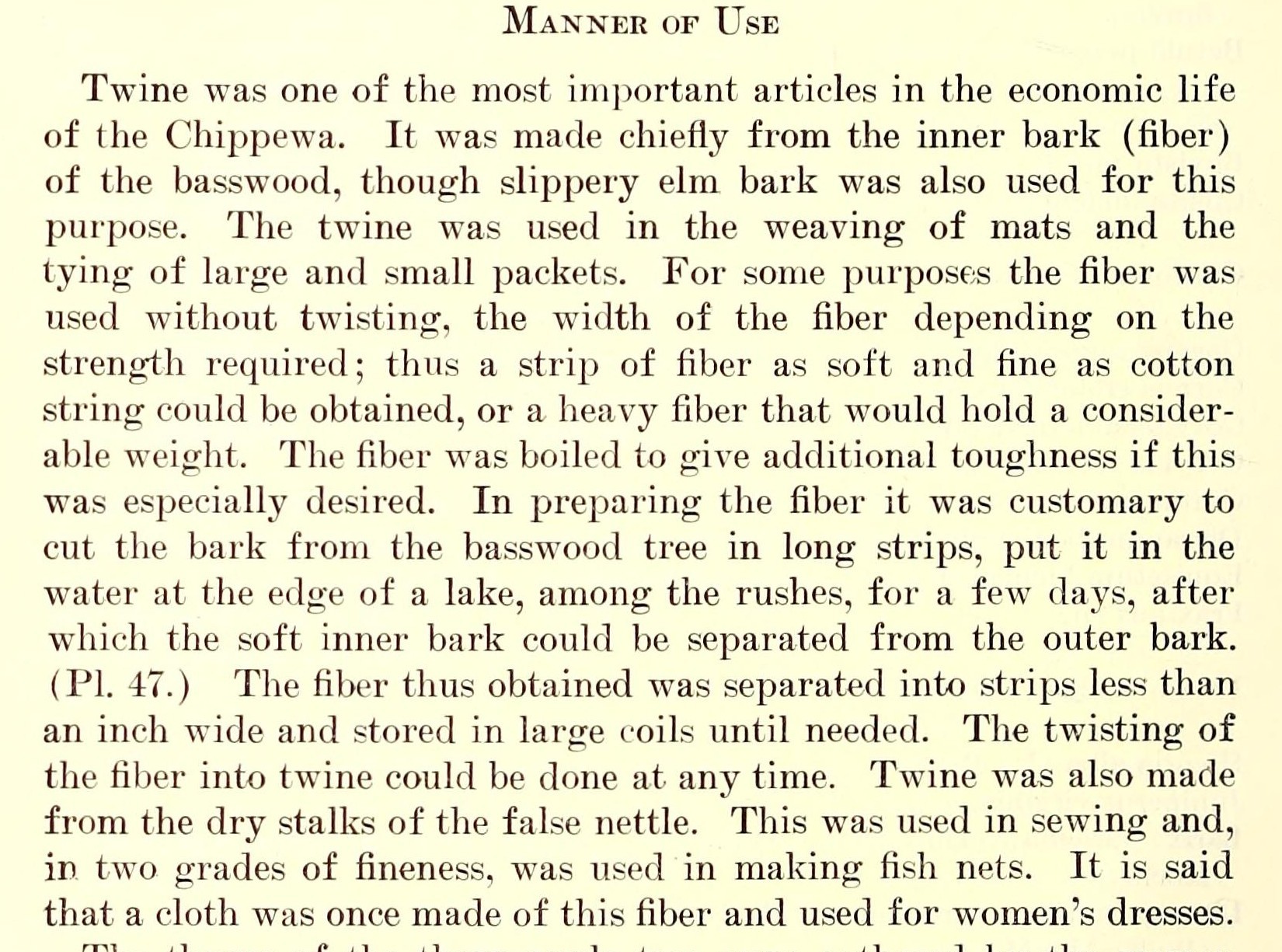


Chippewa Basswood Fiber and Twine: Bark Strips Soaked at the Lake Edge, Inner Bark Peeled and Coiled (Densmore, 1928)
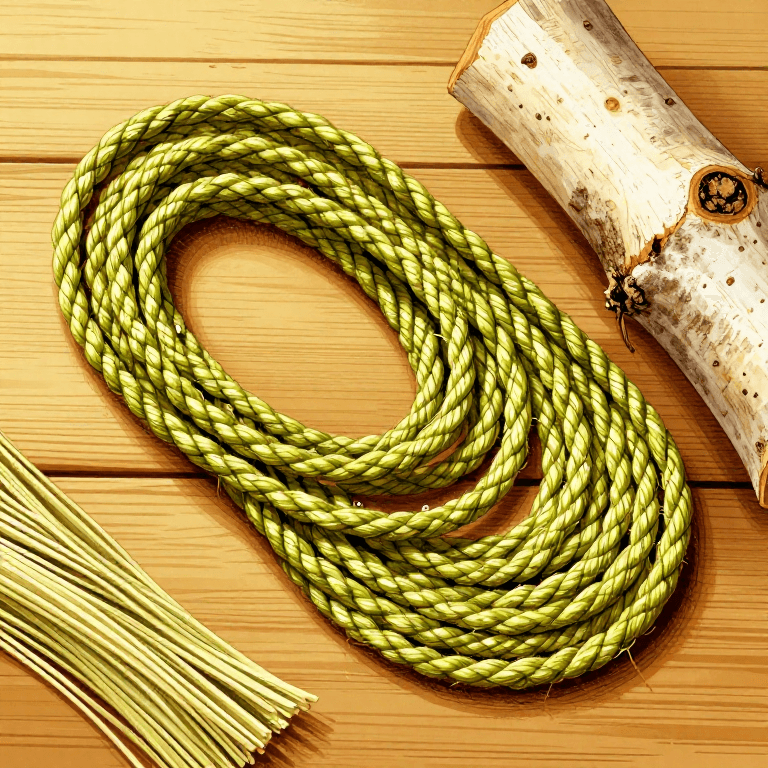
How the Chippewa (Ojibwe) got their most important twine, from Frances Densmore's record: long strips of basswood bark left a few days in the water among the rushes at a lake edge, the soft inner bark peeled off, split into strips under an inch wide and kept in coils, used flat or twisted into twine, and boiled when extra toughness was wanted.
Baguhan
A few days of soaking, then an afternoon
Mga Tagubilin
1
1
Read Densmore
Read Densmore
"Twine was one of the most important articles in the economic life of the Chippewa."
2
2
Cut the bark
Cut the bark
Cut the bark from a basswood tree in long strips. (Slippery elm bark was also used.)
Mga materyales para sa hakbang na ito:
 Troso ng basswood (Tilia americana)1 piraso
Mga kailangang kasangkapan:
 Kutsilyo
3
3
Soak at the lake edge
Soak at the lake edge
Put the strips in the water at the edge of a lake, among the rushes, for a few days.
Mga materyales para sa hakbang na ito:
 Tubig1 piraso
Mga kailangang kasangkapan:
Kutsilyo4
4
Peel and coil the fiber
Peel and coil the fiber
Separate the soft inner bark from the outer bark. Split the fiber into strips less than an inch (25 mm) wide, narrow for string as soft and fine as cotton, wider for a heavy load. Store it in large coils, somewhat moist, in a dark, cool place.
Mga kailangang kasangkapan:
Kutsilyo5
5
Toughen and twist
Toughen and twist
Boil the fiber if you want it extra tough. Use it flat for tying, or twist it into twine whenever you like. She does not say how; ours: roll two strands on the thigh so each twists one way, then let them wind round each other.
Mga materyales para sa hakbang na ito:
Tubig1 pirasoMga kailangang kasangkapan:
 Takure na Bakal
 Hukay ng apoy
6
6
Troubleshooting
Troubleshooting
Basswood fiber troubleshooting.
Flow
Loading...
7
7
History and honest limits
History and honest limits
From Frances Densmore, *Uses of Plants by the Chippewa Indians*, **44th Annual Report of the Bureau of American Ethnology** (1928), pp. 378-379 (checked on the archive.org scan usesofplantsbych00dens). The twine wove bulrush floor mats, passed over and under the rushes on a frame. Soaking time beyond "a few days", the knife, boiling time and the twisting method are not given; ours.
Ang blueprint na ito ay gumagawa ng

Kaugnay na Blueprint
Ang mga blueprint na ito ay nagbabahagi ng kaalaman — mga teknik, materyales, o prinsipyo

CC0 Pampublikong Domain
Ang blueprint na ito ay inilabas sa ilalim ng CC0. Malaya kang kumopya, magbago, mamahagi, at gumamit nang walang pahintulot.
Suportahan ang Maker sa pamamagitan ng pagbili ng mga produkto sa kanilang Blueprint Komisyon ng Maker itinakda ng mga Vendor, o lumikha ng bagong bersyon ng Blueprint na ito at isama bilang koneksyon sa iyong Blueprint upang ibahagi ang kita.