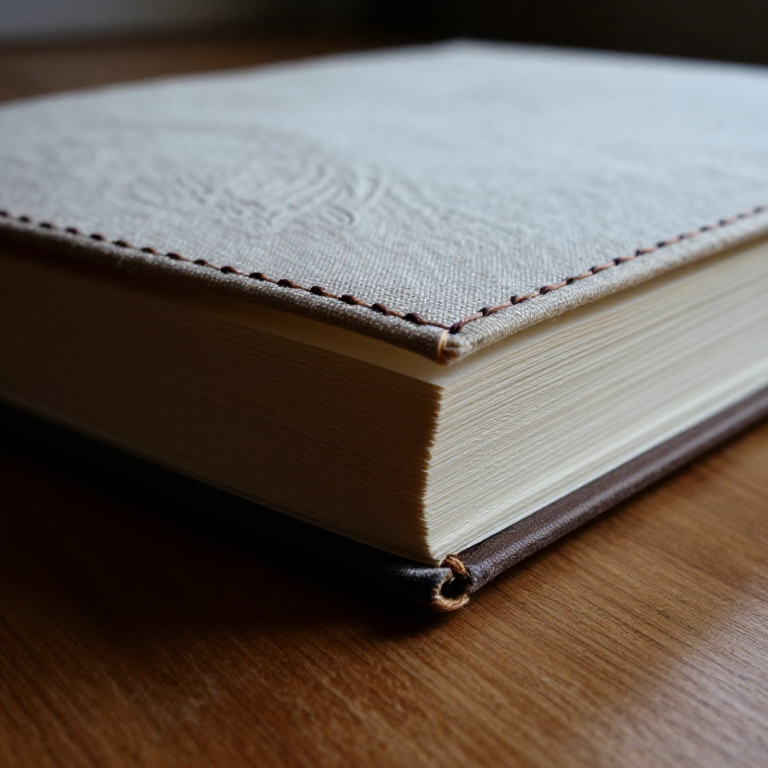


Binding a Coptic Stitch Journal — Exposed-Spine Chain Stitch Bookbinding
The Coptic stitch is the oldest form of book binding that uses a structure recognisable as a modern book — separate sections (signatures) of folded pages, sewn together through their spines. Developed by early Christians in Egypt around the 2nd-4th century CE, it requires no glue and no cover spine, leaving the stitching fully exposed as a decorative element. The chain stitch links each signature to the next and to the cover boards, creating a book that opens completely flat. This blueprint covers the basic two-needle Coptic link stitch — the foundation of all exposed-spine binding.
Mga Tagubilin
Cut and fold the signatures
Cut and fold the signatures
Prepare the cover boards
Prepare the cover boards
Mga materyales para sa hakbang na ito:
 Bookboard2 piraso
Mark the sewing stations
Mark the sewing stations
Punch the sewing holes
Punch the sewing holes
Mga kailangang kasangkapan:
 Awl
AwlCut and wax the thread
Cut and wax the thread
Mga materyales para sa hakbang na ito:
 Waxed Linen Thread3 metro
Mga kailangang kasangkapan:
 Sewing Needle
Attach the first signature to the back cover
Attach the first signature to the back cover
Add the second signature with chain stitch
Add the second signature with chain stitch
Continue adding signatures
Continue adding signatures
Attach the front cover board
Attach the front cover board
Tie off the thread
Tie off the thread
Cover the boards (optional)
Cover the boards (optional)
Press and finish
Press and finish
Mga Materyales ng Nakakonektang Blueprint


Kaugnay na Blueprint
Ang mga blueprint na ito ay nagbabahagi ng kaalaman — mga teknik, materyales, o prinsipyo

CC0 Pampublikong Domain
Ang blueprint na ito ay inilabas sa ilalim ng CC0. Malaya kang kumopya, magbago, mamahagi, at gumamit nang walang pahintulot.
Suportahan ang Maker sa pamamagitan ng pagbili ng mga produkto sa kanilang Blueprint Komisyon ng Maker itinakda ng mga Vendor, o lumikha ng bagong bersyon ng Blueprint na ito at isama bilang koneksyon sa iyong Blueprint upang ibahagi ang kita.