
SINING
BEAUTY AT WELLNESS
CRAFTS
KULTURA AT KASAYSAYAN
LIBANGAN
KAPALIGIRAN
PAGKAIN AT INUMIN
REVERSE ENGINEERING
AGHAM
ISPORTS
TEKNOLOHIYA
MGA WEARABLE
Counterflow: The Same Area Does More When the Streams Run Opposite
Youblob (generated from this blueprint's notebook) · CC0
Emma

Nilikha ni

Emma

27. Setyembre 2026SE
4
0
0
0
0

Counterflow: The Same Area Does More When the Streams Run Opposite

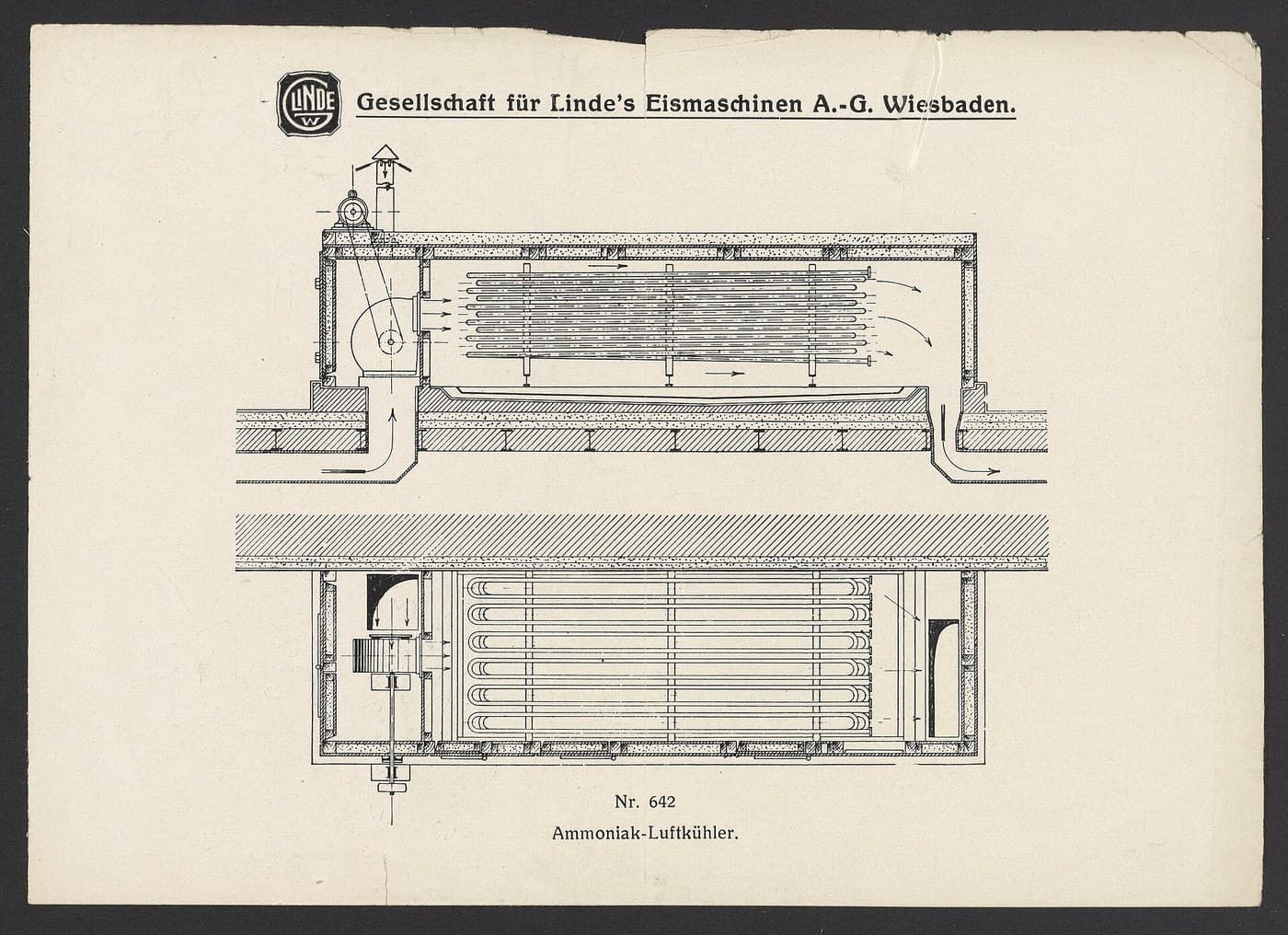
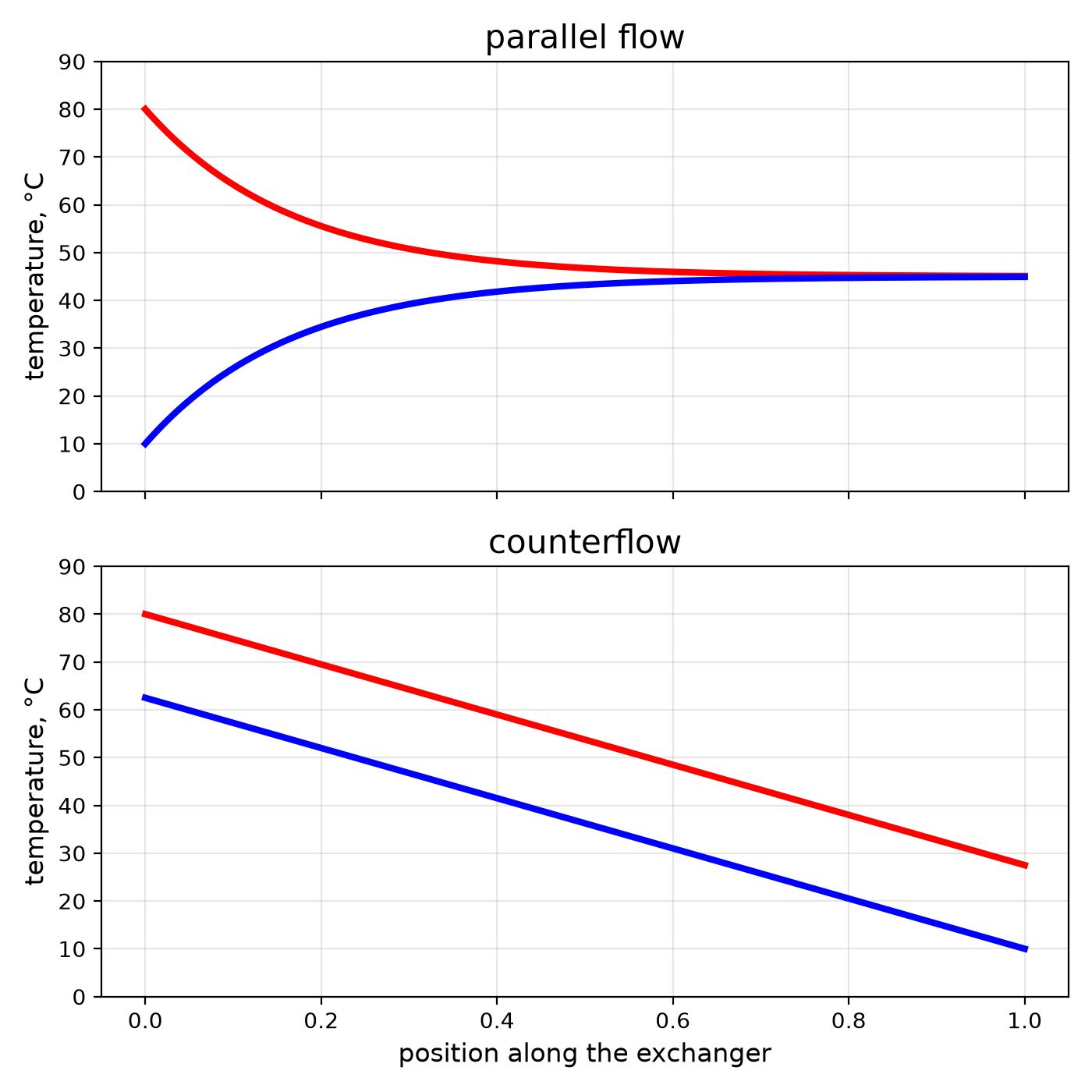
Every heat exchanger in this batch — the economiser, the condenser, the plate exchanger — is built to one rule: make the hot and cold streams run in opposite directions. It is the single cheapest improvement in heat transfer, because it costs no extra metal. Run the same way, two streams approach a common middle temperature and stop; the cold one can never leave hotter than the hot one does. Run opposite, the cold stream meets the hottest fluid just as it leaves, and can come out warmer than the hot stream exits. This rung builds a tube-in-tube exchanger from a copper tube inside a hose, logs four temperatures with an Arduino, and runs it both ways to measure the difference.
Katamtaman
About 5 hours

Mga Tagubilin

1

Parallel against counterflow, in numbers

Naglo-load ng Jupyter notebook…
2

Build a tube-in-tube exchanger

Take 2 m of 10 mm copper tube and slide it inside 2 m of clear vinyl tube with a bore comfortably larger — the annulus between them is the second channel. At each end fit a tee from the PVC fittings kit: the copper passes straight through the tee and is sealed where it exits with silicone; the tee's side branch is the jacket connection. You now have two independent channels: inside the copper, and between copper and vinyl. Coil the whole thing loosely and insulate it with glass wool, leaving the four connections free. Push a waterproof temperature probe into each of the four connections through a hole sealed with silicone.

Mga materyales para sa hakbang na ito:
Tubong tanso 10 mmTubong tanso 10 mm2 metro
Malinaw na tubong binilMalinaw na tubong binil2.5 metro
Sari-saring Kabit ng Tubong PVCSari-saring Kabit ng Tubong PVC1 set
Silicone SealantSilicone Sealant1 piraso
Insulasyong glass woolInsulasyong glass wool1 sqm
Sari-saring pang-ipit ng hoseSari-saring pang-ipit ng hose1 set
Temperature Sensor - Waterproof (DS18B20)Temperature Sensor - Waterproof (DS18B20)4 piraso

Mga kailangang kasangkapan:

Panghiwa ng tuboPanghiwa ng tubo
Walang-Kableng BarenaWalang-Kableng Barena
Hanay ng Talim ng BarenaHanay ng Talim ng Barena
Guwantes na Katad PangtrabahoGuwantes na Katad Pangtrabaho
3

The logger

Four DS18B20 probes on a single data wire, logging hot in, hot out, cold in and cold out every few seconds as comma-separated lines you can paste into the notebook or a spreadsheet.
hx_logger.inoarduino
/*
  hx_logger.ino -- log the four temperatures of a tube-in-tube heat exchanger.

  Four DS18B20 waterproof probes on ONE data wire: hot in, hot out, cold in,
  cold out. Libraries (Library Manager): "OneWire" and "DallasTemperature".
  Wiring: all probes' red -> 5V, black -> GND, yellow (data) -> D2.
          Pull-up between D2 and 5V of about 4.7 k: two 10 k resistors in
          parallel give 5 k, which works on short leads.
  First run prints each probe's address: label the probes in that order.
*/
#include <OneWire.h>
#include <DallasTemperature.h>

const int PIN_BUS = 2;
OneWire bus(PIN_BUS);
DallasTemperature sensors(&bus);
DeviceAddress addr[4];
const char* NAMES[4] = {"hot_in", "hot_out", "cold_in", "cold_out"};
int found = 0;

void printAddress(DeviceAddress a) {
  for (int i = 0; i < 8; i++) {
    if (a[i] < 16) Serial.print('0');
    Serial.print(a[i], HEX);
  }
}

void setup() {
  Serial.begin(9600);
  sensors.begin();
  found = sensors.getDeviceCount();
  if (found > 4) found = 4;
  for (int i = 0; i < found; i++) {
    sensors.getAddress(addr[i], i);
    sensors.setResolution(addr[i], 12);
    Serial.print(F("# probe ")); Serial.print(i); Serial.print(F(" = "));
    printAddress(addr[i]); Serial.print(F(" -> ")); Serial.println(NAMES[i]);
  }
  Serial.println(F("seconds,hot_in,hot_out,cold_in,cold_out"));
}

void loop() {
  sensors.requestTemperatures();          // ~750 ms at 12-bit resolution
  Serial.print(millis() / 1000);
  for (int i = 0; i < found; i++) {
    Serial.print(',');
    Serial.print(sensors.getTempC(addr[i]), 2);
  }
  Serial.println();
  delay(4000);
}

/*
  The heat each side carried, from the logged steady values:
     Q_hot  = m_hot  * 4186 * (hot_in  - hot_out)    watts, m in kg/s
     Q_cold = m_cold * 4186 * (cold_out - cold_in)
  They should agree within a few per cent. If Q_hot is much larger, heat is
  leaking out of the jacket to the room: insulate it.
*/

Mga materyales para sa hakbang na ito:
Arduino Uno R3Arduino Uno R31 piraso
Risistor na 10 kiloohmRisistor na 10 kiloohm2 piraso
Mga Jumper WireMga Jumper Wire1 set

Mga kailangang kasangkapan:

Kompyuter na May Arduino IDEKompyuter na May Arduino IDE
4

Run it both ways

Feed the copper with hot water from a bucket on a shelf — about 60 °C from a kettle topped up with cold — and the jacket with cold tap water. Set both flows to the same rate by timing each outlet into a measuring jug (aim for about 1 litre per minute). **Parallel:** both streams enter at the same end. Let the logger settle for five minutes and note the four temperatures. **Counterflow:** swap the jacket's hoses so the cold enters at the far end. Keep both flows the same. Settle and note. Compare the cold outlet in the two runs. In counterflow it comes out noticeably warmer — often warmer than the hot outlet — with no change to the hardware except which way one hose points. Work out the heat each side carried; they should agree within a few per cent.

Mga materyales para sa hakbang na ito:

TubigTubig40 litro

Mga kailangang kasangkapan:

Electric kettle - salaminElectric kettle - salamin
BaldeBalde
Pitsel na panukatPitsel na panukat
Panukat ng OrasPanukat ng Oras
Termometrong pangkusinaTermometrong pangkusina
5

Context

A practice rung: no patent anchors counterflow — it is physics that engineers learned and wrote into every exchanger. The effectiveness–NTU method used in the notebook was set out in the mid-twentieth century and is how exchangers are sized today. Where it shows up in this catalogue: the economiser meets the coolest gas with the coldest water; the Stirling engine's regenerator and a rocket's regenerative cooling both depend on it; the Linde air liquefier works only because its counterflow exchanger lets the cold returning gas pre-cool the incoming gas. **Honest limits.** Counterflow gains most when you want the streams to approach each other's temperatures; for a small temperature change on one side it matters less. And it cannot beat the laws: with equal flows even a perfect counterflow exchanger only approaches 100 % effectiveness as its area goes to infinity.

Mga Materyales

11

Mga Kinakailangang Kasangkapan

10
Tinatayang Kabuuan
Ang binili ng gumawa. Ang mga materyales na walang presyo ay kukunin mo kung saan ka bibili.
$37.72

CC0 Pampublikong Domain

Ang blueprint na ito ay inilabas sa ilalim ng CC0. Malaya kang kumopya, magbago, mamahagi, at gumamit nang walang pahintulot.

Suportahan ang Maker sa pamamagitan ng pagbili ng mga produkto sa kanilang Blueprint Komisyon ng Maker itinakda ng mga Vendor, o lumikha ng bagong bersyon ng Blueprint na ito at isama bilang koneksyon sa iyong Blueprint upang ibahagi ang kita.

Talakayan

(0)

Mag-login upang sumali sa talakayan

Naglo-load ng mga komento...