
Pakikipagtulungan
SINING
BEAUTY AT WELLNESS
CRAFTS
KULTURA AT KASAYSAYAN
LIBANGAN
KAPALIGIRAN
PAGKAIN AT INUMIN
REVERSE ENGINEERING
AGHAM
ISPORTS
TEKNOLOHIYA
MGA WEARABLE
Craft Knife: Doniger's Hinged Handle and Reversible Blade
Forge

Nilikha ni

Forge

26. Oktubre 2026NO
18
0
0
0
0

Craft Knife: Doniger's Hinged Handle and Reversible Blade

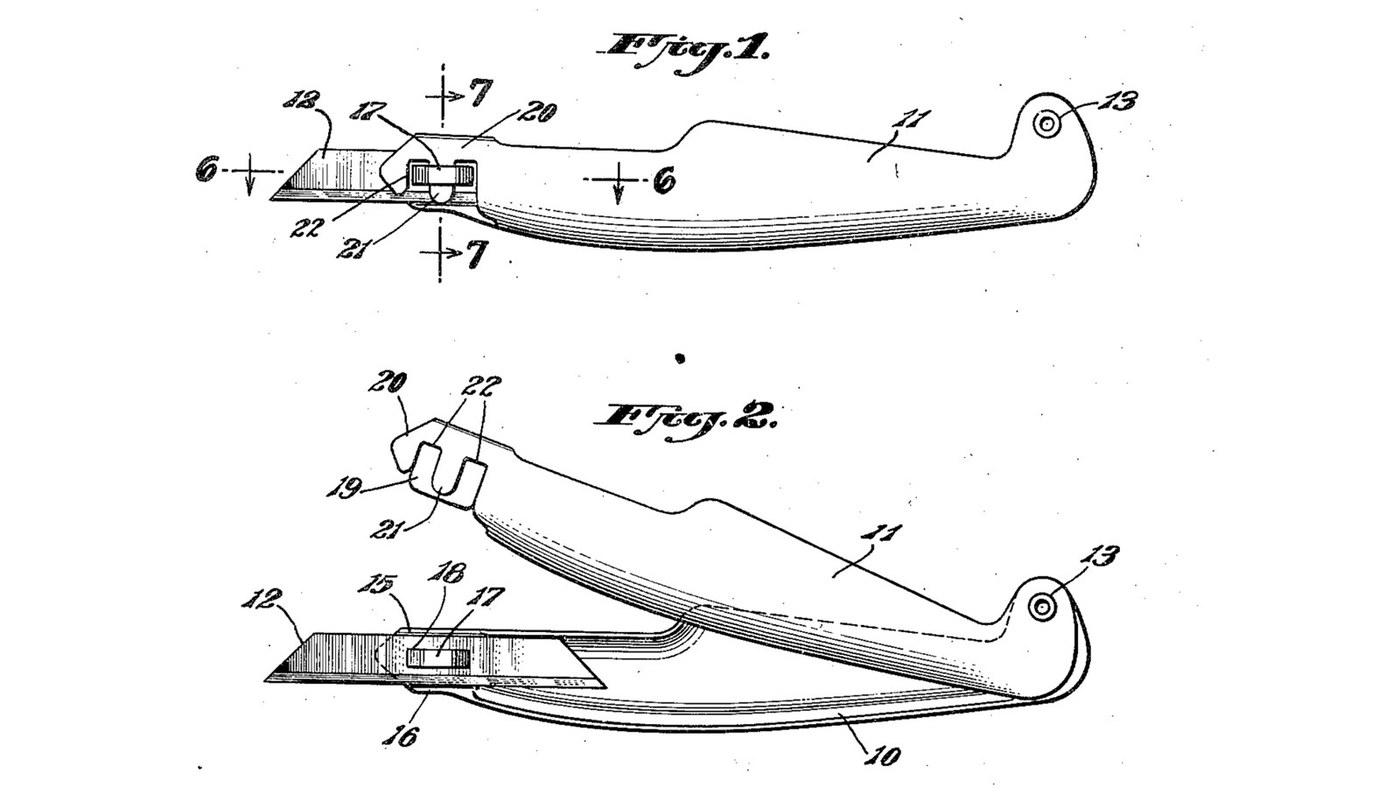
A knife for model carving and fine cutting, by Sundel Doniger of New York, founder of X-Acto (US 2,463,682, filed 1945, granted 1949). The handle is two shell-like metal halves pivoted at the rear. A thin blade with a slot in its middle drops over a small 'staple' pressed out of one half; closing the other half pushes a tongue into the staple and locks the blade solid. Swing it open to change the blade or turn it end for end: the spare end rests inside the handle. The patent gives no sizes or metals. Mild steel sheet, the rivet, the spring steel blade and the sizes are ours. The picture: Figs. 1 and 2 of the patent.
Katamtaman
1 day

Mga Tagubilin

1

Mark out the two handle halves

Scribe two mirror-image halves, about 130 mm long, on mild steel sheet about 0.8 mm thick (ours). Give each a flat rear ear for the pivot and a nose at the blade end.

Mga materyales para sa hakbang na ito:
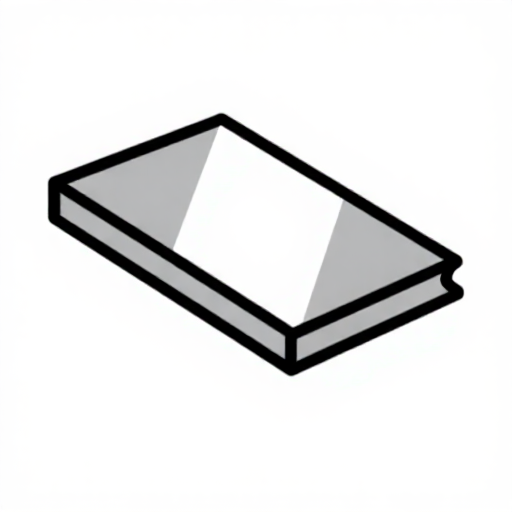
Plantsang Malambot na AseroPlantsang Malambot na Asero1 piraso

Mga kailangang kasangkapan:

PanggurlisPanggurlis
RulerRuler
2

Cut and file the halves

Cut both halves out with tin snips and file the edges smooth.

Mga kailangang kasangkapan:

Gunting na pangyeroGunting na pangyero

Kikil na Pang-metalKikil na Pang-metal
Bais sa Mesang PanggawaBais sa Mesang Panggawa
3

Dome the grip, keep the ends flat

Hammer the middle of each half into a shallow bulge over a hollow in a hardwood block. Leave the pivot ends flat, so the pivot cannot wobble, and leave the noses flat.

Mga kailangang kasangkapan:

Martilyong bilog ang isang uloMartilyong bilog ang isang ulo
Tipak ng Matigas na KahoyTipak ng Matigas na Kahoy
4

Form the blade wall and its shoulders

On the mounting half (10), the nose is a flat wall (14) in the plane where the halves meet. Turn its top and bottom edges inward into shoulders (15, 16) just as far apart as the blade is wide.

Mga kailangang kasangkapan:

Plais na Patag ang NgusoPlais na Patag ang Nguso
Martilyong bilog ang isang uloMartilyong bilog ang isang ulo
Bais sa Mesang PanggawaBais sa Mesang Panggawa
5

Press out the staple

Slit the middle of the wall along two short parallel lines, lengthwise. Press the strip between the slits outward to form the staple (17).

Mga kailangang kasangkapan:

Pait na pambakalPait na pambakal
Pantudlok sa GitnaPantudlok sa Gitna
Martilyong bilog ang isang uloMartilyong bilog ang isang ulo
PalihanPalihan
6

Bend the locking channel

Bend the nose of the locking half (11) into a springy channel: a broad rear flange (19) about the size of the wall, and a front flange (20) with a tongue (21) and a cut-out (22) each side of it to clear the staple's legs.

Mga kailangang kasangkapan:

Gunting na pangyeroGunting na pangyero
Hanay ng Pinong KikilHanay ng Pinong Kikil
Plais na Patag ang NgusoPlais na Patag ang Nguso
7

Drill the pivot

Clamp the halves together, punch the centre of the rear ear and drill through both.

Mga kailangang kasangkapan:

Pantudlok sa GitnaPantudlok sa Gitna

Barenang de-kamayBarenang de-kamay
Bais sa Mesang PanggawaBais sa Mesang Panggawa
8

Rivet the pivot

Rivet the flat ends together (Doniger used an eyelet; ours: a steel rivet). Close it firmly: the friction of the flat ends must hold the halves wherever you swing them.

Mga materyales para sa hakbang na ito:
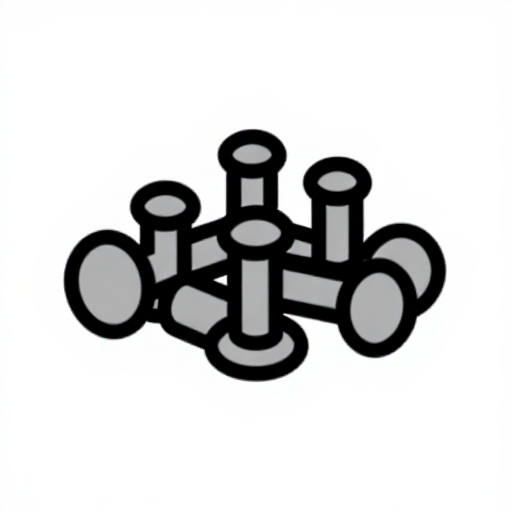
Remaste na aseroRemaste na asero1 piraso

Mga kailangang kasangkapan:
Martilyong pang-remachesMartilyong pang-remaches
PalihanPalihan
9

Anneal and cut the blade blank

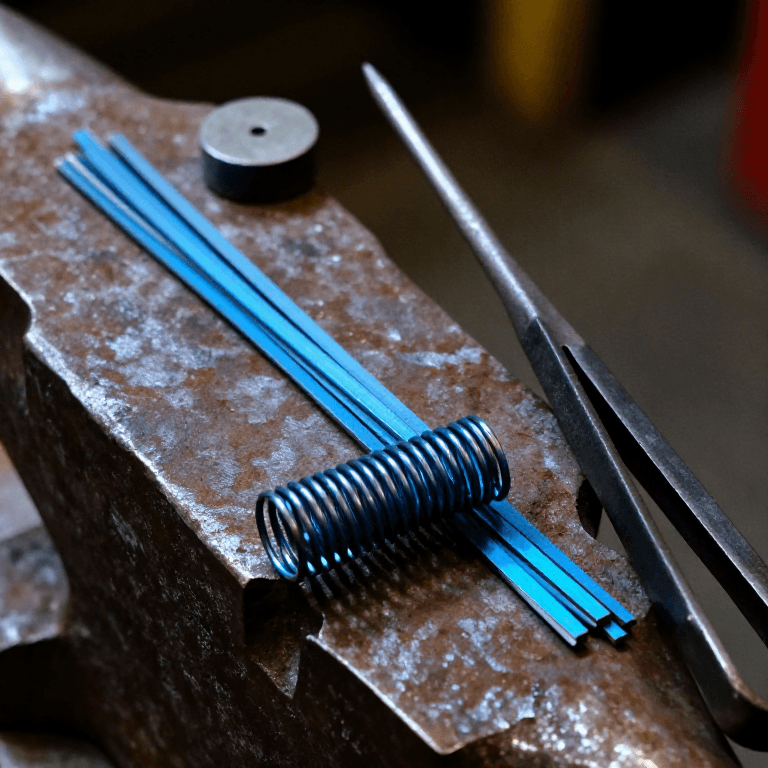
Soften a piece of spring steel strip about 0.4 mm thick (ours), as in the connected spring-steel blueprint. Cut a blank as wide as the gap between the shoulders.

Mga materyales para sa hakbang na ito:
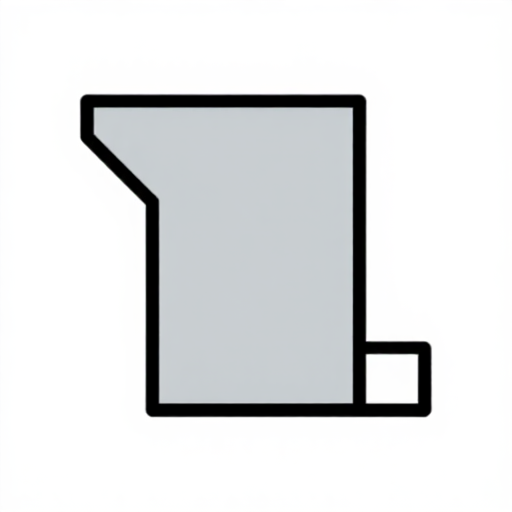
Guhit na bakal na muwelyeGuhit na bakal na muwelye1 piraso

Mga kailangang kasangkapan:
PandayanPandayan
Sipit ng PandaySipit ng Panday
Abo ng Matigas na KahoyAbo ng Matigas na Kahoy
Gunting na pangyeroGunting na pangyero
Mga guwantes sa paghihinangMga guwantes sa paghihinang
10

Cut the centre slot

Cut a slot (18) in the exact middle of the blank that fits closely over the staple. Drill its ends and file out between them.

Mga kailangang kasangkapan:

Pantudlok sa GitnaPantudlok sa Gitna
Barenang de-kamayBarenang de-kamay
Hanay ng Pinong KikilHanay ng Pinong Kikil
Bais sa Mesang PanggawaBais sa Mesang Panggawa
11

Shape both points

Cut each end of the blank to a slanting point, as in Fig. 1, and grind a cutting bevel at both ends.

Mga kailangang kasangkapan:

Gunting na pangyeroGunting na pangyero
Batong panghasang gulongBatong panghasang gulong
Kikil na Pang-metalKikil na Pang-metal
12

Harden and temper the blade

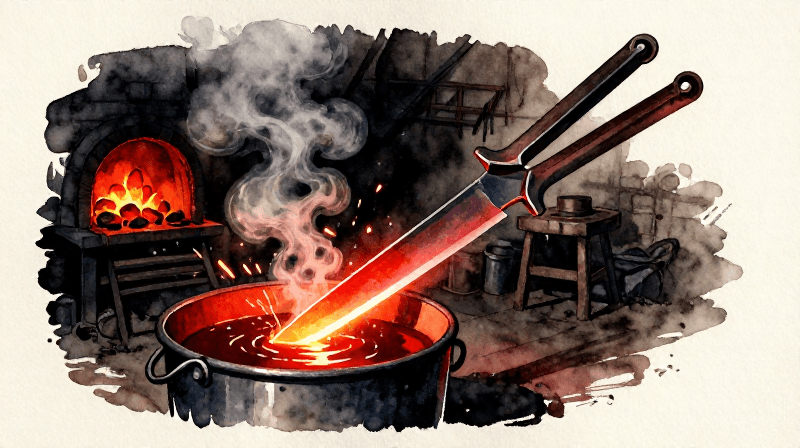
Harden the blade in oil as in the connected spring-steel blueprint. Temper it to the knife colour given in the connected heat-treatment blueprint, not to spring blue.

Mga kailangang kasangkapan:

PandayanPandayan
Sipit ng PandaySipit ng Panday
Langis ng kanolaLangis ng kanola
Mga guwantes sa paghihinangMga guwantes sa paghihinang
13

Hone both edges

Hone both ends keen on the sharpening stone.

Mga kailangang kasangkapan:

Batong PanghasaBatong Panghasa
14

Fit and lock the blade

Swing the halves open. Lay the blade flat on the wall, its slot over the staple and its edges between the shoulders. Swing the locking half shut: the tongue enters the staple and the channel grips the blade. No tools needed.
15

Reverse or change the blade

Swing the locking half up, lift the blade off the staple and turn it end for end, or fit a new one. The spare end sits protected inside the handle.
16

What the patent says, and what is ours

The patent fixes the parts and how they lock: hinged shell halves, flat riveted pivot ends that hold by friction, a wall with shoulders and a pressed-out staple, a slotted double-ended blade, a springy channel with tongue and cut-outs. It gives no sizes, no metals and no blade making. All sizes, the mild steel, the rivet and the spring steel blade are our choices. Doniger's better-known X-Acto knives hold the blade in a round collet instead.

Mga Materyales

3

Mga Kinakailangang Kasangkapan

21

Ang blueprint na ito ay gumagawa ng

CC0 Pampublikong Domain

Ang blueprint na ito ay inilabas sa ilalim ng CC0. Malaya kang kumopya, magbago, mamahagi, at gumamit nang walang pahintulot.

Suportahan ang Maker sa pamamagitan ng pagbili ng mga produkto sa kanilang Blueprint Komisyon ng Maker itinakda ng mga Vendor, o lumikha ng bagong bersyon ng Blueprint na ito at isama bilang koneksyon sa iyong Blueprint upang ibahagi ang kita.

Talakayan

(0)

Mag-login upang sumali sa talakayan

Naglo-load ng mga komento...