Pakikipagtulungan
SINING
BEAUTY AT WELLNESS
CRAFTS
KULTURA AT KASAYSAYAN
LIBANGAN
KAPALIGIRAN
PAGKAIN AT INUMIN
REVERSE ENGINEERING
AGHAM
ISPORTS
TEKNOLOHIYA
MGA WEARABLE
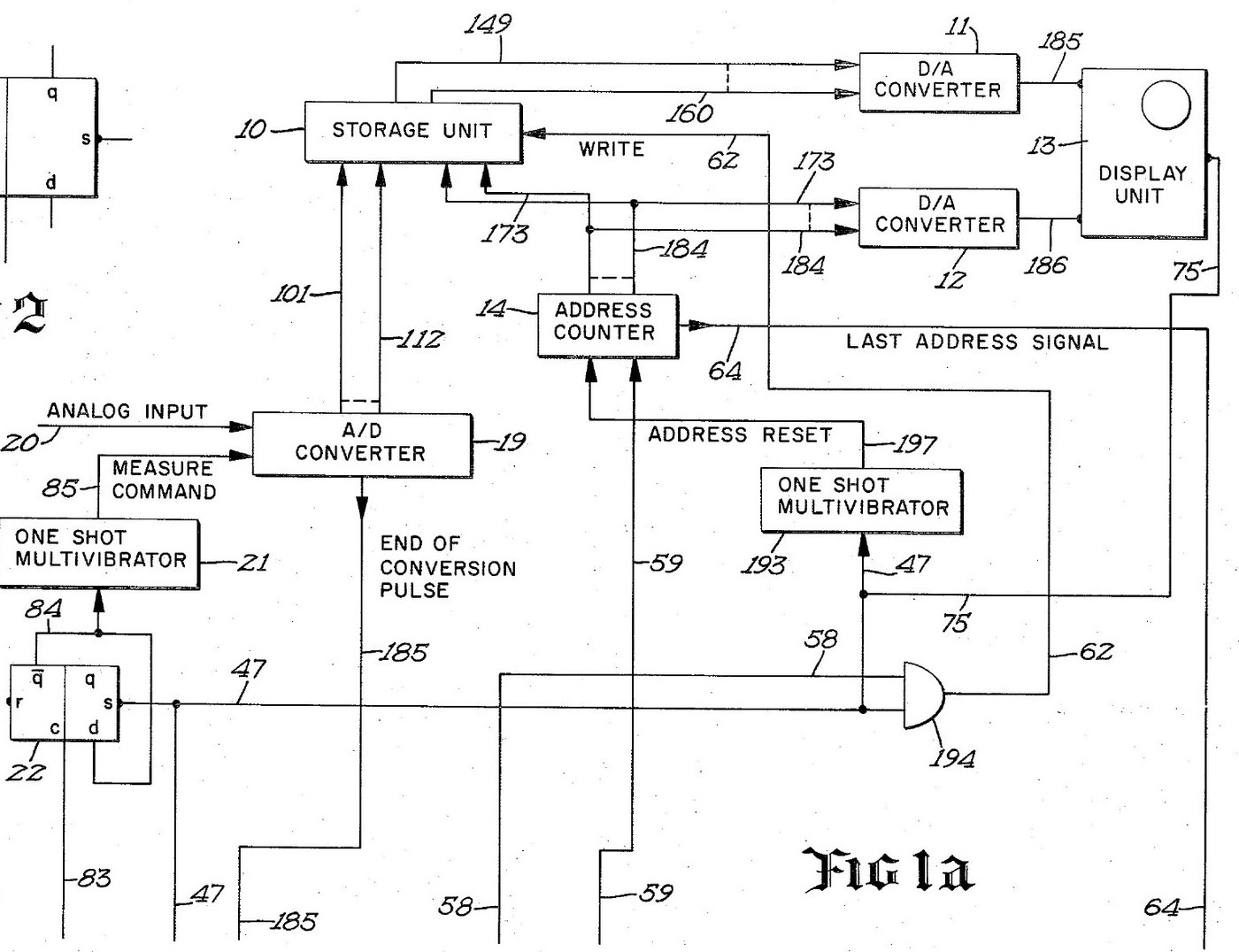

Digital Oscilloscope: Waveform Stored in Memory and Shown on a CRT (Schumann, Nicolet, US 3,816,815, 1974)
An oscilloscope with a memory. After a trigger, an analog-to-digital converter measures the input at regular intervals and writes each reading into its own memory register, replacing the old one. The screen then shows the memory: each register's number sets the beam's height, its address sets the beam's place across. The last waveform can be held on the screen as long as you like.
Result: a digital storage oscilloscope with 4,096 points of 12 bits, refresh and hold modes and single-shot capture.
Source: R. W. Schumann (Nicolet), US 3,816,815 (1974). Unknown: sample rate, bandwidth, voltages and the parts used. Picture: the patent drawing.
Dalubhasa
Unknown
Mga Tagubilin
1
1
Sample and convert the input
Sample and convert the input
Bring the analog input to an analog-to-digital converter, through a BNC socket. A sampling oscillator, divided by four by two flip-flops so the first reading comes soon after the sweep starts, fires a one-shot multivibrator that gives the converter its measure command. The converter holds each 12-bit result on its output lines and signals the end of each conversion. Ours: a BNC socket. Not given: the sample rate.
Mga materyales para sa hakbang na ito:
 Tagapalit ng Analog sa Digital1 12-bit converter
 Clock oscillator1 sampling oscillator
 Sari-saring IC na lohika1 flip-flops, one-shots, gates
 Set ng koaksiyal na konektor (BNC / SO-239)1 input socket
Mga kailangang kasangkapan:
 Panghinang
 Pambalat ng kawad
2
2
Store each reading in memory
Store each reading in memory
Wire an integrated-circuit memory of 4,096 registers, 12 bits each, that can be read without changing it. A 12-bit address counter picks the register. On each write command the register at the current address takes the last reading from the converter, and the counter steps on. When the sweep starts, a one-shot resets the counter to zero. When it reaches the last address, its last-address signal ends the sweep.
Mga materyales para sa hakbang na ito:
 Integrated-circuit memory1 4,096 x 12-bit store
Mga kailangang kasangkapan:
PanghinangPambalat ng kawad3
3
Drive the CRT from the memory
Drive the CRT from the memory
Feed the addressed register's number to one digital-to-analog converter and the address to a second. Their outputs drive the vertical and horizontal deflection plates of a cathode-ray tube, so the beam always stands at the height of the stored reading and at the place of its address. Wire the sweep line to the tube's intensifier, to brighten the trace while a waveform is being taken.
Mga materyales para sa hakbang na ito:
 Digital-to-analog converter2 vertical and horizontal
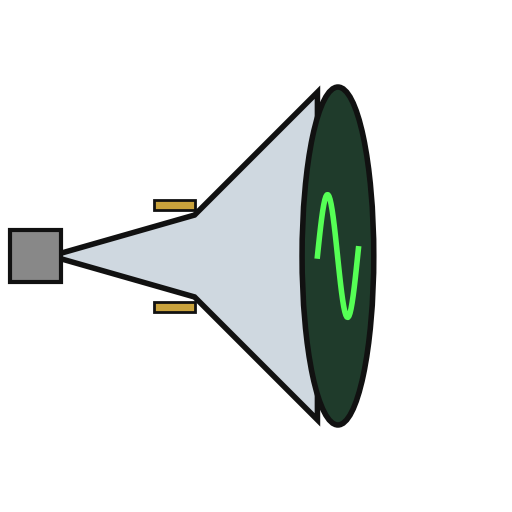 Cathode-ray tube1 display tube
Mga kailangang kasangkapan:
PanghinangPambalat ng kawad4
4
Wire the trigger and the modes
Wire the trigger and the modes
A trigger input, usually from the leading edge of the input waveform, starts the sweep, once a measure flip-flop has armed it. Put a two-position mode switch on the face: MODE I and MODE II. Add a push button in the probe, a switch on the panel and an external initiate input; each goes through a flip-flop that removes contact bounce. Two more oscillators step the memory round to refresh the display between waveforms. Mount it all in a case with its supply. Ours: toggle switches, an aluminium case, a DC supply. Not given: the supply voltages.
Mga materyales para sa hakbang na ito:
Clock oscillator2 display sequencing oscillators Toggle na switch2 mode and panel switches
 Pindutan1 probe switch
 Kahon na aluminyo1 case
Mga kailangang kasangkapan:
 Pinagkukunan ng tuwid na kuryente
 Baradong NakatayoPanghinang
5
5
Capture and hold a waveform
Capture and hold a waveform
In MODE I, refresh: each new triggered waveform replaces the last on the screen. Press the probe or panel switch to hold: new waveforms are rejected and the last one stays on the screen. In MODE II the screen normally holds; on command, it takes the first waveform after the command, stores it and shows it steadily. Test it with a known signal.
Mga kailangang kasangkapan:
 Bumubuo ng Alon
Mga Materyales
10- 1 12-bit converterPlaceholder
- 2 display sequencing oscillatorsPlaceholder
- 1 flip-flops, one-shots, gatesPlaceholder
- 1 input socketPlaceholder
- 1 4,096 x 12-bit storePlaceholder
- 2 vertical and horizontalPlaceholder
- 1 display tubePlaceholder
- Placeholder
- Placeholder
- 1 casePlaceholder
Mga Kinakailangang Kasangkapan
5- 2 vendors sell this, none ship to you yetPlaceholder
- Placeholder
- Placeholder
- Placeholder
- Placeholder
Ang blueprint na ito ay gumagawa ng

Kaugnay na Blueprint
Ang mga blueprint na ito ay nagbabahagi ng kaalaman — mga teknik, materyales, o prinsipyo
CC0 Pampublikong Domain
Ang blueprint na ito ay inilabas sa ilalim ng CC0. Malaya kang kumopya, magbago, mamahagi, at gumamit nang walang pahintulot.
Suportahan ang Maker sa pamamagitan ng pagbili ng mga produkto sa kanilang Blueprint Komisyon ng Maker itinakda ng mga Vendor, o lumikha ng bagong bersyon ng Blueprint na ito at isama bilang koneksyon sa iyong Blueprint upang ibahagi ang kita.