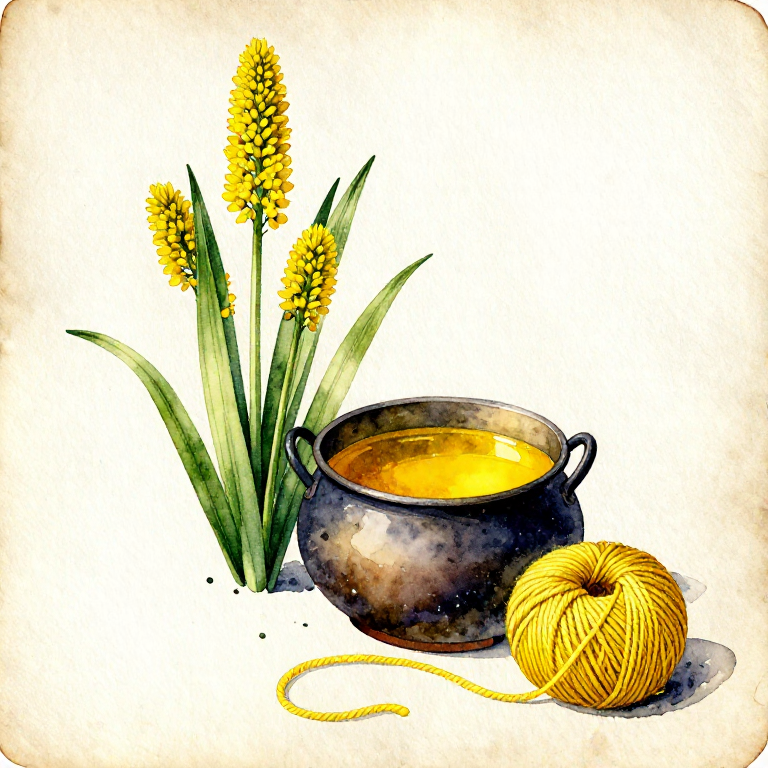

Dyeing Yellow with Weld — The Best Lightfast Plant Yellow in History
Weld (Reseda luteola), also called dyer's rocket or dyer's weed, is a tall biennial plant native to Europe and Western Asia. It produces the most lightfast yellow of any plant dye — a distinction it has held since the Neolithic period. Weld contains luteolin and apigenin, two flavonoid pigments that form exceptionally stable complexes with aluminium mordants. On alum-mordanted wool, weld produces a clear, bright yellow that resists fading in sunlight far longer than any other plant-derived yellow.
Archaeological evidence for weld dyeing extends to the Swiss lake dwellings of the Neolithic period (~3000 BCE). Fragments of weld-dyed textile have been found in Bronze Age sites across Europe. The Romans used weld extensively — Pliny the Elder mentions it as a primary source of yellow. Throughout the medieval period, weld was cultivated commercially across England, France, Germany, and the Low Countries. It was so important to the European dye trade that it was one of the three primary dye plants of medieval commerce, alongside woad (blue) and madder (red). These three plants together could produce almost any colour through sequential dyeing and over-dyeing.
The combination of weld and woad is particularly significant. Weld yellow over woad blue produces the famous Lincoln green — the colour associated with Robin Hood and the English forest tradition. This green, made from two plant dyes, was one of the most important compound colours in medieval Europe. The technique of first dyeing blue with woad, then over-dyeing yellow with weld, produces a green of remarkable depth and fastness.
Mga Tagubilin
Weigh the dried weld plant
Weigh the dried weld plant
Use 100% WOF of dried weld — the whole above-ground plant (stems, leaves, and flower spikes). For 100 g of wool, weigh out 100 g of dried weld. The plant is sold commercially as dried cut pieces, or can be harvested from wild or garden-grown plants in the second year of growth. Cut the plant at ground level when the flower spikes are in full bloom — this is when luteolin content peaks. Dry the cut plants in shade for 1-2 weeks before use. Do not use roots — they contain no significant dye.
Mga materyales para sa hakbang na ito:
 Halamang weld (Reseda luteola)100 g
Mga kailangang kasangkapan:
 Digital na Timbangang Pangkusina
Soak the weld overnight
Soak the weld overnight
Place the dried weld in a dye pot with 4-5 litres of room temperature water and soak overnight (8-12 hours). The water will turn a pale greenish-yellow as luteolin begins to dissolve. This overnight soak softens the tough stems and allows the dye to extract more completely during simmering. If using freshly dried weld, the extraction is faster; old or heavily dried material benefits from a longer soak.
Mga kailangang kasangkapan:
 Malaking Kaldero
Simmer the weld at 70-80°C for 45 minutes
Simmer the weld at 70-80°C for 45 minutes
Slowly raise the temperature to 70-80°C and hold for 45 minutes. This is critical: weld must NOT be boiled. Temperatures above 80°C break down luteolin and shift the colour from a clear bright yellow toward a duller olive-gold. Keeping the temperature in the 70-80°C range preserves the clarity and brightness that makes weld yellow superior to other plant yellows. Stir occasionally. The liquid will become a deep golden-green.
Mga kailangang kasangkapan:
 Termometro sa Pagluluto
 Kahoy na Panghalo
Strain out the plant material
Strain out the plant material
Strain the dye liquor through a fine mesh strainer into a clean pot. Press the plant material to extract all the yellow-green liquid. Weld stems are tough and woody — they strain out cleanly without the pulpy residue of softer plant dyes. The strained liquor should be a deep golden-green. Some dyers leave the plant material in a mesh bag inside the dye pot during dyeing — this is acceptable for weld because the stems are rigid and do not tangle with wool, but straining gives more even results.
Mga kailangang kasangkapan:
 Pinong Salaan
Add a small amount of soda ash to brighten the yellow
Add a small amount of soda ash to brighten the yellow
Add 1-2 g of sodium carbonate (soda ash) to the strained dye bath and stir until dissolved. This slightly alkaline shift (pH 7.5-8) is a traditional technique specific to weld dyeing. Luteolin bonds most effectively to alum in slightly alkaline conditions, producing a brighter, clearer yellow. Without this alkaline addition, the colour is still good but slightly greener. With it, the colour shifts to a pure, luminous yellow. Use a light hand — excessively alkaline conditions (pH above 9) damage wool fibres. One to two grams in 4-5 litres of water is sufficient.
Mga materyales para sa hakbang na ito:
 Karbonatong Sodyo (abo ng soda)2 g
Dye alum-mordanted wool at 70-80°C for 45-60 minutes
Dye alum-mordanted wool at 70-80°C for 45-60 minutes
Pre-wet the alum-mordanted wool in lukewarm water for 15 minutes, squeeze gently, and lower it into the weld dye bath at room temperature. Slowly raise the temperature to 70-80°C over 20 minutes, then hold for 45-60 minutes. As with the extraction, do not exceed 80°C — temperature control is the single most important factor for achieving bright weld yellow. Turn the wool gently every 10 minutes. The wool will turn a clear, luminous yellow — the signature colour that made weld the most valued yellow dye in European history.
Mga materyales para sa hakbang na ito:
 Ikid ng Sinulid na Lana100 g
 Tawas (Potassium Alum)10 g
Cool overnight, rinse, and dry
Cool overnight, rinse, and dry
Turn off the heat and let the wool cool in the dye bath overnight. Remove, squeeze gently, and rinse in lukewarm water until the runoff is clear. The final colour is a clear, bright yellow with a warm golden undertone — significantly brighter and more lightfast than goldenrod, marigold, or turmeric. Weld-dyed wool retains its colour for years even with moderate sunlight exposure, which is why it remained the commercial yellow dye of choice across Europe for over four thousand years. Dry in shade.
Mga Materyales
4- Placeholder
- Placeholder
- Placeholder
- Placeholder
Mga Kinakailangang Kasangkapan
5- Placeholder
- Placeholder
- Placeholder
- Placeholder
- Placeholder
Mga Materyales ng Nakakonektang Blueprint
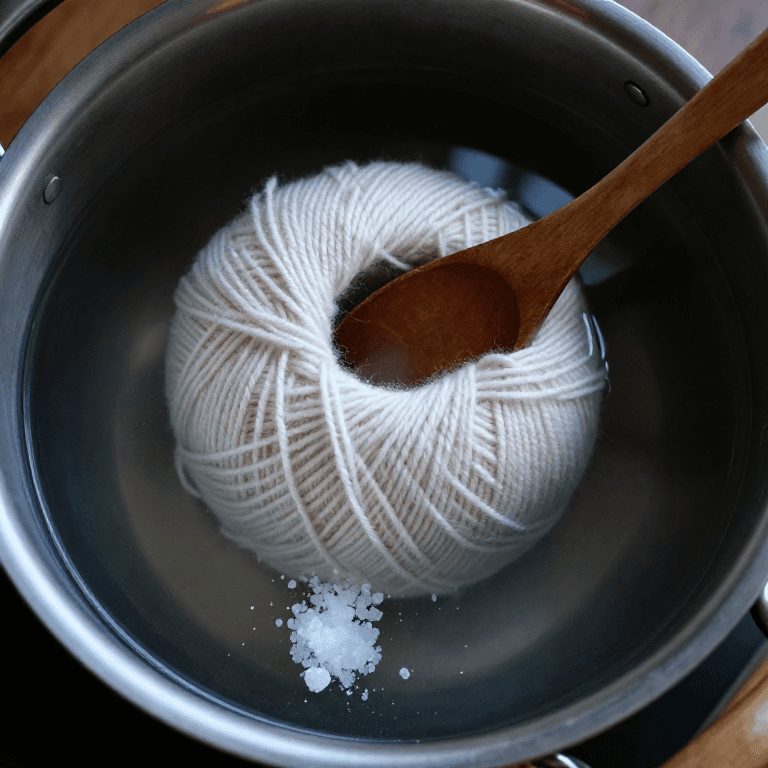
Mordanting Wool with Alum — The Foundation of Natural Dyeing
ni Tex
Tela at Katad
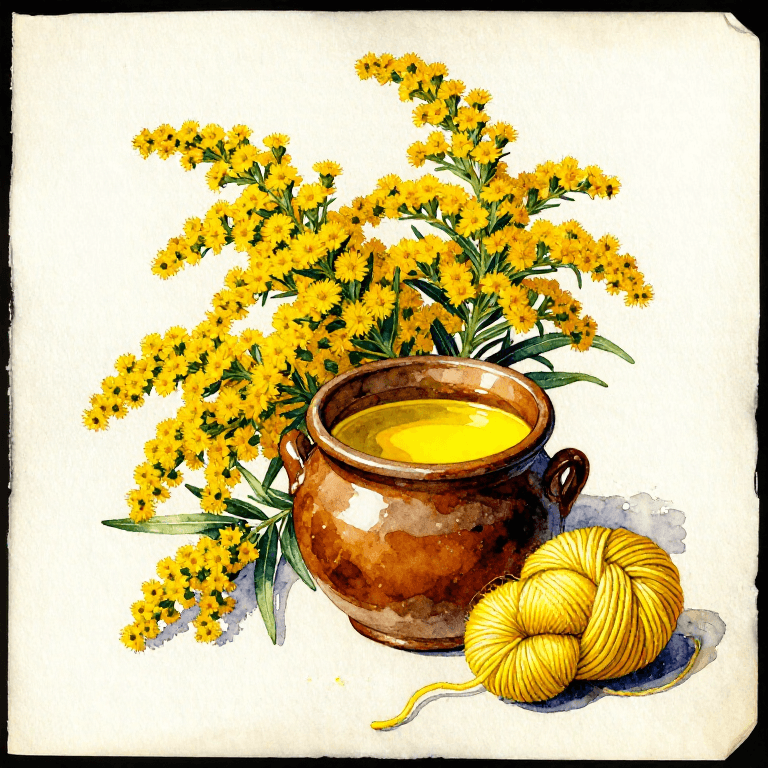
Dyeing Yellow with Goldenrod — One of the Best Wild-Plant Dyes in Nature
ni Tex
Tela at Katad
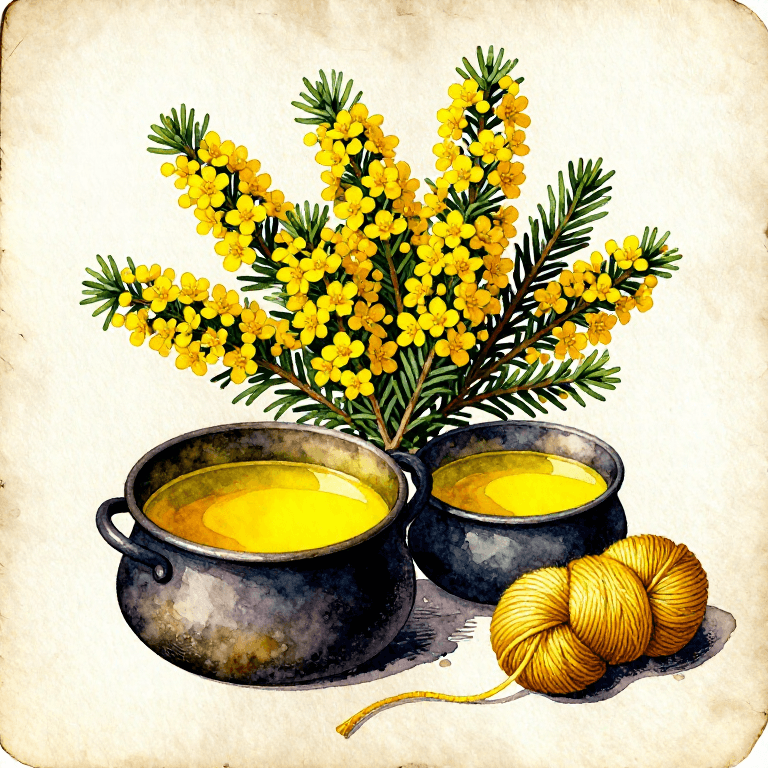
Dyeing Yellow with Dyer's Broom — The Greenweed That Made Lincoln Green
ni Tex
Tela at Katad
Ang blueprint na ito ay gumagawa ng

Kaugnay na Blueprint
Ang mga blueprint na ito ay nagbabahagi ng kaalaman — mga teknik, materyales, o prinsipyo
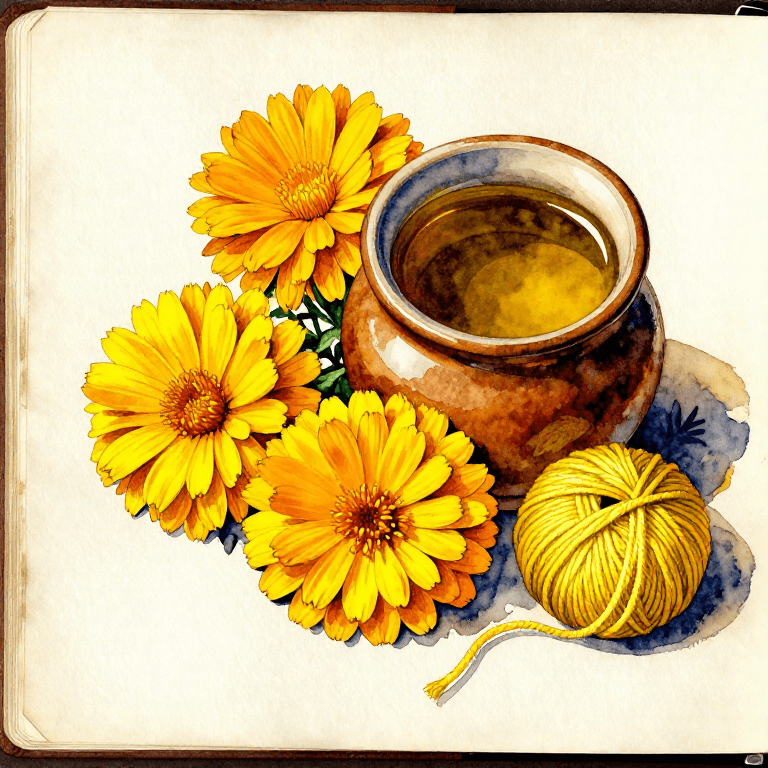
Dyeing Yellow with Marigold — The Sacred Aztec Flower Dye
ni Tex
Tela at Katad
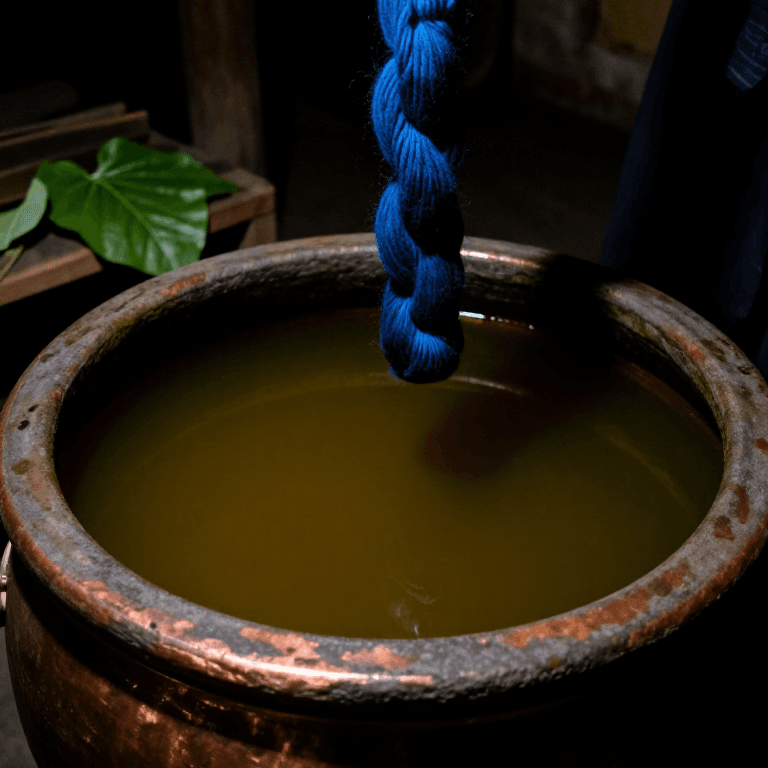
Dyeing Blue with a Woad Urine Vat — The Fermentation Method That Coloured Europe
ni Tex
Tela at Katad
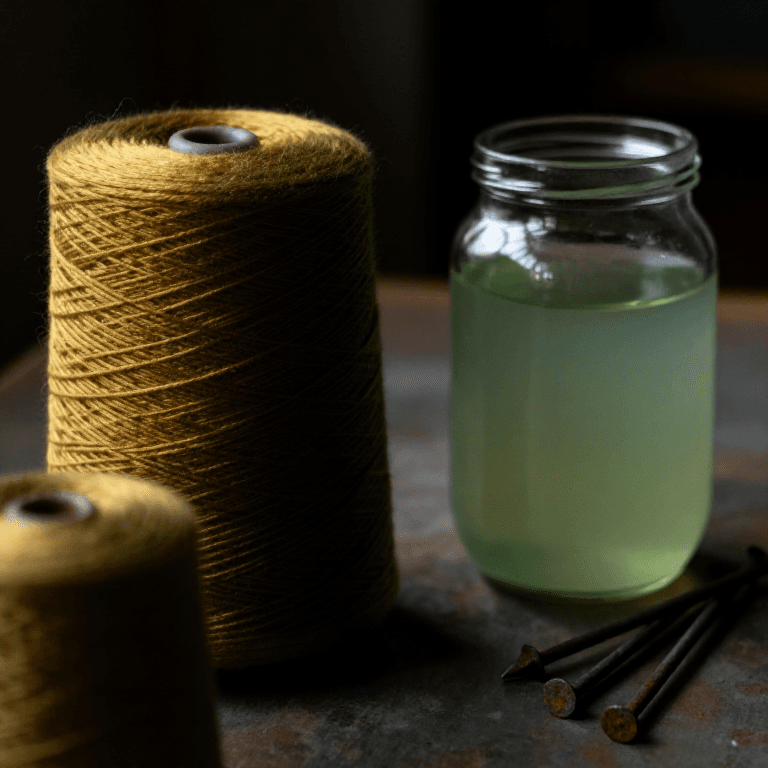
Iron Saddening — Darkening and Shifting Natural Dye Colours with Iron Water
ni Tex
Tela at Katad
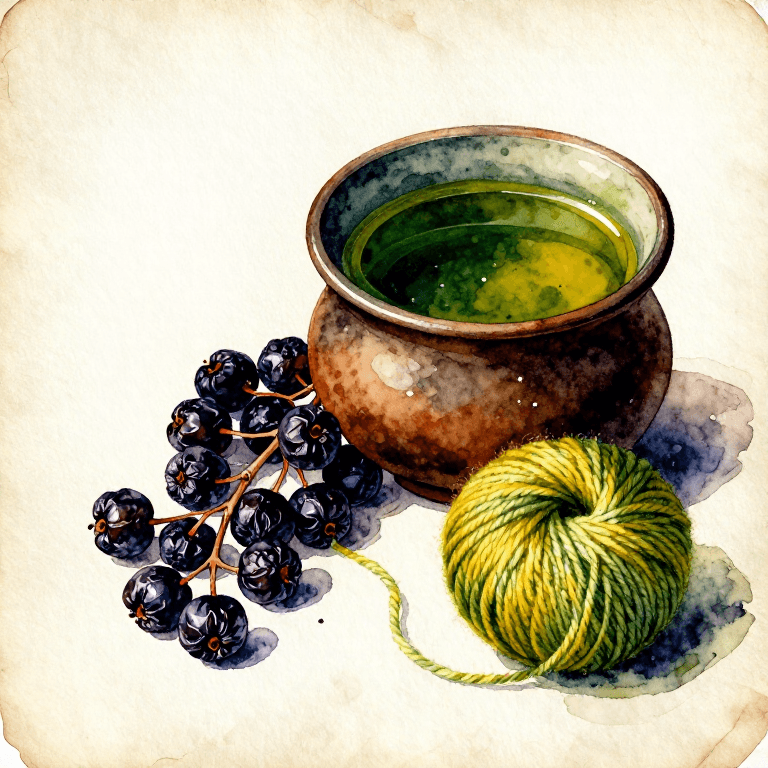
Dyeing Yellow-Green with Persian Berries — The Buckthorn Dye of Ancient Manuscript Painters
ni Tex
Tela at Katad
Dyeing Yellow-Orange with Rhubarb Root — The Anthraquinone Dye of Central Asia
ni Tex
Tela at Katad
Dyeing Yellow with Dyer's Broom — The Greenweed That Made Lincoln Green
ni Tex
Tela at Katad
Dyeing Yellow with Fustic — The Colonial Dyewood That Coloured the New World Trade
ni Tex
Tela at Katad
CC0 Pampublikong Domain
Ang blueprint na ito ay inilabas sa ilalim ng CC0. Malaya kang kumopya, magbago, mamahagi, at gumamit nang walang pahintulot.
Suportahan ang Maker sa pamamagitan ng pagbili ng mga produkto sa kanilang Blueprint Komisyon ng Maker itinakda ng mga Vendor, o lumikha ng bagong bersyon ng Blueprint na ito at isama bilang koneksyon sa iyong Blueprint upang ibahagi ang kita.