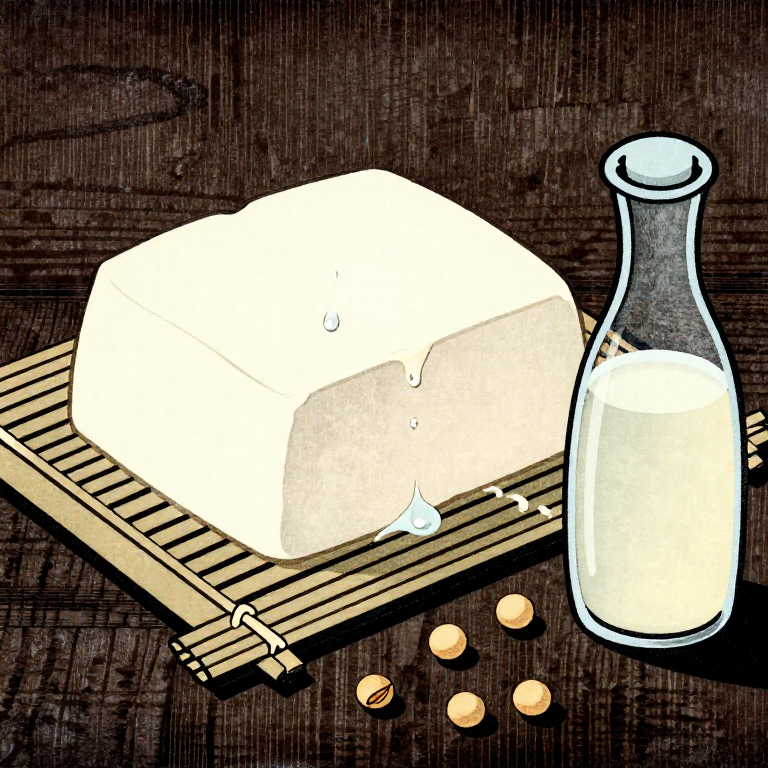


Making Fresh Tofu from Soybeans and Nigari — Japanese Bean Curd
Mga Tagubilin
Soak and Grind the Soybeans
Soak and Grind the Soybeans
Rinse 300g of dried soybeans and soak them in three times their volume of water for 8-12 hours (overnight). The beans will absorb water and roughly double in size. Drain the soaked beans and blend them with approximately 1 litre of fresh water in batches until you have a smooth, creamy slurry with no large chunks. This raw slurry is called go. The grinding step ruptures the soybean cells and releases the protein-rich liquid that will become soy milk. More thorough grinding extracts more protein, producing a higher yield and richer-tasting tofu.
Mga materyales para sa hakbang na ito:
 Soya300g (yields ~500g tofu) g
 Nigari (kloruro ng magnesyo)1-2 teaspoons (5-10ml of liquid nigari) ml
 Tubig2-3 litres piraso
Mga kailangang kasangkapan:
 Blender
 Malaking Kaldero
 Tela (Pansala)
 Hulmahang kahoy ng tokwa
 Termometro ng Hurno
Cook and Strain the Soy Milk
Cook and Strain the Soy Milk
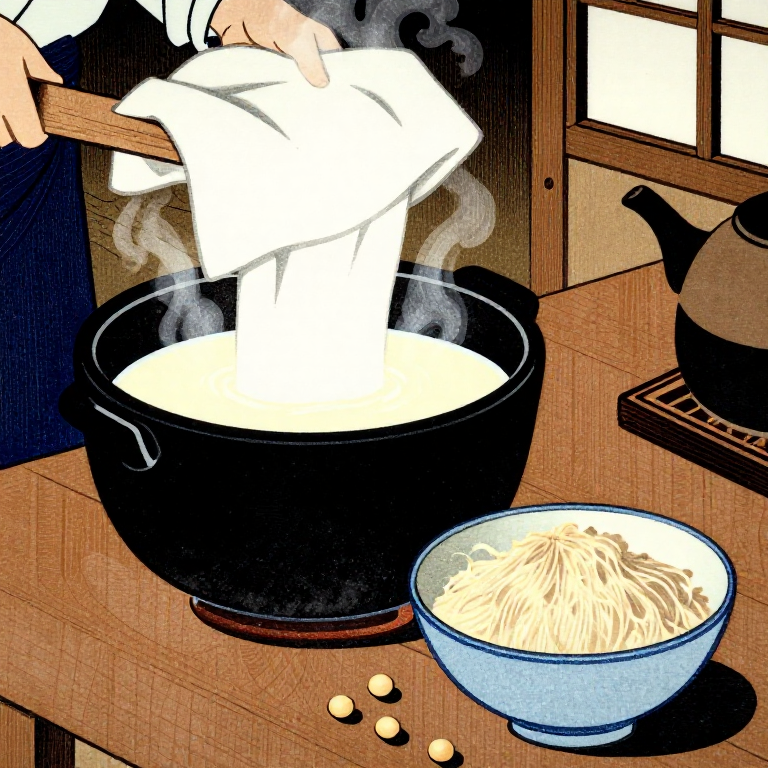
Transfer the raw go into a large pot and add another litre of water. Bring it to a boil over medium-high heat, stirring constantly to prevent sticking and scorching on the bottom. The slurry will foam vigorously when it approaches boiling — reduce heat immediately to prevent boiling over. Simmer for 8-10 minutes to fully cook the soy proteins (raw soy contains trypsin inhibitors that are destroyed by cooking). Strain the hot liquid through cheesecloth into a clean pot, squeezing the cloth firmly to extract all the soy milk. The fibre remaining in the cloth is called okara and can be used in cooking. You should have approximately 1.5-2 litres of hot soy milk.
Coagulate with Nigari
Coagulate with Nigari
Heat the strained soy milk to approximately 70-80 degrees C. Dissolve nigari in a small amount of warm water (1-2 teaspoons liquid nigari or 1 teaspoon solid nigari dissolved in 50ml water). Remove the pot from heat. Stir the soy milk gently and add half the nigari solution in a thin stream while stirring slowly with three long strokes. Stop stirring, cover the pot, and wait 3-5 minutes. The soy proteins coagulate around the magnesium ions, forming white curds that separate from a yellowish liquid (whey). If curds have not formed clearly, add the remaining nigari and stir once more. The coagulation temperature is critical: too hot and the curds are tough, too cool and they do not form at all.
Ladle Curds into the Mould
Ladle Curds into the Mould
Line a tofu mould (a small box with drainage holes on all sides and bottom) with damp cheesecloth. Gently ladle the curds and whey into the lined mould — do not pour, as the agitation breaks the curds too small. Allow the whey to drain through the cloth and holes for several minutes. For silken tofu (kinugoshi), simply allow the curds to set in the pot without pressing and scoop them directly into bowls. For firm tofu (momen-dofu), fold the cloth over the top of the curds and place a flat weight on top — approximately 200-500g for medium-firm, up to 1 kg for very firm tofu. Press for 15-30 minutes.
Unmould and Store the Tofu
Unmould and Store the Tofu
Remove the weight and carefully lift the tofu block from the mould by the cheesecloth corners. Unwrap the cloth and slip the tofu into a container of cold water. The cold water firms the tofu further and washes away any residual nigari bitterness. Fresh tofu should be used within 2-3 days and stored in the refrigerator submerged in clean water that is changed daily. The texture depends on pressing time and weight: briefly pressed tofu is soft and custardy (ideal for eating cold with soy sauce and ginger), while heavily pressed tofu is dense and holds its shape for grilling, stir-frying, and simmering in soups. Fresh homemade tofu has a sweet, subtly nutty flavour that commercial tofu cannot match.
Mga Materyales
4- 300g (yields ~500g tofu) gPlaceholder
- 2-3 litres pirasoPlaceholder
- 300g (yields ~500g tofu) pirasoPlaceholder
- 1-2 teaspoons (5-10ml of liquid nigari) pirasoPlaceholder
Mga Kinakailangang Kasangkapan
6- Placeholder
- Placeholder
- Placeholder
- Placeholder
- Placeholder
Ang blueprint na ito ay gumagawa ng
CC0 Pampublikong Domain
Ang blueprint na ito ay inilabas sa ilalim ng CC0. Malaya kang kumopya, magbago, mamahagi, at gumamit nang walang pahintulot.
Suportahan ang Maker sa pamamagitan ng pagbili ng mga produkto sa kanilang Blueprint Komisyon ng Maker itinakda ng mga Vendor, o lumikha ng bagong bersyon ng Blueprint na ito at isama bilang koneksyon sa iyong Blueprint upang ibahagi ang kita.