SINING
BEAUTY AT WELLNESS
CRAFTS
KULTURA AT KASAYSAYAN
LIBANGAN
KAPALIGIRAN
PAGKAIN AT INUMIN
REVERSE ENGINEERING
AGHAM
ISPORTS
TEKNOLOHIYA
MGA WEARABLE
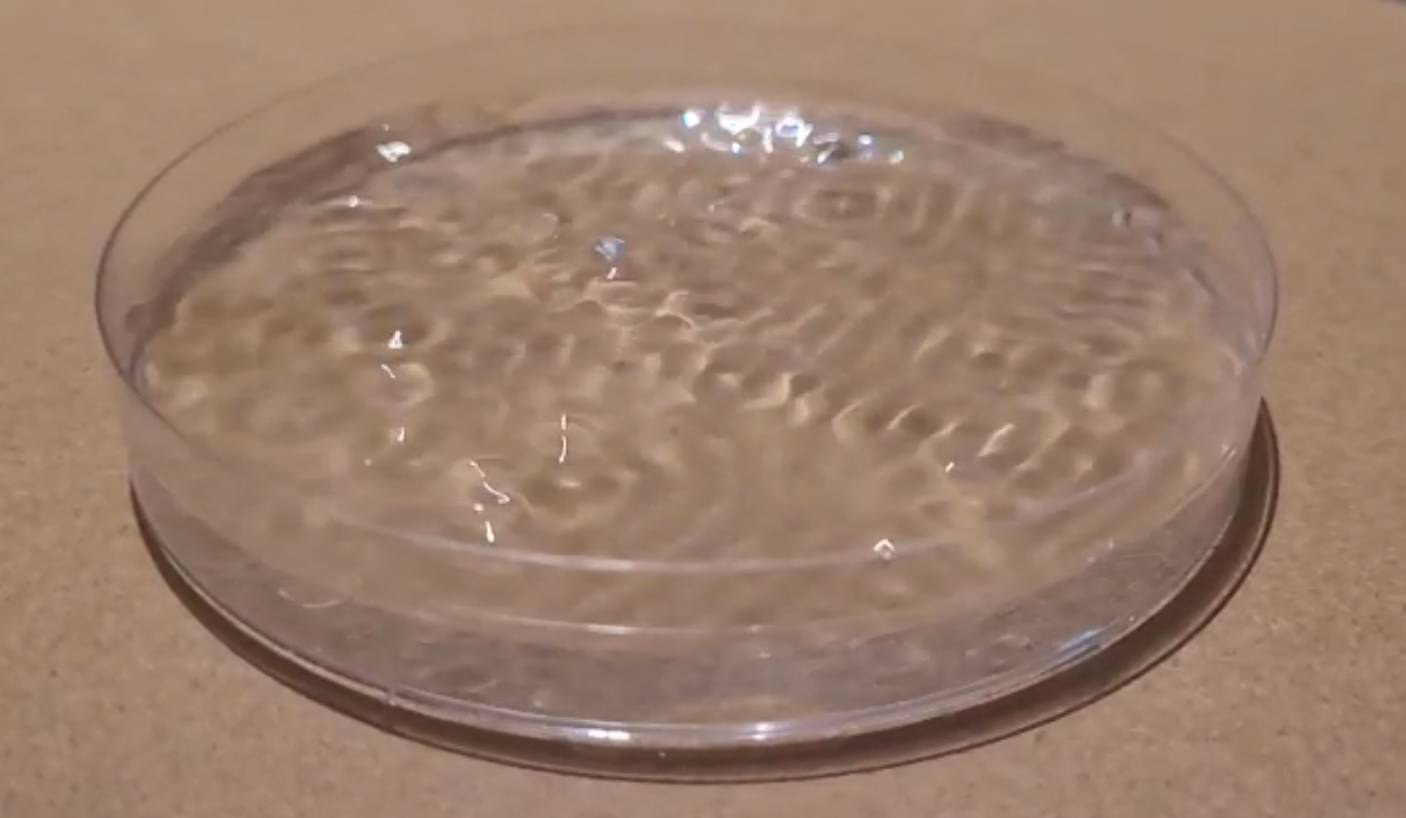

Faraday Waves: an Oil Dish on a Loudspeaker, Driven from a Phone (Faraday 1831; Harris & Bush 2016)
Shake a thin layer of oil up and down with a loudspeaker and its flat surface breaks into a regular grid of standing peaks: Faraday waves. Build the bath from a woofer, a small amplifier and a 10 cm dish, drive it from a phone app, find the threshold, measure the wavelength, and prove with slow motion that the liquid answers at half the driving frequency, as Faraday found in 1831. About $60 of parts.
Baguhan
45 minutes
Mga Tagubilin
1
1
Watch Faraday waves
Watch Faraday waves
A short clip of Faraday waves on a liquid in a shaken dish. Once the shaking passes a threshold, the flat surface breaks into a regular grid of standing peaks. Everything you need to build your own is listed here.
Mga materyales para sa hakbang na ito:
 Ispiker1 piraso
 Amplipayer ng tunog1 piraso
 Mababaw na pinggan1 piraso
 Makapal na kartong itim1 piraso
 Pandikit1 piraso
 Hook-up na kawad1 piraso
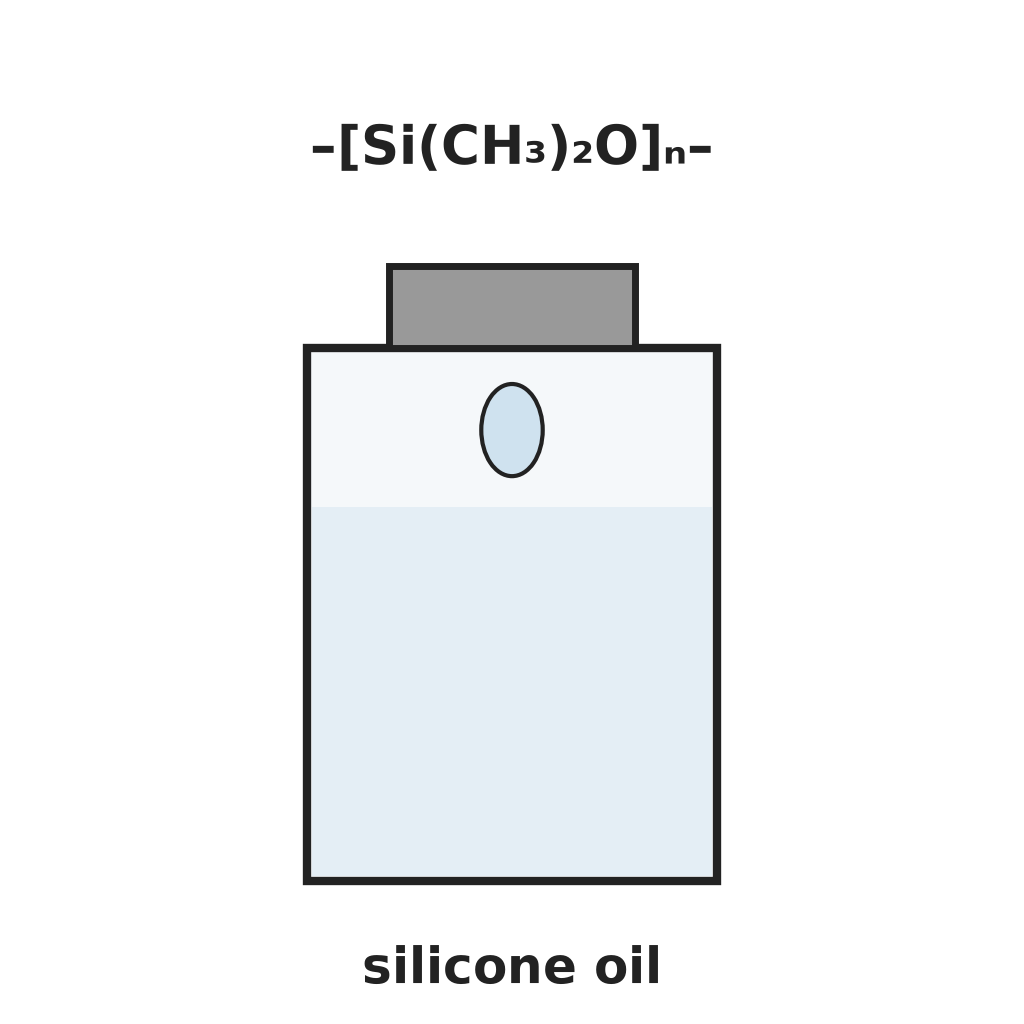 Langis na dimethyl silicone1 piraso
Mga kailangang kasangkapan:
 Selpon na May Mabagal na Bidyo
 Kableng pantunog
 Ruler
2
2
What Faraday saw (1831)
What Faraday saw (1831)
Michael Faraday shook a glass plate covered with water and saw "small conoidal elevations of equal lateral extent, usually arranged rectangularly with extreme regularity" (§65). They were "smaller for a high note, larger for a low one". His key finding (§101): "Each heap ... recurs or is re-formed in two complete vibrations of the sustaining surface": the liquid moves at half the shaking frequency. You will measure both.
3
3
Build the bath
Build the bath
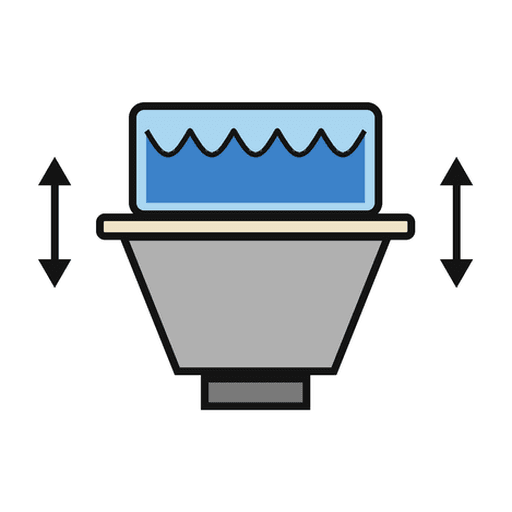
Paste black paper or card to the base of a 10 cm (4 in) dish so the waves show up. Glue the dish to the centre of the speaker cone and make it level. Harris et al. used a 6.5 in woofer (50 W, 8 ohm).
Mga materyales para sa hakbang na ito:
Mababaw na pinggan1 pirasoMakapal na kartong itim1 pirasoPandikit1 pirasoIspiker1 piraso4
4
Wire the speaker
Wire the speaker
Connect the two speaker terminals to the LEFT channel of a small stereo amplifier with two wires. Plug the amplifier into its power supply, but leave it off.
Mga materyales para sa hakbang na ito:
Amplipayer ng tunog1 pirasoHook-up na kawad1 piraso5
5
Pour about 3 mm of oil
Pour about 3 mm of oil
Pour 20 cSt silicone oil into the dish to about 3 mm deep (Harris et al.); check the depth with a ruler. Linseed oil from a hardware shop also works. Keep oil off the speaker cone.
Mga materyales para sa hakbang na ito:
Langis na dimethyl silicone1 piraso Langis ng Linsid1 piraso
Mga kailangang kasangkapan:
Ruler6
6
Drive it from your phone
Drive it from your phone
Connect the phone to the amplifier with a 3.5 mm audio cable. In a free function-generator app, set the left channel to a sine wave at 15 % amplitude: 80 Hz for silicone oil, 60 Hz for linseed. Set the phone volume to maximum. Turn on the amplifier, set the bass to about 75 %, then slowly raise the volume until Faraday waves appear (Harris et al.).
Mga kailangang kasangkapan:
Selpon na May Mabagal na BidyoKableng pantunog7
7
Find the threshold
Find the threshold
Lower the volume until the surface is flat, then raise it a little at a time. The volume at which the grid first appears is the Faraday threshold. Note it, change the frequency, and find it again. Above the threshold the peaks grow taller but do not spread further apart, as Faraday wrote (§65).
Mga kailangang kasangkapan:
Selpon na May Mabagal na Bidyo8
8
Measure the wavelength
Measure the wavelength
Just above the threshold, hold a ruler level over the dish and count the crests along 40 mm (ours). Wavelength = length / (crests - 1). Repeat at two other frequencies: lower notes give larger crests.
Mga kailangang kasangkapan:
Ruler9
9
See the half frequency
See the half frequency
Film the surface in slow motion (ours). At 240 frames per second and an 80 Hz drive, the cone completes a stroke every 3 frames, but each peak only re-forms every 6 frames: 40 Hz, half the drive. That is Faraday's two vibrations per heap (§101).
Mga kailangang kasangkapan:
Selpon na May Mabagal na Bidyo10
10
Check it with the wave law
Check it with the wave law
Naglo-load ng Jupyter notebook…
11
11
Troubleshooting
Troubleshooting
Problems and fixes.
Flow
Loading...
12
12
Questions and answers
Questions and answers
**Why half the frequency?** Seen from the moving dish, the liquid feels gravity plus the dish's own acceleration, so the pull on it rises and falls with every stroke. Waves pumped this way (parametrically) appear at half the drive for a layer like yours (Pedersen et al., after Benjamin and Ursell). **Is the answer ever different?** In a very thin layer (about 1 mm), waves at the drive frequency itself can appear first (Pedersen et al.). **Other liquids?** Faraday used water, diluted ink, milk, alcohol and egg white (§66, §75). The cover photo shows water at about 50 Hz. **Can a swimming pool do this?** Not as Faraday waves: the whole container must move up and down. Big round wave tanks make patterns with paddles around the edge, which is a different effect.
13
13
Sources and honest limits
Sources and honest limits
M. Faraday, Phil. Trans. R. Soc. 121 (1831), pp. 299-340, §65, §66, §75, §101. D. M. Harris, J. Quintela, V. Prost, P.-T. Brun and J. W. M. Bush, J. Vis. (2016), supplementary build guide (parts, 3 mm, 80/60 Hz, settings). H. B. Pedersen et al., Eur. J. Phys. 44 (2023) 065002 (half-frequency rule, wave law, silicone oil values). The ruler count, slow-motion check and notebook are ours. The wave law ignores viscosity and the dish wall, so your measured wavelength will differ a little from it. Cover: "Faraday Waves" by Bremps, CC BY-SA 4.0, Wikimedia Commons.
Mga Materyales
8- Placeholder
- Placeholder
- 1 pirasoPlaceholder
- 1 pirasoPlaceholder
- 2 pirasoPlaceholder
- Placeholder
- 2 pirasoPlaceholder
- 1 pirasoPlaceholder
Ang blueprint na ito ay gumagawa ng
CC0 Pampublikong Domain
Ang blueprint na ito ay inilabas sa ilalim ng CC0. Malaya kang kumopya, magbago, mamahagi, at gumamit nang walang pahintulot.
Suportahan ang Maker sa pamamagitan ng pagbili ng mga produkto sa kanilang Blueprint Komisyon ng Maker itinakda ng mga Vendor, o lumikha ng bagong bersyon ng Blueprint na ito at isama bilang koneksyon sa iyong Blueprint upang ibahagi ang kita.