
Trockenelement
Eine Batterie war lange etwas, das man nicht umkippen durfte. Das Leclanché-Element stand offen in einem Glasgefäß mit Salmiaklösung: Es funktionierte gut, aber es schwappte, es lief aus, und man konnte es nicht in eine Tasche stecken. Eine Taschenlampe war damit unmöglich.
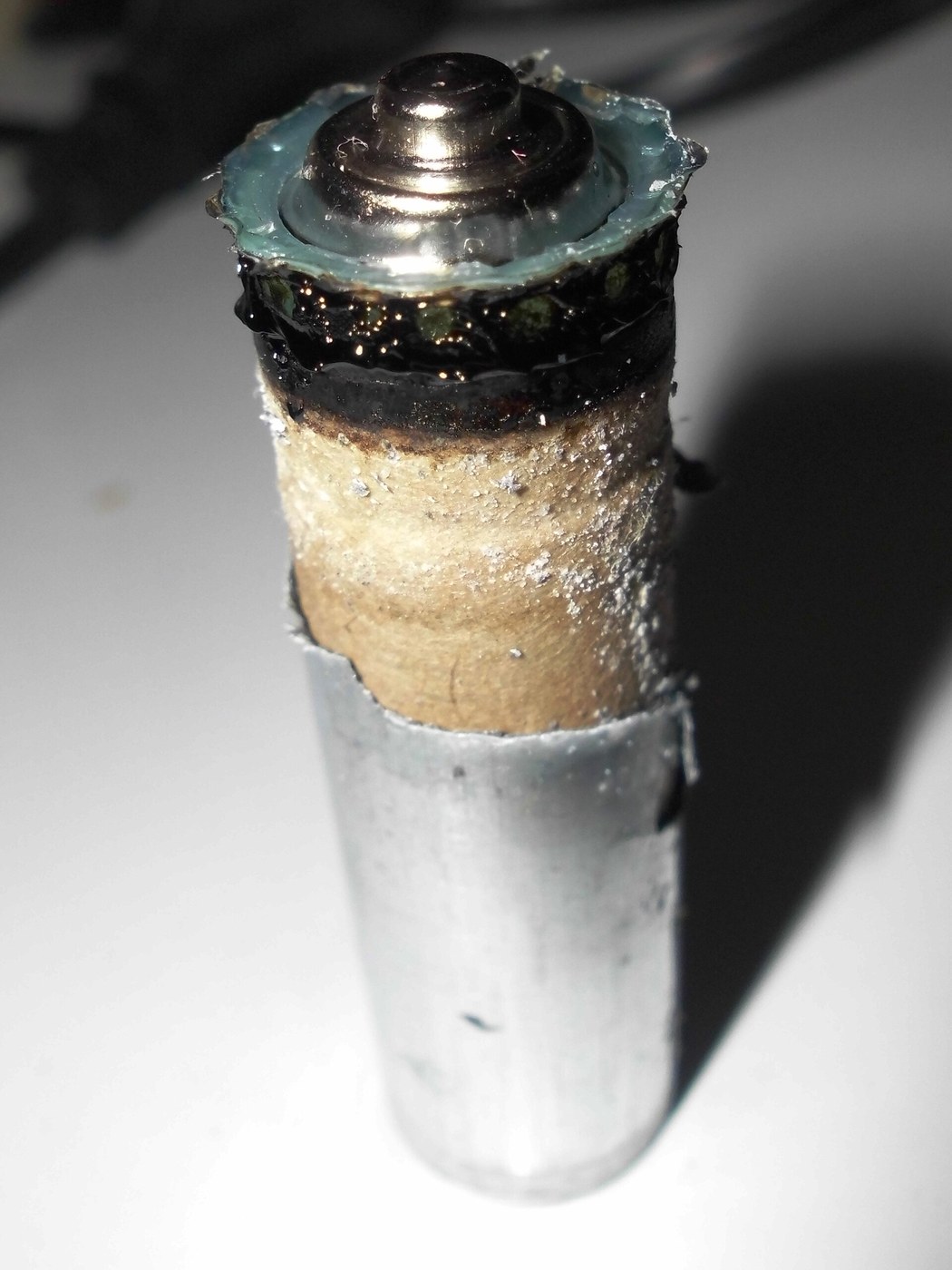
Gassners Idee war nicht, die Flüssigkeit wegzulassen. Sie ist noch da — sie wird nur so dick angerührt, dass sie nicht mehr fließt. Der Zinkbecher ist zugleich Gefäß und Elektrode, in der Mitte steht ein Kohlestab, und dazwischen sitzt die Paste, die „nach einer Weile vergleichsweise hart und fest wird".
Der eigentliche Anspruch ist ein Zusatz. Die Patentschrift sagt es deutlich: Die Erfindung „besteht in der Beimischung und Verwendung von Zinkoxid als Zusatz zum erregenden Mittel". Zinkoxid macht die Paste weniger aggressiv gegen den Zinkbecher — das Element frisst sich nicht mehr selbst auf, während es im Regal liegt.
US-Patent 373,064, „Galvanic Battery", eingereicht am 20. Mai 1887, erteilt am 15. November 1887 an Carl Gassner jr. aus Mainz. Zuerst patentiert in Deutschland am 8. April 1886 unter Nr. 37.758.
Mga Tagubilin
Den Anspruch der Patentschrift lesen
Den Anspruch der Patentschrift lesen
Gassner schreibt, seine Erfindung „besteht in der Beimischung und Verwendung von Zinkoxid". Nicht die Batterie — ein Zusatzstoff. Das ist der ganze Patentanspruch.
Schutzbrille aufsetzen
Schutzbrille aufsetzen
Salmiak und Zinkchlorid reizen Augen und Haut. Schutzbrille auf, hinterher Hände waschen.
Mga kailangang kasangkapan:
 Malinaw na Salaming Pangkaligtasan
Einen Zinkbecher formen
Einen Zinkbecher formen
Ein Stück Zinkblech zu einem Zylinder von etwa 40 mm Durchmesser rollen und den Boden dicht verschließen. Der Becher ist Gefäß und Elektrode zugleich.
Mga materyales para sa hakbang na ito:
 Manipis na sink1 pilyego
Den Kohlestab mittig einsetzen
Den Kohlestab mittig einsetzen
Einen Graphitstab genau in die Mitte stellen, ohne das Zink zu berühren. Berührung heißt Kurzschluss.
Mga materyales para sa hakbang na ito:
 Elektrodong grapito1 piraso
Zuerst eine Vergleichszelle mit reiner Lösung ansetzen
Zuerst eine Vergleichszelle mit reiner Lösung ansetzen
In einem zweiten Glas 25 g Salmiak in 100 ml Wasser lösen — flüssig, ohne Zusatz. Das ist die Leclanché-Bauart als Kontrolle.
Mga materyales para sa hakbang na ito:
 Ammonium chloride (NH₄Cl)25 g
 Garapong Salamin1 piraso
Die Vergleichszelle messen und umkippen
Die Vergleichszelle messen und umkippen
Spannung notieren, dann das Glas schräg halten. Es läuft aus. Genau dieses Verhalten macht eine Taschenlampe unmöglich.
Mga kailangang kasangkapan:
 Digital na Multimetro na Pang-laboratoryo
Braunstein mit Graphit mischen
Braunstein mit Graphit mischen
20 g Braunstein mit 4 g Graphitpulver trocken vermengen. Der Graphit macht die Mischung leitfähig.
Mga materyales para sa hakbang na ito:
 Manganese dioxide (pirolusita)20 g
 Pulbos na Grapayt4 g
Die Paste mit Zinkoxid anrühren
Die Paste mit Zinkoxid anrühren
10 g Salmiak, 5 g Zinkoxid und wenig Wasser zu einem steifen Brei rühren, dann unter die Braunsteinmischung heben. Das Zinkoxid ist Gassners Zusatz.
Mga materyales para sa hakbang na ito:
 Pulbos na zinc oxide5 g
Den Ringraum füllen
Den Ringraum füllen
Die Paste dicht zwischen Zinkbecher und Kohlestab einfüllen, ohne Hohlräume. Luftblasen unterbrechen den Ionenweg.
Oben abdichten und ruhen lassen
Oben abdichten und ruhen lassen
Den Becher oben verschließen und zwei Stunden stehen lassen, bis die Paste fest wird. Erst dann ist es ein Trockenelement.
Spannung messen und die Zelle umdrehen
Spannung messen und die Zelle umdrehen
Spannung notieren, dann die fertige Zelle auf den Kopf stellen und schütteln. Nichts läuft aus. Vergleiche mit Schritt 6 — das ist der ganze Fortschritt.
Eine Lampe anschließen und die Spannung verfolgen
Eine Lampe anschließen und die Spannung verfolgen
Eine kleine Lampe anschließen und die Spannung über zehn Minuten alle zwei Minuten ablesen. Der langsame Abfall zeigt, wie der Braunstein den Wasserstoff aufnimmt.
Mga kailangang kasangkapan:
 Bombilya
Zwei Zellen in Reihe schalten
Zwei Zellen in Reihe schalten
Zink der einen an Kohle der anderen. Die Spannung verdoppelt sich — so entsteht aus Zellen eine Batterie.
Geschichte & Hintergrund — warum Zinkoxid der Anspruch ist
Geschichte & Hintergrund — warum Zinkoxid der Anspruch ist
Das Patent. US 373.064, „Galvanic Battery", eingereicht am 20. Mai 1887, erteilt am 15. November 1887 an Carl Gassner jr. aus Mainz. Wichtig für die Datierung: Die amerikanische Schrift führt die älteren Auslandspatente selbst auf — Deutschland, 8. April 1886, Nr. 37.758, dazu Belgien (16. Juli 1886, Nr. 73.872), Frankreich (17. Juli 1886, Nr. 177.465) und Österreich. Die Priorität liegt also in Deutschland im Jahr 1886, nicht in den USA 1887. Wer nur die US-Nummer zitiert, verschiebt die Erfindung um anderthalb Jahre.
🔴 Der Patentanspruch ist enger, als fast überall behauptet wird. Gassner beansprucht nicht „die Trockenbatterie". Er schreibt: Die Erfindung „bezieht sich auf galvanische Elemente und besteht in der Beimischung und Verwendung von Zinkoxid als Zusatz zum erregenden Mittel". Und er sagt ausdrücklich, dass er sich „nicht auf die genauen Bestandteile oder Verhältnisse" festlegt, solange das Zinkoxid im erregenden Mittel vorhanden ist. Der Anspruch ist ein Zusatzstoff, kein Gerät.
Warum ausgerechnet Zinkoxid. Eine Zink-Salmiak-Zelle hat ein stilles Problem: Das Zink wird auch dann angegriffen, wenn kein Strom fließt. Diese „lokale Wirkung" entlädt die Zelle im Regal und frisst mit der Zeit Löcher in den Becher, der ja zugleich das Gefäß ist — eine auslaufende Zelle ist nicht nur leer, sondern undicht. Zinkoxid im Elektrolyten verschiebt das chemische Gleichgewicht so, dass das Zink deutlich langsamer angegriffen wird. Erst dadurch wird aus einer dicken Paste ein lagerfähiges Produkt. Die Verdickung allein hatten andere schon versucht; die Haltbarkeit ist Gassners Beitrag.
Was „trocken" wirklich heißt. Nichts an einem Trockenelement ist trocken. Ohne Wasser bewegen sich keine Ionen, und ohne Ionen fließt kein Strom. Die Paste enthält Wasser — sie fließt nur nicht mehr. Deshalb ist eine ausgetrocknete Batterie tatsächlich leer, und deshalb ist die Bezeichnung ein Verkaufsname, kein chemischer Zustand.
Was daraus wurde. Das Trockenelement machte tragbare Elektrik überhaupt erst möglich: Taschenlampe, Klingel, Feldtelefon, später das Kofferradio. Die heutige Zink-Kohle-Zelle ist demselben Bauprinzip verblieben — Zinkbecher außen, Kohlestab in der Mitte, Braunsteinmasse dazwischen. Wer eine billige Zink-Kohle-Batterie aufschneidet, findet Gassners Anordnung von 1886 wieder, und die Alkali-Mangan-Zelle kehrt sie lediglich um.
Mga Materyales
7- 1 pilyegoPlaceholder
- 1 pirasoPlaceholder
- Placeholder
- 1 pirasoPlaceholder
- Placeholder
- Placeholder
- Placeholder
Mga Kinakailangang Kasangkapan
3- Placeholder
- Placeholder
- Placeholder
Ang blueprint na ito ay gumagawa ng

Kaugnay na Blueprint
Ang mga blueprint na ito ay nagbabahagi ng kaalaman — mga teknik, materyales, o prinsipyo

Building a Voltaic Pile — The First Battery and the Birth of Steady Electricity
ni Gloin
Electronics
Extracting Zinc from Sphalerite — Roasting and Reduction of the Invisible Metal
ni Peter
Paggawa ng Metal
Extracting Manganese from Pyrolusite — The Cave Painter's Black That Cleans Glass
ni Peter
Paggawa ng Metal
CC0 Pampublikong Domain
Ang blueprint na ito ay inilabas sa ilalim ng CC0. Malaya kang kumopya, magbago, mamahagi, at gumamit nang walang pahintulot.
Suportahan ang Maker sa pamamagitan ng pagbili ng mga produkto sa kanilang Blueprint Komisyon ng Maker itinakda ng mga Vendor, o lumikha ng bagong bersyon ng Blueprint na ito at isama bilang koneksyon sa iyong Blueprint upang ibahagi ang kita.