
Fluorescent Lamp
An incandescent lamp makes light by being hot. That is its whole method and also its whole problem: the great majority of the energy leaves as heat, and only a small fraction as visible light. You cannot fix it by design, because the heat is the mechanism.
A discharge lamp abandons heat entirely. Pass electricity through a low-pressure gas and atoms emit light directly. Low-pressure mercury vapour does this with remarkable efficiency — but it emits almost all of it as ultraviolet, which is invisible. A very efficient lamp you cannot see by.
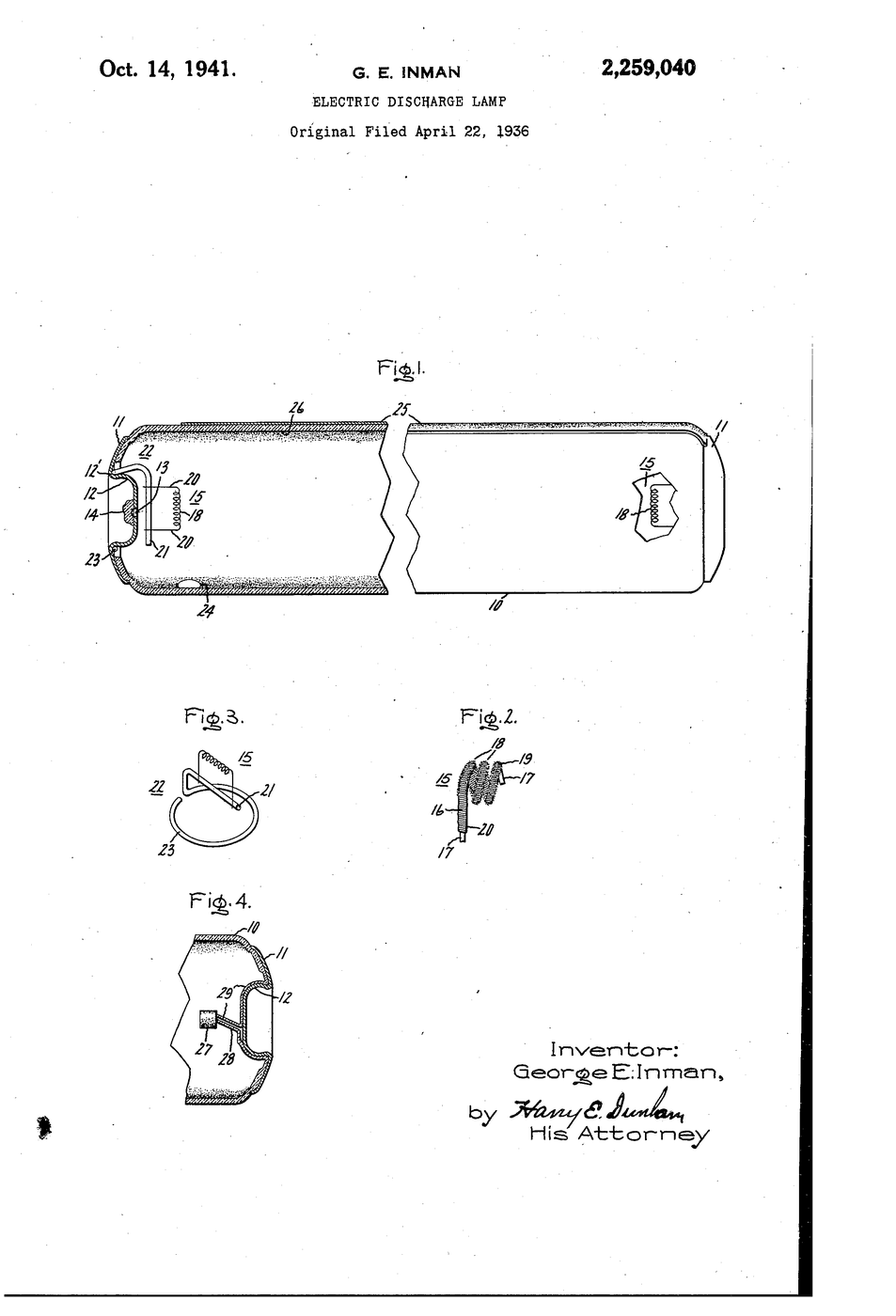
Inman's lamp adds a converter. Coat the inside of the tube with a fluorescent powder that absorbs ultraviolet and re-emits visible light. The patent's own words: convert "ultra-violet rays emitted by the discharge into visible light rays", with the fluorescent material "disposed so as to intercept the ultra-violet radiation" by coating the inner surface.
US Patent 2,259,040, "Electric Discharge Lamp", granted 14 October 1941 to George E. Inman of East Cleveland, Ohio, assignor to General Electric.
⚠ This build never opens a tube. Fluorescent tubes contain mercury — see the last step.
Mga Tagubilin
Read the two-stage description in the patent
Read the two-stage description in the patent
Inman describes converting "ultra-violet rays emitted by the discharge into visible light rays". Two stages: make UV efficiently, then convert it. Write both down.
Handle tubes as sealed objects only
Handle tubes as sealed objects only
Never open, cut or break a fluorescent tube. Handle it by the ends, keep it in its sleeve when not in use, and read the final step before you start.
Mga materyales para sa hakbang na ito:
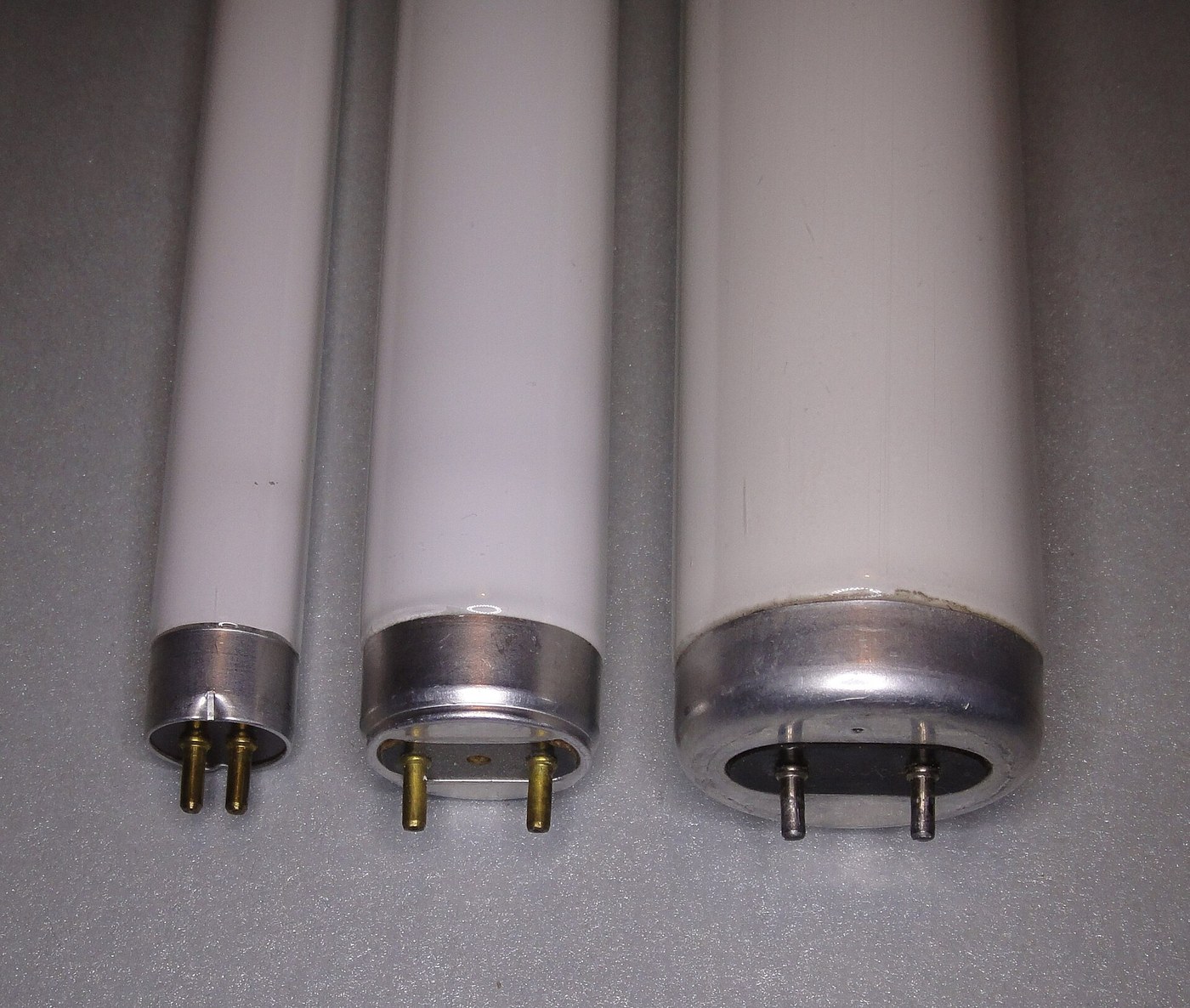 Tubong fluorescent T81 piraso
Mga kailangang kasangkapan:
 Malinaw na Salaming Pangkaligtasan
Measure an incandescent lamp's light and heat
Measure an incandescent lamp's light and heat
Run an incandescent lamp for two minutes. Record light output at 300 mm and feel the heat from 100 mm away. Most of the input is leaving as that heat.
Mga kailangang kasangkapan:
 Bombilya
 Light meter (tumatama/sumasalamin)
Measure a fluorescent tube the same way
Measure a fluorescent tube the same way
Same distance, same meter, similar rated power. Record light and surface warmth. More light, far less heat.
Look at the unlit tube's inner coating
Look at the unlit tube's inner coating
Examine the switched-off tube. The dull white lining is the phosphor. The glass is clear — the whiteness is the converter.
Compare both spectra through a spectroscope
Compare both spectra through a spectroscope
View the incandescent lamp: a smooth continuous rainbow. View the fluorescent tube: a broad band with bright discrete lines superimposed. Two different mechanisms, visible directly.
Mga kailangang kasangkapan:
 Espektroskopyong hawak-kamay
Identify which lines come from the mercury
Identify which lines come from the mercury
The sharp lines are mercury atoms emitting at fixed wavelengths; the smooth background is the phosphor. You are seeing both stages at once.
Shine a UV LED on white paper in the dark
Shine a UV LED on white paper in the dark
In a dark room, shine the UV LED on plain paper. It glows far brighter than the LED alone should allow. That is fluorescence — the second stage on its own.
Mga kailangang kasangkapan:
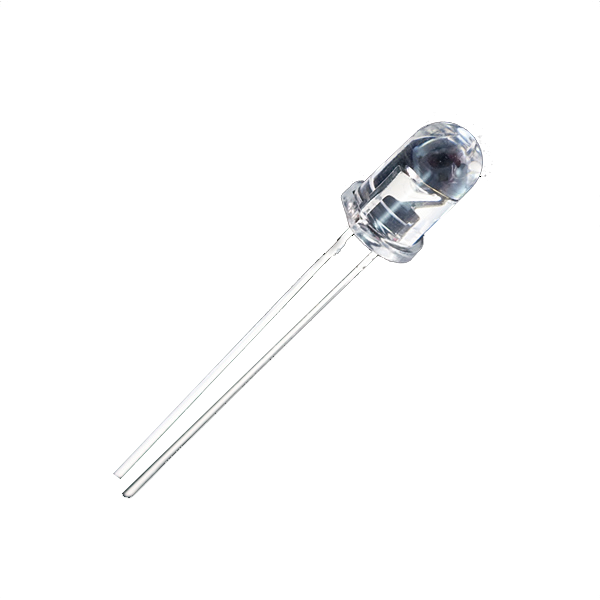 LED - Ultraviolet 5mm
Test several materials under the UV LED
Test several materials under the UV LED
Try tonic water, a highlighter mark, a banknote and a plain rock. Some glow strongly, some not at all. Fluorescence is a property of the specific substance.
Note that emitted light is always redder
Note that emitted light is always redder
UV in, visible out — never the reverse. Some energy is always lost as heat in the conversion, so the light that comes back is always longer wavelength than the light that went in.
Scrape phosphor from a dead UV lamp and test it
Scrape phosphor from a dead UV lamp and test it
Using powder from a mercury-free UV LED lamp only, sprinkle a little on card and light it with the UV LED. It glows white — this is the coating in Inman's tube.
Hold the UV LED against the unlit tube's coating
Hold the UV LED against the unlit tube's coating
Shine the UV LED on the switched-off tube's white lining. It glows. The tube's phosphor works on any ultraviolet — the mercury discharge is just the supply.
Compare a warm and a cool white tube
Compare a warm and a cool white tube
View two colour temperatures through the spectroscope. The mercury lines are identical; the broad band differs. Colour is chosen by phosphor, not by the discharge.
History & Context — a divisional patent, a team, and the mercury question
History & Context — a divisional patent, a team, and the mercury question
The patent. US 2,259,040, "Electric Discharge Lamp", granted 14 October 1941 to George E. Inman of East Cleveland, Ohio, assignor to General Electric. The document states that it "is a division of my application Serial No. 75,772, filed April 22, 1936, and now U.S. Patent Number 2,146,579, granted February 7, 1939". So the work dates from 1936, and this is a later slice of an earlier filing — which is why quoting 1941 as the invention date is misleading.
The mechanism, in Inman's words. The object is "fluorescent lamps... having high luminous efficiencies with a long useful life", achieved "by employing a low pressure discharge through a gaseous atmosphere, preferably mercury vapor, which produces ultra-violet radiation with very high efficiency", with the fluorescent material "applying a coating of the material to the inner surface of the lamp container or envelope". Every part of that sentence is testable, and steps 6 to 12 test them separately.
The unglamorous engineering is in the electrodes. A large part of the specification concerns metal discs sealed to each end of the tube, dish-shaped so they can be thin and still hold vacuum, made of "an iron alloy containing about twenty-nine per cent of chromium". It also credits a colleague's separate application — Harold D. Blake, Serial No. 3,334 of 24 January 1935 — for that seal. Fluorescent lighting is routinely credited to Inman alone, and the patent itself is more generous than that: he led a GE team, the seal came from a colleague, and the underlying idea has a long European lineage running through Becquerel's fluorescent-coated tubes and the Moore and Küch lamps. The contribution here is making it manufacturable and commercially viable, which is a real achievement and a different one from inventing the principle.
⚠ The mercury awareness note, and it is for everyone. Every fluorescent tube and compact fluorescent lamp contains a small quantity of mercury, which is genuinely toxic and is why this build never opens one. If a tube breaks indoors: get people and pets out, ventilate for fifteen minutes, do not vacuum (a vacuum disperses mercury vapour and contaminates the machine), pick up fragments and powder with stiff card and sticky tape, seal it all in a jar, and take it to household hazardous waste. Intact tubes are safe to handle. Spent tubes are not general rubbish and should go to a recycling point. This warning is deliberately open to all readers — the people most likely to break a tube are the people who need it.
What replaced it, and why the physics survived. The LED has now taken over general lighting, being more efficient still, mercury-free and instantly dimmable. But the phosphor idea did not go away: a white LED is a blue LED with a phosphor coating that converts part of the blue to yellow, which is the same trick — an efficient short-wavelength source plus a converter — that Inman's tube used with ultraviolet. The lamp is obsolete; step 8 is not.
Mga Materyales
1- 1 pirasoPlaceholder
Mga Kinakailangang Kasangkapan
5- Placeholder
- Placeholder
- Placeholder
- Placeholder
- LED - Ultraviolet 5mm10% komisyon$1.19
Kaugnay na Blueprint
Ang mga blueprint na ito ay nagbabahagi ng kaalaman — mga teknik, materyales, o prinsipyo


CC0 Pampublikong Domain
Ang blueprint na ito ay inilabas sa ilalim ng CC0. Malaya kang kumopya, magbago, mamahagi, at gumamit nang walang pahintulot.
Suportahan ang Maker sa pamamagitan ng pagbili ng mga produkto sa kanilang Blueprint Komisyon ng Maker itinakda ng mga Vendor, o lumikha ng bagong bersyon ng Blueprint na ito at isama bilang koneksyon sa iyong Blueprint upang ibahagi ang kita.