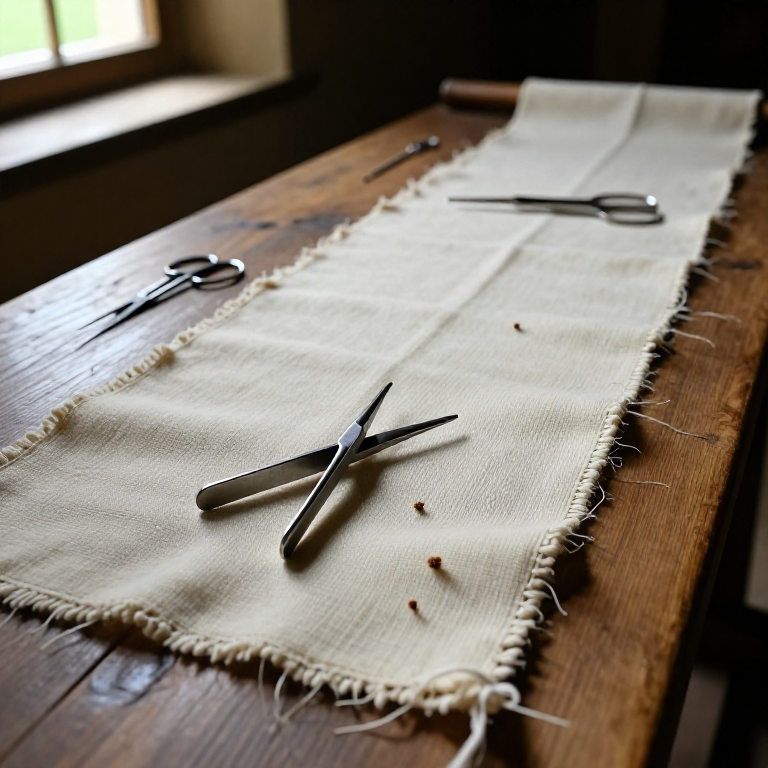

Burling and Mending Woven Cloth — Cleaning and Repairing Fabric Before Fulling
Burling is the first finishing operation performed on cloth fresh from the loom — a painstaking inspection and cleaning process that prepares the fabric for fulling. The burlier lays the woven cloth flat on a table and works inch by inch across the entire surface, using tweezers (burling irons) to pluck out knots, loose thread ends, small lumps of vegetable matter, slubs, and any other imperfections caught in the weave. At the same time, the burlier checks for broken warp or weft threads and repairs them with a needle, weaving in short replacement threads that blend invisibly into the fabric. Burling was women's work in the medieval cloth trade — skilled, quiet, and absolutely essential. Without burling, every knot and slub would be permanently set into the cloth during fulling, ruining the surface that would later be napped and sheared. This blueprint follows the traditional hand-burling process from first inspection to final check.
Mga Tagubilin
Remove the cloth from the loom
Remove the cloth from the loom
Mga materyales para sa hakbang na ito:
 Bagong habing telang lana1 piraso
Set up the burling table
Set up the burling table
Prepare your burling irons
Prepare your burling irons
Mga kailangang kasangkapan:
 Sipit na pang-alis ng buhol
Begin systematic inspection
Begin systematic inspection
Pluck out knots and slubs
Pluck out knots and slubs
Remove vegetable matter
Remove vegetable matter
Trim loose thread ends
Trim loose thread ends
Mga kailangang kasangkapan:
 Maliit at matalim na gunting
Check for broken threads
Check for broken threads
Mend broken threads
Mend broken threads
Mga materyales para sa hakbang na ito:
 Sinulid na lana na tugma1 labay
Mga kailangang kasangkapan:
 Karayom na malaki ang butas
Check the selvedges
Check the selvedges
Turn and inspect the reverse
Turn and inspect the reverse
Final pass and approval
Final pass and approval
Mga Materyales
2- 1 pirasoPlaceholder
- 1 labayPlaceholder
Mga Kinakailangang Kasangkapan
3- Placeholder
- Placeholder
- Placeholder
Mga Materyales ng Nakakonektang Blueprint
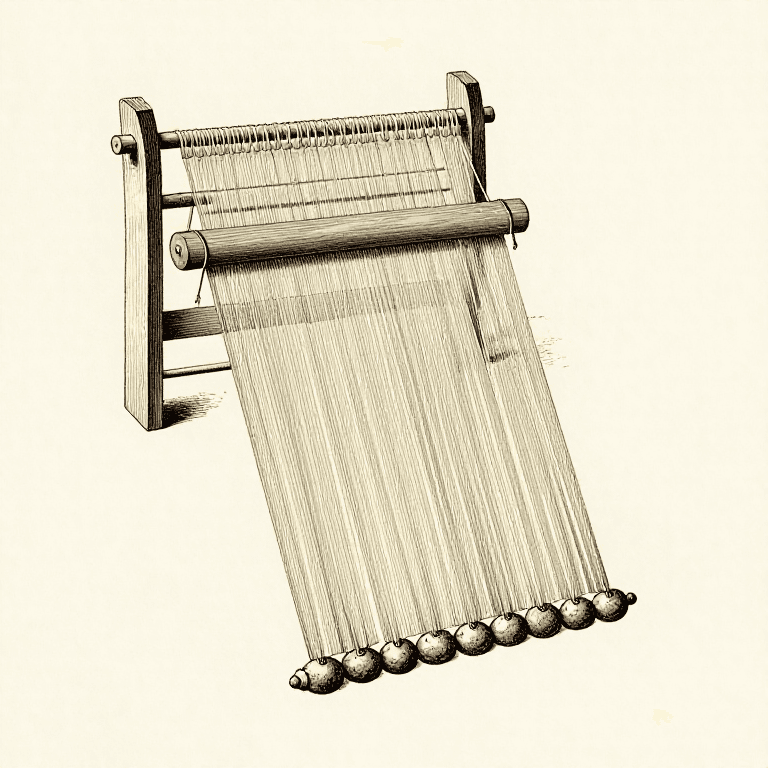
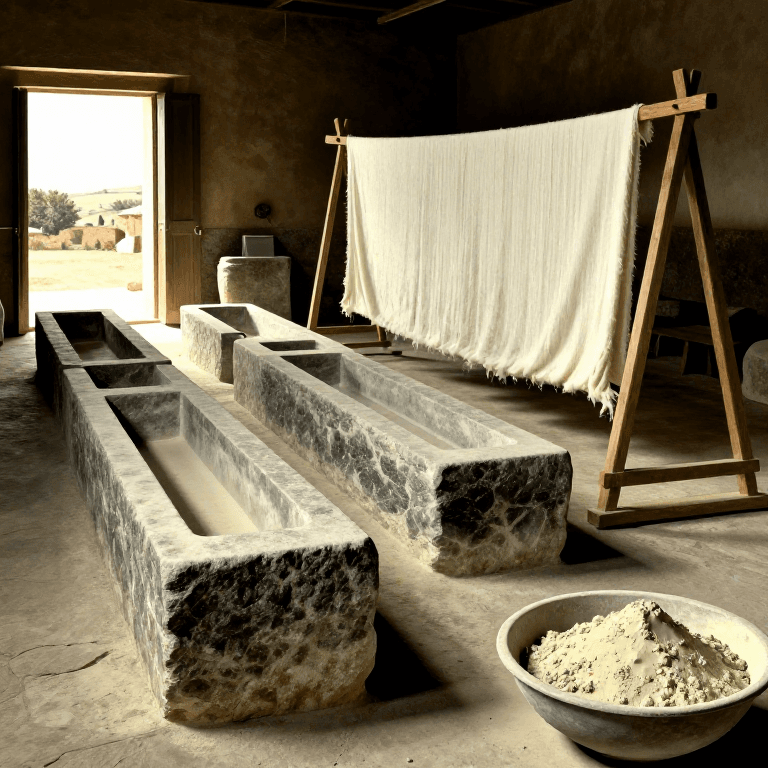
Ang blueprint na ito ay gumagawa ng
Kaugnay na Blueprint
Ang mga blueprint na ito ay nagbabahagi ng kaalaman — mga teknik, materyales, o prinsipyo
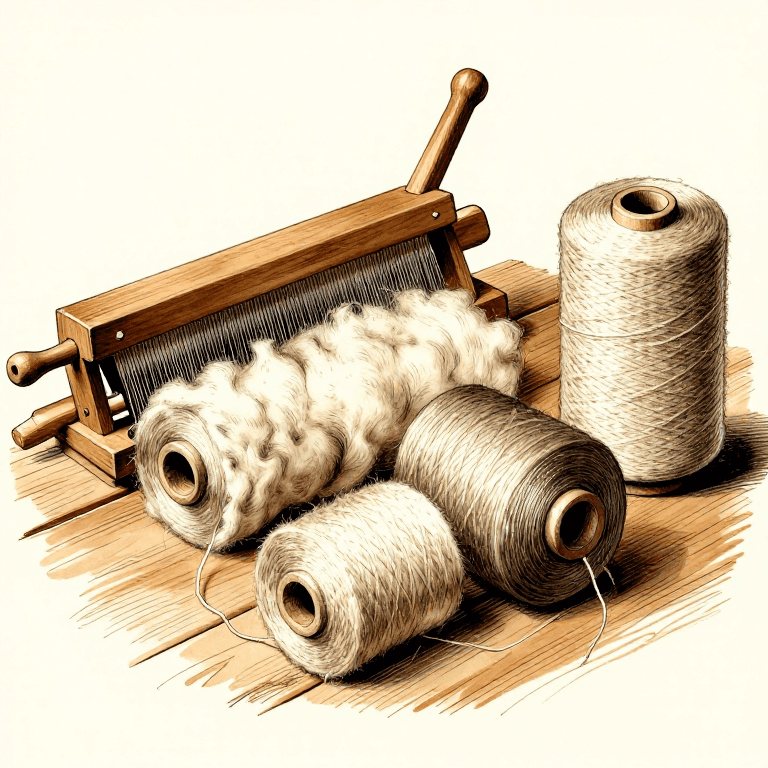
Carding and Combing Raw Wool for Spinning — Preparing Fleece for the Drop Spindle
ni Tex
Sinauna
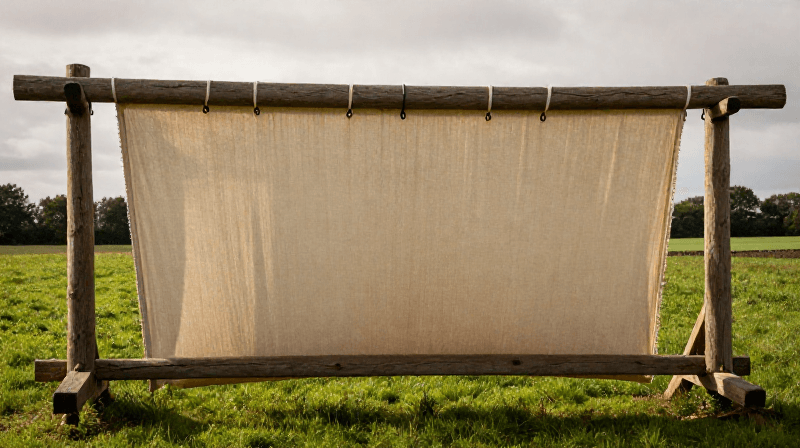
Tentering Cloth on a Frame — Stretching Fulled Wool to Set Width and Grain
ni Tex
Tela at Katad
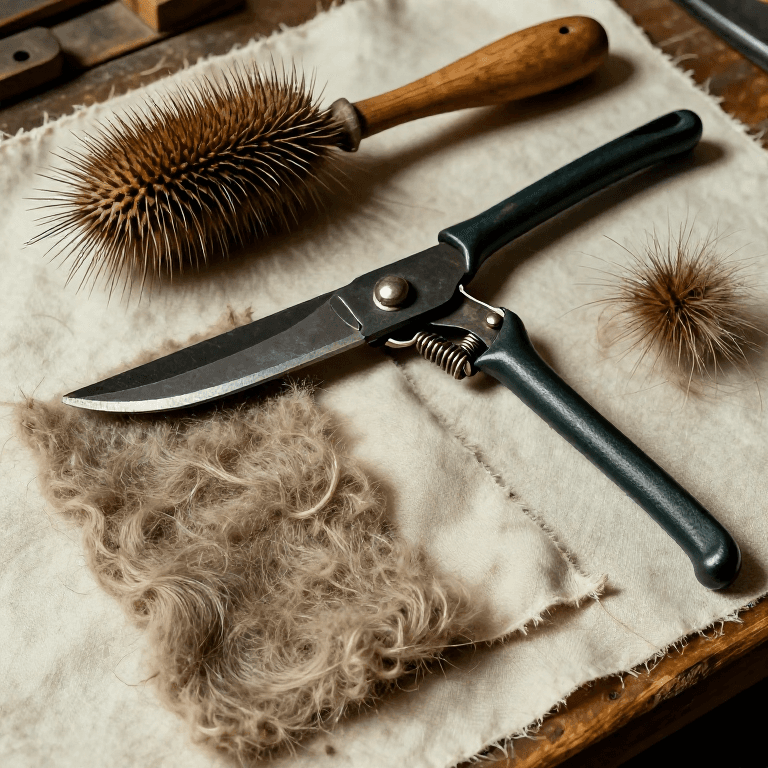
Raising the Nap and Shearing Woolen Cloth — Teasel Napping and Cropping Shears
ni Tex
Tela at Katad
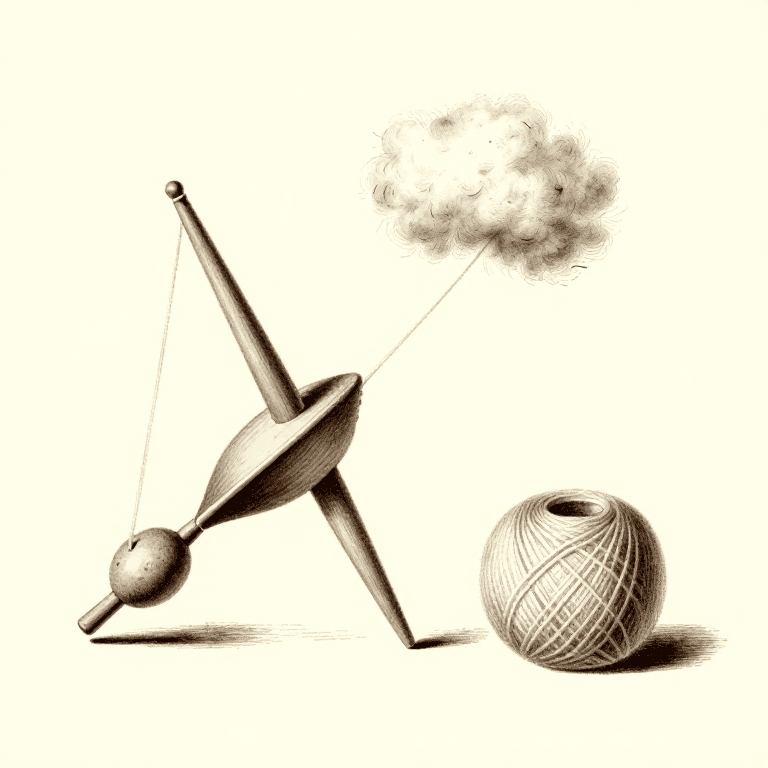
Using a Drop Spindle to Spin Wool — Hand Spinning Yarn
ni Tex
Tela at Katad
CC0 Pampublikong Domain
Ang blueprint na ito ay inilabas sa ilalim ng CC0. Malaya kang kumopya, magbago, mamahagi, at gumamit nang walang pahintulot.
Suportahan ang Maker sa pamamagitan ng pagbili ng mga produkto sa kanilang Blueprint Komisyon ng Maker itinakda ng mga Vendor, o lumikha ng bagong bersyon ng Blueprint na ito at isama bilang koneksyon sa iyong Blueprint upang ibahagi ang kita.