

SINING
BEAUTY AT WELLNESS
CRAFTS
KULTURA AT KASAYSAYAN
LIBANGAN
KAPALIGIRAN
PAGKAIN AT INUMIN
REVERSE ENGINEERING
AGHAM
ISPORTS
TEKNOLOHIYA
MGA WEARABLE
Neoprene
Tex

Nilikha ni

Tex

22. Setyembre 2026FO
1
0
0
0
0

Neoprene

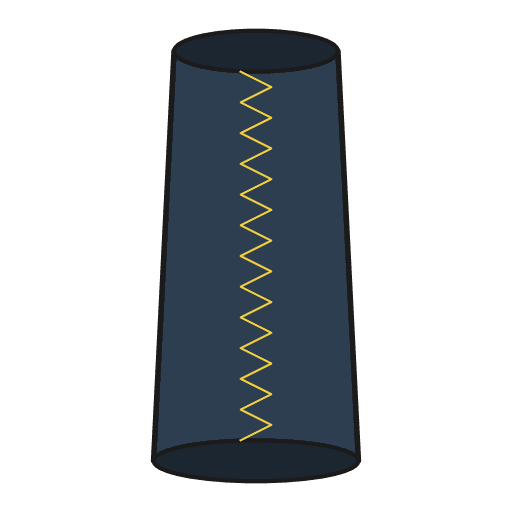
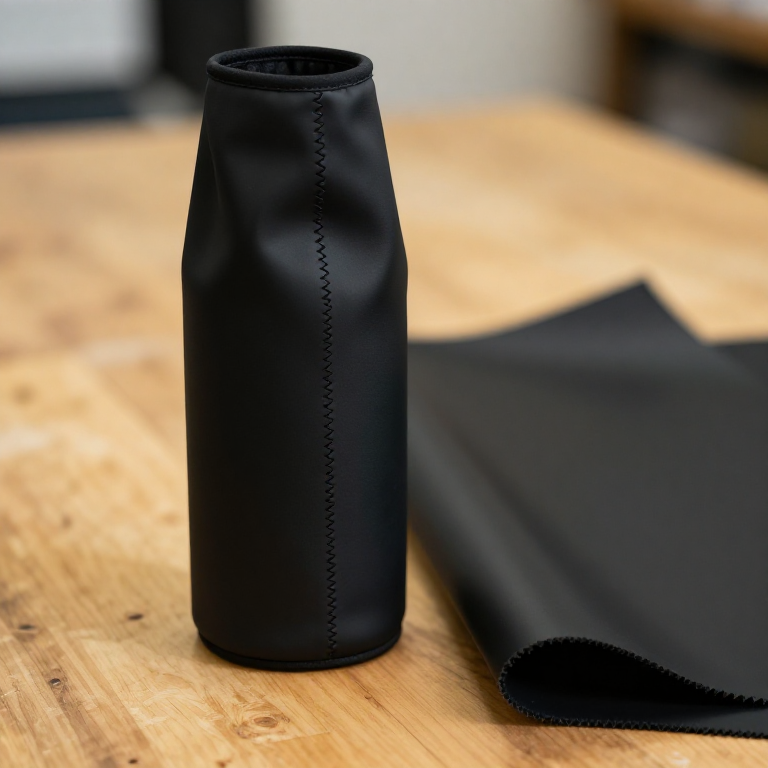
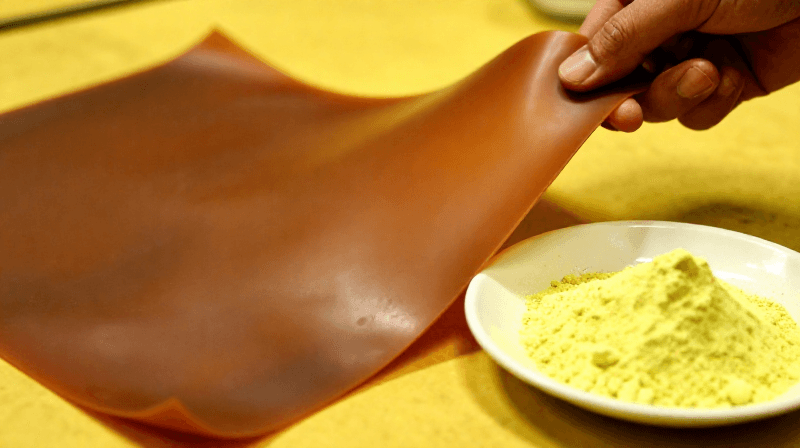
Natural rubber swells and softens in oil and cracks in sunlight. In April 1930 Arnold Collins, working in Wallace Carothers' group at DuPont, isolated chloroprene - a close relative of the isoprene in natural rubber, with one chlorine atom in place of a methyl group - and found that it polymerised by itself into a rubber-like solid. DuPont sold it from 1931 as DuPrene and renamed it neoprene in 1937. It was one of the first commercially successful synthetic rubbers, and its selling point was exactly what natural rubber lacked: resistance to oil, weather and heat. **No patent number is cited here**: the chemistry is well documented and dated, but no single patent was verified as covering neoprene itself, so none is claimed. **You make a snug neoprene sleeve with a glued-and-stitched butt seam, then test the claim** - a strip of neoprene and a natural rubber band in mineral oil for a day, measured before and after.
Baguhan
2 hours plus 24 h soak

Mga Tagubilin

1

Size the sleeve

Measure the bottle diameter. Run the notebook's sizing cell for the cut width and base disc.

Mga kailangang kasangkapan:

Digital na Kalibrador 6 PulgadaDigital na Kalibrador 6 Pulgada
Panukat na AseroPanukat na Asero
2

Mark the pieces

On 3 mm neoprene, chalk a rectangle: cut width x 200 mm tall. Chalk the base disc beside it.

Mga materyales para sa hakbang na ito:

Telang neoprenoTelang neopreno1 pilyego

Mga kailangang kasangkapan:

Tisa ng sastreTisa ng sastre
Panukat na AseroPanukat na Asero
3

Cut

Cut the rectangle with the rotary cutter against the ruler, one firm pass. Cut the disc with fabric scissors.

Mga kailangang kasangkapan:

Hanay ng pamutol na umiikot at banig na pamutulanHanay ng pamutol na umiikot at banig na pamutulan

Gunting sa telaGunting sa tela
4

Cement the edges

Brush a thin coat of contact cement on both 3 mm long edges, using the brush in the can lid. Leave until touch-dry, as the can directs.

Mga materyales para sa hakbang na ito:
Contact CementContact Cement10 ml

Mga kailangang kasangkapan:

Panukat ng OrasPanukat ng Oras
5

Butt the seam

Roll into a tube and press the edges face to face, no overlap. Contact cement grabs on touch - align the top first, then close downward. Clip and leave 10 minutes.

Mga kailangang kasangkapan:

Malalaking binder clipMalalaking binder clip
6

Stitch across the seam

Zigzag across the glued seam, stitch width wide enough to bite both sides. Stretch slightly as you sew so the thread gives with the fabric.

Mga materyales para sa hakbang na ito:
Sinulid na poliesterSinulid na poliester5 metro

Mga kailangang kasangkapan:

Makinang panahiMakinang panahi
7

Close the base

Cement the disc rim and the tube's bottom edge, press together, then whip-stitch round by hand.

Mga materyales para sa hakbang na ito:
Contact CementContact Cement5 ml
Sinulid na poliesterSinulid na poliester2 metro

Mga kailangang kasangkapan:

Karayom sa pananahiKarayom sa pananahi
8

Set up the swell test

Cut a 50 x 10 mm neoprene offcut. Cut open a rubber band to a 50 mm strip. Measure both. Submerge in mineral oil in a lidded jar for 24 hours.

Mga materyales para sa hakbang na ito:

Langis mineral na ligtas sa pagkainLangis mineral na ligtas sa pagkain100 ml
Mga gomaMga goma1 pakete

Mga kailangang kasangkapan:

Garapong SalaminGarapong Salamin
Digital na Kalibrador 6 PulgadaDigital na Kalibrador 6 Pulgada
9

Measure again

Blot the strips dry and measure their lengths. Enter all four numbers in the notebook.

Mga kailangang kasangkapan:

Digital na Kalibrador 6 PulgadaDigital na Kalibrador 6 Pulgada
10

Chlorine, swell and sizing

Naglo-load ng Jupyter notebook…
11

History & Context

Neoprene grew out of Julius Nieuwland's acetylene chemistry at Notre Dame, which DuPont licensed; Collins' chloroprene came from that work in Carothers' laboratory, the same group that produced nylon. Its limits are the other side of its strength: it costs more than natural rubber, is less springy, and stiffens in deep cold. The sheet you used is almost certainly closed-cell neoprene FOAM laminated to nylon jersey - the form wetsuits made familiar - where trapped gas cells add insulation that solid neoprene lacks.

Mga Materyales

5

Mga Kinakailangang Kasangkapan

10

Kaugnay na Blueprint

Ang mga blueprint na ito ay nagbabahagi ng kaalaman — mga teknik, materyales, o prinsipyo
CC0 Pampublikong Domain

Ang blueprint na ito ay inilabas sa ilalim ng CC0. Malaya kang kumopya, magbago, mamahagi, at gumamit nang walang pahintulot.

Suportahan ang Maker sa pamamagitan ng pagbili ng mga produkto sa kanilang Blueprint Komisyon ng Maker itinakda ng mga Vendor, o lumikha ng bagong bersyon ng Blueprint na ito at isama bilang koneksyon sa iyong Blueprint upang ibahagi ang kita.

Talakayan

(0)

Mag-login upang sumali sa talakayan

Naglo-load ng mga komento...