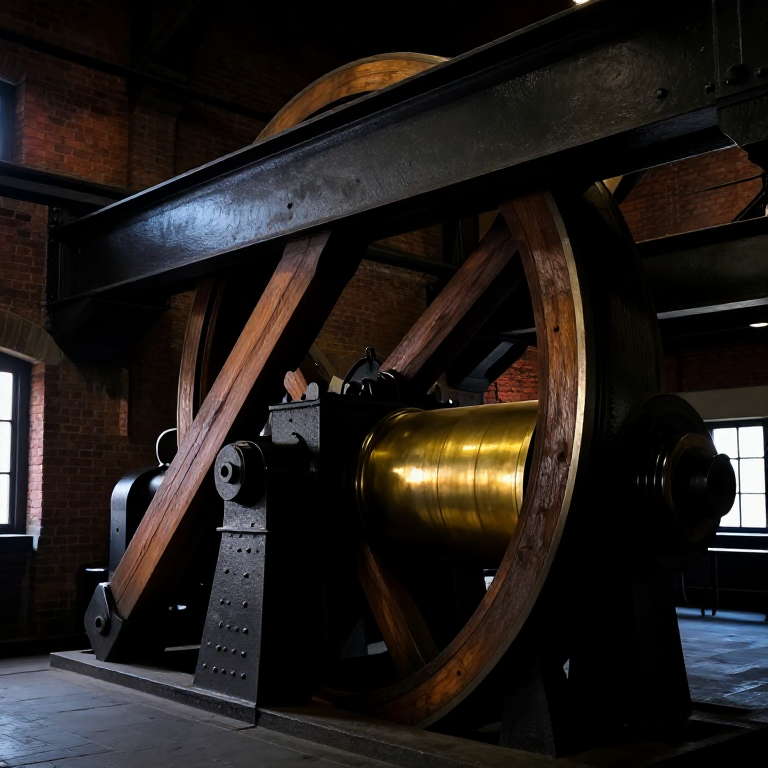


Building a Newcomen Atmospheric Engine — The First Engine to Do Real Work
In 1712 Thomas Newcomen built a machine that changed the world quietly, by pumping water out of coal mines. It was the first engine to turn the heat of a fire into useful mechanical work on a large scale, and every steam engine and motor that followed descends from it.
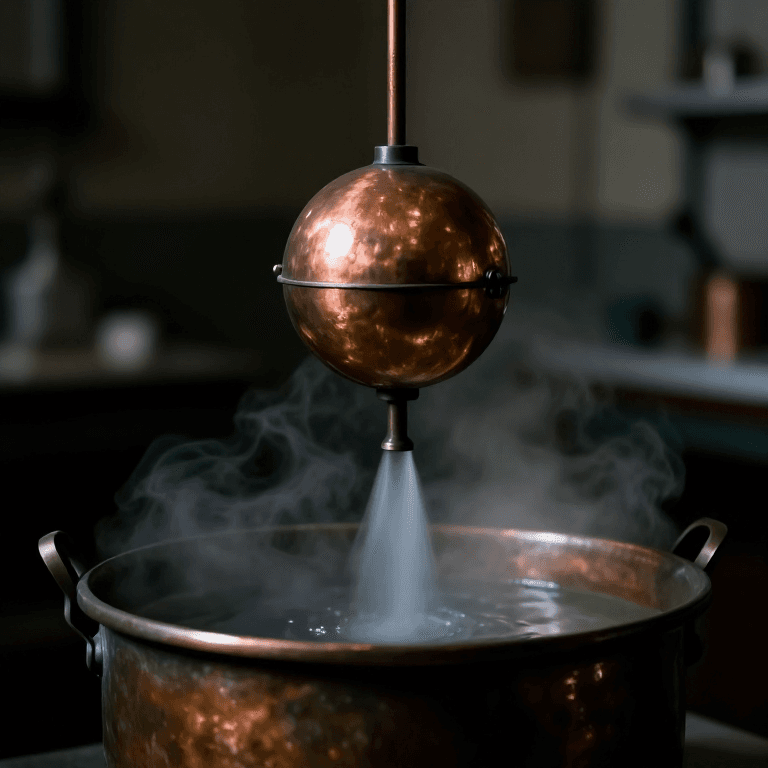
Its genius is counter-intuitive: the steam does not push the piston. Newcomen's engine fills a cylinder with low-pressure steam, then sprays in cold water to condense that steam into a few drops, leaving a vacuum. The ordinary pressure of the atmosphere — about a tonne on a large piston — then shoves the piston down into the vacuum. That downward stroke rocks a great wooden beam whose far end lifts the mine pump. Because air pressure does the work, it is called an atmospheric engine.
It was thirsty and wasteful, reheating its whole cylinder every stroke, but it was tireless and it worked. For sixty years Newcomen engines drained the mines that supplied the coal that fed the Industrial Revolution — until James Watt's separate condenser made the steam engine efficient enough to drive factories and locomotives.
Mga Tagubilin
Grasp the atmospheric principle
Grasp the atmospheric principle
Build the boiler
Build the boiler
Mga materyales para sa hakbang na ito:
 Lapad na Tanso40 kg
 Ladrilyong Matibay sa Apoy120 piraso
Cast and bore the cylinder
Cast and bore the cylinder
Mga materyales para sa hakbang na ito:
 Silindro na kaeng bakal1 piraso
 Katad2 sqm
Erect the great beam
Erect the great beam
Mga materyales para sa hakbang na ito:
 Bigang Douglas fir1 piraso
Plumb the steam and water pipes
Plumb the steam and water pipes
Mga materyales para sa hakbang na ito:
 Tubong tanso6 metro
Mga kailangang kasangkapan:
 Liyabe sa tubo
Raise steam
Raise steam
Mga materyales para sa hakbang na ito:
 Bituminous na uling-bato50 kg
Admit steam and let the piston rise
Admit steam and let the piston rise
Mga kailangang kasangkapan:
 Balbula ng singaw
Inject cold water to make the vacuum
Inject cold water to make the vacuum
Mga kailangang kasangkapan:
Balbula ng singawTake the power stroke
Take the power stroke
Mga materyales para sa hakbang na ito:
 Tubig30 litro
Drain and repeat
Drain and repeat
Mga kailangang kasangkapan:
Balbula ng singawMake it self-acting
Make it self-acting
Mga kailangang kasangkapan:
Liyabe sa tuboKnow its power and its flaw
Know its power and its flaw
Mga Materyales
8- 40 kgPlaceholder
- 120 pirasoPlaceholder
- 1 pirasoPlaceholder
- 2 sqmPlaceholder
- 1 pirasoPlaceholder
- 6 metroPlaceholder
- Placeholder
- 30 litroPlaceholder
Kaugnay na Blueprint
Ang mga blueprint na ito ay nagbabahagi ng kaalaman — mga teknik, materyales, o prinsipyo


CC0 Pampublikong Domain
Ang blueprint na ito ay inilabas sa ilalim ng CC0. Malaya kang kumopya, magbago, mamahagi, at gumamit nang walang pahintulot.
Suportahan ang Maker sa pamamagitan ng pagbili ng mga produkto sa kanilang Blueprint Komisyon ng Maker itinakda ng mga Vendor, o lumikha ng bagong bersyon ng Blueprint na ito at isama bilang koneksyon sa iyong Blueprint upang ibahagi ang kita.