SINING
BEAUTY AT WELLNESS
CRAFTS
KULTURA AT KASAYSAYAN
LIBANGAN
KAPALIGIRAN
PAGKAIN AT INUMIN
REVERSE ENGINEERING
AGHAM
ISPORTS
TEKNOLOHIYA
MGA WEARABLE
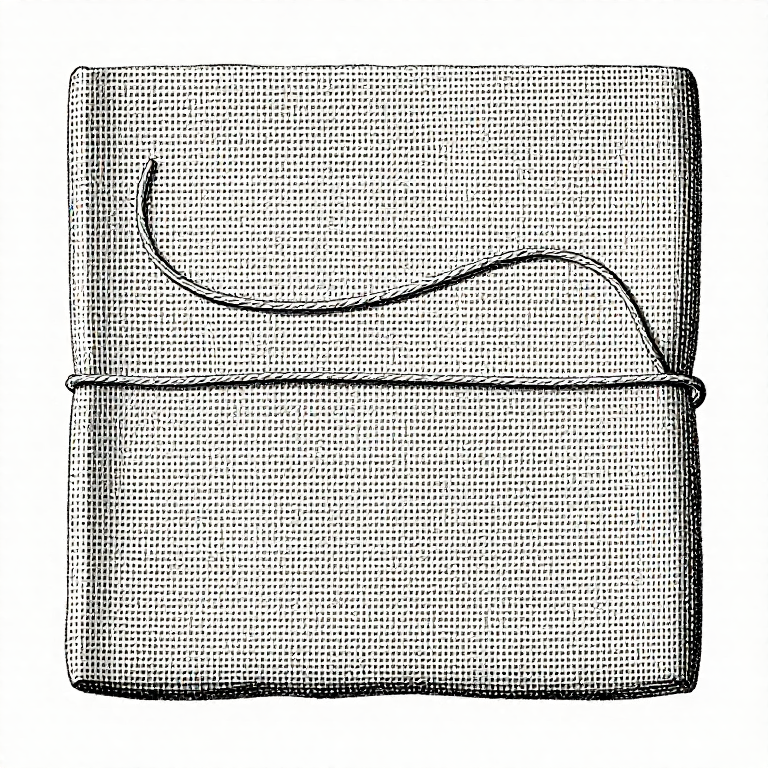


Reading a Woven Fault: Every Line in the Cloth Names Its Cause
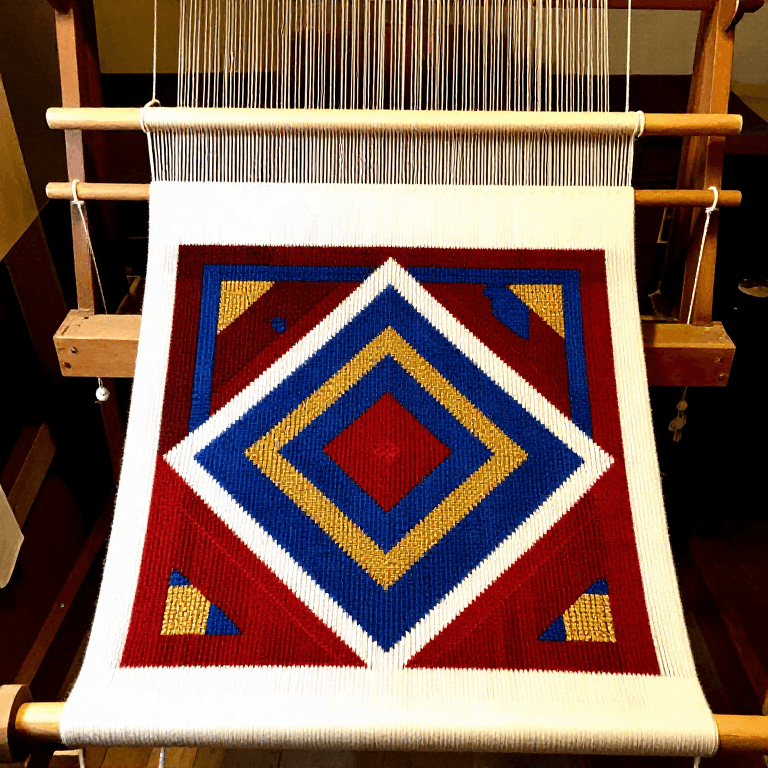
A woven fault has a direction, and the direction is half the diagnosis.
**A fault running the LENGTH of the cloth is a warp fault** — a threading error, a sleying error, a slack or tight end. It was created before weaving began and it runs to the end of the piece.
**A fault running ACROSS the cloth is a weft fault** — a beat that varied, a shed that was not clear, a shuttle that misbehaved. It happened at one moment and it stops there.
That one distinction sorts nearly every problem into "I did this at the loom" or "I did this at the warping board", and the two have completely different remedies.
Katamtaman
2 hours
Mga Tagubilin
1
1
Faults that run the length: the warp
Faults that run the length: the warp
**A line where the structure is wrong** — the over-under pattern breaks along one or two threads. A **threading error**: those ends went through the wrong heddles. It runs the whole length, and it is fixed by re-threading those ends, which is worth doing however far in you are.
**A line where the structure is right but the spacing is wrong** — a visibly wider or narrower gap. A **sleying error**: too many or too few ends in one dent of the reed. Re-sley that section.
**A loose line, threads floating above the surface** — a **slack end**. Weight it separately over the back beam.
**A puckered line, the cloth drawn up along one thread** — a **tight end**. Ease it, or weight the neighbours.
**A streak of different colour or lustre down the cloth** — a different yarn, or the same yarn from a different dye lot or a different bobbin. This is why warp for one piece is wound from one lot, and why alternating between two cones across the warp hides a difference that a block of each would show.
**Repeated breaks in the same few threads** — abrasion, either from a rough heddle or reed, or from draw-in at the edges. Find which, because the two fixes are different.
Mga materyales para sa hakbang na ito:
 Sinulid na Warp na Koton1 piraso
Mga kailangang kasangkapan:
 Lupang Pampalaki
 Ruler
Ruler2
2
Faults that run across: the weft
Faults that run across: the weft
**A band of denser or looser cloth** — the **beat** changed. Often at the start of a session, or when the warp was advanced, or as the weaver tired.
**A float — weft passing over several warp threads it should have gone under** — the **shed was not clear**. A warp thread failed to lift, usually because it was slack or stuck to its neighbour. Fix the shed; the float can be needled in afterwards if it matters.
**A loop of weft hanging out at the selvedge** — the weft was laid in with too much slack, or the shuttle unwound at the turn.
**The cloth narrowing** — draw-in increasing, which is the weaver pulling tighter.
**A visible line where a new weft was joined** — the join was made at the selvedge, or the overlap was too short, or the tension differed.
**A weft thread lying at an angle rather than straight across** — the beat was harder at one side than the other. Watch the fell line.
**Streaks of a slightly different colour across the cloth** — a new bobbin from a different part of the yarn. The remedy is the same as for the warp: alternate between two bobbins pick by pick rather than using one after the other.
Mga materyales para sa hakbang na ito:
 Sinulid na lana na walang tina1 piraso
Mga kailangang kasangkapan:
Lupang PampalakiRuler3
3
What can be mended, and what cannot
What can be mended, and what cannot
**Mendable at the loom:** a broken warp end, a slack end, a float caught within a few picks, a sleying error found early. All of these are routine and cost minutes.
**Mendable after cutting off:** a float can be needled into the correct path with a fine needle and the excess trimmed; a small hole can be darned in matching yarn. On a busy cloth these become invisible. On a plain one they are visible and better than a hole.
**Improvable by finishing:** a slightly uneven beat, a marginally loose sett, small irregularities in handspun weft. Washing and fulling pull a woollen cloth together and hide a great deal. This is not cheating — it is what finishing is for, and every traditional cloth relies on it.
**Not mendable:** a threading error left to run the whole length; a sett that is badly wrong; a warp yarn too weak for the job; a cloth woven at the wrong density throughout.
**The honest decision is early.** Half a metre into a piece that is going wrong, cutting off and re-threading costs an afternoon. Ten metres in, it costs the whole warp. Weave 20 cm, cut a sample off if the loom allows, wash it and look — before committing the rest.
Mga materyales para sa hakbang na ito:
Sinulid na Warp na Koton1 pirasoSinulid na lana na walang tina1 pirasoMga kailangang kasangkapan:
 GuntingLupang Pampalaki
4
4
The record that stops it happening twice
The record that stops it happening twice
Every warp is worth a page, and the page is short.
**Yarn** — fibre, grist in metres per gram, twist, singles or plied, and where it came from.
**Sett** — ends per inch, and how it was sleyed in the reed.
**Width and ends** — in the reed, and the finished width after washing.
**Length** — warped, woven, and finished, so the take-up and shrinkage are recorded as percentages.
**Structure** — the threading and treadling.
**Weft** — yarn and picks per inch.
**Finishing** — how it was washed, how hard, how dried.
**A sample stapled to the page**, washed and finished.
That last line is the one that matters most, exactly as it is for the dyer's card: the cloth is the record and the writing explains it.
**Two pages with the same fault is a systematic problem** — the loom, the reed, a habit. One is an accident. There is no way to tell which without the pages.
And the shrinkage percentages are the thing that is reused most: they are what turn "I want a scarf 180 cm long" into a warp length, and they are specific to the yarn and the finishing rather than general.
Mga materyales para sa hakbang na ito:
Sinulid na lana na walang tina1 pirasoMga kailangang kasangkapan:
Ruler Tumpak na TimbanganGunting
Mga Materyales
2- 2 pirasoPlaceholder
- 3 pirasoPlaceholder
Kaugnay na Blueprint
Ang mga blueprint na ito ay nagbabahagi ng kaalaman — mga teknik, materyales, o prinsipyo

CC0 Pampublikong Domain
Ang blueprint na ito ay inilabas sa ilalim ng CC0. Malaya kang kumopya, magbago, mamahagi, at gumamit nang walang pahintulot.
Suportahan ang Maker sa pamamagitan ng pagbili ng mga produkto sa kanilang Blueprint Komisyon ng Maker itinakda ng mga Vendor, o lumikha ng bagong bersyon ng Blueprint na ito at isama bilang koneksyon sa iyong Blueprint upang ibahagi ang kita.