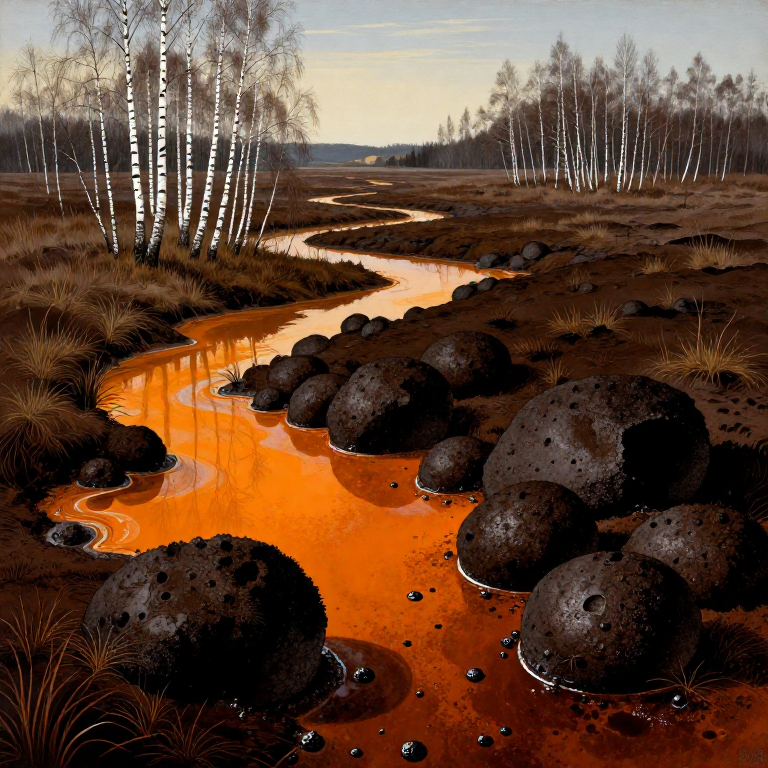


Ruda bagienna — zbieranie rudy darniowej z torfowisk i bagien
Mga Tagubilin
Zrozumiec czym jest ruda bagienna
Zrozumiec czym jest ruda bagienna
Ruda bagienna (ruda darniowa, limonit bagienny) to naturalnie wystepujacy tlenek i wodorotlenek zelaza(III), glownie goethyt (FeOOH) z domieszka lepidokrokytu i ferrhydrytu. Powstaje w srodowisku bagiennym, gdy woda gruntowa bogata w rozpuszczone jony zelaza(II) — pochodzace z wietrzenia mineralow glebowych, np. pirytu i skaleni — wyplywa na powierzchnie w strefach mokradlowych. W kwasnym, ubogim w tlen srodowisku torfowiskowym bakterie zelaziste, przede wszystkim Gallionella ferruginea i Leptothrix ochracea, utleniaja jony Fe2+ do Fe3+, ktore wytraca sie jako nierozpuszczalne tlenki zelaza. Proces ten zachodzi w warstwie gleby na glebokosci 20-60 cm. Zawartosc zelaza w rudzie bagiennej wynosi typowo 30-60% Fe, co czyni ja uzytecznym surowcem hutniczym. Ruda bagienna byla glownym zrodlem zelaza w sredniowiecznej Polsce, Skandynawii i polnocnej Europie az do XIII-XIV wieku, gdy zaczeto eksploatowac glebokie zloza rud zelaza.
Poznac historyczne znaczenie rudy bagiennej w Polsce
Poznac historyczne znaczenie rudy bagiennej w Polsce
Ruda bagienna byla fundamentem produkcji zelaza na ziemiach polskich od epoki zelaza (ok. 700 p.n.e.) az po sredniowiecze. Region Swietokrzyski (okolice Nowej Slupi) byl jednym z najwazniejszych osrodkow hutnictwa zelaza w Europie — archeolodzy odkryli tam tysiace dymarek z okresu rzymskiego (I-IV w. n.e.). Wikingowie i Slowiane budowali piece dymarkowe (bloomery furnaces) specjalnie do wytopu rudy bagiennej. Unikalna cecha rudy bagiennej to jej odnawialnosc — zloza regeneruja sie w ciagu 20-30 lat dzieki ciaglej aktywnosci bakterii zelazistych, co czyni ja surowcem samoodnawialnym. Eksploatacja rudy bagiennej zanikla w Polsce w XIV-XV wieku, gdy gornictwo glebokie umozliwilo dostep do bogatszych zloz hematytu i magnetytu.
Zidentyfikowac torfowisko bogate w zelazo
Zidentyfikowac torfowisko bogate w zelazo
Torfowiska i mokradla zawierajace rude bagienna mozna rozpoznac po kilku charakterystycznych znakach. Pierwszym i najlatwiejszym do zauwazenia jest kolor wody — woda w rowach i kanalach odwadniajacych ma kolor rdzy, od pomaranczowego po ciemnobrunatny, co wskazuje na wysoka zawartosc rozpuszczonego zelaza. Na powierzchni wody czesto widoczna jest teczowa, opalizujaca plywajaca warstwa — to nie jest ropa ani olej, lecz cienki film tlenku zelaza (iron oxide film). Odroznic go od zanieczyszczen ropopochodnych mozna prosty testem: zelazo daje krucha, lamilawa blonke, ktora peka na kawalki po dotknieu patykikem, podczas gdy olej plynie i laczy sie z powrotem. Ruda bagienna wystepuje czesto na Mazurach, Podlasiu, Pomorzu, w Wielkopolsce i na Kujawach — na nizinnych terenach z wysokim poziomem wod gruntowych i kwasnym podlozem torfowym.
Mga kailangang kasangkapan:
 Mapang topograpiko ng mga lokal na latian
 Botang hindi tinatablan ng tubig (botang goma)
Przygotowac sprzet do poszukiwan i wydobycia
Przygotowac sprzet do poszukiwan i wydobycia
Do poszukiwania i wydobywania rudy bagiennej potrzebny jest nastepujacy sprzet: zelazny lub stalowy pret sondazowy (dlugosc 80-120 cm, srednica 10-12 mm) do sondowania gleby pod powierzchnia bagna — ruda bagienna daje charakterystyczny twardy, chrzeszczacy opor w odroznieniu od miekkiego torfu. Potrzebna jest tez mocna lopata szpadlowa do kopania w mokrej glebie, wiadro na wydobyta rude, gumowe kalosze siegajace co najmniej do kolan, oraz rekawice robocze. Woda bagienna jest kwasna (pH 4-6) i moze podraznic skore przy dlugotrwalym kontakcie.
Mga kailangang kasangkapan:
 Barenang bakal na pantarok
 Pala
Pala Balde na 20 Litro
 Botang goma hanggang tuhod
 Mabibigat na guwantes sa trabaho
Sondowac glebe w poszukiwaniu rudy
Sondowac glebe w poszukiwaniu rudy
Wybierz miejsce w poblizu rdzawych wyplywow wody lub pomaranczowych plam na powierzchni gleby. Wbijaj pret sondazowy pionowo w ziemie na glebokosc 20-80 cm, co 50-100 cm wzdluz linii. Miękki torf i bloto daja maly opor — pret wchodzi latwo. Warstwa rudy bagiennej daje wyrazny twardy opor, czesto z charakterystycznym chrzestem lub skrzypnieciem zelaza. Ruda bagienna wystepuje najczesciej na glebokosci 20-60 cm pod powierzchnia, w postaci ciaglej warstwy (grubosc 5-20 cm) lub rozproszonych grudek i konkrecji o srednicy 2-15 cm. Zaznacz miejsca, gdzie napotkales opor — to tam bedziesz kopal. Najlepsze zloza czesto znajduja sie na krawediach torfowisk, gdzie woda gruntowa wyplywa z wyzszego terenu mineralnego na nizinne mokradlo.
Mga kailangang kasangkapan:
Barenang bakal na pantarokWykopac rude bagienna
Wykopac rude bagienna
Zdejmij lopata wierzchnia warstwe torfu i roslinnosci (darni) — zwykle 10-20 cm. Pod spodem znajdziesz warstwe brunatno-rdza, wilgotna mase rudy bagiennej przemieszana z torfem, piaskiem i glina. Ruda bagienna wystepuje w kilku formach: grudki (noduly) o srednicy 2-15 cm, zwarte warstwy (skorupy) o grubosci 5-20 cm, oraz sypkie, porowate masy przypominajace rdza. Wyjmuj rude lopata lub rekami (w rekawicach) i wkladaj do wiader. Z jednego stanowiska mozna zwykle wydobyc 10-30 kg rudy. Dol po wydobyciu mozesz zasypac z powrotem torfem — bakterie zelaziste odnowia zloze w ciagu 20-30 lat. Unikaj kopania glebiej niz 60-80 cm, gdyz ponizej tej glebokosci ruda jest zwykle ubozsza.
Mga materyales para sa hakbang na ito:
 Hilaw na bukol ng bakal sa latian (kagagaling sa hukay)20 kilogram
Mga kailangang kasangkapan:
PalaBalde na 20 LitroMabibigat na guwantes sa trabahoUmyc rude z torfu i blota
Umyc rude z torfu i blota
Swiezo wydobyta ruda bagienna jest pokryta torfem, blotem i materialem organicznym, ktory musi byc usuniety przed dalszym przetworzeniem. Plucz grudki rudy w czystej wodzie, pocierajac je rekami lub szczotka druciana, aby usunac przyczepiony torf i piasek. Mozesz uzyc duzego sita (oczko 5-10 mm) na wiadrze z woda — drobny material organiczny przepadnie, a ciezsze grudki rudy zostana. Po umyciu ruda ma kolor od ciemnobrunatnego po rdzawy, czesto z charakterystyczna porowata, gabczasta struktura (skutek aktywnosci bakteryjnej). Odrzuc kawaki, ktore sa zbyt lekkie lub calkowicie organiczne — prawdziwa ruda jest wyraznie ciezsza od torfu.
Mga materyales para sa hakbang na ito:
 Distiladong Tubig40 litro
Mga kailangang kasangkapan:
 Set ng brotsang kawad
 Magaspang na bithay
 Palanggana ng paghuhugas
Rozkruszyc wieksze grudki
Rozkruszyc wieksze grudki
Wieksze grudki i bryly rudy bagiennej nalezy rozlamac na mniejsze kawalki o srednicy 2-5 cm. Mniejsze fragmenty schnac szybciej i rownosc sie praza w piecu. Uzyj mlotka lub kamienia na twardym podlozu (plaska skala, drewniana kloda). Ruda bagienna jest stosunkowo krucha i latwo sie lamiie — jest to porowaty, gabczasty material, a nie lity kamien. Przy rozbijaniu zwroc uwage na zawartosc: dobra ruda ma jednolity, rdza-brunatny kolor na przelamaniu. Jesli wnetrze jest jasnoszare lub biale, to moze byc glina lub piaskowiec, a nie ruda zelaza. Odrzuc takie kawaki. Grudki z wyrazna metaliczna polyskliwoscia lub ciemnobrunatnym, twardym jadrem sa najwartosciowsze — to czysty goethyt o najwyzszej zawartosci zelaza.
Mga kailangang kasangkapan:
 Martilyo
 Palihan
Wysuszyc rude na powietrzu
Wysuszyc rude na powietrzu
Rozloz rozkruszone kawaki rudy w pojedynczej warstwie na drewnianej desce, metalowej blasze lub na trawie w nasłonecznionym miejscu. Ruda bagienna zawiera 15-30% wody, ktora musi byc usunieta przed prazeniem. Suszenie na powietrzu trwa 3-7 dni w zaleznosci od pogody — wybierz suche, sloneczne dni. Obracaj kawaki co 1-2 dni, aby schnac rownomiernie z kazdej strony. Ruda jest wystarczajaco sucha, gdy jest wyraznie lzejsza niz swiezo wydobyta, nie zostawia mokrych sladow na papierze i daje czysty, metaliczny dzwiek przy uderzeniu kawalek o kawalek (mokra ruda daje gluchy, stlumiony dzwiek). Niedostatecznie wysuszona ruda eksploduje przy gwaltownym nagrzewaniu w piecu z powodu gwaltownego parowania wody.
Mga kailangang kasangkapan:
 Tablang kahoy na patuyuan
Prazyc rude w ognisku (roasting)
Prazyc rude w ognisku (roasting)
Prazenie (kalcynacja) to kluczowy etap przygotowania rudy bagiennej do wytopu. Celem jest usuniecie wody chemicznie zwiazanej, wypalenie materii organicznej oraz przeksztalcenie goethytu (FeOOH) w hematyt (Fe2O3), ktory jest latwiejszy do redukcji w piecu dymarkowym. Zbuduj ognisko z suchego drewna (najlepiej drewno twarde — dab, buk, grab) i rozpal je. Gdy drewno zamieni sie w zarza placik, rozloz kawaki rudy na warstwie zaru, jedna warstwa rudy, jedna warstwa drewna, na przemian. Utrzymuj ogien przez 3-6 godzin w temperaturze 300-500 stopni Celsjusza. Ruda zmieni kolor z brunatno-zoltego na ciemnoczerwony lub ciemnobrazowy — to oznacza konwersje goethytu do hematytu. Po wygasnieciu ogniska i ostygunieciu (minimum 12 godzin), zbierz prazona rude. Bedzie wyraznie lzejsza — utracila 10-15% masy w postaci wody i materii organicznej.
Mga materyales para sa hakbang na ito:
 Panggatong na matigas na kahoy30 kilogram
 Tuyong mineral ng bakal sa latian15 kilogram
Mga kailangang kasangkapan:
 Hukay ng apoy
 Sipit ng apoy na mahaba ang hawakan
 Guwantes na Matibay sa Init
Ocenic jakosc prazonej rudy
Ocenic jakosc prazonej rudy
Prazona ruda bagienna dobrej jakosci ma nastepujace cechy: kolor ciemnoczerwony do ciemnobrazowego (hematyt), jest twarda i krucha (nie sypie sie jak piasek), daje czerwony pyl przy potarciu o chropowata powierzchnie (test rys — hematyt zostawia czerwona ryse, goethyt zolta). Zmierz mase prazonej rudy — powinna byc o 10-15% mniejsza niz przed prazeniem. Jesli ruda nadal jest zolta wewnatrz po rozlamaniu, prazenie bylo niedostateczne — powtorz proces. Prazona ruda o dobrej jakosci jest gotowa do wytopu w piecu dymarkowym (bloomery). Z 10-15 kg prazonej rudy bagiennej o zawartosci 40-50% Fe mozna uzyskac 2-4 kg surowego zelaza (lupy dymarkowej). Przechowuj prazona rude w suchym miejscu — wilgoc moze czesciwoo cofnac proces kalcynacji.
Mga kailangang kasangkapan:
 Timbangan
 Tisang seramiko na walang esmalte
Przechowac rude do dalszego przetworzenia
Przechowac rude do dalszego przetworzenia
Prazona ruda bagienna powinna byc przechowywana w suchym, zadaszonym miejscu — najlepiej w jutowych lub bawelnianych workach, lub w drewnianych skrzyniach. Unikaj plastikowych pojemnikow zamknietych szczelnie, gdyz resztkowa wilgoc moze sie skraplac i powodowac ponowne utlenianie. Prazona ruda zachowuje swoje wlasciwosci przez wiele miesiecy, jesli jest sucha. Sredniowieczni kowale w Polsce gromadzili rude przez cale lato i jesien, aby miec zapas na zimowy sezon hutniczy. Nastepnym etapem przetworzenia jest wytop w piecu dymarkowym (bloomery furnace) z uzyciem wegla drzewnego jako reduktora — ale to temat na oddzielny blueprint. Pamietaj o aspektach prawnych: w Polsce zbieranie rudy bagiennej do celow edukacyjnych i rekonstrukcji historycznej jest dozwolone, ale eksploatacja komercyjna kopalin wymaga koncesji geologicznej zgodnie z Prawem geologicznym i gorniczym.
Mga materyales para sa hakbang na ito:
 Sakong hita na pang-imbak2 piraso
Mga kailangang kasangkapan:
 Kahong kahoy na imbakan
Mga Materyales
5- Placeholder
- 40 litroPlaceholder
- 30 kilogramPlaceholder
- 15 kilogramPlaceholder
- 2 pirasoPlaceholder
Mga Kinakailangang Kasangkapan
20- Placeholder
- Placeholder
- Placeholder
- Placeholder
- Placeholder
- Placeholder
- Placeholder
- Placeholder
- Placeholder
- Placeholder
- Placeholder
- Placeholder
- Placeholder
- Placeholder
- Placeholder
- Placeholder
- Placeholder
- Placeholder
- Placeholder
Ang blueprint na ito ay gumagawa ng

CC0 Pampublikong Domain
Ang blueprint na ito ay inilabas sa ilalim ng CC0. Malaya kang kumopya, magbago, mamahagi, at gumamit nang walang pahintulot.
Suportahan ang Maker sa pamamagitan ng pagbili ng mga produkto sa kanilang Blueprint Komisyon ng Maker itinakda ng mga Vendor, o lumikha ng bagong bersyon ng Blueprint na ito at isama bilang koneksyon sa iyong Blueprint upang ibahagi ang kita.