SINING
BEAUTY AT WELLNESS
CRAFTS
KULTURA AT KASAYSAYAN
LIBANGAN
KAPALIGIRAN
PAGKAIN AT INUMIN
REVERSE ENGINEERING
AGHAM
ISPORTS
TEKNOLOHIYA
MGA WEARABLE
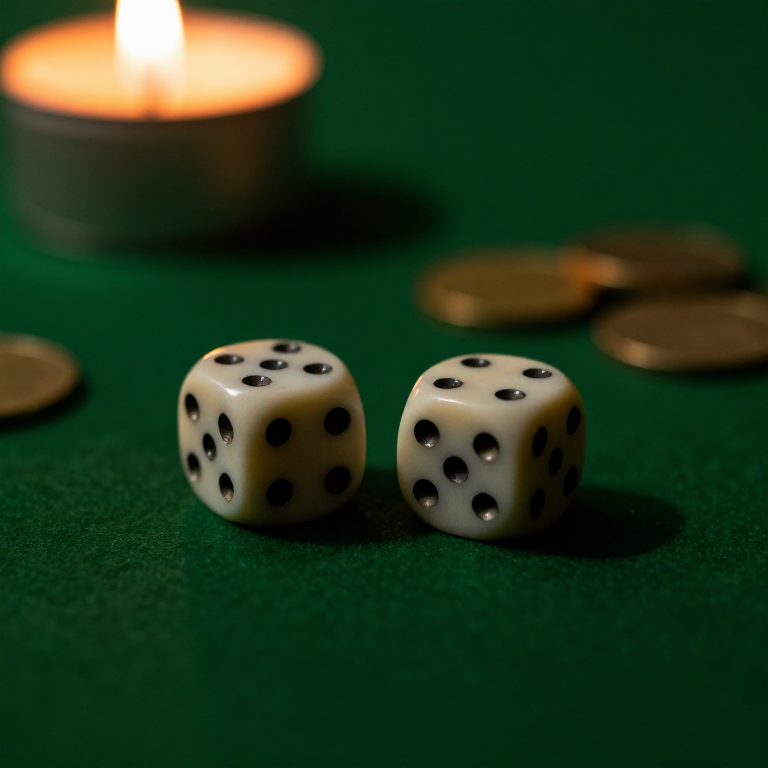


The Birth of Probability — Roll the Dice and Find the Odds
A hands-on maths project: roll two dice fifty times, tally the totals, and discover that 7 comes up most often -- the start of probability, born from a gambler's question to Pascal and Fermat in 1654. A Python cell gives the exact odds and simulates thousands of rolls, and a compendium reaches from dice to modern statistics.
Baguhan
30 minutes
Mga Tagubilin
1
1
A gambler's question
A gambler's question
In 1654 a gambler asked Blaise Pascal how to split the stakes in an unfinished game. Pascal and Pierre de Fermat worked out the answer in a famous exchange of letters -- and invented the mathematics of chance. You will rediscover its first lesson with two dice.
2
2
Roll and tally
Roll and tally
Take two dice. On paper, make a tally chart with a row for each possible total from 2 to 12. Now roll the two dice fifty times, and each time add a tally mark next to the total you rolled. Take your time and be honest with every roll.
Mga materyales para sa hakbang na ito:
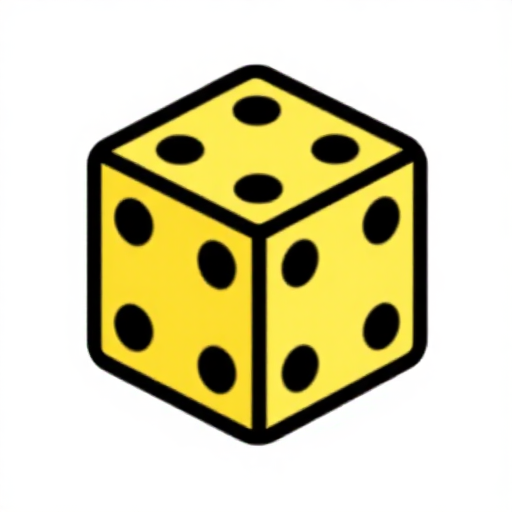 Dais (anim ang mukha, set ng 5)1 piraso
 Papel1 pilyego
Mga kailangang kasangkapan:
 Hanay ng Lapis na Grapito
3
3
Which total wins?
Which total wins?
Turn your tallies into a little bar chart. You should find the middle totals -- especially 7 -- came up far more often than 2 or 12. Why? Because there are six ways to make 7 (1+6, 2+5, 3+4, 4+3, 5+2, 6+1) but only ONE way to make 2 (1+1) or 12 (6+6). More ways means more likely.
4
4
Compare with the exact odds
Compare with the exact odds
Naglo-load ng Jupyter notebook…
Mga kailangang kasangkapan:
 Desktop na Kompyuter
5
5
Compendium: the mathematics of uncertainty
Compendium: the mathematics of uncertainty
What your dice teach. (1) When outcomes are equally likely, a probability is just favourable outcomes divided by all outcomes -- 6 ways out of 36 for a seven, so one in six. (2) Your fifty rolls wobble around the true odds; a thousand rolls hug them tightly -- the 'law of large numbers'. (3) The counts of ways to make each total are hidden in Pascal's triangle, tying chance to counting. (4) The reasoning Pascal and Fermat invented for a gambling dispute now underlies insurance, weather forecasts, medical trials, quantum physics and the machine-learning behind modern AI. A question about dice became the mathematics of uncertainty itself.
Mga Kinakailangang Kasangkapan
2- Placeholder
- Placeholder
Kaugnay na Blueprint
Ang mga blueprint na ito ay nagbabahagi ng kaalaman — mga teknik, materyales, o prinsipyo
CC0 Pampublikong Domain
Ang blueprint na ito ay inilabas sa ilalim ng CC0. Malaya kang kumopya, magbago, mamahagi, at gumamit nang walang pahintulot.
Suportahan ang Maker sa pamamagitan ng pagbili ng mga produkto sa kanilang Blueprint Komisyon ng Maker itinakda ng mga Vendor, o lumikha ng bagong bersyon ng Blueprint na ito at isama bilang koneksyon sa iyong Blueprint upang ibahagi ang kita.