SINING
BEAUTY AT WELLNESS
CRAFTS
KULTURA AT KASAYSAYAN
LIBANGAN
KAPALIGIRAN
PAGKAIN AT INUMIN
REVERSE ENGINEERING
AGHAM
ISPORTS
TEKNOLOHIYA
MGA WEARABLE
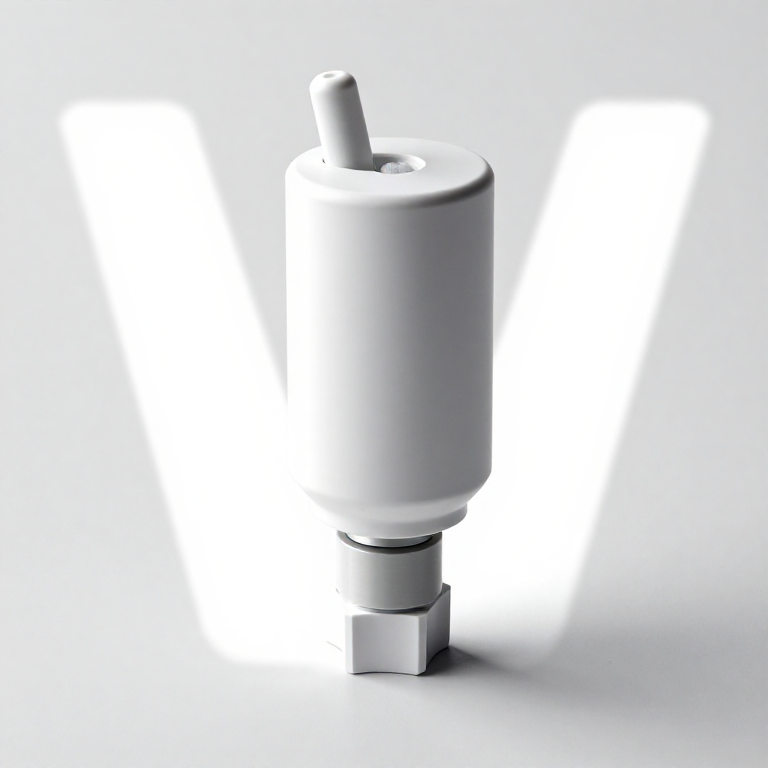


The Servo-Diaphragm Float Valve
This is a sibling of `ball-cock-float-valve`. Same goal — refill a cistern and stop exactly at the right level, unattended, for decades. Different means, and the difference is where the closing force comes from.
In a ball cock the float supplies the force. Buoyancy lifts the arm, the arm is a lever, and the lever multiplies that buoyancy into a force pressing a washer onto a seat. It is direct, it is beautifully simple, and it has a hard limit: the force available is whatever the float can produce times whatever the lever can multiply, and the force NEEDED rises with the supply pressure and the seat area. At high mains pressure the ball cock is fighting hard, which is why it chatters, why it wears its seat, and why the float and arm have to be as big as they are.
The servo-diaphragm valve inverts the problem. The float still senses the level, but it no longer does the work. All it does is open or close a tiny pilot orifice, perhaps a millimetre across, which needs almost no force. Behind the main seat is a flexible diaphragm with the supply pressure bled into a chamber BEHIND it through a small feed hole. When the pilot is shut, that chamber pressurises to full line pressure, and because the diaphragm's back area is larger than the seat area it is pressed firmly closed — by the water's own pressure. When the float opens the pilot, the back chamber empties faster than the feed hole can refill it, the pressure behind collapses, and line pressure lifts the diaphragm open.
The water closes the valve against itself. Higher supply pressure makes it close HARDER rather than making it harder to close, which is exactly backwards from the ball cock and is the whole point.
What it costs: more parts, a diaphragm that perishes, and a pilot orifice small enough to be blocked by a grain of grit — which is why these valves have a filter and why the filter is the thing that needs cleaning. A ball cock will pass dirty water forever.
You will build both, load them until they fail to seal, and find the pressure at which the ball cock gives up.
Katamtaman
5 hours
Mga Tagubilin
1
1
Build the servo — a pilot orifice, a diaphragm, and a feed hole
Build the servo — a pilot orifice, a diaphragm, and a feed hole
Three dimensions make this work and one relationship between them. Get the relationship wrong and it either never opens or never closes.
THE BODY. A 40 millimetre pipe end cap as the valve chamber, with a 15 millimetre inlet fitting entering the side. Across the middle, clamped between the cap and a flange, a diaphragm cut from 0.5 millimetre silicone or EPDM sheet, 38 millimetres across.
THE MAIN SEAT. A short 10 millimetre tube standing up from the outlet side so its open end faces the diaphragm, its rim flat and smooth. When the diaphragm is pressed down onto that rim, flow stops. The seat area is what line pressure pushes UP on — about 78 square millimetres for a 10 millimetre bore.
THE BACK CHAMBER is the space above the diaphragm, and it needs two holes.
THE FEED HOLE, roughly 0.8 millimetres, drilled through the diaphragm itself or through the body from the inlet side. This continuously bleeds supply pressure into the back chamber. Make it with a fine drill bit run slowly — a rotary tool on its lowest speed, or a pin vice turned by hand if you have one — and not with a needle — a punched hole has a ragged lip that changes size as it flexes.
THE PILOT ORIFICE, roughly 1.5 millimetres, leading from the back chamber out to atmosphere, closed by a small rubber pad on the end of the float arm.
THE RELATIONSHIP, and this is the design: the pilot must be able to dump water faster than the feed hole can supply it. Flow through a small orifice goes as the square of its diameter, so a 1.5 millimetre pilot passes roughly three and a half times what a 0.8 millimetre feed does at the same pressure. That ratio is what makes the back pressure collapse when the pilot opens. A rule of thumb is a pilot at least 1.5 times the feed diameter, and 2 times is safer.
If you make them the same size, the back chamber never depressurises and the valve never opens at all. Try it deliberately with a 0.8 millimetre pilot and watch nothing happen — it is a quick way to understand what the ratio is doing.
THE FLOAT AND ARM. Because the float now only has to lift a rubber pad off a 1.5 millimetre hole, it can be tiny. A 40 millimetre closed-cell foam float on a 60 millimetre arm is ample. Compare that with the ball cock's 100 millimetre float on a 200 millimetre arm doing the same job, and the size difference IS the amplification.
TEST IT. Connect to a supply, fill a bucket, and watch. It should shut with a distinct clean action rather than the gradual throttling of a ball cock, and it should shut silently. That sharpness is the servo action: as the float begins to close the pilot, back pressure rises, which closes the diaphragm further, which is positive feedback toward closed.
Mga materyales para sa hakbang na ito:
 Sari-saring Kabit ng Tubong PVC1 set
 Malinaw na Tubong PVC2 metre
 Plantsang gomang silikon1 piraso
 Bloke ng espumang saradong selda1 piraso
 Check valve na tanso1 piraso
 Silicone Sealant1 piraso
 Turnilyong May Ulong Soket8 piraso
 Tuerkang Heksagonal8 piraso
Mga kailangang kasangkapan:
 Walang-Kableng Barena
 Hanay ng Talim ng Barena
 Umiikot na kasangkapan (uring Dremel)
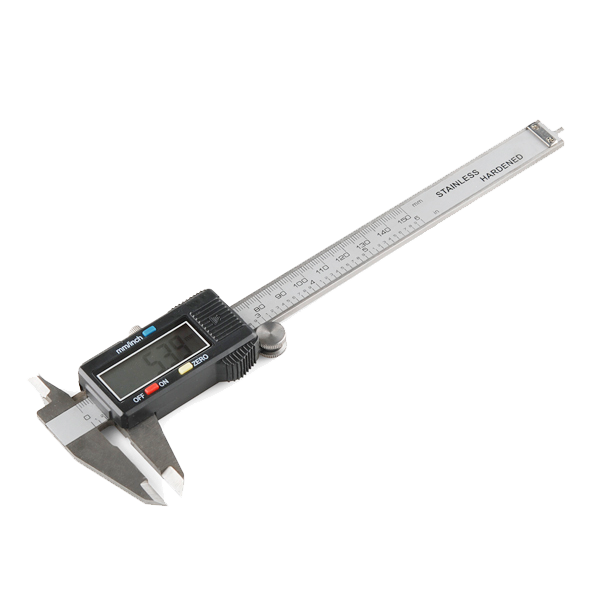 Digital Calipers - 152.4 mm
 Hanay ng Susing Heks
 Balde
Balde2
2
Raise the pressure until the ball cock gives up
Raise the pressure until the ball cock gives up
Set both valves up side by side on the same supply, with a pressure gauge and a way to vary the pressure — a pump with a bypass, or simply a header tank you can raise.
THE MEASUREMENT THAT SEPARATES THEM. Start at low pressure, perhaps 0.5 bar, and let each valve close. Both will. Now raise the pressure in steps and, at each step, check three things.
Does it shut off completely? Look for a weep at the outlet after closure. The ball cock will begin to weep at some pressure, because the float's buoyancy times the lever ratio is a FIXED force, while the force trying to push the washer off its seat rises linearly with pressure. Above a certain pressure the arithmetic simply loses. Find that pressure and write it down; it is the single most important number in this comparison.
The servo valve will not weep, and will not weep at any pressure you can generate on a bench, because the closing force is the same pressure that is trying to open it — multiplied by the ratio of the diaphragm area to the seat area. Raise the supply and both sides rise together, and the ratio never changes.
Does it chatter? Raise the pressure and listen. A ball cock approaching its limit hunts: the valve nearly closes, flow drops, pressure at the seat changes, the float dips slightly, the valve reopens. That oscillation is the noise everyone recognises from a filling cistern, and it hammers the seat until it is grooved. The servo valve should stay quiet, because its feedback is positive toward closed rather than marginal.
How accurate is the shut-off level? Fill and drain each valve ten times and measure the final water level each time with a rule. Compute the spread. The ball cock's shut-off level shifts with supply pressure, because it closes when force balances and the force balance depends on pressure. The servo's does not, because it closes when the pilot closes, which is a position, not a force.
NOW FAIL THE SERVO, which is only fair. Put a pinch of fine sand into the supply. The ball cock will pass it and carry on. The servo will, sooner or later, block its feed hole or its pilot — and note WHICH, because the two failures are opposite and both are instructive.
A blocked FEED hole means the back chamber never pressurises, so the valve cannot close and the cistern overflows continuously. A blocked PILOT means the back chamber cannot empty, so the valve cannot open and there is no water at all.
One failure floods the building and one leaves you without water. That is why these valves are always supplied with a filter, and why the maintenance instruction is to clean it. A ball cock has no equivalent instruction because it has no equivalent vulnerability.
Mga materyales para sa hakbang na ito:
 Buhangin2 kilogram
 Malinaw na tubong binil3 metre
 Balde na 20 Litro2 piraso
Mga kailangang kasangkapan:
 Kit para sa pagsubok ng haydrolikong presyon
 Bombang panubig na isinasawsaw
 Ruler
Ruler Panukat ng Oras
3
3
Force amplification — why one wins at pressure and the other at dirt
Force amplification — why one wins at pressure and the other at dirt
Naglo-load ng Jupyter notebook…
Mga kailangang kasangkapan:
 Desktop na Kompyuter
Mga Materyales
11- Placeholder
- 2 metrePlaceholder
- 1 pirasoPlaceholder
- 1 pirasoPlaceholder
- 1 pirasoPlaceholder
- 1 pirasoPlaceholder
- 8 pirasoPlaceholder
- 8 pirasoPlaceholder
- 2 kilogramPlaceholder
- 3 metrePlaceholder
- 2 pirasoPlaceholder
Mga Kinakailangang Kasangkapan
12- 1 vendor sell this, none ship to you yetPlaceholder
- Placeholder
- Placeholder
- Digital Calipers - 152.4 mm10% komisyon$14.19
- Placeholder
- Placeholder
- Placeholder
- Placeholder
- Placeholder
- Placeholder
- Placeholder
- Placeholder
Kaugnay na Blueprint
Ang mga blueprint na ito ay nagbabahagi ng kaalaman — mga teknik, materyales, o prinsipyo


CC0 Pampublikong Domain
Ang blueprint na ito ay inilabas sa ilalim ng CC0. Malaya kang kumopya, magbago, mamahagi, at gumamit nang walang pahintulot.
Suportahan ang Maker sa pamamagitan ng pagbili ng mga produkto sa kanilang Blueprint Komisyon ng Maker itinakda ng mga Vendor, o lumikha ng bagong bersyon ng Blueprint na ito at isama bilang koneksyon sa iyong Blueprint upang ibahagi ang kita.