SINING
BEAUTY AT WELLNESS
CRAFTS
KULTURA AT KASAYSAYAN
LIBANGAN
KAPALIGIRAN
PAGKAIN AT INUMIN
REVERSE ENGINEERING
AGHAM
ISPORTS
TEKNOLOHIYA
MGA WEARABLE
Youblob (generated from this blueprint's notebook) · CC0

Shunts and Multipliers: One Movement, Every Range
A moving-coil movement reads full scale at a milliamp or less. Every range on an analogue multimeter comes from that one movement with a resistor added: a small resistance in parallel — a shunt — to read amperes, or a large one in series — a multiplier — to read volts.
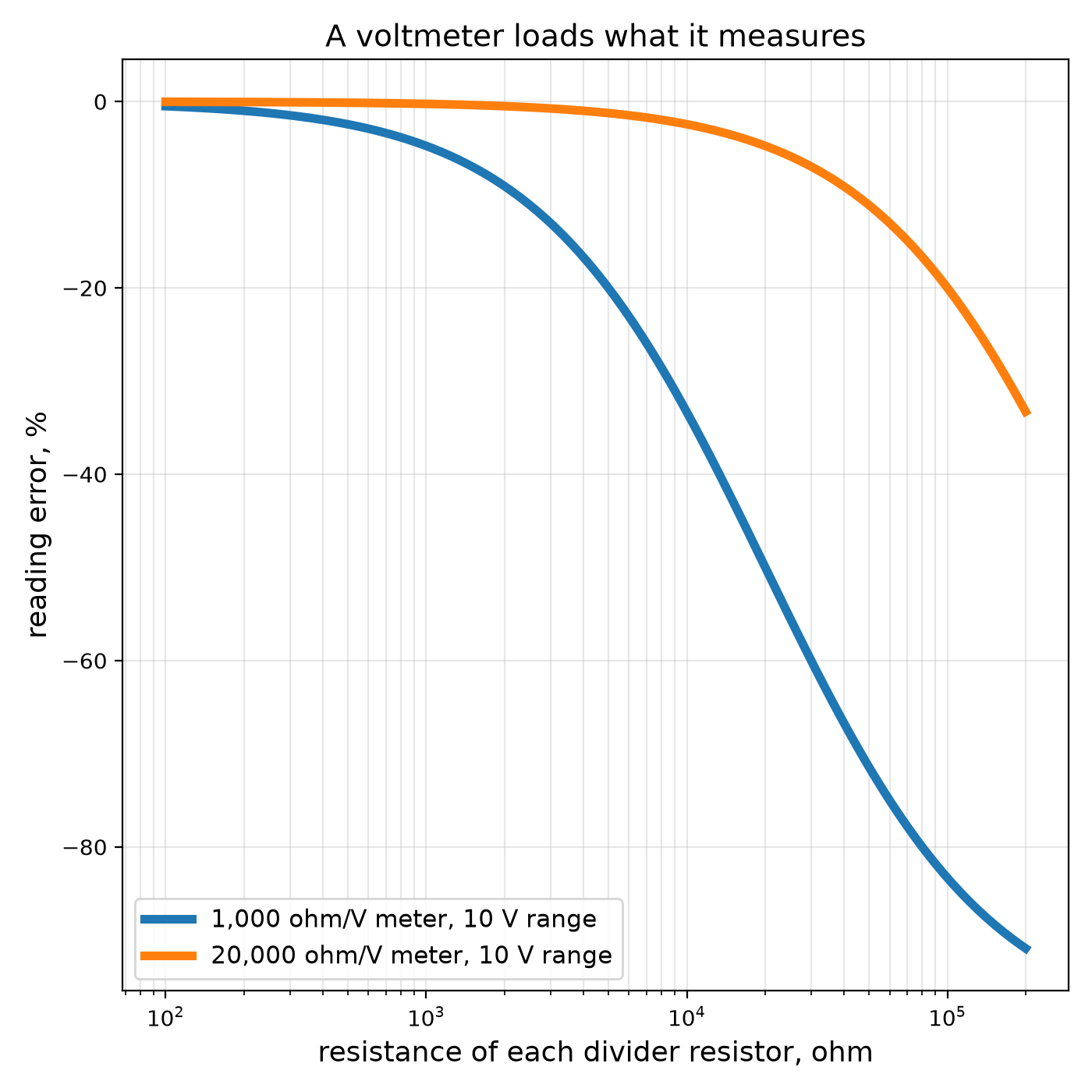
The resistors are easy to calculate. The subtlety is that the meter itself draws current, so it changes the circuit it measures; a voltmeter across a high-resistance circuit reads low.
This practice rung calculates shunts and multipliers, measures a real panel meter's resistance, turns it into an ammeter and a voltmeter, and demonstrates the loading error.
Baguhan
About 3 hours
Mga Tagubilin
1
1
Shunts, multipliers and loading
Shunts, multipliers and loading
Naglo-load ng Jupyter notebook…
2
2
Measure your meter's own resistance
Measure your meter's own resistance
Connect the panel meter in series with a variable resistor (a potentiometer) and a 1.5 V cell, and adjust for exactly full-scale deflection.
Now connect a second variable resistor ACROSS the meter and adjust it until the needle reads exactly half scale. Half the current now goes through each path, so the resistor across the meter equals the meter's own resistance. Disconnect it and measure it with the multimeter: that is R_m. Put it, and the full-scale current from the meter's dial, into the notebook.
Mga materyales para sa hakbang na ito:
 Panukat sa panel na may gumagalaw na likaw1 piraso
 Potensiyometro2 piraso
Mga kailangang kasangkapan:
 Multimetro
 Mga Kableng Pansubok na May Ipit na Buwaya
3
3
Make an ammeter and a voltmeter
Make an ammeter and a voltmeter
For a 10 V voltmeter, choose resistors from the kit that add up to the notebook's multiplier value, put them in series with the meter, and check the reading against the multimeter on a battery or the bench supply.
For a 1 A ammeter, cut the notebook's length of copper wire (about 2.3 m of 0.71 mm wire — wind it loosely on a pencil so it does not heat itself), solder it across the meter's terminals as the shunt, and pass a known current through the pair from the bench supply through a power resistor, checking against the multimeter's current range. Trim the wire until the readings agree.
Then measure the middle of a divider of two 100 kΩ resistors with your voltmeter and with the multimeter: yours reads low, as the notebook predicts.
Mga materyales para sa hakbang na ito:
 Kit ng Risistor1 set
 Kawad na Tanso1 metro
 Panghinang na lata-tingga10 g
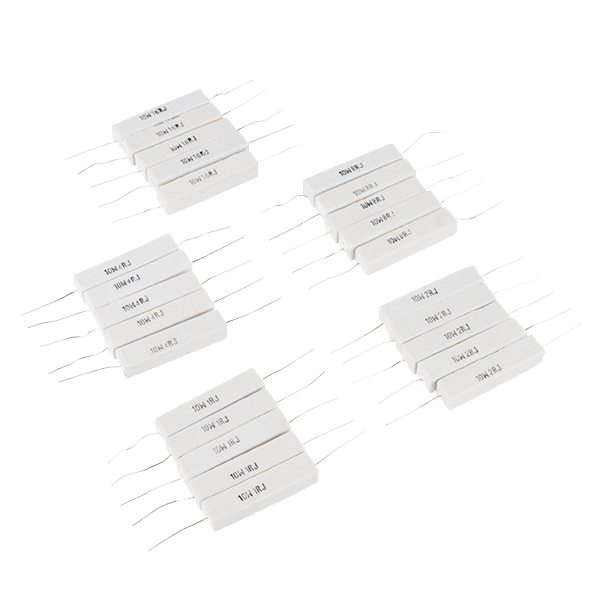 Power Resistor Kit - 10W (25 pack)1 pakete
Mga kailangang kasangkapan:
Multimetro Pinagkukunan ng tuwid na kuryente
 Panghinang
 Digital na Kalibrador 6 Pulgada
4
4
Context
Context
A practice rung: shunts and multipliers came with the moving-coil meter of the previous rung and turned one movement into a multi-range instrument. The resistance per volt of a meter became its quality mark.
**Honest limits.** Copper shunts drift with temperature (manganin does not). Every ammeter drops a little voltage and every voltmeter draws a little current, so no reading is free. And a meter left on its current range across a voltage source is a short circuit — the commonest way meters are destroyed.
Mga Materyales
6- Placeholder
- Placeholder
- Placeholder
- 1 metroPlaceholder
- Placeholder
- Power Resistor Kit - 10W (25 pack)10% komisyon1 pakete$5.72
Mga Kinakailangang Kasangkapan
5- Placeholder
- Placeholder
- Placeholder
- 2 vendors sell this, none ship to you yetPlaceholder
- Placeholder
Tinatayang Kabuuan
Ang binili ng gumawa. Ang mga materyales na walang presyo ay kukunin mo kung saan ka bibili.
Kaugnay na Blueprint
Ang mga blueprint na ito ay nagbabahagi ng kaalaman — mga teknik, materyales, o prinsipyo
The Moving-Coil Meter: A Coil, a Spring and a Radial Field
ni Penny
Electronics
31
0
0
0
0
0

Ohm's Law at the Bench: Picking the Resistor That Saves the LED
ni Volt
Electronics
41
0
0
0
0
0
Using a Multimeter: Continuity, Volts, Ohms — and the Setting That Blows the Fuse
ni Ed
Electronics
40
0
0
0
0
0
Wheatstone Bridge
ni Ed
TEKNOLOHIYA
49
0
0
0
0
0
The Fuse Protects the Wire, Not the Thing You Plugged In
ni Volt
TEKNOLOHIYA
40
0
0
0
0
0
CC0 Pampublikong Domain
Ang blueprint na ito ay inilabas sa ilalim ng CC0. Malaya kang kumopya, magbago, mamahagi, at gumamit nang walang pahintulot.
Suportahan ang Maker sa pamamagitan ng pagbili ng mga produkto sa kanilang Blueprint Komisyon ng Maker itinakda ng mga Vendor, o lumikha ng bagong bersyon ng Blueprint na ito at isama bilang koneksyon sa iyong Blueprint upang ibahagi ang kita.