SINING
BEAUTY AT WELLNESS
CRAFTS
KULTURA AT KASAYSAYAN
LIBANGAN
KAPALIGIRAN
PAGKAIN AT INUMIN
REVERSE ENGINEERING
AGHAM
ISPORTS
TEKNOLOHIYA
MGA WEARABLE
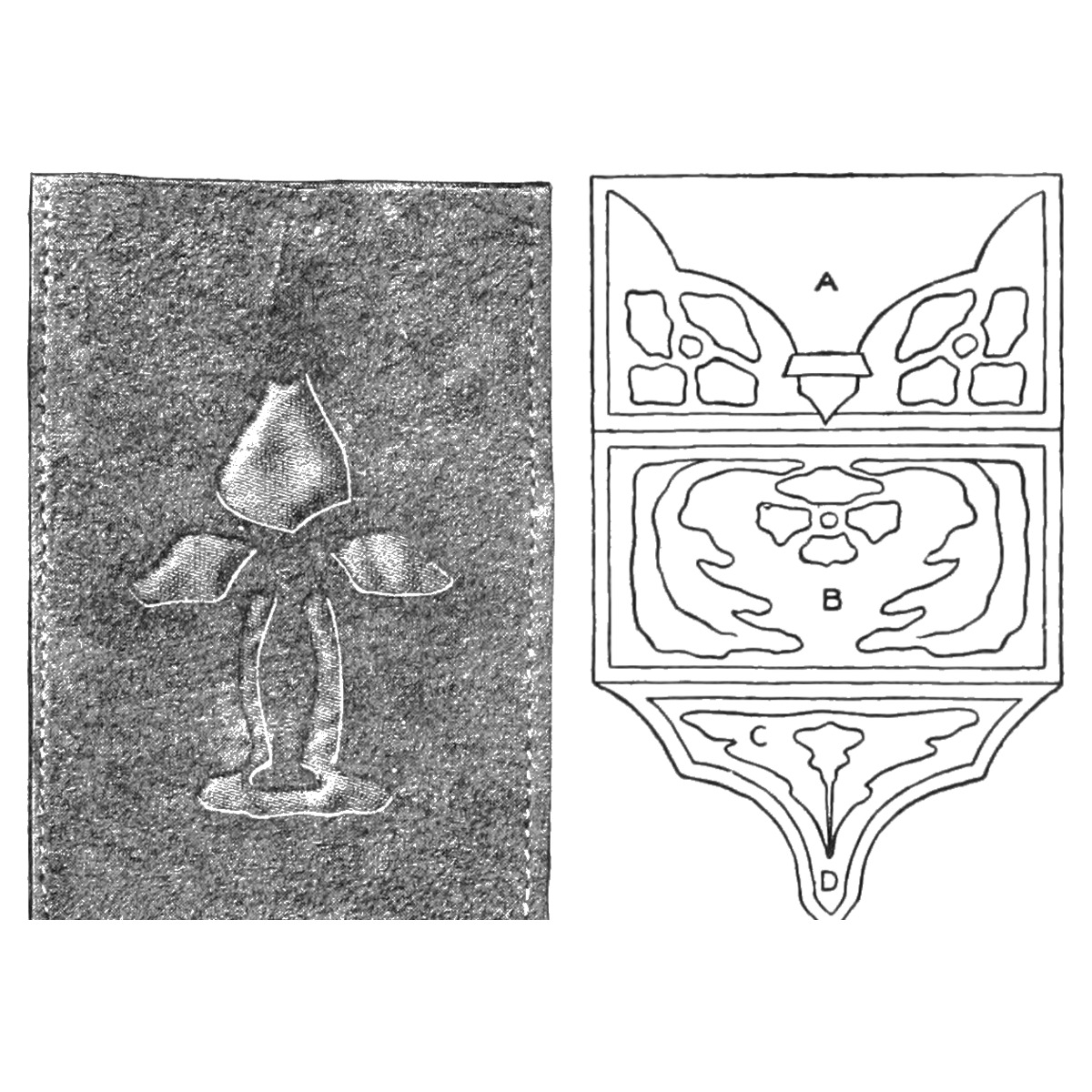


Tooled Stamp Case or Needle Book: Three-Part Fold With a Tongue-and-Slit Closure (Boy Mechanic, 1915)
Mary C. Scovel's needle book or stamp case (The Boy Mechanic, Book 2, 1915): a 6-1/4 by 3-3/4 in piece of Russian calf folded in three, the flap ending in a long narrow tongue that slips through two slits in the front.
Baguhan
About 2 hours
Mga Tagubilin
1
1
Print your template
Print your template
Draft and print her stamp case template at 100 % (check the 10 cm square on page 1), cut it out on the solid line and trace it onto the leather, leaving the 1/4 in margin (the dotted line) for pinning down.
Mga materyales para sa hakbang na ito:
 Papel1 as required
Mga kailangang kasangkapan:
 Pang-imprentang bulalas ng tinta
 Gunting
2
2
Her sizes in centimetres
Her sizes in centimetres
Naglo-load ng Jupyter notebook…
3
3
Read The Boy Mechanic, Book 2
Read The Boy Mechanic, Book 2
Her outfit: "two special tools costing 50 cents each, one with a narrow edge for lining patterns, and one with broad ends for tooling; and a piece of tin, plate glass, or very smooth hard wood, which should not be smaller than 9 by 12 in. A soft sponge, a triangle, a rule, tracing paper and a hard pencil are also needed." Russian calfskin is best for tooling and stamping.
4
4
Make the paper pattern
Make the paper pattern
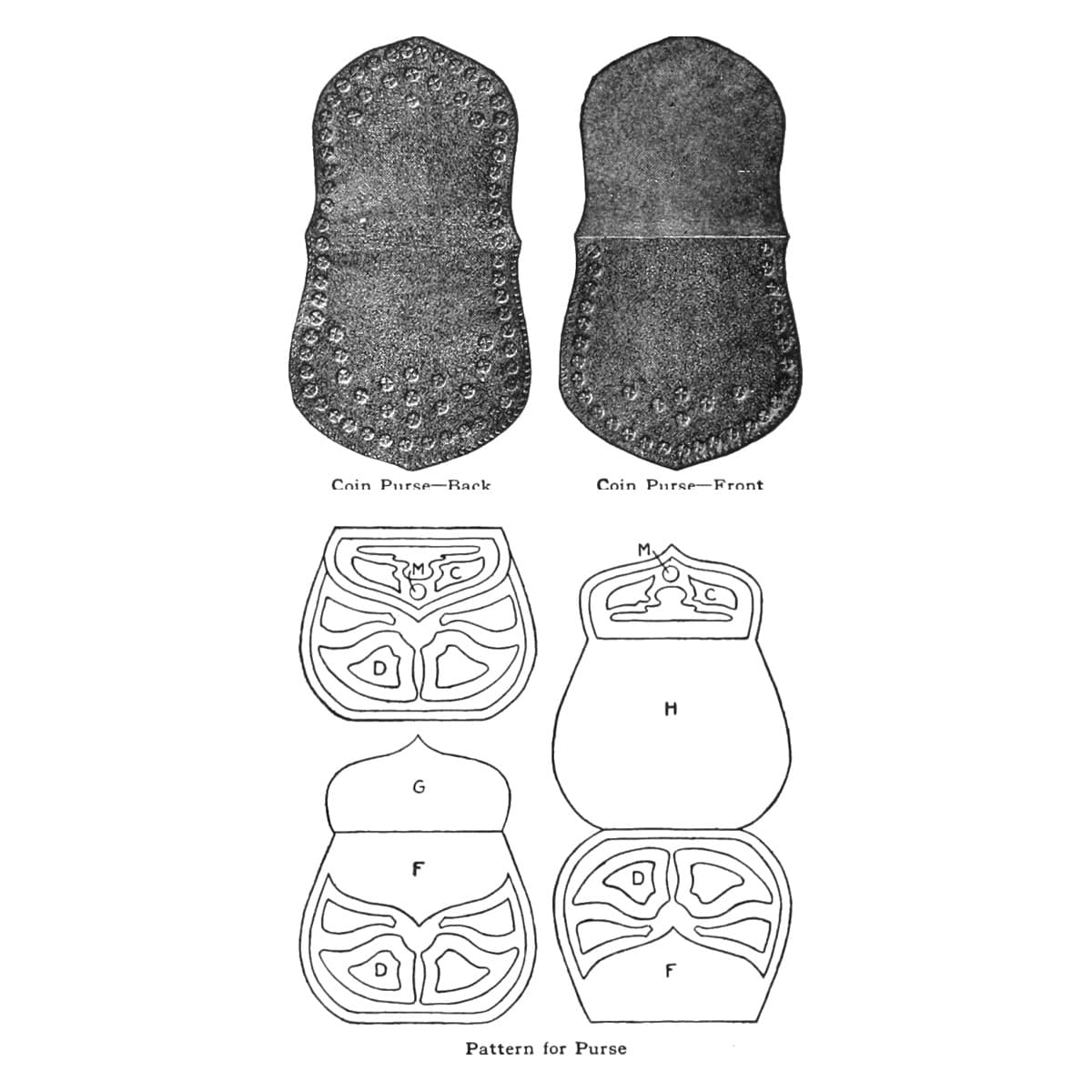
Cut Russian calf 6-1/4 by 3-3/4 in, which allows 1/4 in on each side and end for pinning. Fold paper into three equal parts: A the front; B the back, folded under A; C the flap, which folds up with B and over A. With the pattern open, all the design is on the same side; the design for B goes on upside down so it reads upright when folded. Shape C as you like, but keep its tongue D long and narrow.
Mga materyales para sa hakbang na ito:
 Katad ng guya1 piraso
Mga kailangang kasangkapan:
 Papel na pambakat
 LapisGunting
 Ruler
5
5
Damp the leather and transfer the design
Damp the leather and transfer the design
Draw the whole design for the stamp case on tracing paper. Wet the leather on the wrong (unfinished) side with a soft sponge: pat it to moisten, not soak, it; too wet and the tool sticks and leaves an uneven background. Pin the design firmly on the leather, tack the leather down on its outer margin to the glass or board, and go over every line with a hard pencil, with firm, even pressure. Lift the paper and go over the lines with the narrow lining tool, with a strong, firm stroke. A line design can stop here.
Mga materyales para sa hakbang na ito:
Katad ng guya1 pirasoMga kailangang kasangkapan:
 EsponghaPapel na pambakatLapis
 Mga tornilyong pandikit (kahon ng 50)
 Plantsa ng salamin
 Kasangkapang panghubog ng katad
6
6
Tool or stamp the background
Tool or stamp the background
Leave at least 1/8 in between the edge of the pattern and the design. To tool, press the background down with the broad end in even, long strokes; if it will not go down, the leather is too dry, so take it off and damp the back again. Keep the edges sharp between pressed and raised parts. To stamp instead, strike a small carpenter's nail set lightly with a wooden mallet in rows of circles; too hard a blow cuts the leather.
Mga kailangang kasangkapan:
Kasangkapang panghubog ng katad Pambaon ng pako
 Kahoy na PamukpokEspongha
7
7
Cut the slits and sew
Cut the slits and sew
Make two horizontal cuts in the front A about 3/16 in apart, a little wider than the tongue, as far from the bottom of A as the narrowest part of the tongue is from its end, so the tongue fits them. Sew parts A and B together. Stitch on a sewing machine with a long stitch, a large needle and silk as heavy as the needle takes; try it on a scrap first, and put tissue paper over the leather if the foot marks it. Without a machine, prick holes with an awl and sew with needle and silk, running or over-and-over; going over-and-over to the end and back gives an X stitch.
Mga materyales para sa hakbang na ito:
 Sinulid na seda1 piraso
Mga kailangang kasangkapan:
 Kutsilyong Pang-arteRuler
 Makinang panahi
 Panundot
 Dalawang karayom ng talutot
8
8
Troubleshooting
Troubleshooting
Stamp case troubleshooting.
Flow
Loading...
9
9
History and honest limits
History and honest limits
From Mary C. Scovel, "Arts-Crafts Leather Work", in **The Boy Mechanic, Book 2**, Popular Mechanics, 1915 (Project Gutenberg 44585; checked on the archive.org scan boymechanicbook200chic2, pp. 432-441), Part I. Part II adds that ooze cow or calf can be used with a cut-out design lined with silk; that version is not made here. The tools and metric figures are ours.
Mga Materyales
3- 1 as requiredPlaceholder
- 2 pirasoPlaceholder
- 1 pirasoPlaceholder
Mga Kinakailangang Kasangkapan
15- Placeholder
- Placeholder
- Placeholder
- 1 vendor sell this, none ship to you yetPlaceholder
- Placeholder
- Placeholder
- Placeholder
- Placeholder
- Placeholder
- Placeholder
- Placeholder
- Placeholder
- Placeholder
- Placeholder
- Placeholder
Ang blueprint na ito ay gumagawa ng
Kaugnay na Blueprint
Ang mga blueprint na ito ay nagbabahagi ng kaalaman — mga teknik, materyales, o prinsipyo
CC0 Pampublikong Domain
Ang blueprint na ito ay inilabas sa ilalim ng CC0. Malaya kang kumopya, magbago, mamahagi, at gumamit nang walang pahintulot.
Suportahan ang Maker sa pamamagitan ng pagbili ng mga produkto sa kanilang Blueprint Komisyon ng Maker itinakda ng mga Vendor, o lumikha ng bagong bersyon ng Blueprint na ito at isama bilang koneksyon sa iyong Blueprint upang ibahagi ang kita.