SINING
BEAUTY AT WELLNESS
CRAFTS
KULTURA AT KASAYSAYAN
LIBANGAN
KAPALIGIRAN
PAGKAIN AT INUMIN
REVERSE ENGINEERING
AGHAM
ISPORTS
TEKNOLOHIYA
MGA WEARABLE
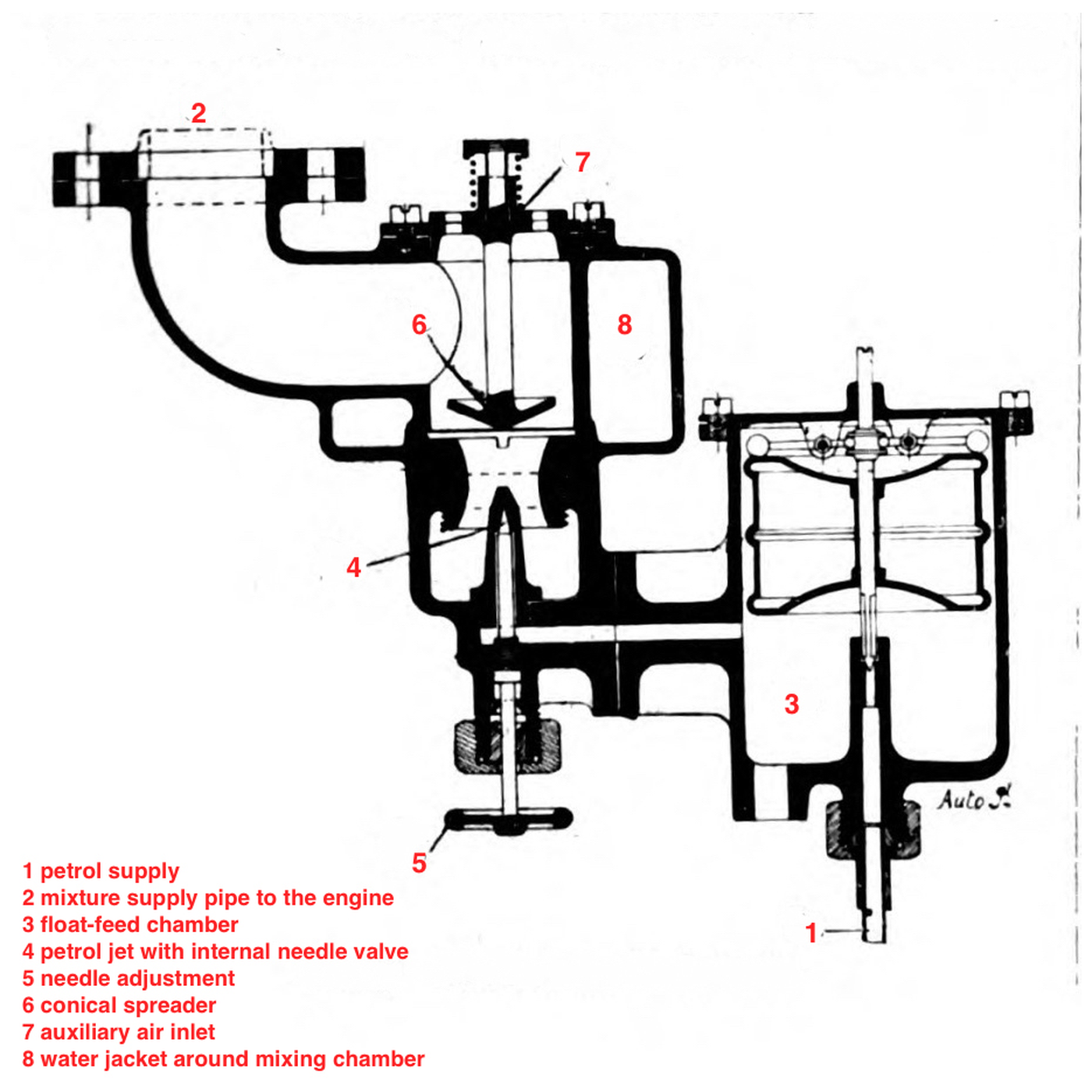


The Carburettor: A Venturi, a Jet and a Float
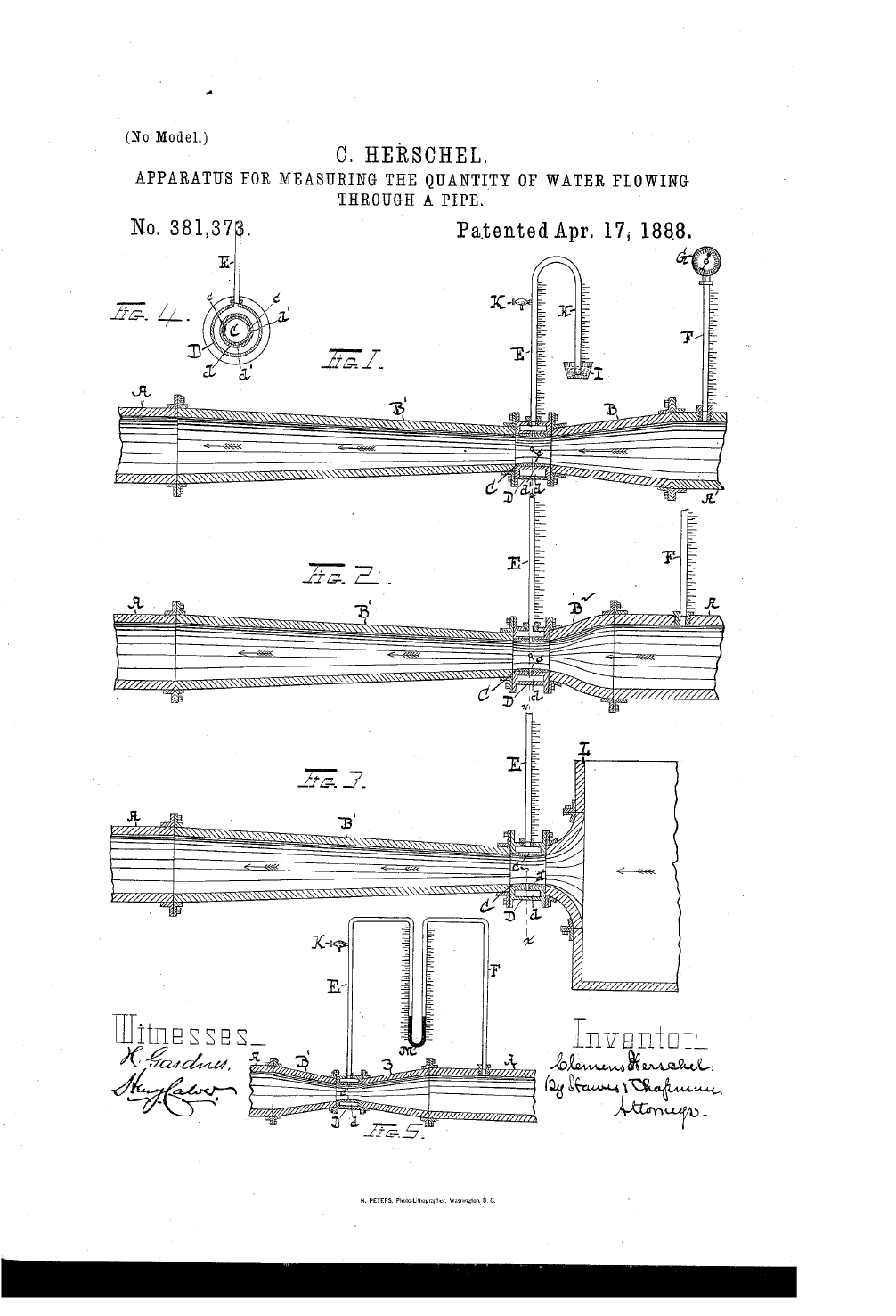
A petrol engine needs its fuel mixed with air in a nearly fixed ratio, at every speed. Wilhelm Maybach's spray-nozzle carburettor of 1893, for Daimler, did it with three parts and no moving control at all: a **venturi** that speeds the air and lowers its pressure, a **jet** opening into the throat that the low pressure draws fuel through, and a **float bowl** that holds the fuel at a constant level just below the jet.
Because the air flow and the fuel flow both go with the air's speed, the mixture stays right as the engine speeds up and slows down.
This rung works out why, and builds a water-and-air venturi atomiser to see the jet draw and spray — no petrol involved.
Katamtaman
About 3 hours
Mga Tagubilin
1
1
Why the mixture stays right
Why the mixture stays right
Naglo-load ng Jupyter notebook…
2
2
Build a venturi atomiser — with water
Build a venturi atomiser — with water
Print a venturi tube: 12 mm bore narrowing smoothly to a 6 mm throat and opening gently back out, with a 2 mm side hole at the throat into which a fine tube is sealed. Lead that tube down into a cup of coloured water 30 mm below the throat — the cup is your float bowl, and the height is the level the float holds.
Blow air through with the air compressor through the regulator, starting very low. At some air speed the water climbs the tube and is torn into a spray at the throat. Raise the cup and it starts at lower air speed; lower it and it needs more. That is why a carburettor needs a float: the fuel level must not change.
**Water only.** Never demonstrate this with petrol: an atomised fuel spray is an explosive mixture.
Mga materyales para sa hakbang na ito:
 PETG filament30 g
 Malinaw na tubong binil1 metro
 Pangkulay sa pagkain (tina para makita ang agos)1 patak
 Tubig1 litro
Mga kailangang kasangkapan:
 Limbagang 3D na FDM
 Kompresor ng hangin
 Regulator na pambawas ng presyon
 Ruler
Ruler Malinaw na Salaming Pangkaligtasan
3
3
History and context
History and context
**Wilhelm Maybach, 1893** — the spray-nozzle carburettor with a float chamber, developed for Daimler engines, the pattern for carburettors for most of the next century. No patent number is asserted here. Earlier 'surface' and 'wick' carburettors had simply let air pass over or through petrol, and their mixture wandered with temperature and fuel level.
Fuel injection replaced the carburettor in cars from the 1980s, for precise mixture control and emissions; carburettors survive on small engines.
**Honest limits.** The simple venturi law fails at very low airflow (idle) and during sudden throttle opening, so real carburettors carry extra circuits. The mixture shifts with altitude, because air density falls. And petrol vapour is dangerous: carburettors are worked on outdoors, away from flame.
Mga Materyales
4- 30 gPlaceholder
- 1 metroPlaceholder
- Placeholder
- 1 litroPlaceholder
Mga Kinakailangang Kasangkapan
5- Placeholder
- 1 vendor sell this, none ship to you yetPlaceholder
- Placeholder
- Placeholder
- Placeholder
Kaugnay na Blueprint
Ang mga blueprint na ito ay nagbabahagi ng kaalaman — mga teknik, materyales, o prinsipyo


CC0 Pampublikong Domain
Ang blueprint na ito ay inilabas sa ilalim ng CC0. Malaya kang kumopya, magbago, mamahagi, at gumamit nang walang pahintulot.
Suportahan ang Maker sa pamamagitan ng pagbili ng mga produkto sa kanilang Blueprint Komisyon ng Maker itinakda ng mga Vendor, o lumikha ng bagong bersyon ng Blueprint na ito at isama bilang koneksyon sa iyong Blueprint upang ibahagi ang kita.