SINING
BEAUTY AT WELLNESS
CRAFTS
KULTURA AT KASAYSAYAN
LIBANGAN
KAPALIGIRAN
PAGKAIN AT INUMIN
REVERSE ENGINEERING
AGHAM
ISPORTS
TEKNOLOHIYA
MGA WEARABLE
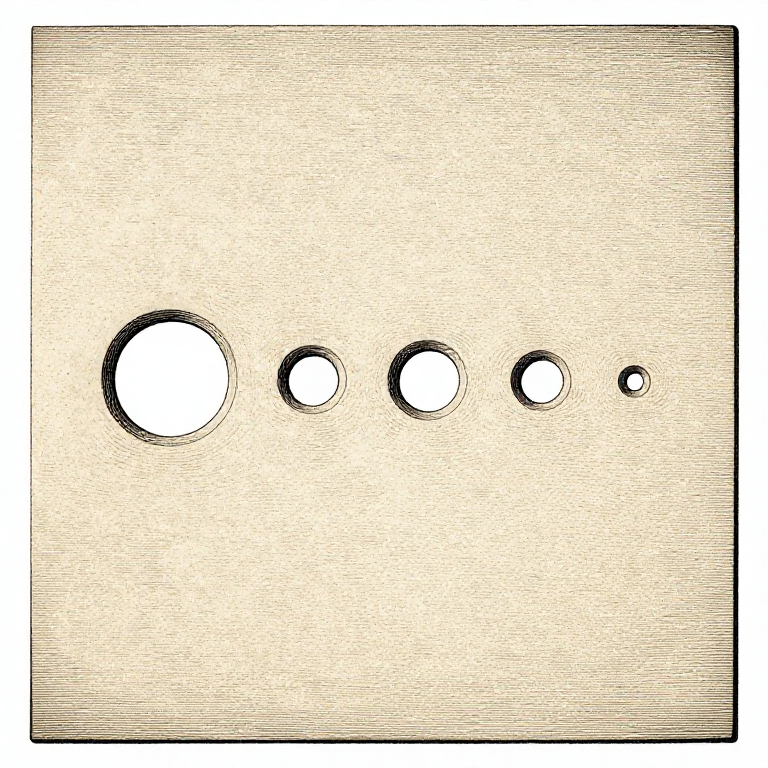


The Exposure Triangle: A Stop Is a Factor of Two
Three settings decide how much light reaches the film: how wide the lens opens, how long it stays open, and how sensitive the film is.
All three are counted in the same unit — the **stop**, which is a doubling or a halving. That one convention is what makes the system workable, because a stop given up on one can be taken back on another without any arithmetic.
It also explains the f-number series, which looks arbitrary and is not: 1.4, 2, 2.8, 4, 5.6, 8 is a sequence of square roots of two, because the light a lens gathers goes with the AREA of its opening.
Baguhan
3 hours
Mga Tagubilin
1
1
The three controls, and what each one costs
The three controls, and what each one costs
**Aperture**, written as an f-number. The f-number is the focal length divided by the diameter of the opening, so a **smaller** number is a **wider** hole — the single most confusing convention in photography, and it follows directly from the definition.
Its side effect is **depth of field**, which has its own rung. A wide aperture throws the background out of focus; a small one brings it in.
**Shutter speed**, in seconds or fractions. Its side effect is **motion**: a fast shutter freezes it, a slow one blurs it, and below about 1/60 a handheld camera blurs everything from the photographer's own movement.
**ISO**, the film's sensitivity. Its side effect is **grain**: a faster film needs less light and records a coarser image. With film this is chosen when the roll is loaded and cannot be changed shot to shot, which is the fundamental difference from a digital sensor.
Every photograph is a decision about which side effect matters. The exposure is the easy part.
Mga materyales para sa hakbang na ito:
 Pelikulang potograpiko1 piraso
Mga kailangang kasangkapan:
 Kamerang digital
 Light meter (tumatama/sumasalamin)
2
2
Stops, equivalents and sunny 16
Stops, equivalents and sunny 16
Naglo-load ng Jupyter notebook…
Mga kailangang kasangkapan:
 Desktop na Kompyuter
3
3
Latitude: why film forgives and slides do not
Latitude: why film forgives and slides do not
**Latitude** is how far an exposure can be wrong and still give a usable picture, and it differs enormously between materials.
**Black and white negative film** has the most — commonly two or three stops over and one stop under. It fails gracefully: an over-exposed negative is dense and still printable.
**Colour negative film** is similar, and also errs towards over-exposure.
**Slide film** has almost none — half a stop either way. It is exposed for the highlights, because a blown highlight on a slide is clear film and nothing can be done with it.
**A digital sensor** behaves like slide film at the top and like negative film at the bottom: highlights clip abruptly and shadows can be lifted. Hence the modern advice to expose for the highlights, which is the opposite of the traditional film advice to expose for the shadows.
That old rule — **"expose for the shadows, develop for the highlights"** — is the whole of black and white practice in six words, and the next rungs are what it means.
Mga materyales para sa hakbang na ito:
Pelikulang potograpiko2 pirasoMga kailangang kasangkapan:
Light meter (tumatama/sumasalamin)4
4
Bracketing, and keeping a record
Bracketing, and keeping a record
**Bracketing** is taking the same picture at several exposures — normally one stop under, at the meter reading, and one stop over. It costs two frames and it is the only certain answer when the meter cannot be trusted.
Bracket whenever the scene is unusual: snow, a spotlit subject, a sunset, anything backlit, or any long exposure where reciprocity failure is in play.
**Keep a frame log.** Frame number, subject, aperture, shutter, and anything unusual about the light. With film there is no data recorded with the image, so an unlogged roll teaches nothing — and the whole point of shooting film deliberately is that each frame is considered.
The log becomes useful the moment a roll comes back wrong: with it, the difference between a metering error, a development error and a light leak is usually obvious. Without it, every frame is a mystery.
**Write the film and the ISO on the log too**, because a roll rated at something other than its box speed needs developing differently, and that is a decision made at the camera and paid for in the darkroom.
Mga materyales para sa hakbang na ito:
Pelikulang potograpiko1 pirasoMga kailangang kasangkapan:
Kamerang digitalMga Kinakailangang Kasangkapan
3- Placeholder
- Placeholder
- Placeholder
Kaugnay na Blueprint
Ang mga blueprint na ito ay nagbabahagi ng kaalaman — mga teknik, materyales, o prinsipyo

CC0 Pampublikong Domain
Ang blueprint na ito ay inilabas sa ilalim ng CC0. Malaya kang kumopya, magbago, mamahagi, at gumamit nang walang pahintulot.
Suportahan ang Maker sa pamamagitan ng pagbili ng mga produkto sa kanilang Blueprint Komisyon ng Maker itinakda ng mga Vendor, o lumikha ng bagong bersyon ng Blueprint na ito at isama bilang koneksyon sa iyong Blueprint upang ibahagi ang kita.