SINING
BEAUTY AT WELLNESS
CRAFTS
KULTURA AT KASAYSAYAN
LIBANGAN
KAPALIGIRAN
PAGKAIN AT INUMIN
REVERSE ENGINEERING
AGHAM
ISPORTS
TEKNOLOHIYA
MGA WEARABLE
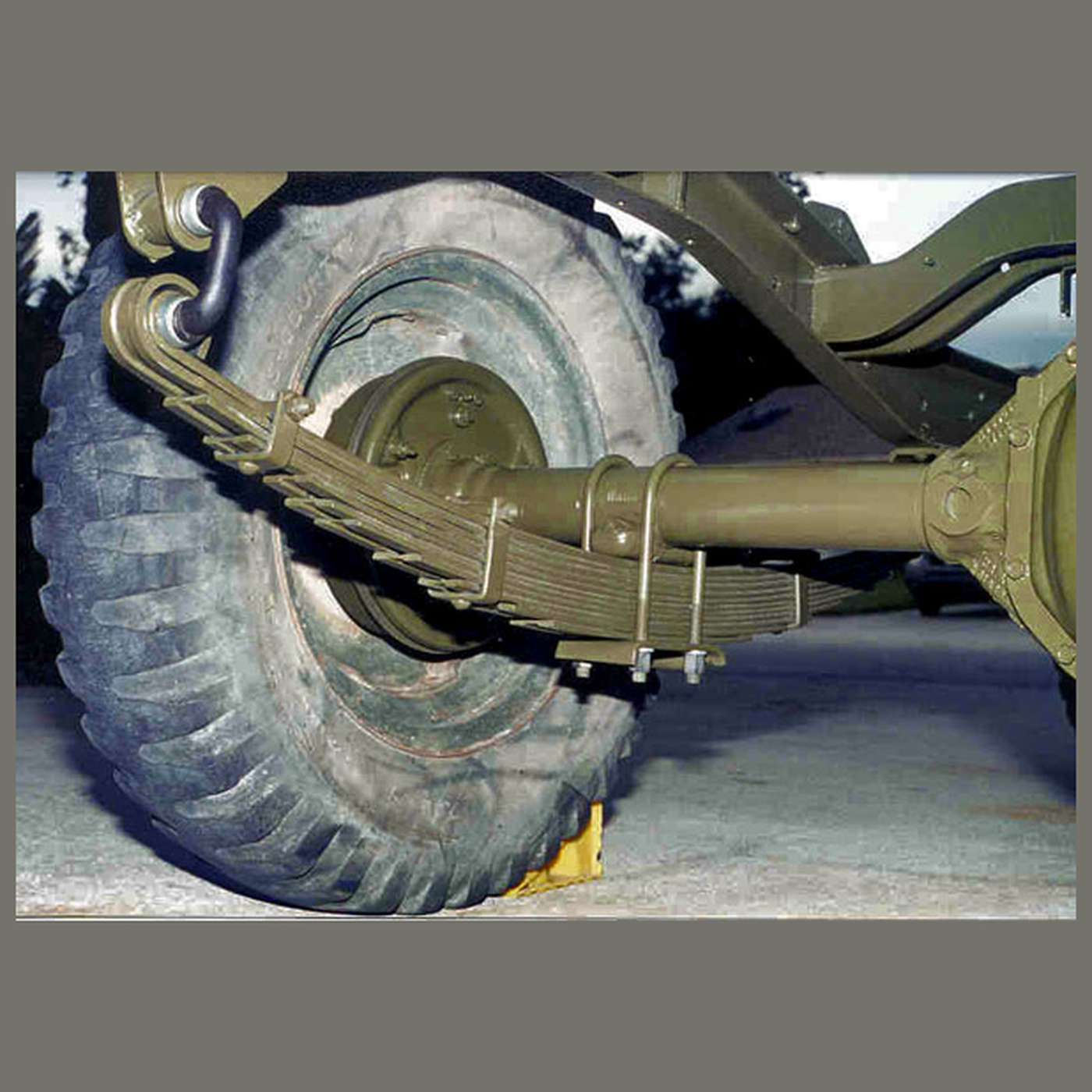

The Leaf Spring: A Beam That Carries the Load and Locates the Axle
Stack strips of spring steel, longest on top and each shorter one below, clamp them at the middle to an axle and hang the ends from the body: that is the leaf spring. It is the carriage spring of the early 1800s — Obadiah Elliott's elliptic spring of 1804 let coaches do away with the heavy perch that held the axles together — and it is still under most lorries and many pick-ups.
It does three jobs at once: it carries the load, it locates the axle so no other links are needed, and the leaves rubbing on each other damp the motion a little.
This rung works out a leaf spring's rate and the ride frequency it gives, and builds one from spring-steel strip to measure.
Baguhan
About 3 hours
Mga Tagubilin
1
1
Rate and ride frequency
Rate and ride frequency
Naglo-load ng Jupyter notebook…
2
2
Build a small leaf spring and measure it
Build a small leaf spring and measure it
Cut four strips of spring-steel strip: 300, 240, 180 and 120 mm long. Stack them centred, longest on top, and clamp them together at the middle with a bolt through a small hole (or a clamp). Bend a small eye at each end of the top leaf, or hook it over two dowels set 300 mm apart on a board.
Hang weights from the centre in steps and measure the sag with the steel rule. The slope of load against sag is the rate. Compare with the notebook's formula for your strip's width and thickness (measure them with calipers).
Now remove the two shortest leaves and repeat: the rate falls — and the top leaf now bends into a sharper curve at the centre, where it would crack first.
Mga materyales para sa hakbang na ito:
 Guhit na bakal na muwelye1 set
 Mga turnilyo ng makina2 piraso
 Mga tarugong matigas na kahoy1 set
 Tabla ng playwud1 pilyego
Mga kailangang kasangkapan:
 Bais sa Mesang Panggawa
 Digital na Kalibrador 6 Pulgada
 Ruler
Ruler Panukat ng Puwersa (Timbangang Spring)
 Guwantes na Katad Pangtrabaho
3
3
History and context
History and context
Laminated carriage springs developed through the eighteenth century; **Obadiah Elliott's elliptic spring of 1804** (a British patent) let coaches be built without the perch, and the semi-elliptic form went on to railway wagons and motor vehicles. No patent number is asserted here.
**Honest limits.** A leaf spring is heavy for the energy it stores. The friction between leaves damps small bumps poorly and large ones harshly, and changes as the leaves rust. And because the spring also locates the axle, the axle can wind up under hard acceleration and braking.
Mga Materyales
4- Placeholder
- 2 pirasoPlaceholder
- Placeholder
- 1 pilyegoPlaceholder
Mga Kinakailangang Kasangkapan
5- Placeholder
- Placeholder
- Placeholder
- Placeholder
- Placeholder
Ang blueprint na ito ay gumagawa ng
Kaugnay na Blueprint
Ang mga blueprint na ito ay nagbabahagi ng kaalaman — mga teknik, materyales, o prinsipyo
Spring Rate: The One Number a Spring Is
ni Emma
Mekanika
43
0
0
0
0
0

Spring Fatigue: It Is the Swing That Breaks It
ni Emma
Paggawa ng Metal
33
0
0
0
0
0
Balance: A Tiny Eccentricity Becomes an Enormous Force
ni Martin
Inhinyeriya
42
0
0
0
0
0
Building a Wooden Cart Wheel — Hub, Spokes, and Felloes
ni Woody
Paggawa ng Kahoy
79
0
0
0
2
0
Ackermann Steering: The Inner Wheel Turns Further
ni Martin
Mekanika
28
0
0
0
0
0
CC0 Pampublikong Domain
Ang blueprint na ito ay inilabas sa ilalim ng CC0. Malaya kang kumopya, magbago, mamahagi, at gumamit nang walang pahintulot.
Suportahan ang Maker sa pamamagitan ng pagbili ng mga produkto sa kanilang Blueprint Komisyon ng Maker itinakda ng mga Vendor, o lumikha ng bagong bersyon ng Blueprint na ito at isama bilang koneksyon sa iyong Blueprint upang ibahagi ang kita.