Pakikipagtulungan
SINING
BEAUTY AT WELLNESS
CRAFTS
KULTURA AT KASAYSAYAN
LIBANGAN
KAPALIGIRAN
PAGKAIN AT INUMIN
REVERSE ENGINEERING
AGHAM
ISPORTS
TEKNOLOHIYA
MGA WEARABLE



The Story Stick: Carry the Dimension Instead of the Number
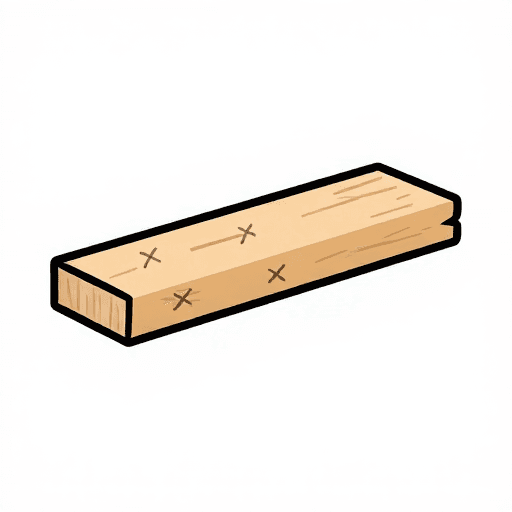
A story stick is a plain batten with the actual dimensions of a job marked on it. Not written — MARKED, as physical positions you transfer directly to the work.
It removes reading a scale, rounding a number, writing it down and reading it back — four separate opportunities for error, each of which has ruined a piece at some point. The stick carries the real distance and hands it over unchanged.
It is also how you fit something to an opening that is not quite square or not quite the size it should be, which is most real openings in most real buildings.
Baguhan
2 hours
Mga Tagubilin
1
1
Make one from the job, not from the drawing
Make one from the job, not from the drawing
Take a straight offcut a little longer than the largest dimension, hold it in the actual opening or against the actual assembly, and mark the real positions directly onto it.
The drawing says the alcove is 800 mm. The alcove is 797 at the bottom and 803 at the top, and the stick knows that while the drawing does not. Working from the stick makes the piece fit the opening it is actually going into.
Mark clearly and label what each mark is. An unlabelled story stick is useless a week later, and labelling it takes as long as making the marks.
Mga materyales para sa hakbang na ito:
 Tuyong Tabla ng Malambot na Kahoy1 piraso
Mga kailangang kasangkapan:
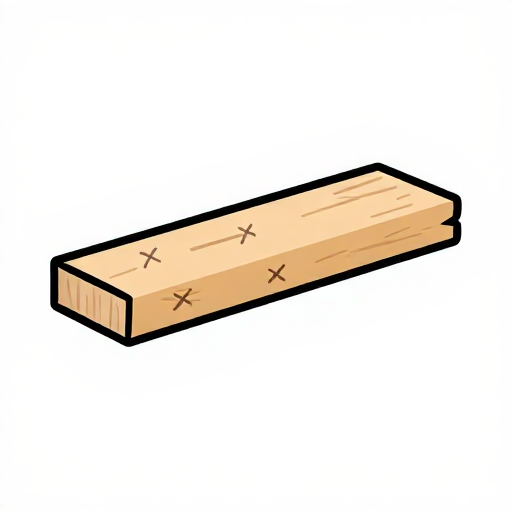 Kahoy na tanda ng sukat
 Kutsilyong pangmarka
2
2
Transfer, never measure
Transfer, never measure
Lay the stick on the work with a known end registered against the end of the piece, and transfer each mark straight across with a knife or a square.
Never read a number off the stick. The whole value is that no number exists: the distance goes from opening to stick to workpiece without ever becoming a quantity, so there is nothing to round and nothing to mistype.
Always register the same end of the stick against the same end of the work. That is the face-side principle again — one reference for everything — and getting it backwards on one piece of a set produces a mirror-image part that looks correct until it is offered up.
Mga materyales para sa hakbang na ito:
 Tabla ng Matigas na Kahoy4 piraso
Mga kailangang kasangkapan:
Kahoy na tanda ng sukatKutsilyong pangmarka Eskuwalang de-tokod
3
3
One stick per job, and keep it until the job is finished
One stick per job, and keep it until the job is finished
Use one stick for one job and write the job on it. A stick reused for the next job with new marks over old ones is worse than no stick — you will read the wrong set at exactly the wrong moment.
Keep it until the piece is installed and accepted. Replacement parts, later adjustments and the matching piece next year are all easier with the stick than without, and it costs nothing to keep an offcut on a nail.
For a kitchen, a row of cabinets or a set of doors, the stick becomes the authoritative record of the job. If the stick and the drawing disagree, the stick is right — it was made from the building.
Mga materyales para sa hakbang na ito:
Tuyong Tabla ng Malambot na Kahoy1 pirasoMga kailangang kasangkapan:
Kahoy na tanda ng sukat4
4
The same trick on a small scale: pinch rods and gauge blocks
The same trick on a small scale: pinch rods and gauge blocks
Two sticks overlapped and clamped, extended until they just touch both sides of an opening, give an exact internal measurement with no reading at all. That is a PINCH ROD, and it measures a diagonal or an alcove far more accurately than a tape pushed into a corner.
Use two of them to check whether an opening is square: set one to each diagonal and compare the rods against each other. Equal means square, and you never learn or need either number.
The same idea, smaller again, is simply holding the part against the hole. The principle running through this whole rung is that a comparison is more accurate than a measurement, and it is available far more often than people use it.
Mga materyales para sa hakbang na ito:
Tuyong Tabla ng Malambot na Kahoy2 pirasoMga kailangang kasangkapan:
Kahoy na tanda ng sukat PanuwidEskuwalang de-tokod
Mga Materyales
2- Placeholder
- 4 pirasoPlaceholder
Ang blueprint na ito ay gumagawa ng
Kaugnay na Blueprint
Ang mga blueprint na ito ay nagbabahagi ng kaalaman — mga teknik, materyales, o prinsipyo

CC0 Pampublikong Domain
Ang blueprint na ito ay inilabas sa ilalim ng CC0. Malaya kang kumopya, magbago, mamahagi, at gumamit nang walang pahintulot.
Suportahan ang Maker sa pamamagitan ng pagbili ng mga produkto sa kanilang Blueprint Komisyon ng Maker itinakda ng mga Vendor, o lumikha ng bagong bersyon ng Blueprint na ito at isama bilang koneksyon sa iyong Blueprint upang ibahagi ang kita.