SINING
BEAUTY AT WELLNESS
CRAFTS
KULTURA AT KASAYSAYAN
LIBANGAN
KAPALIGIRAN
PAGKAIN AT INUMIN
REVERSE ENGINEERING
AGHAM
ISPORTS
TEKNOLOHIYA
MGA WEARABLE
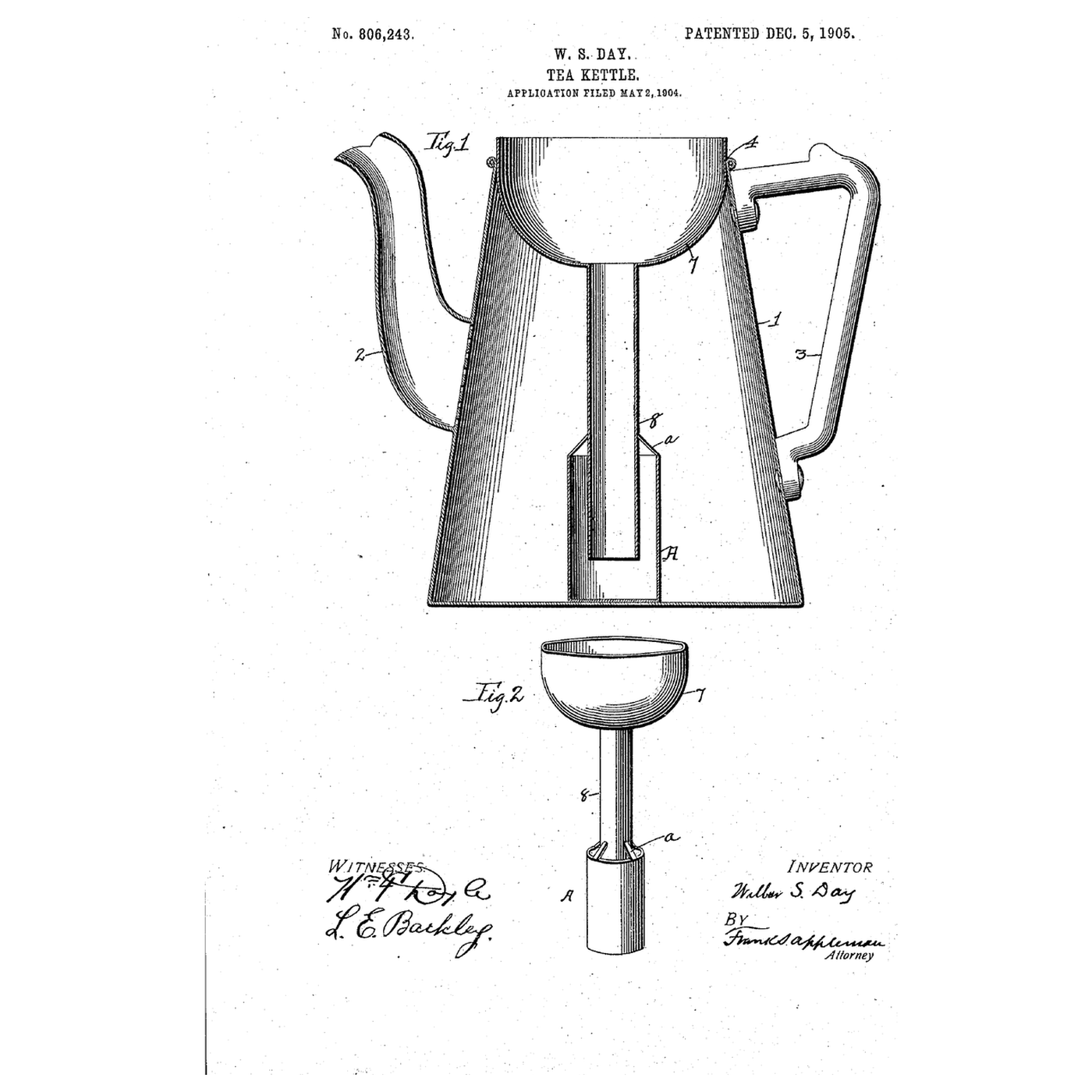


The Trap-Sealed Funnel Cover: The Kettle's Own Water Keeps the Steam In
Pouring from a boiling kettle sends steam out of the fill opening in its top, over the hand on the handle.
Wilbur S. Day of Warren, Minnesota, received US 806,243, patented 5 December 1905, for a cover "with a depending portion reaching into and sealed by the contents of the kettle, whereby the discharge of steam through the top opening of said kettle is prevented": a funnel pressed into the opening, its tube dipping into a trap that rests on the kettle's bottom and is held to the tube by springy arms; lifted out, it serves as a funnel.
This rung works out how much pressure the trap's water holds back, then makes the funnel, tube and trap for a stovetop kettle and looks for steam at the top and at the spout.
Katamtaman
About 3 hours
Mga Tagubilin
1
1
Pressure the seal holds
Pressure the seal holds
Naglo-load ng Jupyter notebook…
2
2
A kettle guarded from its steam before it
A kettle guarded from its steam before it
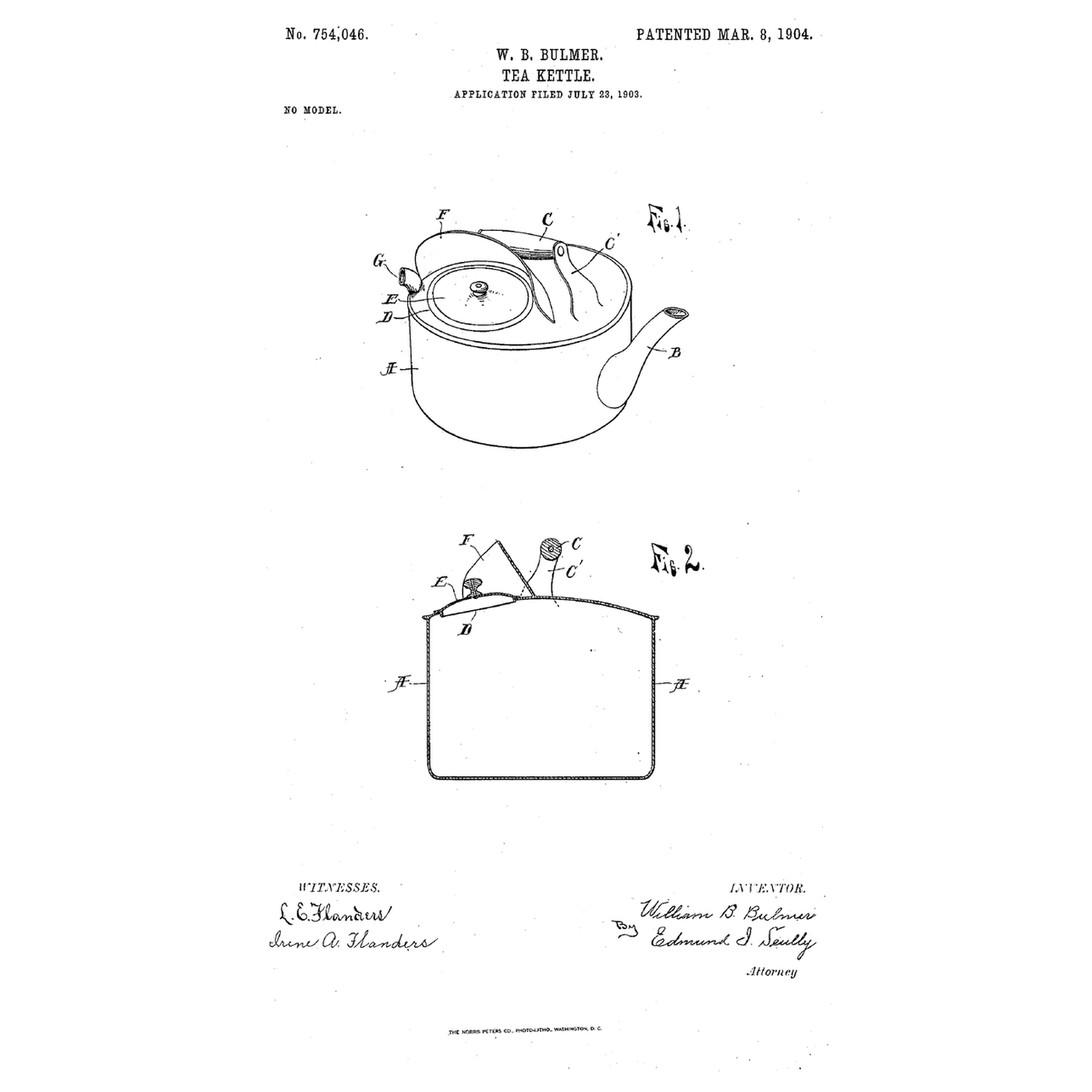
The embedded blueprint shields the hand from steam leaving the opening. Day stops the steam leaving the top at all, by sealing the opening's funnel in a trap of the kettle's own water.
3
3
Read US 806,243
Read US 806,243
"To prevent the escape of steam through the tube 8, a trap A is applied to the free or lower end of the tube 8. This trap rests on the bottom of the kettle and has formed on its upper edge the resilient arms a, which engage the tube 8 and retain the trap A in its operative relation to the free end of the tube 8 no matter what position the kettle may attain."
"In practice it is to be understood that the trap is filled by the liquid poured into the kettle, and thereby forming a perfect seal for the tube."
4
4
Make the cover and look for steam
Make the cover and look for steam
**Funnel.** Choose a stainless steel kitchen funnel whose cone presses snugly into the kettle's fill opening in place of its lid. Measure from the funnel's seat to the kettle's floor.
**Tube.** Cut copper tube that slips over the funnel's spout, long enough to end 1.5 cm above the floor. Wrap the spout with PTFE tape and push the tube on tightly.
**Trap.** Choose a small, clean tin can that passes through the fill opening. With tin snips cut three tabs 1.5 cm deep into its rim and bend them inward so they spring against the tube and hold it central, with its end 1 cm above the can's floor. File every cut edge smooth.
**Test.** Fill the kettle through the funnel until the trap is covered, and bring it to the boil. Hold a cold spoon over the funnel and another over the spout and see which one mists; then lift the funnel out and hold the spoon over the open fill hole.
Mga materyales para sa hakbang na ito:
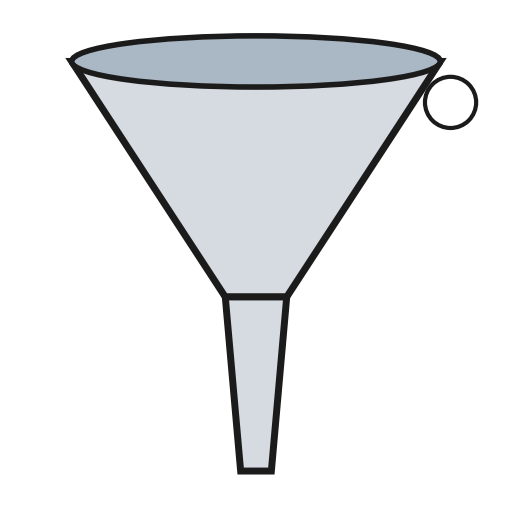 Imbudo sa kusina1 piraso
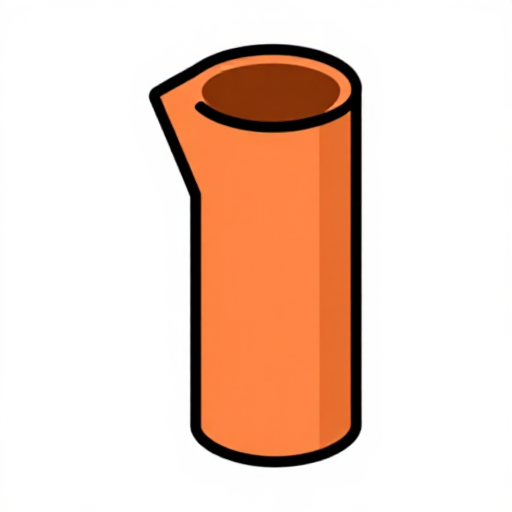 Tubong tanso1 piraso
 Teyp na PTFE na pantakip ng sinulid1 piraso
 Lata1 piraso
Mga kailangang kasangkapan:
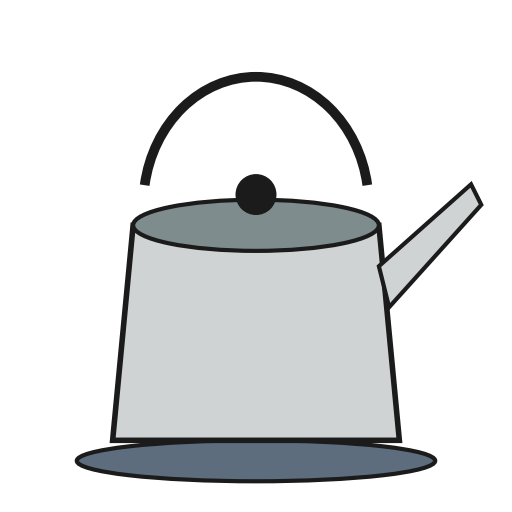 Takure sa kalan
 Panghiwa ng tubo
 Gunting na pangyero
 Plais na Patag ang Nguso
 Kikil (Kikil na Pangkamay)
 Ruler
Ruler Guwantes na Matibay sa Init
5
5
A cover that lets steam through or falls apart
A cover that lets steam through or falls apart
Trap-sealed funnel cover troubleshooting.
Flow
Loading...
6
6
History and honest limits
History and honest limits
**Wilbur S. Day** of Warren, Marshall County, Minnesota, filed US 806,243 on 2 May 1904; it was patented 5 December 1905. The funnel's body 7 is preferably bowl-shaped, its walls flaring slightly toward the top so it can be pressed into the edge of the opening 4 for a tight joint; the arms a hold the tube 8 central in the trap, and the trap is easily removed so the funnel can be used alone. His claim covers a receptacle with a top opening, a cover with a body fitting tightly in it and a depending tube, and a trap on the bottom with arms on its upper edge binding against the tube.
**Honest limits.** A bought funnel, a copper tube taped to its spout and a tin can stand in for his one-piece cover and trap. The notebook treats the seal as a still column of water; its depths are examples. What your spoons show is the result.
Mga Materyales
4- 1 pirasoPlaceholder
- 1 pirasoPlaceholder
- Placeholder
- 1 pirasoPlaceholder
Mga Kinakailangang Kasangkapan
7- Placeholder
- Placeholder
- Placeholder
- Placeholder
- Placeholder
- Placeholder
- Placeholder
Kaugnay na Blueprint
Ang mga blueprint na ito ay nagbabahagi ng kaalaman — mga teknik, materyales, o prinsipyo




CC0 Pampublikong Domain
Ang blueprint na ito ay inilabas sa ilalim ng CC0. Malaya kang kumopya, magbago, mamahagi, at gumamit nang walang pahintulot.
Suportahan ang Maker sa pamamagitan ng pagbili ng mga produkto sa kanilang Blueprint Komisyon ng Maker itinakda ng mga Vendor, o lumikha ng bagong bersyon ng Blueprint na ito at isama bilang koneksyon sa iyong Blueprint upang ibahagi ang kita.