Pakikipagtulungan
SINING
BEAUTY AT WELLNESS
CRAFTS
KULTURA AT KASAYSAYAN
LIBANGAN
KAPALIGIRAN
PAGKAIN AT INUMIN
REVERSE ENGINEERING
AGHAM
ISPORTS
TEKNOLOHIYA
MGA WEARABLE
Thin-Layer Chromatography: Making Your Own Plates
Mary

Nilikha ni

Mary

23. Setyembre 2026FI
55
0
0
0
0

Thin-Layer Chromatography: Making Your Own Plates

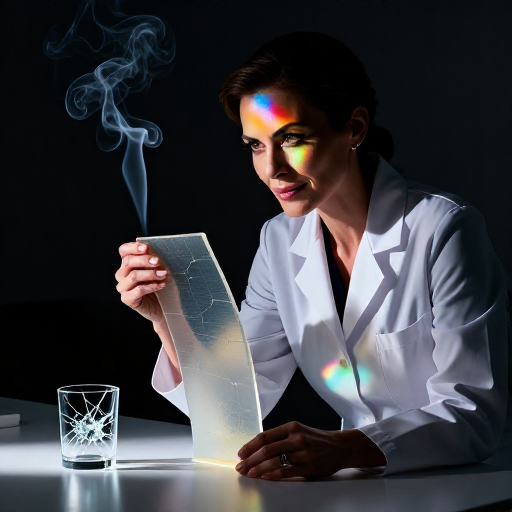
Paper is cellulose, and cellulose is a mediocre stationary phase: its fibres are coarse, they run in one direction, and a spot spreads as it climbs. Egon Stahl's answer in 1956 was to throw the paper away and spread a thin layer of fine powder on a sheet of glass instead. A silica layer a quarter of a millimetre thick, made of particles a few thousandths of a millimetre across, gives far less room for a spot to wander. Runs finish in fifteen minutes instead of hours, spots stay tight, and — because glass does not burn or dissolve — you can develop the plate with corrosive reagents or heat that would destroy paper. Commercial plates are cheap and excellent. Make your own anyway, once: spreading the slurry is where you learn what an even layer is worth, and why the plate, not the chemistry, is usually what went wrong.
Katamtaman
1 day

Mga Tagubilin

1

Clean the glass until water sheets off it

Wash microscope slides in hot detergent, rinse, and finish with a wipe of isopropyl alcohol. Handle them by the edges from now on. Test them: water should spread into an unbroken film, not bead up. A bead means grease, and grease means the silica layer will lift away in a flake exactly there — usually halfway through a run, taking your sample with it. This is the least interesting step and the one that decides whether the plates work.

Mga materyales para sa hakbang na ito:
Salaming pantanaw na may pantakipSalaming pantanaw na may pantakip20 piraso

Mga kailangang kasangkapan:

Gwantes na NitrileGwantes na Nitrile
Isopropyl Alcohol 99 %Isopropyl Alcohol 99 %
2

Mix the slurry: silica, gypsum binder, water

Stir 3 parts chromatography-grade silica gel and 1 part gypsum into about 2 parts water by weight, to the consistency of thin cream. Use it within a few minutes. The gypsum is calcium sulfate — plaster — and it is the only thing holding the silica to the glass; a layer made without it dusts off at a touch. This is exactly the composition sold as 'silica gel G', where the G stands for gypsum. Work fast, because plaster starts setting as soon as it is wet and a slurry that has begun to go off spreads in ridges.

Mga materyales para sa hakbang na ito:
Silica gel (grado sa kromatograpiya)Silica gel (grado sa kromatograpiya)30 g

Yeso (calcium sulfate)Yeso (calcium sulfate)10 g

Mga kailangang kasangkapan:

Tumpak na Digital na TimbanganTumpak na Digital na Timbangan
Basong BorosilikatoBasong Borosilikato
3

Coat the plates evenly

The simplest method that works: hold two slides back to back, dip them into the slurry, withdraw them smoothly and steadily, separate them and stand them on edge to dry. Steadily is the whole instruction. Any hesitation leaves a horizontal line in the layer, and a solvent front reaching that line slows, stalls, or jumps it — giving you an Rf value that is a property of your dipping technique rather than of the compound. A uniform thin layer is worth more than a thick careful one.

Mga kailangang kasangkapan:

Basong BorosilikatoBasong Borosilikato
Gwantes na NitrileGwantes na Nitrile
4

Activate the plates in an oven

Air-dry the plates, then heat them at about 110 °C for half an hour and store them somewhere dry until use. Silica holds water on its surface, and adsorbed water occupies exactly the sites your sample needs to stick to. A damp plate therefore behaves as a weaker stationary phase: everything runs faster and the separation compresses. This is the usual reason Rf values drift between a dry week and a humid one, and it is why published Rf figures always state the activation.

Mga kailangang kasangkapan:

Pang-init na PlatoPang-init na Plato
5

Spot, develop, and mark the front at once

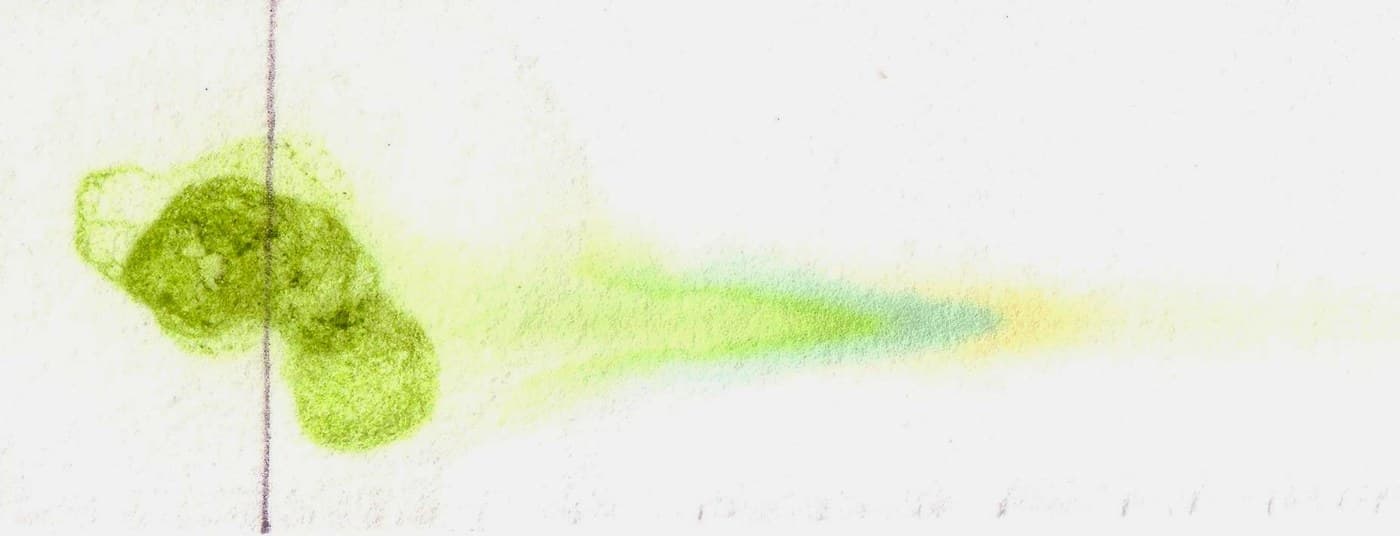
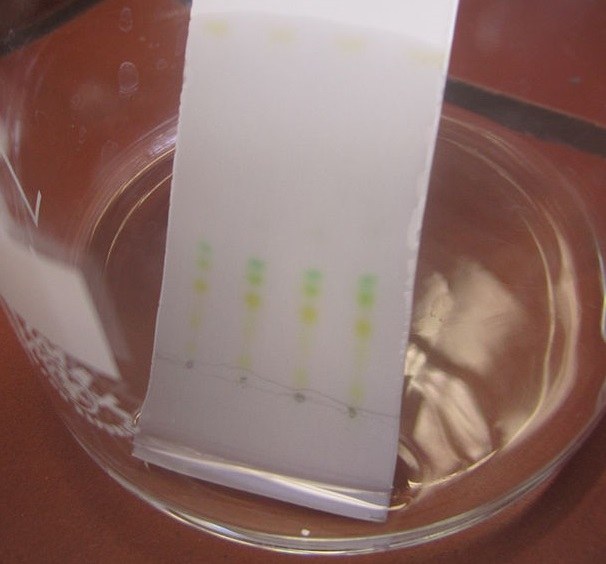
Mark a faint pencil origin line 1 cm from one end — press lightly, because a hard line scores through the layer. Spot as small as you can, then stand the plate in a closed jar with solvent below the origin line. A thin layer develops fast: the front may reach the top in five to fifteen minutes. Take the plate out while the front is still a centimetre short of the top edge and mark it immediately with pencil, because it evaporates in seconds. A front that ran off the end means every Rf from that plate is unrecoverable.

Mga materyales para sa hakbang na ito:
Etanol - antas laboratoryo, 95 %Etanol - antas laboratoryo, 95 %50 ml
Acetic acid (glacial)Acetic acid (glacial)5 ml
EspinakaEspinaka50 g

Mga kailangang kasangkapan:

Garapong SalaminGarapong Salamin
Manipis na tubong salaminManipis na tubong salamin
6

Visualise: iodine first, then heat

Stand the dry plate in a closed jar with a few iodine crystals. Most organic spots turn brown within minutes. Circle them in pencil while they show. Then use what glass allows and paper does not: spray the plate with dilute sulfuric acid and heat it, and every organic compound chars to a permanent black spot. It is destructive and utterly general — nothing organic escapes it. That trick is the real reason Stahl's layers displaced paper, and it needs a fume extract and full protection, so treat it as an optional advanced finish rather than a routine step.

Mga materyales para sa hakbang na ito:

Mga kristal ng yodoMga kristal ng yodo2 g

Mga kailangang kasangkapan:

Garapong SalaminGarapong Salamin
Gwantes na NitrileGwantes na Nitrile
Nakasarang Salaming PangkaligtasanNakasarang Salaming Pangkaligtasan
7

Why a thin layer beats paper

Naglo-load ng Jupyter notebook…

Mga kailangang kasangkapan:

RulerRuler
Panukat ng OrasPanukat ng Oras
8

Use it the way a chemist actually uses it

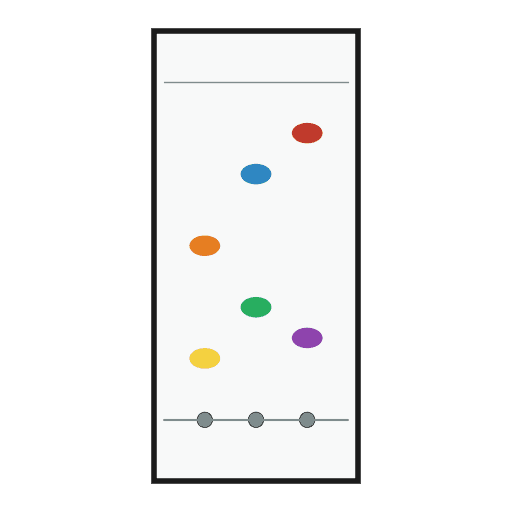
Spot three lanes on one plate: your unknown, a known reference compound, and a spot of BOTH together. Develop them side by side. That third lane is the point. If the unknown and the reference are the same substance, the co-spot runs as a single round spot; if they merely have similar Rf values, it runs as an elongated or double spot that neither lane alone would have revealed. Matching Rf values is suggestive — a clean co-spot is evidence. This is how a bench chemist follows a reaction to completion, and it costs one extra capillary.

Mga kailangang kasangkapan:

Manipis na tubong salaminManipis na tubong salamin
Garapong SalaminGarapong Salamin
RulerRuler

Mga Materyales

7

Mga Kinakailangang Kasangkapan

10

CC0 Pampublikong Domain

Ang blueprint na ito ay inilabas sa ilalim ng CC0. Malaya kang kumopya, magbago, mamahagi, at gumamit nang walang pahintulot.

Suportahan ang Maker sa pamamagitan ng pagbili ng mga produkto sa kanilang Blueprint Komisyon ng Maker itinakda ng mga Vendor, o lumikha ng bagong bersyon ng Blueprint na ito at isama bilang koneksyon sa iyong Blueprint upang ibahagi ang kita.

Talakayan

(0)

Mag-login upang sumali sa talakayan

Naglo-load ng mga komento...