SINING
BEAUTY AT WELLNESS
CRAFTS
KULTURA AT KASAYSAYAN
LIBANGAN
KAPALIGIRAN
PAGKAIN AT INUMIN
REVERSE ENGINEERING
AGHAM
ISPORTS
TEKNOLOHIYA
MGA WEARABLE
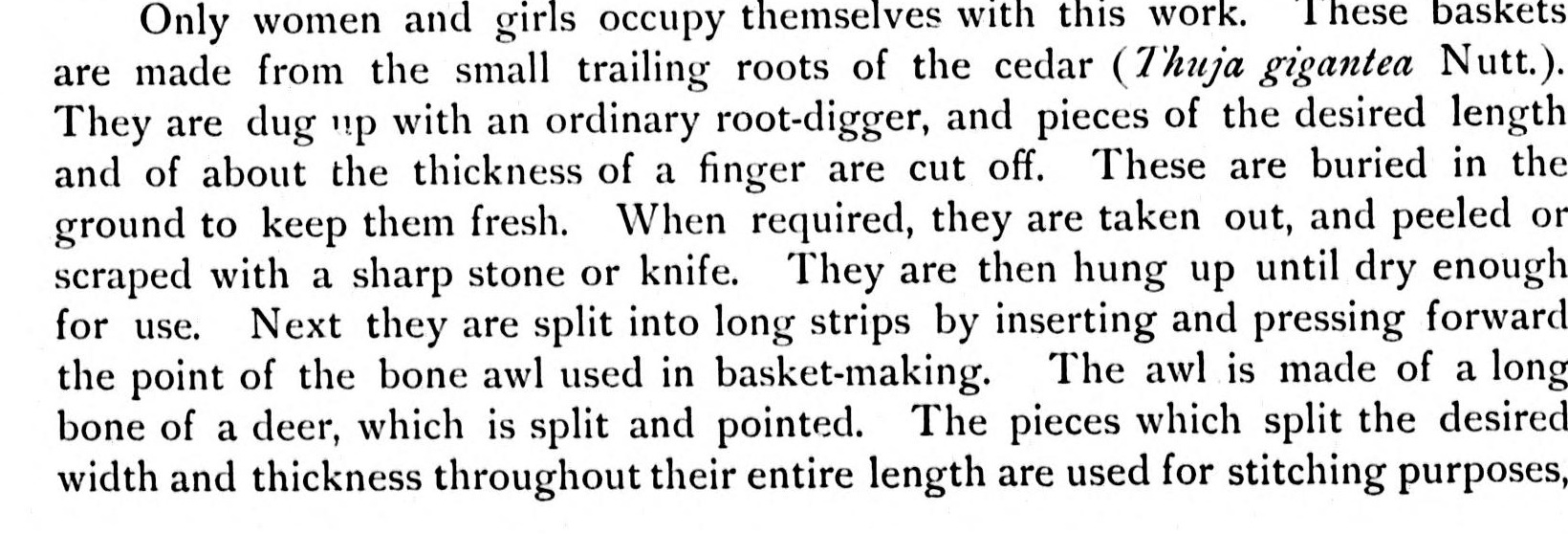


Thompson (Nlaka'pamux) Split Cedar Roots: Finger-Thick Roots Dug, Buried Fresh, Peeled, Dried and Split with a Bone Awl (Teit, 1900)
How Thompson (Nlaka'pamux) women got their cedar-root sewing splints, as James Teit recorded them: the small trailing roots of the red cedar dug with a root-digger, cut in finger-thick lengths, buried to keep fresh, peeled with a sharp stone or knife, dried, and split into long strips by pushing a deer-bone awl along them; even splints sew, the rest become coil.
Baguhan
A day, plus drying
Mga Tagubilin
1
1
Read Teit
Read Teit
"Next they are split into long strips by inserting and pressing forward the point of the bone awl used in basket-making."
2
2
Dig the roots
Dig the roots
Dig the small trailing roots of a red cedar with a root-digger and cut pieces of the length you need, about as thick as a finger. Take only a few roots from each tree (ours).
Mga materyales para sa hakbang na ito:
 Troso ng pulang cedar1 piraso
Mga kailangang kasangkapan:
 Patpat na panghukay
 Kutsilyo
3
3
Keep them fresh
Keep them fresh
Bury the pieces in the ground to keep them fresh until you need them.
Mga kailangang kasangkapan:
 Pala
4
4
Peel and dry
Peel and dry
Take them out, peel or scrape them with a sharp stone or knife, and hang them up until dry enough to work.
Mga materyales para sa hakbang na ito:
 Lubid1 piraso
Mga kailangang kasangkapan:
Kutsilyo5
5
Split
Split
Push the point of a deer-bone awl into the end and press it forward along the root to split off long strips. Keep those that come out even in width and thickness along their whole length for sewing; tie the irregular, short or thin ones in bundles of about a dozen for coiling.
Mga kailangang kasangkapan:
 Panundot na ButoKutsilyo
6
6
Troubleshooting
Troubleshooting
Root splitting troubleshooting.
Flow
Loading...
7
7
History and honest limits
History and honest limits
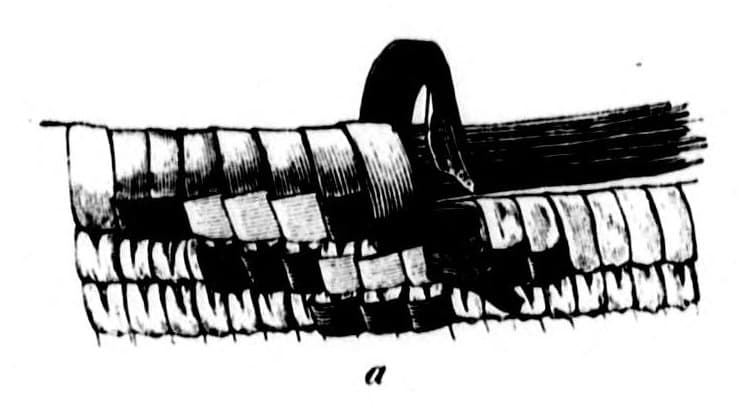
From James Teit, *The Thompson Indians of British Columbia*, **Memoirs of the American Museum of Natural History, Jesup North Pacific Expedition** vol. I part IV (1900), pp. 187-188 (checked on the archive.org scan cihm_16242). Only women and girls did this work; the splints went into watertight coiled baskets (see the coiled-basket blueprint). Lengths and taking only a few roots per tree are ours.
Ang blueprint na ito ay gumagawa ng
Kaugnay na Blueprint
Ang mga blueprint na ito ay nagbabahagi ng kaalaman — mga teknik, materyales, o prinsipyo


CC0 Pampublikong Domain
Ang blueprint na ito ay inilabas sa ilalim ng CC0. Malaya kang kumopya, magbago, mamahagi, at gumamit nang walang pahintulot.
Suportahan ang Maker sa pamamagitan ng pagbili ng mga produkto sa kanilang Blueprint Komisyon ng Maker itinakda ng mga Vendor, o lumikha ng bagong bersyon ng Blueprint na ito at isama bilang koneksyon sa iyong Blueprint upang ibahagi ang kita.