SINING
BEAUTY AT WELLNESS
CRAFTS
KULTURA AT KASAYSAYAN
LIBANGAN
KAPALIGIRAN
PAGKAIN AT INUMIN
REVERSE ENGINEERING
AGHAM
ISPORTS
TEKNOLOHIYA
MGA WEARABLE
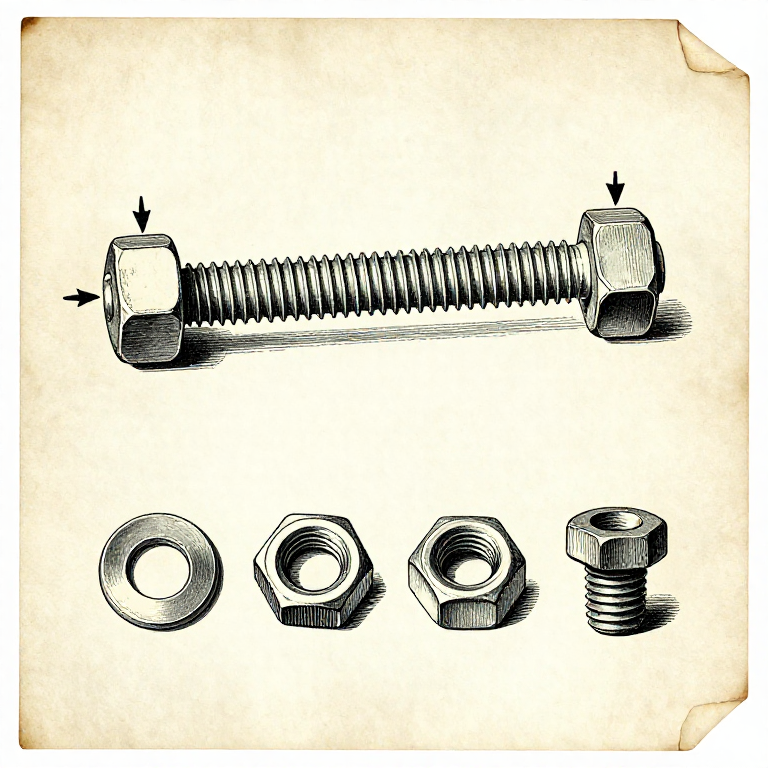


Tightening: How Tight Is Right, and Making It Stay
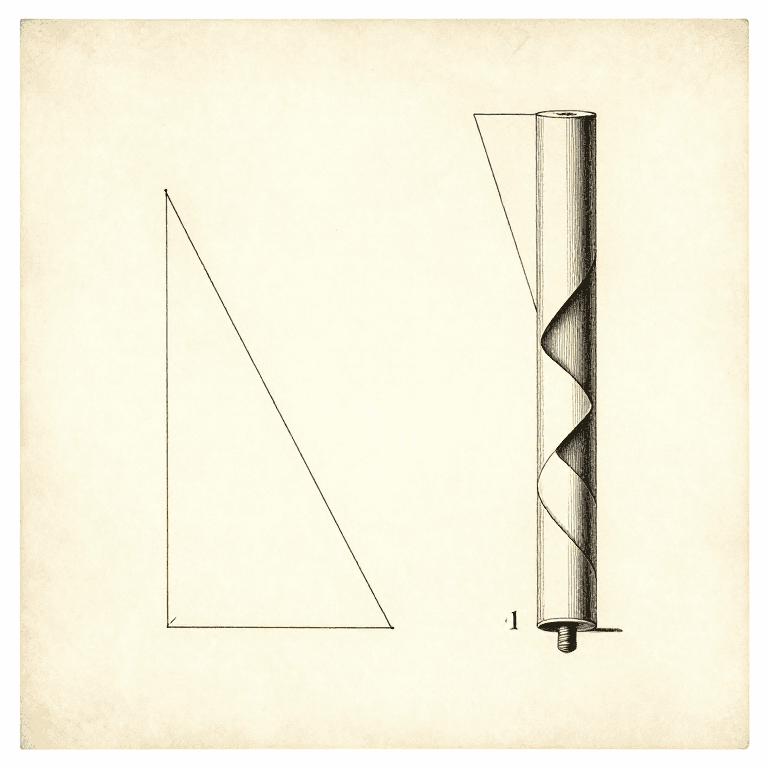
Tightening a bolt is not about making it hard to undo. It is about STRETCHING it — a tightened bolt is a very stiff spring, and the clamping force holding the joint together is the tension in that spring.
Which is why 'as tight as it will go' is the wrong target in both directions. Too little and the joint relies on the bolt taking shear, works loose and eventually breaks from fatigue. Too much and you take the bolt past its yield point, where it stretches permanently and loses the tension you were trying to create.
And a thread engaged far enough is stronger than the bolt itself, so tightening harder into a shallow hole does not help — it just strips it.
Katamtaman
3 hours
Mga Tagubilin
1
1
The bolt is a spring you are winding up
The bolt is a spring you are winding up
As the nut turns, the bolt stretches by a fraction of a millimetre. That stretch is elastic, so the bolt pulls back with a force proportional to it, and that force clamps the joint.
The stretch is tiny — well under a tenth of a millimetre on a short bolt at full tension — which is why a fraction of a turn past snug makes such a difference, and why a joint that settles by even a few hundredths loses much of its clamp.
A LONGER bolt is a softer spring, so it holds its tension better through settlement and thermal movement. That is a genuine design tool: where a joint keeps coming loose, a longer bolt through a spacer often fixes it where a tighter short one will not.
Mga kailangang kasangkapan:
 Sari-saring hex bolt
 Assortment ng tuwerka at siyete
 Kalipers na Vernier
2
2
Thread engagement: deeper than 1.5 diameters buys nothing
Thread engagement: deeper than 1.5 diameters buys nothing
Naglo-load ng Jupyter notebook…
Mga kailangang kasangkapan:
 Kalkulador
 Set sa paggawa ng sinulid ng turnilyo
3
3
Torque is a proxy, and a poor one
Torque is a proxy, and a poor one
A torque wrench does not measure tension. It measures the twisting force you apply, and most of that force is spent on friction — under the head and in the threads — with only a fraction becoming clamping tension.
Which means a dry bolt and an oiled bolt at the same torque end up at very different tensions; oiled can be a third tighter and may well be past yield. Torque figures always assume a lubrication condition, so if a specification says dry, it means dry.
Use a torque wrench where a figure is specified, and tighten progressively in a criss-cross pattern on any joint with several bolts. Tightening one fully before starting the next distorts the parts and leaves the first one loose once the others pull down.
Mga materyales para sa hakbang na ito:
 Langis sa paggupit1 piraso
Mga kailangang kasangkapan:
 Torque Wrench
 Set ng liyabeSari-saring hex bolt
4
4
Locking: correct tension first, then a locking method
Locking: correct tension first, then a locking method
A properly tensioned bolt is already largely self-locking. Most fasteners that vibrate loose were never tight enough in the first place, and adding a lock washer to an under-tightened bolt fixes nothing.
THREAD LOCKER is an anaerobic adhesive that cures in the absence of air between the threads. Medium strength comes apart with hand tools; high strength usually needs heat. It also seals the thread against corrosion, which is often the real benefit.
A NYLOC nut has a nylon insert gripping the thread and is reliable and reusable a few times. A SPLIT LOCK WASHER is the traditional answer and is genuinely weak against vibration; a serrated flange or a wedge-lock pair works far better. WIRE LOCKING is fully mechanical and cannot fail chemically, which is why aircraft still use it — and it is the right answer whenever a fastener coming loose would be dangerous rather than merely annoying.
Mga materyales para sa hakbang na ito:
 Pandikit ng sinulid ng tornilyo1 piraso
Mga kailangang kasangkapan:
 Biyak na lock washerAssortment ng tuwerka at siyeteSet ng liyabeTorque Wrench
Mga Materyales
2- 1 pirasoPlaceholder
- 1 pirasoPlaceholder
Mga Kinakailangang Kasangkapan
8- Placeholder
- Placeholder
- Placeholder
- Placeholder
- Placeholder
- Placeholder
- Placeholder
- Biyak na lock washer10% komisyonPlaceholder
Kaugnay na Blueprint
Ang mga blueprint na ito ay nagbabahagi ng kaalaman — mga teknik, materyales, o prinsipyo
CC0 Pampublikong Domain
Ang blueprint na ito ay inilabas sa ilalim ng CC0. Malaya kang kumopya, magbago, mamahagi, at gumamit nang walang pahintulot.
Suportahan ang Maker sa pamamagitan ng pagbili ng mga produkto sa kanilang Blueprint Komisyon ng Maker itinakda ng mga Vendor, o lumikha ng bagong bersyon ng Blueprint na ito at isama bilang koneksyon sa iyong Blueprint upang ibahagi ang kita.