SINING
BEAUTY AT WELLNESS
CRAFTS
KULTURA AT KASAYSAYAN
LIBANGAN
KAPALIGIRAN
PAGKAIN AT INUMIN
REVERSE ENGINEERING
AGHAM
ISPORTS
TEKNOLOHIYA
MGA WEARABLE
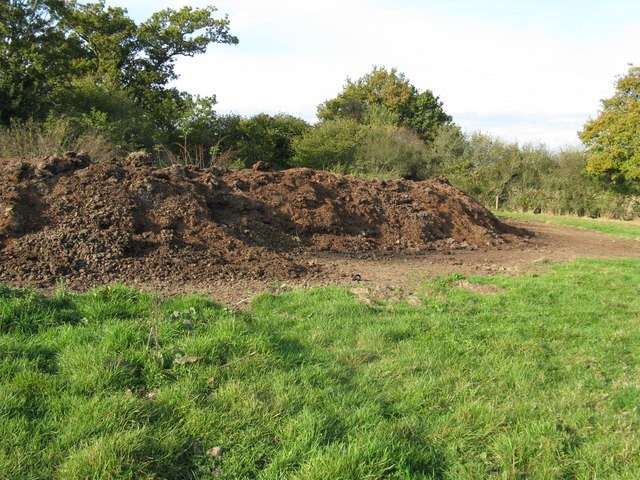


Rotting Cattle Dung in a Field Dunghill: Forming and Turning
Fresh dung and straw from the cattle yard is not yet the dark, short, even manure that crops and niter beds want. Henry Stephens's Book of the Farm describes the Scottish way: in late winter the yard dung is carted out and built into a long, firmly trodden dunghill in the field, which keeps it from fermenting while it is cold. About a fortnight before it is needed it is cut down and turned, shaken and mixed into a block of even height, and left to heat and settle. Dung for turnips gets a second turning.
Baguhan
Winter to spring; two weeks per turning
Mga Tagubilin
1
1
Lift the yard dung
Lift the yard dung
Toward the close of winter, before the trodden dung in the cattle courts rises level with the troughs, lift it out with graips. Where it is packed too hard to lift, cut it first into parallel strips with the dung-spade, kept sharp with a scythe-stone. Keep cattle dung from the cattle courts separate from yards with much horse dung if you want manure for a particular crop.
Mga materyales para sa hakbang na ito:
 Dumi ng baka1 as required
 Dayami1 as required
Mga kailangang kasangkapan:
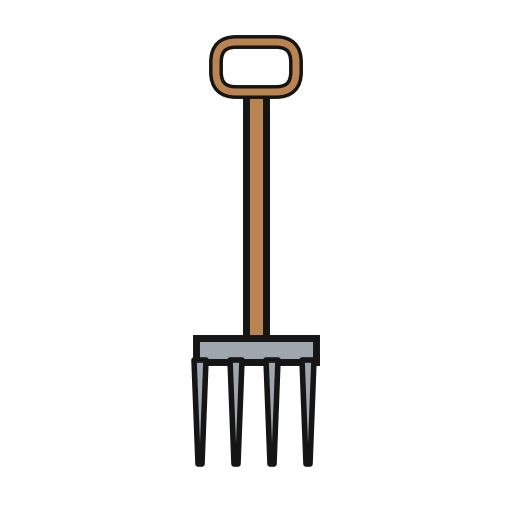 Tinidor sa dumi ng hayop
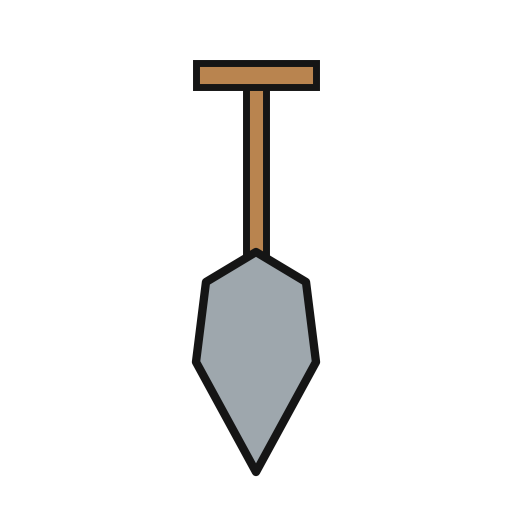 Pala sa dumi ng hayop
 Hasaan
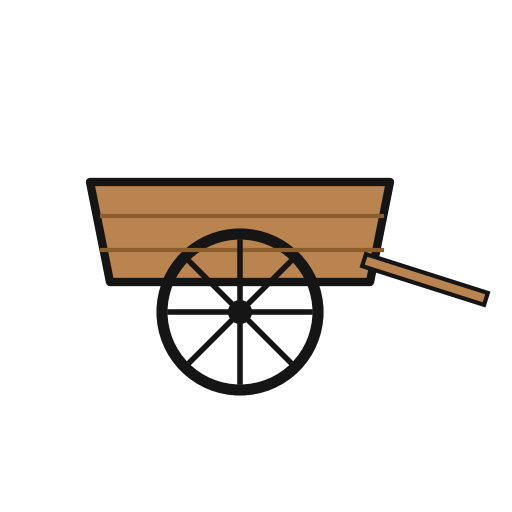 Kariton sa bukid
2
2
Build the dunghill in the field
Build the dunghill in the field
Choose a head-ridge or side-ridge of the field to be manured, where the carts can reach it. Lay the bottom to a fixed breadth and length, then build up layer after layer, sloping at both ends so the loaded carts can drive up over it. Spread every load to mix the kinds of dung, and let the carts pass over the whole heap so it is compressed equally.
Mga kailangang kasangkapan:
Kariton sa bukidTinidor sa dumi ng hayop3
3
Finish and leave it over winter
Finish and leave it over winter
Throw the scattered dung around the heap onto the top and level the top along and across. Pressed firm and cold (Stephens gives about 45 °F in winter), it hardly ferments; fermentation proper needs about 65 °F.
Mga kailangang kasangkapan:
Tinidor sa dumi ng hayop Pala
Pala4
4
Turn it, a fortnight before use
Turn it, a fortnight before use
Start at the end farthest from where the carts will load it. Cut the heap across into divisions about 3 feet wide with the dung-spade. Turn each division over to the ground with small graipfuls, shaking every one loose: put the drier dung into the interior, mix the different sorts, and shovel the scattered straw and the earth wetted by the heap into the middle. Throw the dung up onto the face of the turned part, and keep the turned heap the same height from end to end, or it will ferment unevenly.
Mga kailangang kasangkapan:
Pala sa dumi ng hayopTinidor sa dumi ng hayopPala5
5
Watch it ferment
Watch it ferment
Within a few days of turning the heap heats. Over a fortnight it settles by about a foot, gives off a smell and a flicker of vapour, and a black liquid oozes from its sides. Push a stick into it here and there: inside it feels much hotter than the hand. The dung becomes more consolidated and more uniform throughout, shortest where it is hottest.
Mga kailangang kasangkapan:
 Tulos na kahoy
6
6
Turn it again for a rotted dung
Turn it again for a rotted dung
For dung that must be well rotted (Stephens's turnip dung), turn it a second time about a fortnight after the first, beginning where the first turning ended. It cuts and shakes far more easily now. If it heats too fast in warm weather, throw a spadeful of earth around it to check it.
Mga kailangang kasangkapan:
Pala sa dumi ng hayopTinidor sa dumi ng hayop Pala
Pala7
7
Troubleshooting
Troubleshooting
Dunghill troubleshooting.
Flow
Loading...
8
8
History and honest limits
History and honest limits
Stephens wrote for the large mixed farms of the Scottish Borders in the 1840s, where dung was led out with horse carts. At a smaller scale we use a wheelbarrow instead of carts; that is ours, not his. He gives no fixed proportions of dung to straw: the litter is whatever the cattle were bedded with.
Ang blueprint na ito ay gumagawa ng

CC0 Pampublikong Domain
Ang blueprint na ito ay inilabas sa ilalim ng CC0. Malaya kang kumopya, magbago, mamahagi, at gumamit nang walang pahintulot.
Suportahan ang Maker sa pamamagitan ng pagbili ng mga produkto sa kanilang Blueprint Komisyon ng Maker itinakda ng mga Vendor, o lumikha ng bagong bersyon ng Blueprint na ito at isama bilang koneksyon sa iyong Blueprint upang ibahagi ang kita.