SINING
BEAUTY AT WELLNESS
CRAFTS
KULTURA AT KASAYSAYAN
LIBANGAN
KAPALIGIRAN
PAGKAIN AT INUMIN
REVERSE ENGINEERING
AGHAM
ISPORTS
TEKNOLOHIYA
MGA WEARABLE
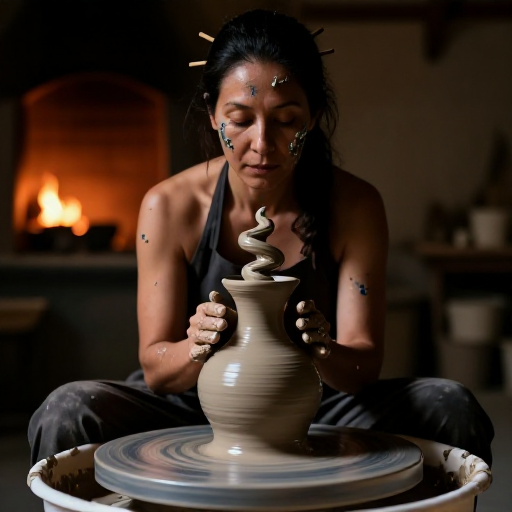

Wedging: Getting the Air Out and the Particles Pointing the Same Way
An air bubble trapped in clay is a small sealed vessel of moist air. Heat it in a kiln and the water inside turns to steam, the steam has nowhere to go, and the pot breaks — often taking its neighbours on the shelf with it.
Wedging is how the air comes out. It is also how the clay is made uniform in moisture, and how the plate-shaped clay particles are aligned so the clay behaves the same way in every direction on the wheel.
It is the one step beginners skip and professionals never do, and the reason is simple: the failure it prevents does not appear until the firing, by which time nobody connects the two.
Baguhan
2 hours
Mga Tagubilin
1
1
A surface that absorbs, and clay of one consistency
A surface that absorbs, and clay of one consistency
Wedge on canvas over a solid bench, or on unsealed plaster or wood. The surface needs to grip the clay and take a little water out of it; a smooth sealed surface lets the clay slide and does nothing.
Start with clay that is roughly one consistency. Wedging will even out moderate differences, but a lump of firm clay folded into a soft one takes a long time to blend and will still show as a hard streak on the wheel.
Work a lump you can actually handle — for most people 1 to 2 kg. A lump too large to fold cleanly is simply not being wedged, whatever the arms think they are doing.
Mga materyales para sa hakbang na ito:
 Luwad2 kg
 Tubig1 litro
Mga kailangang kasangkapan:
 Canvas na pagawaan ng palayok
 Alambreng panghiwa ng luwad
2
2
Ram's head or spiral — both roll, neither folds
Ram's head or spiral — both roll, neither folds
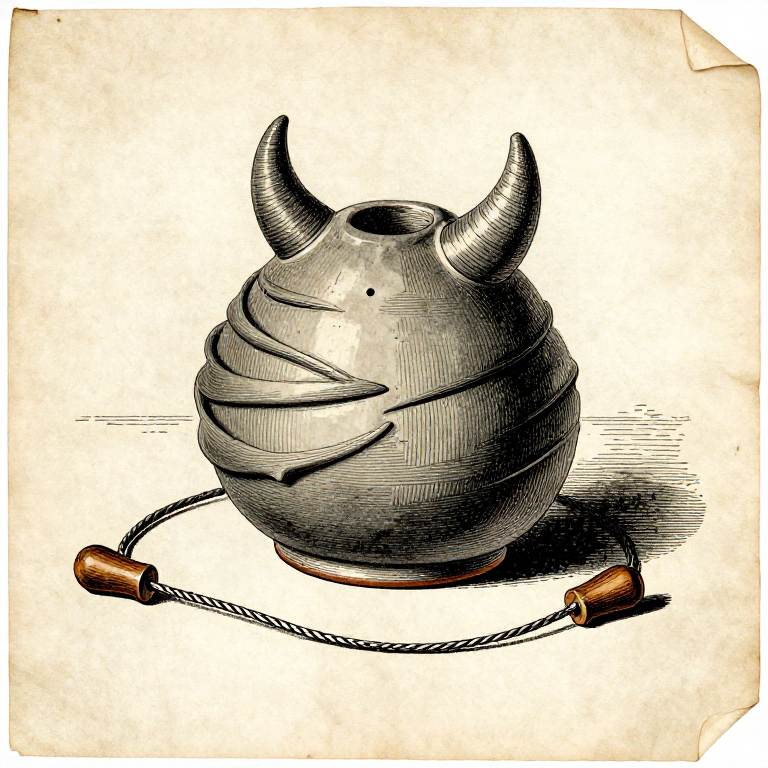
The RAM'S HEAD method: push the lump away from you with the heels of both hands, lift the near edge, roll it forward over itself and push again. The lump takes on a shape with two horns, hence the name.
The SPIRAL method rotates the lump slightly each push, so it travels round and the fold becomes a continuous spiral. It is harder to learn and faster once learned, and it handles larger quantities.
Both ROLL the clay rather than folding it, and that distinction is the whole point. Folding — slapping one slab onto another — traps a new layer of air every time, which is precisely the problem wedging exists to solve.
Mga materyales para sa hakbang na ito:
Luwad2 kgMga kailangang kasangkapan:
Canvas na pagawaan ng palayokAlambreng panghiwa ng luwad Set ng kasangkapan sa luwad
3
3
Cut it open and look
Cut it open and look
Cut the wedged lump in half with a wire and look at the cut face. Air pockets show as holes; uneven moisture shows as streaks and colour differences. That is the only real test, and it takes ten seconds.
If you see bubbles, wedge again and cut again. Twenty to thirty passes is normal for reclaimed clay; fresh clay from a bag often needs far fewer, and cutting is how you find out rather than guessing.
Then form the finished lump into a rough ball or cone and use it. Wedged clay left sitting overnight partly undoes itself as moisture redistributes and the particle alignment relaxes — so wedge what you are about to use.
Mga materyales para sa hakbang na ito:
Luwad2 kgMga kailangang kasangkapan:
Alambreng panghiwa ng luwadCanvas na pagawaan ng palayokSet ng kasangkapan sa luwad4
4
Reclaiming clay, and why nothing is wasted
Reclaiming clay, and why nothing is wasted
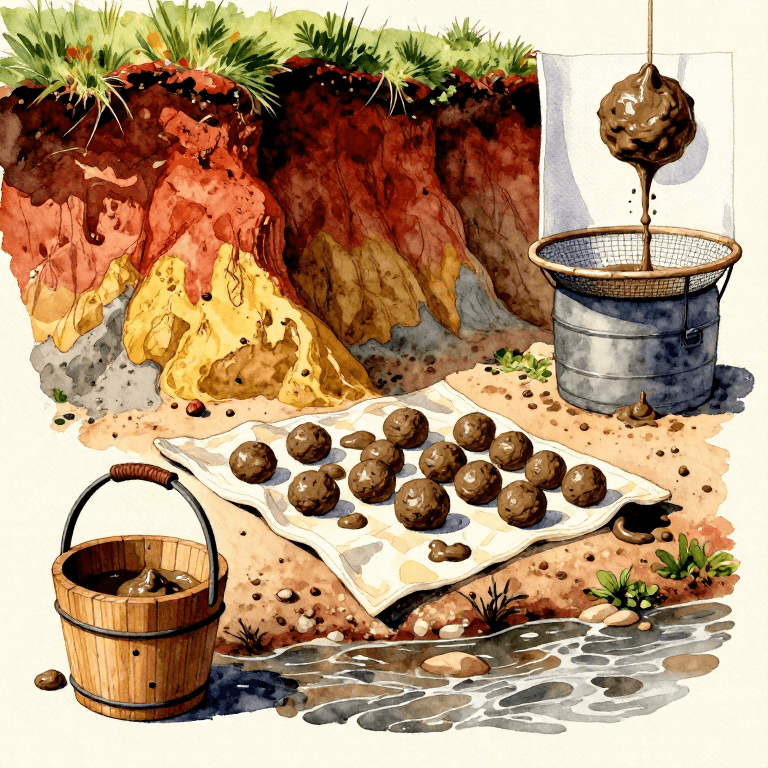
Clay that has not been fired is completely reusable. Trimmings, failed pots and dried scraps all go in a bucket, get covered with water until they slake down to slurry, and are then dried back to working consistency on a plaster bat or a board.
Dry it to slightly FIRMER than you want. Wedging adds a little water from your hands and the clay softens as it is worked, so reclaim that feels right on the bat is usually too soft by the time it reaches the wheel.
Reclaimed clay needs more wedging than fresh, because slaking and drying leave it uneven throughout. It is also often better to throw with — the slaking wets every particle thoroughly, which is what ageing does to clay in a cellar.
Mga materyales para sa hakbang na ito:
Luwad2 kgTubig2 litroMga kailangang kasangkapan:
Canvas na pagawaan ng palayokAlambreng panghiwa ng luwad Tumpak na Timbangan
Kaugnay na Blueprint
Ang mga blueprint na ito ay nagbabahagi ng kaalaman — mga teknik, materyales, o prinsipyo
CC0 Pampublikong Domain
Ang blueprint na ito ay inilabas sa ilalim ng CC0. Malaya kang kumopya, magbago, mamahagi, at gumamit nang walang pahintulot.
Suportahan ang Maker sa pamamagitan ng pagbili ng mga produkto sa kanilang Blueprint Komisyon ng Maker itinakda ng mga Vendor, o lumikha ng bagong bersyon ng Blueprint na ito at isama bilang koneksyon sa iyong Blueprint upang ibahagi ang kita.