SINING
BEAUTY AT WELLNESS
CRAFTS
KULTURA AT KASAYSAYAN
LIBANGAN
KAPALIGIRAN
PAGKAIN AT INUMIN
REVERSE ENGINEERING
AGHAM
ISPORTS
TEKNOLOHIYA
MGA WEARABLE
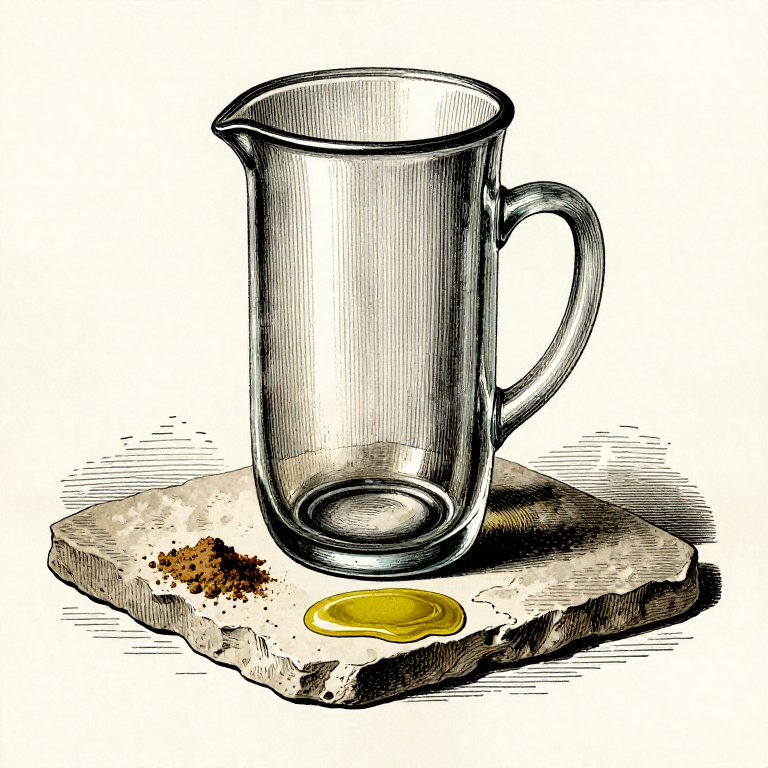
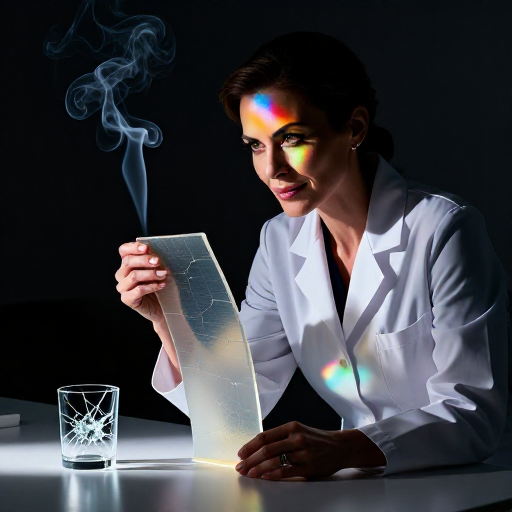

What Paint Is: Pigment, Binder, and the Ratio Between Them
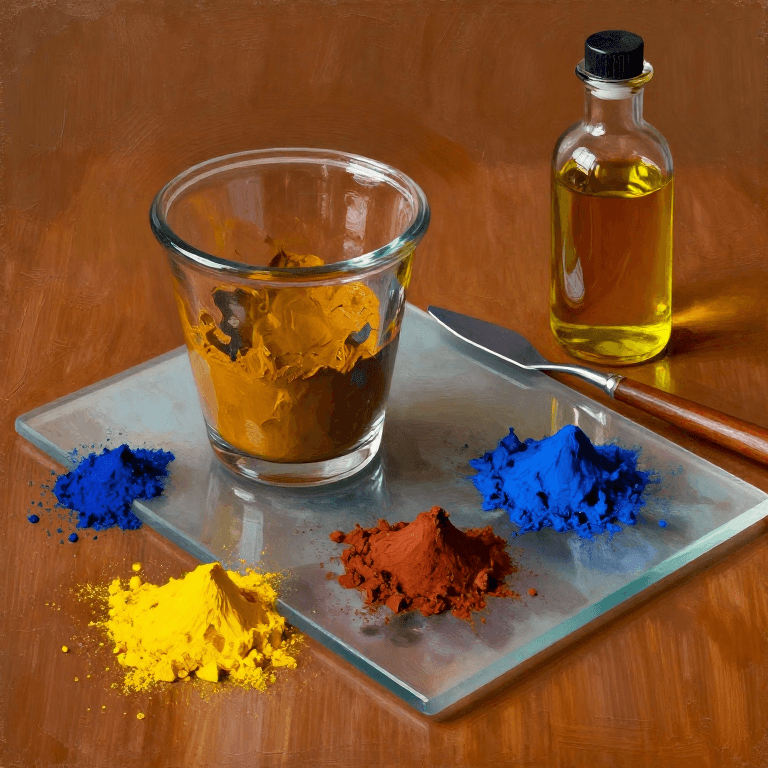
All paint is the same three things: solid coloured PARTICLES, a liquid BINDER that glues them to each other and to the surface, and usually a SOLVENT that makes it workable and then leaves.
Change the binder and you change the medium entirely. Pigment in drying oil is oil paint; the same pigment in gum arabic is watercolour, in egg yolk is tempera, in acrylic dispersion is acrylic. The colour is identical and the material is not.
The ratio between pigment and binder decides almost everything else — gloss, opacity, flexibility, and whether the film holds together at all. There is a specific ratio above which a paint stops being a film and starts being loose powder, and it has a name.
Katamtaman
3 hours
Mga Tagubilin
1
1
Three components, and what each one does
Three components, and what each one does
PIGMENT is insoluble solid particles. It provides the colour and the hiding power, and it does not dissolve — a dye does, and that is the difference between a pigment and a dye.
BINDER is what turns a pile of powder into a film. It wets every particle, fills the space between them, and then hardens — by evaporating, by reacting with oxygen, or by particles coalescing.
SOLVENT or diluent makes the paint thin enough to apply and then leaves completely. It contributes nothing to the final film, which is why thinning too far leaves a weak paint: there is the same pigment with less binder per unit volume once the solvent has gone.
Mga materyales para sa hakbang na ito:
 Set ng Pulbos na Pigmentong Lupa1 piraso
 Langis ng Linsid1 piraso
 Terpentina1 piraso
Mga kailangang kasangkapan:
 Panggiling na Salamin
 Tumpak na Timbangan
 Gwantes na Gomang Nitrile
2
2
Pigment volume concentration, and the critical point
Pigment volume concentration, and the critical point
Naglo-load ng Jupyter notebook…
Mga materyales para sa hakbang na ito:
Set ng Pulbos na Pigmentong Lupa1 pirasoLangis ng Linsid1 pirasoMga kailangang kasangkapan:
Tumpak na Timbangan Desktop na KompyuterPanggiling na Salamin
3
3
The binder decides the medium
The binder decides the medium
DRYING OIL hardens by absorbing oxygen and cross-linking into a tough flexible solid. It is slow, it can be worked wet-into-wet for days, and the film keeps moving for decades.
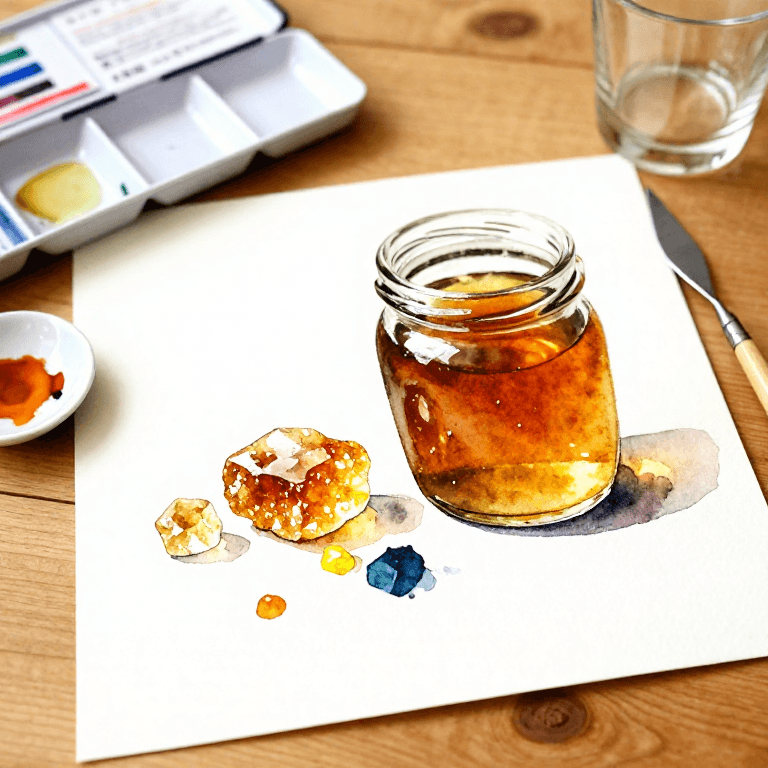
GUM ARABIC dissolves in water and hardens by simply drying. That makes watercolour re-wettable for ever, which is a feature when working and a vulnerability once framed.
EGG YOLK is an emulsion of oil and water that dries fast and then slowly polymerises into something extremely durable. ACRYLIC DISPERSION is solid polymer particles suspended in water: the water leaves, the particles coalesce, and the film is complete in minutes and is not re-soluble afterwards.
Mga materyales para sa hakbang na ito:
Langis ng Linsid1 piraso Gum Arabic1 piraso
Mga kailangang kasangkapan:
 Basong Salamin na Pang-agham
 Panghalo
 Lupang Pampalaki
4
4
Grind it properly, because dispersion is not mixing
Grind it properly, because dispersion is not mixing
Grinding paint is not stirring pigment into oil. It is breaking up clumps of particles and wetting each one, so that every particle is surrounded by binder rather than sitting in a dry cluster.
A glass muller on a ground glass slab does this by shear: the paste is worked in figures of eight until it stops changing. An under-ground paint looks acceptable and is weaker, less colourful and more prone to cracking, because the dry clusters are voids waiting to happen.
You can see when it is done. Under-dispersed paint is grainy against the slab and slightly dull; properly dispersed paint turns noticeably more saturated and smooth. That colour change IS the dispersion, and it is the test.
Mga materyales para sa hakbang na ito:
Set ng Pulbos na Pigmentong Lupa1 pirasoLangis ng Linsid1 pirasoMga kailangang kasangkapan:
Panggiling na Salamin SiyansiLupang PampalakiGwantes na Gomang Nitrile
Mga Materyales
4- 1 pirasoPlaceholder
- 4 pirasoPlaceholder
- 1 pirasoPlaceholder
- 1 pirasoPlaceholder
Kaugnay na Blueprint
Ang mga blueprint na ito ay nagbabahagi ng kaalaman — mga teknik, materyales, o prinsipyo

CC0 Pampublikong Domain
Ang blueprint na ito ay inilabas sa ilalim ng CC0. Malaya kang kumopya, magbago, mamahagi, at gumamit nang walang pahintulot.
Suportahan ang Maker sa pamamagitan ng pagbili ng mga produkto sa kanilang Blueprint Komisyon ng Maker itinakda ng mga Vendor, o lumikha ng bagong bersyon ng Blueprint na ito at isama bilang koneksyon sa iyong Blueprint upang ibahagi ang kita.