SINING
BEAUTY AT WELLNESS
CRAFTS
KULTURA AT KASAYSAYAN
LIBANGAN
KAPALIGIRAN
PAGKAIN AT INUMIN
REVERSE ENGINEERING
AGHAM
ISPORTS
TEKNOLOHIYA
MGA WEARABLE
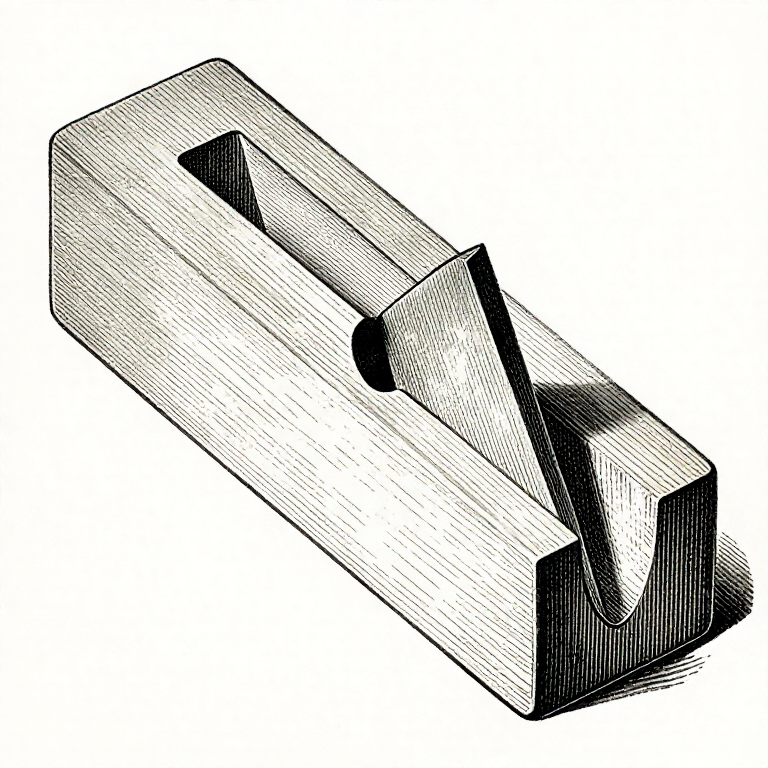


Dovetails: Why They Point One Way, and What That Buys You
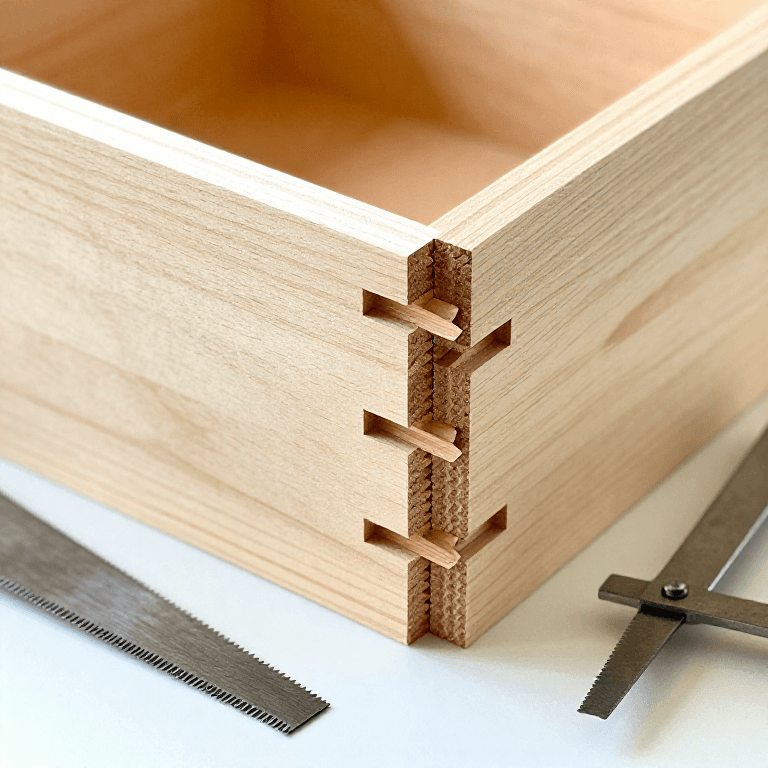
A dovetail is a wedge that can only come out one way. Pull the joint apart in the direction the tails are angled and the wedges jam; pull it the other way and it slides straight out.
That single-direction lock is the whole point, and it is why the joint is used where it is. A drawer front is pulled outward thousands of times, so the tails go on the SIDES and the pins on the front, and every pull tightens the joint instead of loosening it.
It also means a dovetailed corner survives its glue. Antique drawers routinely have completely dead hide glue and perfectly sound corners, because the geometry was doing the work all along.
Abantado
4 hours
Mga Tagubilin
1
1
Work out which way the pull comes from
Work out which way the pull comes from
Before marking anything, decide which direction the joint will be pulled apart in service. The tails go on the piece that is being pulled, and they are angled so that pull drives them deeper into the pins.
A drawer: tails on the sides, pins on the front, because the front is pulled. A carcase: tails on the piece that the load hangs from. A box with no obvious direction: either, and then it is chosen for appearance.
Get it backwards and you have a joint that is beautiful, difficult, and no stronger than a rebate. It is the one decision in the whole joint that cannot be corrected afterwards.
Mga materyales para sa hakbang na ito:
 Tabla ng Matigas na Kahoy1 piraso
Mga kailangang kasangkapan:
 Panandang gauge
 Panuka na Pinagsama
2
2
The angle, and what it is actually trading
The angle, and what it is actually trading
The usual angles are about 1:8 for hardwood and 1:6 for softwood — roughly 7 and 9.5 degrees. They are not arbitrary and they are not decoration.
A STEEPER angle (1:5 and beyond) gives a stronger mechanical lock but leaves the tips of the tails as very short, fragile, nearly-end-grain corners that break off during assembly. A SHALLOWER angle (1:10) gives robust tails and less lock, tending towards a finger joint, which has none at all.
Softwood gets the steeper angle because its fibres are weaker and it needs more mechanical interlock; hardwood gets the shallower one because it can hold a fine tip and does not need as much. Which is the same trade as chisel bevel angles: the angle follows the material.
Mga materyales para sa hakbang na ito:
Tabla ng Matigas na Kahoy1 piraso Tuyong Tabla ng Malambot na Kahoy1 piraso
Mga kailangang kasangkapan:
Panandang gaugePanuka na Pinagsama Kutsilyong pangmarka
3
3
Cut one, mark from it, cut the other
Cut one, mark from it, cut the other
Cut the tails first, then stand them on the pin board and knife round them to mark the pins. Never measure both independently — the second set is transferred from the first, so any error in the first is copied rather than added to.
That is the same principle as measuring everything from one face side: share a reference and errors stop compounding. A dovetail cut from two independent measurements is the cumulative-error rung producing gaps.
Saw on the WASTE side of every knife line, and leave the line itself. The line is where the joint closes, and a saw kerf taken out of it is a gap that has to be filled.
Mga materyales para sa hakbang na ito:
Tabla ng Matigas na Kahoy1 pirasoMga kailangang kasangkapan:
 Lagaring may gulugodKutsilyong pangmarka
 Mga pait
 Bais sa Mesang Panggawa
4
4
One dry test fit, and no more
One dry test fit, and no more
Push the joint together by hand until it is about a third home, look at where it is binding, and pare THAT. Do not drive it fully home to see whether it fits: wood compresses, and a joint assembled dry is looser every time afterwards.
Pare the pins rather than the tails when correcting. A pared pin is hidden inside the joint; a pared tail shows on the outside face.
A dovetail is also almost pure long-grain glue surface on the tail cheeks, so a well-fitted one is both mechanically locked and properly glued. That is why it is worth the difficulty — it is the only common joint that solves the end-grain problem twice over.
Mga materyales para sa hakbang na ito:
Tabla ng Matigas na Kahoy1 piraso Pandikit na PVA sa Kahoy1 piraso
Mga kailangang kasangkapan:
Mga pait Kahoy na Pamukpok
 Klamp na de-baras
Mga Materyales
3- 1 pirasoPlaceholder
- Placeholder
- 1 pirasoPlaceholder
Mga Kinakailangang Kasangkapan
8- Placeholder
- Placeholder
- Placeholder
- Placeholder
- Placeholder
- Placeholder
- Placeholder
- Placeholder
Kaugnay na Blueprint
Ang mga blueprint na ito ay nagbabahagi ng kaalaman — mga teknik, materyales, o prinsipyo
CC0 Pampublikong Domain
Ang blueprint na ito ay inilabas sa ilalim ng CC0. Malaya kang kumopya, magbago, mamahagi, at gumamit nang walang pahintulot.
Suportahan ang Maker sa pamamagitan ng pagbili ng mga produkto sa kanilang Blueprint Komisyon ng Maker itinakda ng mga Vendor, o lumikha ng bagong bersyon ng Blueprint na ito at isama bilang koneksyon sa iyong Blueprint upang ibahagi ang kita.