فن
خوبصورتی اور تندرستی
دستکاری
ثقافت اور تاریخ
تفریح
ماحول
خوراک اور مشروبات
ریورس انجینئرنگ
سائنسز
کھیل
ٹیکنالوجی
پہننے والے آلات
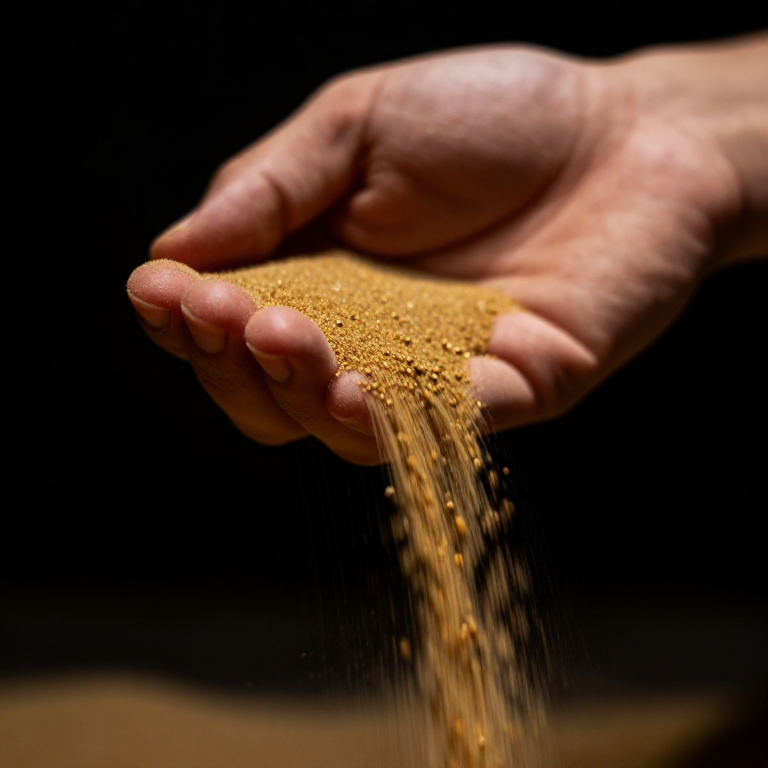


The Sand Reckoner — Count the Grains and Tame Huge Numbers
A hands-on maths project: weigh a pinch of sand, count the grains in a tiny sample, then scale up with powers of ten to estimate the grains in a cup, a bathtub -- even the universe, just as Archimedes did around 250 BC. A Python cell does the giant arithmetic and a compendium shows how exponents were born.
نیا سیکھنے والا
30 minutes
ہدایات
1
1
Counting the uncountable
Counting the uncountable
Around 250 BC Archimedes set himself a game: to count how many grains of sand would fill the whole universe, and to name that number. He had to invent a new way of writing numbers to do it. You will start the same way -- with real sand.
2
2
Weigh and count a sample
Weigh and count a sample
Weigh out a very small, known amount of dry sand -- say one gram -- on a kitchen scale. Counting every grain is impossible, so count the grains in a TINY measured pinch (a few dozen) and scale up, or estimate. Work out roughly how many grains are in one gram.
اس مرحلے کے لیے مواد:
 ریت1 کلوگرام
 ڈھکن والا شیشے کا مرتبان1 ٹکڑا
درکار اوزار:
 ڈیجیٹل باورچی خانہ ترازو
3
3
Scale up with powers of ten
Scale up with powers of ten
Now multiply up. If one gram holds a few thousand grains, a cupful (a couple of hundred grams) holds a few hundred thousand, a bag holds millions, a bathtub holds hundreds of millions. Write each answer as a 1 followed by zeros -- and notice you are just counting the zeros. That count is the 'power of ten', or exponent.
درکار اوزار:
 حساب کرنے والا آلہ
4
4
Let the computer scale to the universe
Let the computer scale to the universe
Jupyter نوٹ بک لوڈ ہو رہی ہے…
درکار اوزار:
 ڈیسک ٹاپ کمپیوٹرحساب کرنے والا آلہ
5
5
Compendium: no largest number
Compendium: no largest number
What the sand teaches. (1) Writing a huge number as 10-to-a-power (scientific notation) turns dozens of zeros into a single small exponent -- exactly how scientists write the sizes of atoms and galaxies today. (2) To MULTIPLY two powers of ten you just ADD their exponents (10^63 times 10^24 is 10^87) -- an idea that, centuries later, became logarithms. (3) Archimedes' real point was philosophical: numbers never run out. However vast a pile of sand, you can always name a bigger number. A game about grains quietly invented one of the most useful ideas in mathematics.
درکار اوزار
4- پلیس ہولڈر
- پلیس ہولڈر
- پلیس ہولڈر
- پلیس ہولڈر
متعلقہ بلیو پرنٹ
یہ بلیو پرنٹ علم بانٹتے ہیں — تکنیک، مواد یا اصول

CC0 پبلک ڈومین
یہ بلیو پرنٹ CC0 کے تحت جاری کیا گیا ہے۔ آپ اجازت لیے بغیر اس کام کو نقل، ترمیم، تقسیم اور کسی بھی مقصد کے لیے استعمال کرنے کے لیے آزاد ہیں۔
میکر کی حمایت کریں ان کے بلیو پرنٹ کے ذریعے پروڈکٹس خرید کر جہاں وہ میکر کمیشن وینڈرز کی طرف سے مقرر، کماتے ہیں، یا اس بلیو پرنٹ کی نئی تکرار بنائیں اور آمدنی شیئر کرنے کے لیے اسے اپنے بلیو پرنٹ میں کنکشن کے طور پر شامل کریں۔