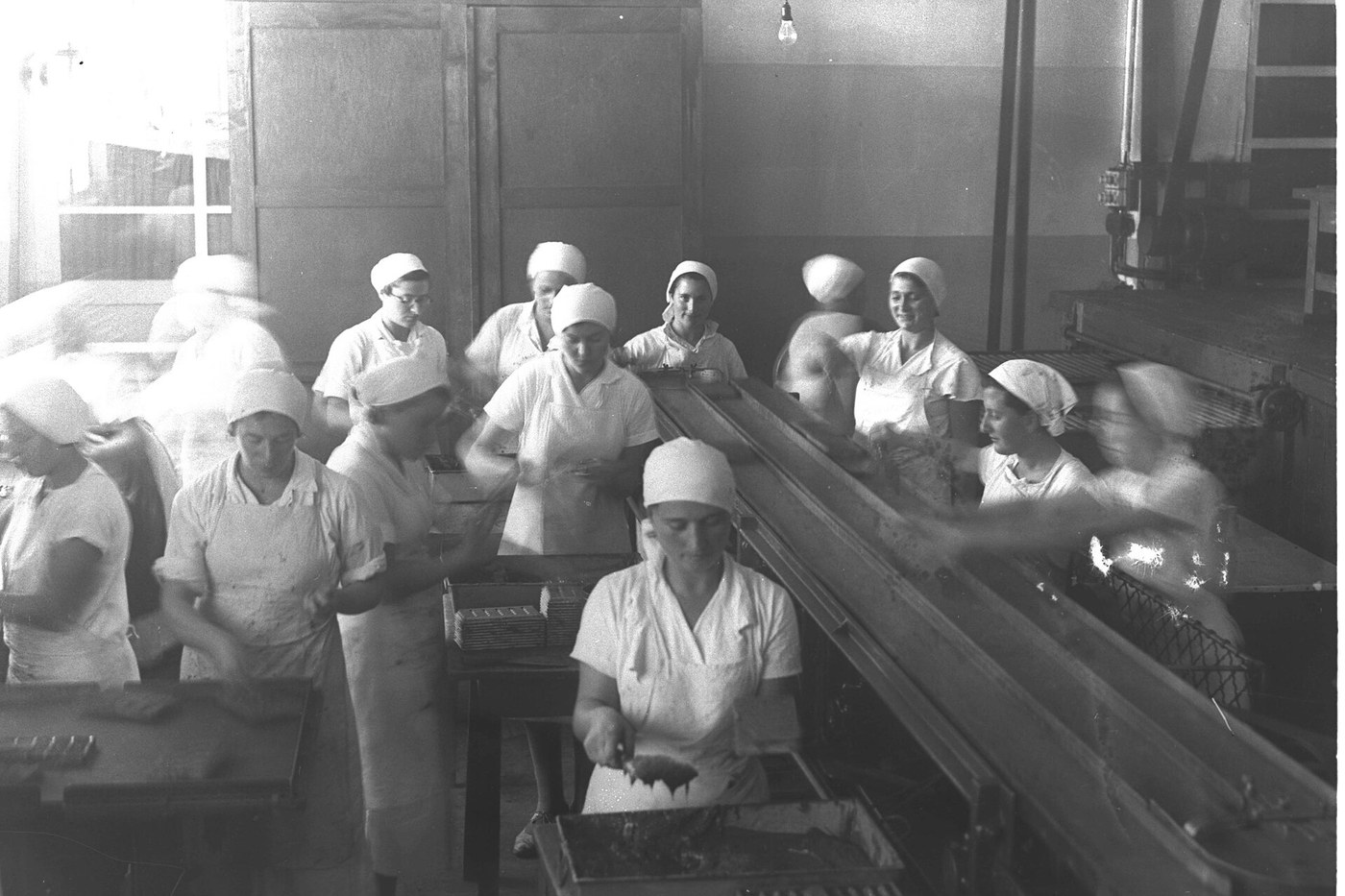


Chocolate Conching
ہدایات
Feel the particle size problem
Feel the particle size problem
Establish what smoothness means before trying to produce it.
- Grind cacao nibs coarsely and taste a little.
- Rub some between finger and thumb.
- Note the grittiness and the sharp, sour edge.
اس مرحلے کے لیے مواد:
 کوکو کے بیج200 گرام
Add cocoa butter and sugar
Add cocoa butter and sugar
The continuous phase has to be fat, not sugar syrup.
- Warm the ground mass gently to about 45-50 °C.
- Add cocoa butter and sugar.
- Stir until it moves as a single thick fluid.
اس مرحلے کے لیے مواد:
 کوکو مکھن100 گرام
درکار اوزار:
 فوری پڑھت کا حرارت پیما
Conche — agitate for hours
Conche — agitate for hours
This is the step whose only ingredient is time.
- Keep the mass warm and moving continuously — a melanger or a slow mixer.
- Leave the surface open so volatiles can escape.
- Sample at 30 minutes, 2 hours and longer, keeping each sample.
Temper it, and understand why
Temper it, and understand why
Conching fixes texture in the mouth. Tempering fixes the set.
- Cool the chocolate to about 27 °C while stirring.
- Warm it back to roughly 31-32 °C.
- Pour a little onto a cool surface and let it set.
History and context
History and context
Rodolphe Lindt (1855-1909) worked in Bern. The story is that he left a mixing machine running over a weekend — by accident, or because a workman forgot — and returned to a chocolate quite unlike anything then sold: what German speakers called Schmelz, the melting quality. He kept the method secret and sold chocolate at a premium for two decades before selling the process to Sprüngli in 1899.
Treat the accident story with mild caution. It is repeated everywhere and is entirely plausible, but it comes to us through company history and retelling. What is not in doubt is that Lindt was the first to conche for long periods and that the resulting product was recognisably different.
The other half of eating chocolate came from Coenraad van Houten, who in the 1820s built a press that separated cocoa butter from the solids and treated the powder with alkali to make it mix with water — Dutch processing. Separating the butter meant it could be added BACK in surplus, which is what makes a chocolate bar fluid enough to mould. Conching without abundant cocoa butter would not work.
The supply chain deserves stating plainly. Cocoa is grown almost entirely by smallholders in West Africa and Latin America, and child labour and forced labour in cocoa growing are documented, persistent, and not resolved by voluntary industry commitments that have been repeatedly deferred. A blueprint about the pleasure of good chocolate that says nothing about who grows it is telling half the story.
درکار اوزار
1- پلیس ہولڈر
یہ بلوپرنٹ بناتا ہے
CC0 پبلک ڈومین
یہ بلیو پرنٹ CC0 کے تحت جاری کیا گیا ہے۔ آپ اجازت لیے بغیر اس کام کو نقل، ترمیم، تقسیم اور کسی بھی مقصد کے لیے استعمال کرنے کے لیے آزاد ہیں۔
میکر کی حمایت کریں ان کے بلیو پرنٹ کے ذریعے پروڈکٹس خرید کر جہاں وہ میکر کمیشن وینڈرز کی طرف سے مقرر، کماتے ہیں، یا اس بلیو پرنٹ کی نئی تکرار بنائیں اور آمدنی شیئر کرنے کے لیے اسے اپنے بلیو پرنٹ میں کنکشن کے طور پر شامل کریں۔