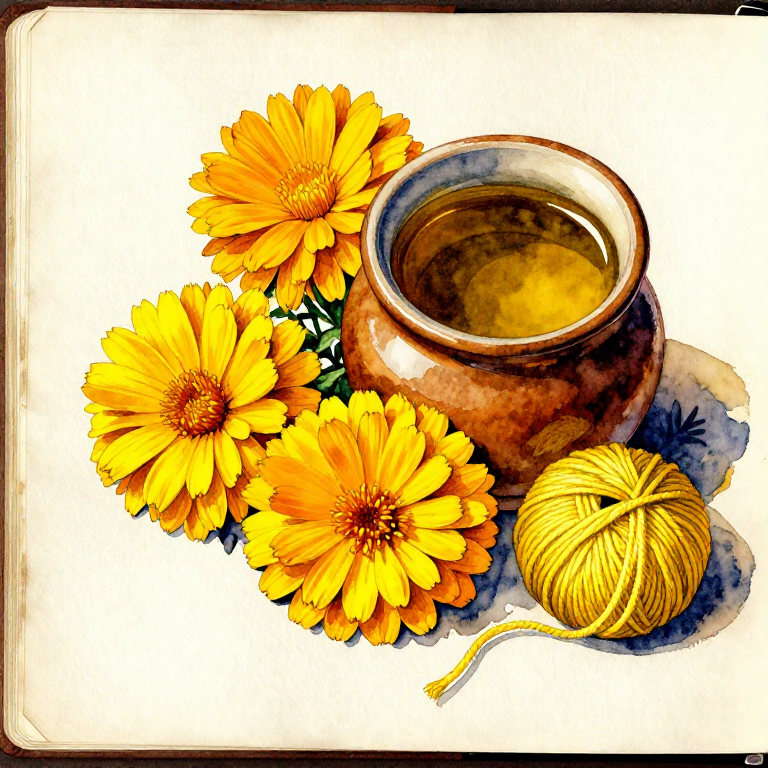


Dyeing Yellow with Marigold — The Sacred Aztec Flower Dye
Marigolds (Tagetes species — primarily Tagetes erecta, the African marigold, and Tagetes patula, the French marigold, both of which are actually native to Mexico) are among the best sources of golden-yellow dye from flowers. The petals contain lutein and other carotenoid pigments that produce warm yellow to deep gold on alum-mordanted wool. Marigolds have been cultivated in Mesoamerica for over 2,000 years — the Aztec name for marigold was cempoalxóchitl (twenty-flower), and the flowers played a central role in religious ceremonies, including the festival that became modern Día de los Muertos.
The Aztecs used marigold not only as a dye but as a medicine, food colouring, and offering flower. When Spanish colonists brought marigold seeds to Europe, Africa, and Asia in the 16th century, the flowers spread globally within decades — they are now among the most widely cultivated flowers on Earth. In India, marigolds became essential for Hindu ceremonies (garlands, temple offerings) and are grown on a massive commercial scale. The global poultry industry uses marigold extract (lutein) to colour egg yolks and chicken skin.
For the natural dyer, marigolds are exceptionally practical: easy to grow, abundant in flowers, quick to extract, and the resulting yellow has notably better lightfastness than turmeric — the other common golden-yellow dye. On alum-mordanted wool, marigold gives a warm, bright golden-yellow. With iron, it shifts to olive-green. With copper, it becomes a rich, warm gold. The dried flower heads store well and are widely available from dye suppliers and herb shops.
ہدایات
Weigh the dried marigold flower heads
Weigh the dried marigold flower heads
Use 200-300% WOF of dried marigold flower heads (or 400-600% WOF of fresh flowers). For 100 g of wool, weigh out 200-300 g of dried flower heads. Use Tagetes erecta (African/Aztec marigold) for the deepest yellow — the large, double-petalled varieties contain the most lutein. Tagetes patula (French marigold) also works but gives slightly paler colour. The dried flowers should be deep orange-yellow. Avoid flower heads that have turned brown — they have lost much of their pigment.
اس مرحلے کے لیے مواد:
 گیندے کے پھول کے سر (خشک)250 گرام
درکار اوزار:
 ڈیجیٹل باورچی خانہ ترازو
Soak the flowers overnight in warm water
Soak the flowers overnight in warm water
Place the dried flower heads in the dye pot and cover with about 5 litres of warm water. Soak overnight (8-12 hours). The flowers will soften and begin releasing their pigments — the water will turn a warm golden-yellow during soaking. The overnight soak ensures that dried petals fully rehydrate and release their dye more completely during the subsequent simmering.
درکار اوزار:
 یخنی کی بڑی دیگ
Simmer the flowers for 60 minutes
Simmer the flowers for 60 minutes
Bring the pot to a gentle simmer (80-85°C) and hold for 60 minutes. Stir occasionally, pressing the flower heads against the side of the pot to release more dye. The liquid will deepen to a rich, opaque golden-yellow. Do not boil vigorously — excessive heat can shift the colour from bright yellow toward muddy olive. After simmering, the spent flower heads will be pale and soft.
درکار اوزار:
 پکوان کا تھرمامیٹر
 لکڑی کا چمچہ
Strain out the spent flower heads
Strain out the spent flower heads
Strain the dye liquor through a fine mesh strainer into a clean pot. Squeeze the spent flowers to extract the last colour. The strained dye bath should be a clear, warm golden-yellow. Compost the spent flower heads. Flower fragments left in the dye bath during dyeing can lodge in the wool and cause uneven spots, so strain thoroughly.
درکار اوزار:
 باریک چھلنی
Dye alum-mordanted wool at 85°C for 45 minutes
Dye alum-mordanted wool at 85°C for 45 minutes
Pre-wet the alum-mordanted wool, squeeze out excess, and lower it into the marigold dye bath at room temperature. Slowly raise to 85°C and hold for 45 minutes. Turn gently every 10 minutes. The alum mordant creates a stable complex with the lutein pigments, producing a bright, warm golden-yellow. The bath will gradually pale as the wool absorbs the colour.
اس مرحلے کے لیے مواد:
 اونی دھاگے کا لچھا100 گرام
 پھٹکری (پوٹاشیم ایلم)10 گرام
Cool overnight, rinse, and dry
Cool overnight, rinse, and dry
Turn off the heat and let the wool cool in the dye bath overnight. Remove, squeeze gently, and rinse in lukewarm water. The final colour is a warm, bright golden-yellow — the colour of sunflowers, of autumn corn, of Mexican cempoalxóchitl garlands. Marigold yellow has moderate-to-good lightfastness — significantly better than turmeric, which fades quickly in sunlight. The colour will mellow slowly over months of sun exposure but does not wash out. An iron afterbath shifts marigold yellow to olive-green. Dry in shade.
مواد
3- 250 گرامپلیس ہولڈر
- 100 گرامپلیس ہولڈر
- 10 گرامپلیس ہولڈر
درکار اوزار
5- پلیس ہولڈر
- پلیس ہولڈر
- پلیس ہولڈر
- پلیس ہولڈر
- پلیس ہولڈر
منسلک بلیو پرنٹ مواد
یہ بلوپرنٹ بناتا ہے

متعلقہ بلیو پرنٹ
یہ بلیو پرنٹ علم بانٹتے ہیں — تکنیک، مواد یا اصول

CC0 پبلک ڈومین
یہ بلیو پرنٹ CC0 کے تحت جاری کیا گیا ہے۔ آپ اجازت لیے بغیر اس کام کو نقل، ترمیم، تقسیم اور کسی بھی مقصد کے لیے استعمال کرنے کے لیے آزاد ہیں۔
میکر کی حمایت کریں ان کے بلیو پرنٹ کے ذریعے پروڈکٹس خرید کر جہاں وہ میکر کمیشن وینڈرز کی طرف سے مقرر، کماتے ہیں، یا اس بلیو پرنٹ کی نئی تکرار بنائیں اور آمدنی شیئر کرنے کے لیے اسے اپنے بلیو پرنٹ میں کنکشن کے طور پر شامل کریں۔