فن
خوبصورتی اور تندرستی
دستکاری
ثقافت اور تاریخ
تفریح
ماحول
خوراک اور مشروبات
ریورس انجینئرنگ
سائنسز
کھیل
ٹیکنالوجی
پہننے والے آلات
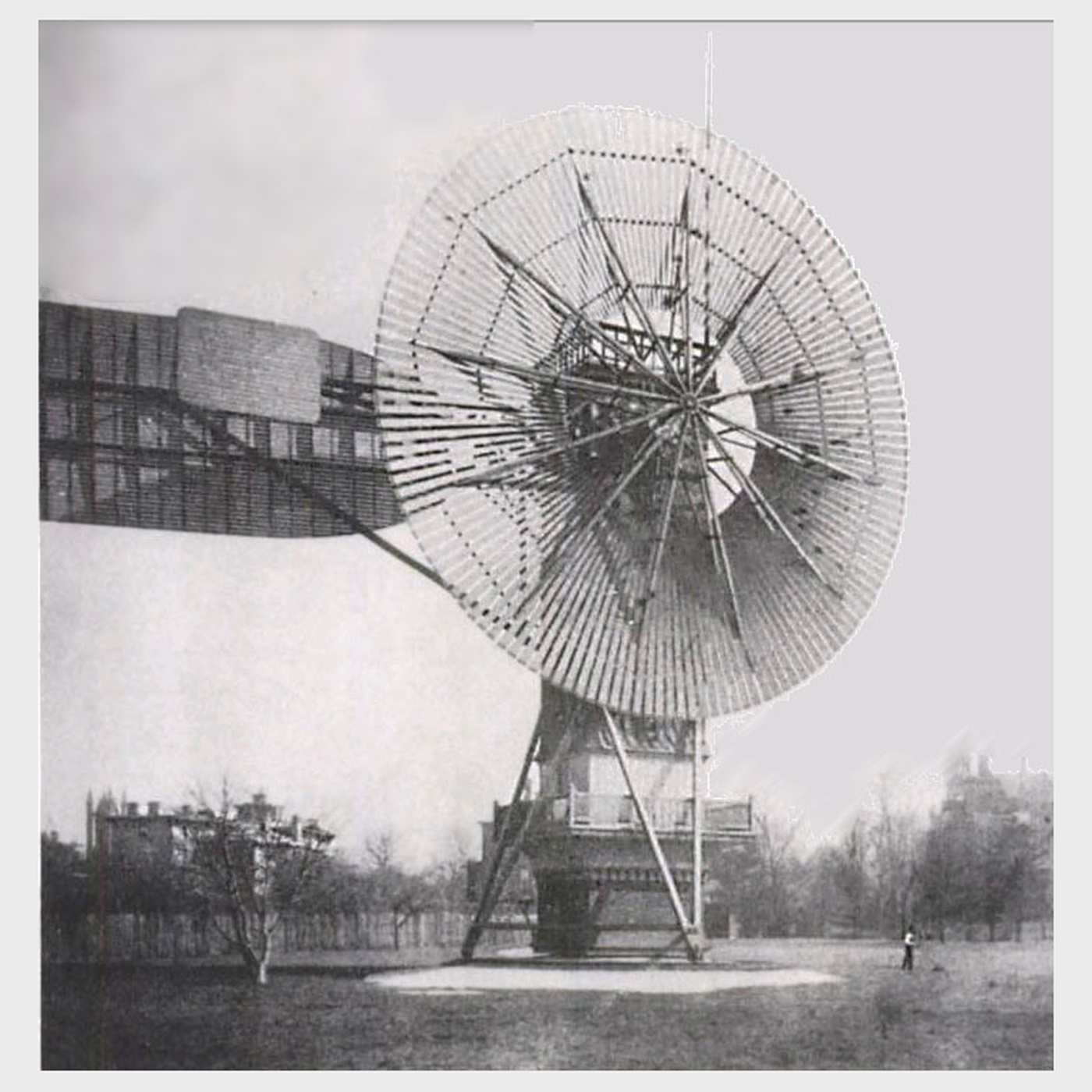


Electricity From the Wind: The Cube Law and a Rotor on a Dynamo
For a thousand years windmills ground grain and pumped water. In the winter of 1887–88 Charles F. Brush put one to a new job in the back garden of his house in Cleveland, Ohio: a 17-metre rotor of 144 cedar blades turning a dynamo that charged a cellar full of batteries — electricity from the wind.
Everything about a wind generator follows from one relation: the power in the wind goes with the cube of its speed and the square of the rotor's diameter. That is why turbines grew huge and why their sites are chosen with such care.
This rung builds a small wind generator from a hobby motor and a printed rotor, measures its power in front of a fan at several wind speeds, and checks the cube law.
نیا سیکھنے والا
About 4 hours
ہدایات
1
1
The cube law
The cube law
Jupyter نوٹ بک لوڈ ہو رہی ہے…
2
2
Build a small wind generator
Build a small wind generator
A small permanent-magnet DC motor is also a generator: turn its shaft and it makes a voltage proportional to speed.
Print a three-bladed rotor 300 mm across in PETG, with a hub that presses onto the motor shaft, each blade twisted — steep near the hub, flatter towards the tip — because the tip moves faster through the air than the root. Mount the motor on a dowel mast clamped to a plywood base, with the rotor facing the fan.
Wire the motor's terminals to a 330 Ω resistor as a load, with the multimeter across it. Add an LED in series if you want to see it light.
اس مرحلے کے لیے مواد:
 گیئر والی موٹر1 ٹکڑا
 PETG فلامنٹ60 گرام
 سخت لکڑی کی کھونٹیاں1 سیٹ
 پلائی ووڈ کی چادر1 شیٹ
 ۳۳۰ اوہم مزاحم1 ٹکڑا
 ۵ ملی میٹر ایل ای ڈی1 ٹکڑا
 جمپر تاریں1 سیٹ
درکار اوزار:
 تار والا 3D پرنٹر (FDM)
 بے تار مشق
 مشقوں کا سیٹ
 ایلن کنجی سیٹ
3
3
Measure its power at three wind speeds
Measure its power at three wind speeds
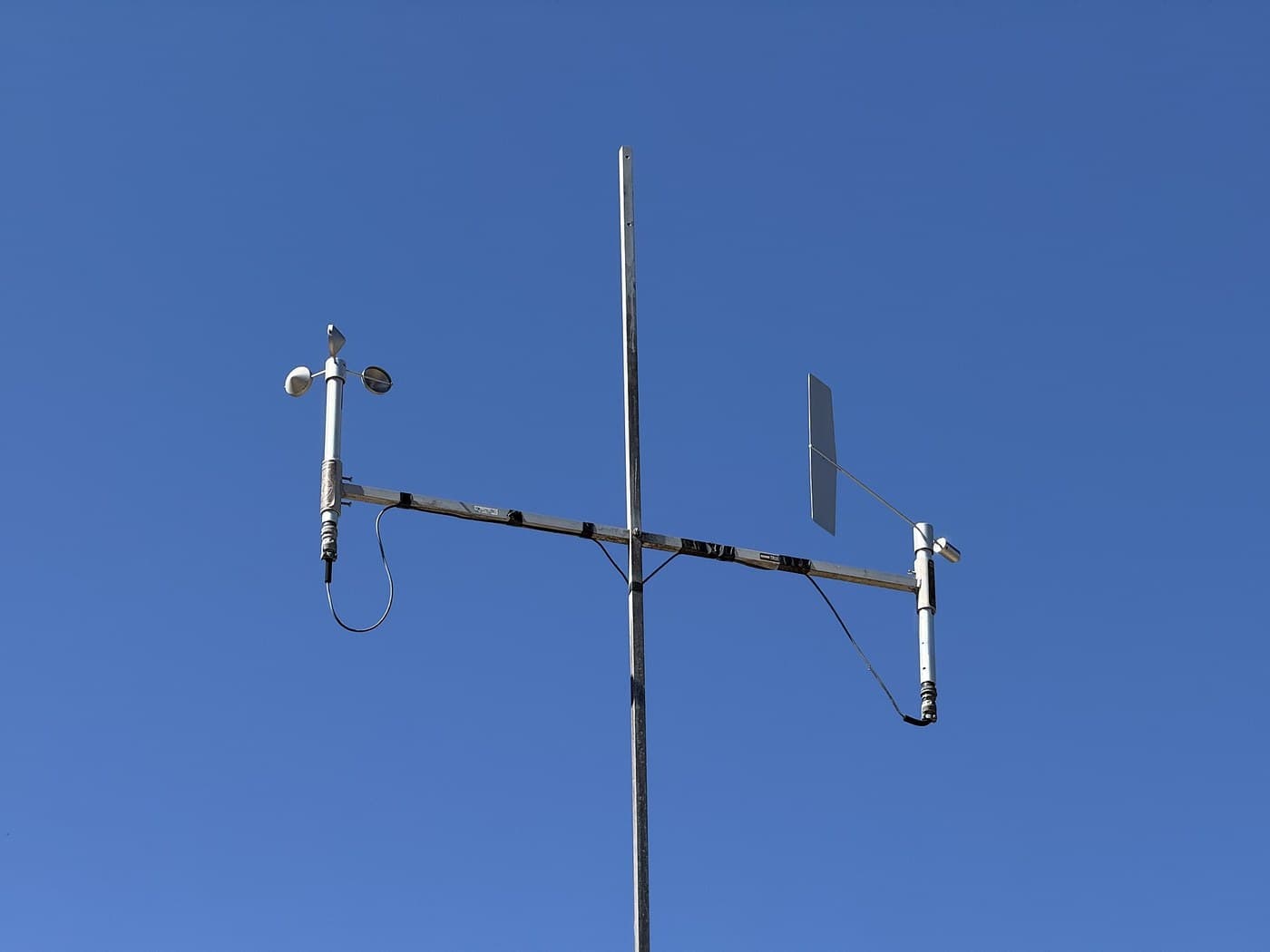
Stand the box fan 1.5 m away, facing the rotor. Measure the wind speed at the rotor with the anemometer before fitting the rotor, at each fan setting.
Fit the rotor, run the fan, and read the voltage across the resistor once it is steady. The electrical power is **V² ÷ R**. Record wind speed and power for each fan setting.
Plot power against wind speed cubed. It should be roughly a straight line — not exactly, because a small motor's own losses take a bigger share at low speed. Then divide your power by the notebook's power passing through a 0.3 m disc at the same wind speed. That ratio is your rotor's power coefficient, and the Betz rung shows the most it could ever be.
درکار اوزار:
 بکس پنکھا (بدلتی رفتار)
 ہاتھ کا ہوا پیما
 ملٹی میٹر
 فیتہ پیما
 ڈیجیٹل ٹیکو میٹر
4
4
History and context
History and context
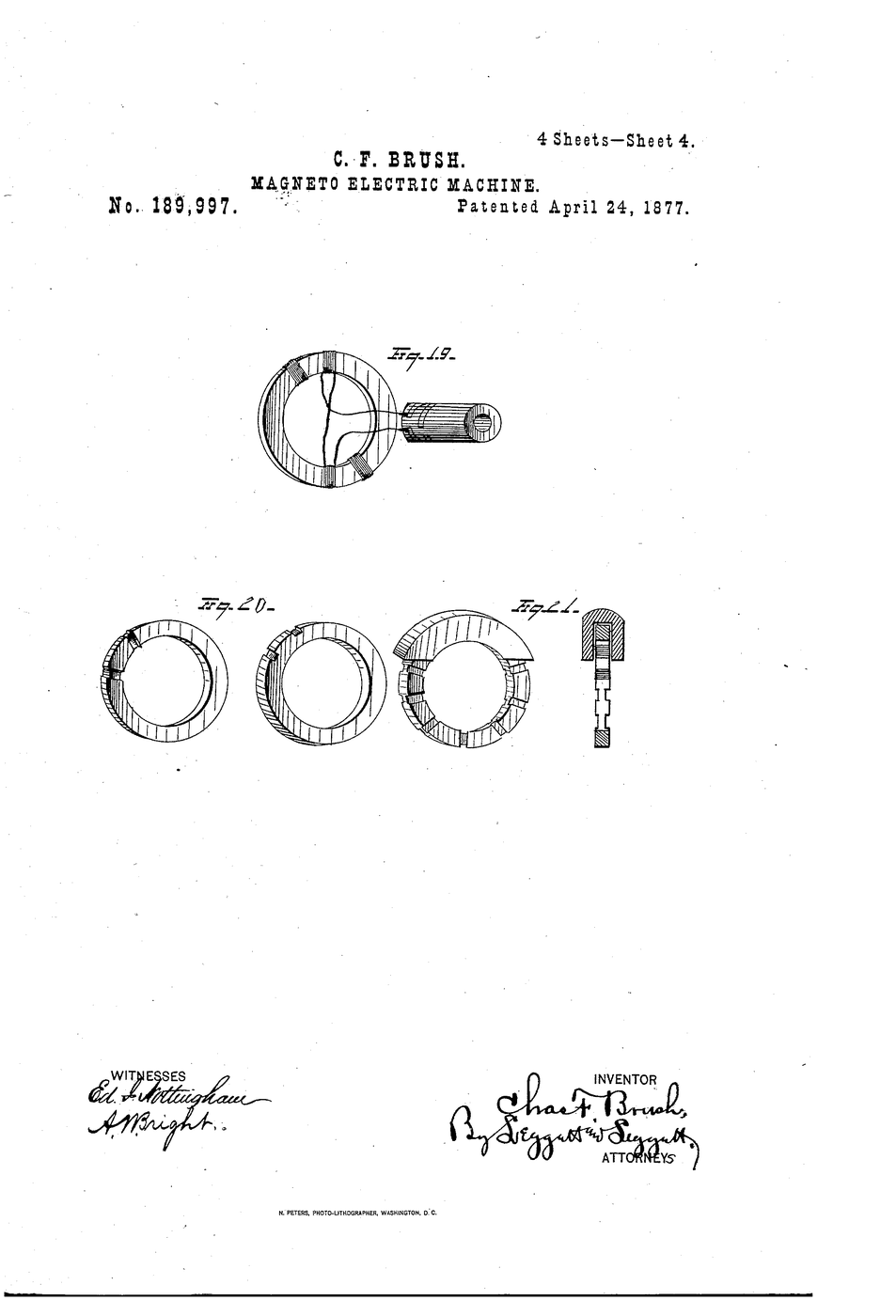
**Charles F. Brush, Cleveland, Ohio, 1887–88** — a 17 m, 144-bladed rotor on a tower about 18 m (60 ft) high driving a 12 kW dynamo through step-up gearing, charging batteries that lit his house; it ran for some twenty years. Brush had already built the arc-lighting dynamo in this catalogue. No patent number is asserted here.
In Denmark from 1891, **Poul la Cour** tested rotors in a wind tunnel of his own and found that fewer blades turning faster made better use of the wind than many slow ones — the direction every modern turbine took.
**Honest limits.** The wind stops; a wind generator needs storage or another source behind it. Its output swings with the cube of a quantity that changes by the minute. And a large rotor is a serious hazard: it must be able to stop itself in a storm, as the Halladay windmill's governor in this catalogue already could.
مواد
7- پلیس ہولڈر
- 60 گرامپلیس ہولڈر
- 1 سیٹپلیس ہولڈر
- 1 شیٹپلیس ہولڈر
- 1 ٹکڑاپلیس ہولڈر
- پلیس ہولڈر
- پلیس ہولڈر
درکار اوزار
9- پلیس ہولڈر
- 1 vendor sell this, none ship to you yetپلیس ہولڈر
- پلیس ہولڈر
- پلیس ہولڈر
- پلیس ہولڈر
- پلیس ہولڈر
- پلیس ہولڈر
- 1 vendor sell this, none ship to you yetپلیس ہولڈر
- پلیس ہولڈر
متعلقہ بلیو پرنٹ
یہ بلیو پرنٹ علم بانٹتے ہیں — تکنیک، مواد یا اصول
CC0 پبلک ڈومین
یہ بلیو پرنٹ CC0 کے تحت جاری کیا گیا ہے۔ آپ اجازت لیے بغیر اس کام کو نقل، ترمیم، تقسیم اور کسی بھی مقصد کے لیے استعمال کرنے کے لیے آزاد ہیں۔
میکر کی حمایت کریں ان کے بلیو پرنٹ کے ذریعے پروڈکٹس خرید کر جہاں وہ میکر کمیشن وینڈرز کی طرف سے مقرر، کماتے ہیں، یا اس بلیو پرنٹ کی نئی تکرار بنائیں اور آمدنی شیئر کرنے کے لیے اسے اپنے بلیو پرنٹ میں کنکشن کے طور پر شامل کریں۔