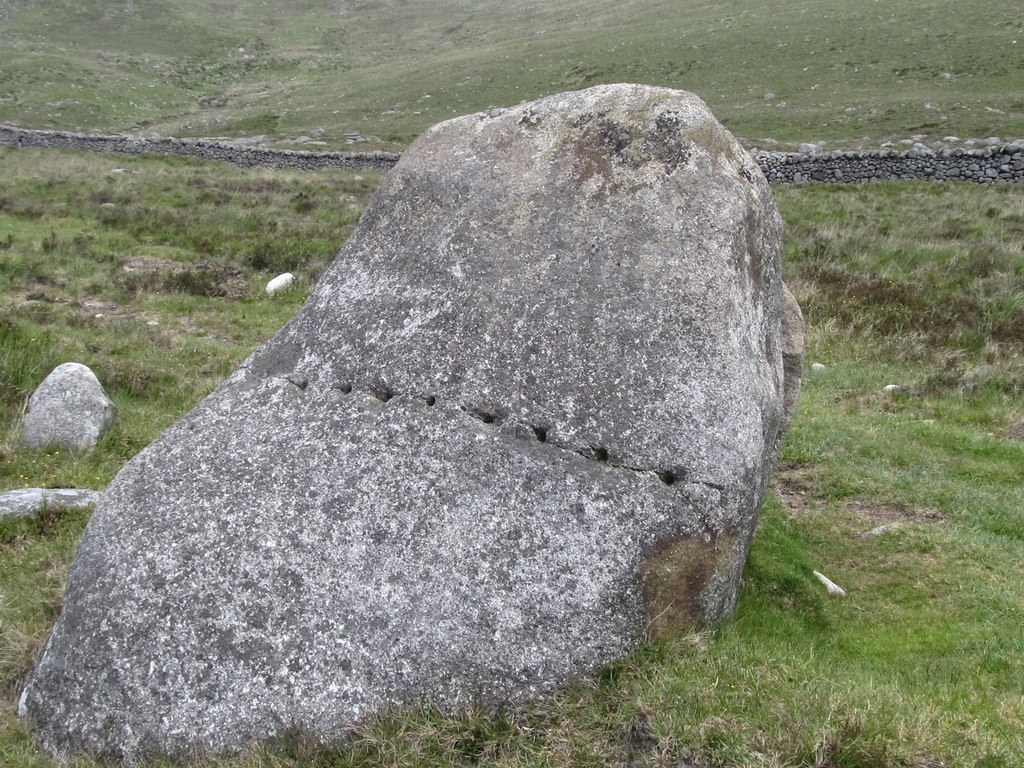


Feather and Wedge
ہدایات
Prove stone is weak in tension
Prove stone is weak in tension
Establish the asymmetry the method exploits.
- Stand on a small slab of stone laid flat on the ground — it takes the compression easily.
- Support the same slab at both ends only and load the middle.
- It breaks at a fraction of the load.
اس مرحلے کے لیے مواد:
 آگ روک اینٹ2 ٹکڑے
Read the grain before you mark the line
Read the grain before you mark the line
Granite has directional weakness, and quarrymen have names for it.
- Look for the rift — the direction it splits most easily.
- Find the grain — the next easiest.
- The hardway is the third, and you avoid it.
اس مرحلے کے لیے مواد:
 محدب عدسہ1 ٹکڑا
Drill the row and set the feathers
Drill the row and set the feathers
Evenly spaced, equal depth, all in line.
- Drill holes along the marked line, typically 100-150 mm apart in granite.
- Drop two feathers into each hole, with their flat backs facing along the line.
- Insert a plug between each pair, leaving it standing proud.
اس مرحلے کے لیے مواد:
 فولادی پچر6 ٹکڑے
درکار اوزار:
 نوکدار سرد چھینی
Tap along the row, and listen
Tap along the row, and listen
Patience is the technique. Eye protection throughout.
- Tap each plug once, lightly, working along the row.
- Return to the start and repeat, again and again.
- Listen — the note changes and a hairline appears before it goes.
درکار اوزار:
 نقاشی کا لکڑی کا ہتھوڑا
History and context
History and context
Splitting stone with wedges is ancient. Egyptian and Roman quarries show wedge slots, and there is a long-running argument about whether wooden wedges were soaked to swell and split the stone — the evidence is genuinely mixed, and dry wooden wedges hammered in work perfectly well, so the soaking story should be treated as plausible rather than established.
The modern plug-and-feather set is a nineteenth-century refinement associated with New England granite quarrying, where it replaced the older method of cutting a continuous slot with a chisel. It is far faster and wastes almost no stone — a slot turns a line of material into dust, while a split consumes only the drill holes.
Look for the marks. Half-round grooves along the edge of a granite kerbstone, bridge abutment or old building block are the remains of the drill holes, sliced in two by the split. They are all over nineteenth-century masonry once you know to look, and they date the stone as surely as a tool mark can.
Still current. Quarries use hydraulic splitters and diamond wire now, but plug and feather remains standard for trimming, for work where vibration matters, and for conservation — and a set of feathers and wedges costs very little and needs no power. It is one of those techniques that industrialisation improved without ever replacing.
Safety: eye protection without exception — steel-on-steel throws chips, and the stone releases suddenly. Keep hands clear of the split line and expect the two halves to move.
مواد
3- 2 ٹکڑےپلیس ہولڈر
- 1 ٹکڑاپلیس ہولڈر
- 6 ٹکڑےپلیس ہولڈر
درکار اوزار
2- پلیس ہولڈر
- پلیس ہولڈر
CC0 پبلک ڈومین
یہ بلیو پرنٹ CC0 کے تحت جاری کیا گیا ہے۔ آپ اجازت لیے بغیر اس کام کو نقل، ترمیم، تقسیم اور کسی بھی مقصد کے لیے استعمال کرنے کے لیے آزاد ہیں۔
میکر کی حمایت کریں ان کے بلیو پرنٹ کے ذریعے پروڈکٹس خرید کر جہاں وہ میکر کمیشن وینڈرز کی طرف سے مقرر، کماتے ہیں، یا اس بلیو پرنٹ کی نئی تکرار بنائیں اور آمدنی شیئر کرنے کے لیے اسے اپنے بلیو پرنٹ میں کنکشن کے طور پر شامل کریں۔