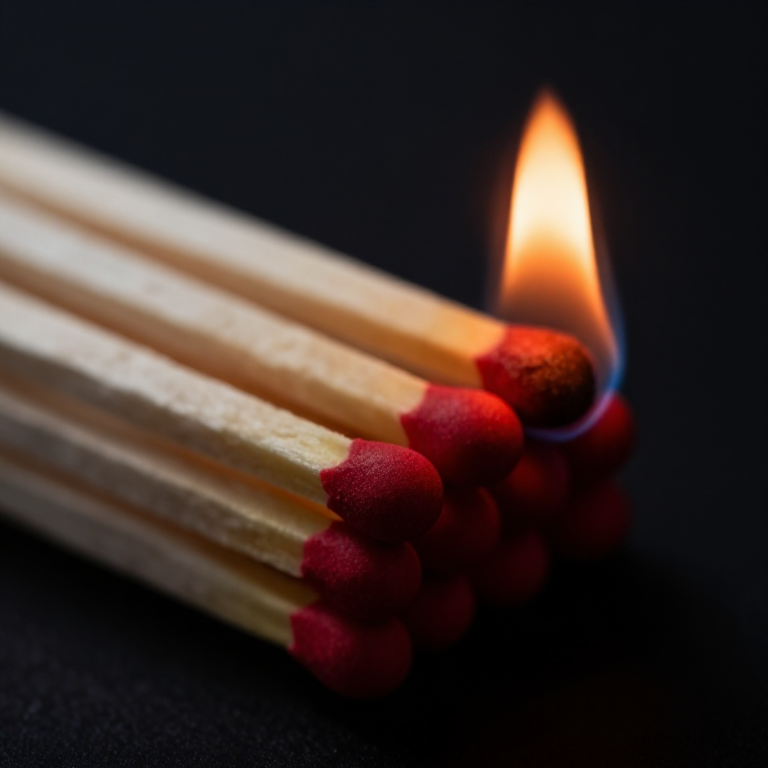

Making Friction Matches — Fire on the Strike of a Stick
For all of history, making fire meant friction sticks, flint and steel, or carrying an ember. Then in the 1820s and 30s the friction match put instant fire in a pocket: a little stick whose tip bursts into flame when dragged across a rough surface. It seems trivial now, but it was a genuine chemical invention that transformed daily life.
The head packs three things together: an oxidiser to supply oxygen, an igniter that catches from the heat of friction, and a fuel bridge to carry the flame down to the wood. In the original strike-anywhere matches the igniter was white phosphorus, which lights at the gentlest heat. Drag the head and the friction warms the phosphorus enough to ignite; it sets off the oxidiser in a fierce little flare; the sulphur-tipped splint catches and the wood burns.
White phosphorus also had a dark side — its vapour gave match factory workers a horrific bone disease called phossy jaw, which is why it was eventually banned in favour of the red-phosphorus safety match. This blueprint covers the chemistry of both, and treats the materials with the respect that a powerful oxidiser and a deadly poison demand.
خطرناک مواد
اس بلو پرنٹ میں خطرناک طریقہ کار شامل ہے۔ قدم بہ قدم ہدایات دیکھنے کے لیے لاگ ان کریں اور اپنی اکاؤنٹ سیٹنگز میں خطرناک مواد فعال کریں۔
سائن ان کریںیہ بلوپرنٹ بناتا ہے
متعلقہ بلیو پرنٹ
یہ بلیو پرنٹ علم بانٹتے ہیں — تکنیک، مواد یا اصول

CC0 پبلک ڈومین
یہ بلیو پرنٹ CC0 کے تحت جاری کیا گیا ہے۔ آپ اجازت لیے بغیر اس کام کو نقل، ترمیم، تقسیم اور کسی بھی مقصد کے لیے استعمال کرنے کے لیے آزاد ہیں۔
میکر کی حمایت کریں ان کے بلیو پرنٹ کے ذریعے پروڈکٹس خرید کر جہاں وہ میکر کمیشن وینڈرز کی طرف سے مقرر، کماتے ہیں، یا اس بلیو پرنٹ کی نئی تکرار بنائیں اور آمدنی شیئر کرنے کے لیے اسے اپنے بلیو پرنٹ میں کنکشن کے طور پر شامل کریں۔