
Gül Yağı (Rose Otto) Damıtma — Isparta'da Rosa damascena
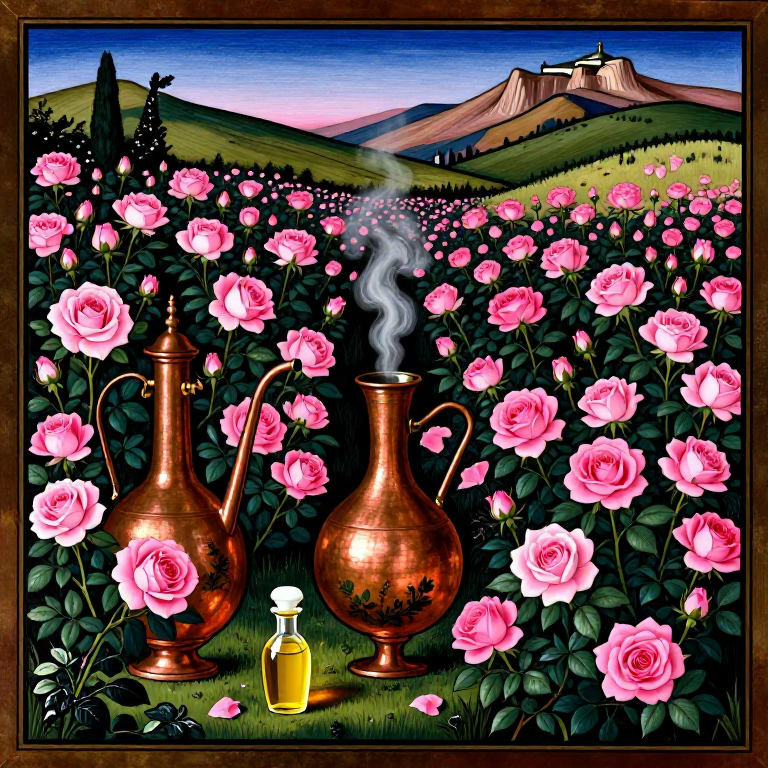
Isparta'da Rosa damascena (Şam gülü) çiçeklerinden geleneksel bakır imbikle gül yağı (rose otto) damıtmanın eksiksiz rehberi. Türkiye, Bulgaristan'dan sonra dünyanın en büyük ikinci gül yağı üreticisidir ve Isparta, Türk gül yağı üretiminin kalbidir. Gül yağı dünyanın en pahalı uçucu yağlarından biridir — yaklaşık 3.500-4.000 kg gül yaprağından yalnızca 1 kg gül yağı elde edilir. Hasat sezonu mayıs-haziran aylarıdır; yapraklar uçucu yağlar buharlaşmadan sabahın erken saatlerinde toplanır. Bu rehber çiçek hasadı, derhal işleme (12 saat içinde), imbik yükleme, buhar damıtma, yoğuşturma, Floransa şişesinde yağ-su ayrımı ve yan ürün olarak gül suyunu kapsar.
ہدایات
Rosa damascena ve Isparta gül yağı tarihini anlamak
Rosa damascena ve Isparta gül yağı tarihini anlamak
Rosa damascena (Şam gülü), gül yağı üretiminde kullanılan başlıca gül türüdür. Bitki orijinal olarak Orta Doğu kökenlidir ve Osmanlı döneminde Anadolu'ya getirilmiştir. Isparta'da gül yetiştiriciliği 1880'lerde Ispartalı Müftüzade İsmail Efendi tarafından başlatılmıştır. Bugün Isparta ve çevresinde (Burdur, Afyon) yaklaşık 30.000 dönüm gül bahçesi bulunmaktadır. Rosa damascena çalımsı bir bitkidir, 1-2 metre yüksekliğe ulaşır ve her yıl mayıs-haziran aylarında çiçek açar. Her çiçekte 30-40 taç yaprağı vardır. Gül yağının ana bileşenleri sitronellol (%34-55), geraniol (%15-22) ve nerol (%5-10) gibi terpen alkolleridir. Bu bileşenler gülün karakteristik kokusunu oluşturur.
Gül bahçesinde hasat zamanını belirlemek
Gül bahçesinde hasat zamanını belirlemek
Gül hasadı mayıs ayının ikinci yarısından haziran ayının ortasına kadar sürer — Isparta'da bu dönem yaklaşık 20-30 gündür. Doğru hasat zamanının işaretleri: çiçekler tam açmış ancak yapraklar henüz dökülmeye başlamamış olmalıdır. Yarı açmış veya solmuş çiçekler daha az yağ verir. Hasat mutlaka şafakta başlanır — sabah saat 04:30-05:00 civarında — ve güneş ısısının artmasından önce, en geç 09:00-10:00'a kadar bitirilmelidir. Bunun sebebi: gündüz sıcaklığı arttıkça uçucu yağlar yapraklardan buharlaşır ve yağ verimi %30-40 oranında düşer. Çiğ üzerindeyken toplanan çiçekler en yüksek yağ içeriğine sahiptir.
Gül yapraklarını toplamak
Gül yapraklarını toplamak
Toplama işlemi elle yapılır — makine kullanılmaz çünkü yapraklar çok hassastır ve mekanik hasar yağ kaybına neden olur. Çiçeği sapından tutarak taç yapraklarını parmak uçlarıyla nazikçe koparın. Bazı üreticiler çiçeği bütün olarak koparır. Toplanan yaprakları pamuklu bez çuval veya hasır sepete koyun — plastik torba kullanmayın, çünkü plastik içinde ısı birikir ve yapraklar fermente olarak yağ kalitesi bozulur. Bir deneyimli toplayıcı günde yaklaşık 40-50 kg yaprak toplayabilir. Isparta'da hasat dönemi boyunca binlerce mevsimlik işçi çalışır. Toplama sırasında yaprakları ezmeyin veya sıkıştırmayın.
اس مرحلے کے لیے مواد:
 سوتی کپڑے کے بورے10 ٹکڑے
 بُنی ہوئی فصل ٹوکریاں4 ٹکڑے
درکار اوزار:
 کانٹ چھانٹ کے دستانے (کانٹا روک)
Yaprakları damıtmahaneye hızla taşımak
Yaprakları damıtmahaneye hızla taşımak
Toplanan gül yaprakları en geç 12 saat içinde damıtılmalıdır — bu süre aşılırsa enzimatik bozunma başlar, uçucu yağlar okside olur ve yağ verimi ile kalitesi önemli ölçüde düşer. İdeal olan topladıktan sonra 4-6 saat içinde damıtmaya başlamaktır. Taşıma sırasında çuvalları üst üste yığmayın — alttaki yapraklar ezilir ve erken fermantasyon başlar. Araçla taşıyorsanız gölgeli, havalandırmalı bir alan tercih edin. Isparta'da geleneksel olarak damıtmahaneler gül bahçelerine yakın konumlanır — taşıma süresini en aza indirmek için. Damıtmahaneye ulaştığında yaprakları hemen tartın ve kayıt altına alın.
درکار اوزار:
 چبوترہ دار ترازو
Bakır imbik sistemini hazırlamak
Bakır imbik sistemini hazırlamak
Geleneksel Isparta gül yağı damıtmasında bakır imbik (alembic) kullanılır. Sistem üç ana parçadan oluşur: kazan (cucurbit) — yapraklar ve su konulan alt kısım, kapak ile boğaz (kuğu boynu / swan neck) — buharı yoğuşturucuya yönlendiren üst kısım, ve soğutucu yılan boru (condenser coil) — buharı sıvılaştıran su soğutmalı sarmal boru. Standart bir bakır imbik 300-500 litre kapasitededir. Damıtmadan önce imbik iyice temizlenmeli — önceki damıtmadan kalan kalıntılar yağ kalitesini bozar. Tüm bağlantı noktalarını kontrol edin — buhar kaçağı verim kaybına neden olur. Bağlantı noktalarını un hamuru ile sızdırmaz hale getirin — bu geleneksel ve etkili bir yöntemdir.
اس مرحلے کے لیے مواد:
 گندم کے آٹے کا گوندھا (بندش کا لیپ)2 kilogram
 کشید کیا ہوا پانی500 لیٹر
درکار اوزار:
 تانبے کا انبیق
 سخت بالوں والا برش
İmbik kazanını yüklemek
İmbik kazanını yüklemek
Kazanın dibine temiz su koyun — su miktarı yaprak miktarının yaklaşık 3-4 katı olmalıdır (100 kg yaprak için 300-400 litre su). Suyun üzerine gül yapraklarını elinizle yavaşça yerleştirin. Yaprakları sıkıştırmayın — gevşek olmaları buharın yapraklar arasında dolaşmasını sağlar. 300 litrelik bir imbik için yaklaşık 70-100 kg gül yaprağı yüklenir. Yaprakları yükledikten sonra imbik kapağını yerleştirin ve un hamuru ile tüm bağlantı noktalarını sızdırmaz hale getirin. Kuğu boynu borusunu soğutucu serpantine bağlayın. Soğutucu tankını soğuk su ile doldurun.
اس مرحلے کے لیے مواد:
 تازی گلاب کی پتیاں (Rosa damascena)100 kilogramکشید کیا ہوا پانی400 لیٹرگندم کے آٹے کا گوندھا (بندش کا لیپ)1 kilogram
درکار اوزار:
تانبے کا انبیقBuhar damıtma işlemini yürütmek
Buhar damıtma işlemini yürütmek
Kazanın altındaki ocağı yakarak ısıtmaya başlayın. Isparta'da geleneksel olarak odun ateşi kullanılır. Suyun kaynamaya başlaması yaklaşık 45-60 dakika sürer. Kaynama başladığında ateşin gücünü ayarlayın — çok şiddetli kaynatma yapraklara zarar verir ve yağda istenmeyen bileşenler oluşturur. Orta şiddette, düzenli bir kaynama idealdir. Buhar, yaprakların hücre yapısını parçalayarak uçucu yağları serbest bırakır. Bu yağ molekülleri su buharıyla birlikte yükselir, kuğu boynu borusundan geçerek soğutucuya ulaşır. İlk damıtma (birinci su) 2-3 saat sürer. Bu süre boyunca soğutucu tankındaki suyun sıcaklığını kontrol edin — su ılınırsa taze soğuk su ile değiştirin. Çıkıştan gelen damıtık suyun sıcaklığı 35°C'yi geçmemelidir.
اس مرحلے کے لیے مواد:
 جلانے کی لکڑی50 kilogram
درکار اوزار:
 حرارت پیما
 آگ کریدنے والا سریا
Birinci su ve cohobation (ikinci damıtma)
Birinci su ve cohobation (ikinci damıtma)
İlk damıtmadan elde edilen damıtık su (birinci su, 'first water'), gül yağının büyük kısmını ve gül suyunu içerir. Ancak damıtık suda çözünmüş halde kalan yağ bileşenleri de vardır. Bunları geri kazanmak için cohobation (ikinci damıtma) yapılır: birinci sudan elde edilen gül suyunu tekrar imbike koyarak yeniden damıtın. Cohobation yağ verimini %15-20 artırır. İkinci damıtma 1,5-2 saat sürer. Bazı üreticiler bu işlemi üçüncü kez de tekrarlar. İkinci damıtmadan elde edilen yağ, birinci damıtmanınkiyle birleştirilir. Toplam damıtma süresi (birinci su + cohobation) 4-6 saattir.
درکار اوزار:
تانبے کا انبیقحرارت پیماFloransa şişesinde yağ-su ayrımı
Floransa şişesinde yağ-su ayrımı
Soğutucudan çıkan damıtık sıvı, Floransa şişesine (Florentine flask / essencier) akar. Bu özel cam veya bakır kap, yağ ve suyun yoğunluk farkına göre ayrılmasını sağlar. Gül yağının yoğunluğu 0,848-0,861 g/ml'dir — sudan hafiftir, bu nedenle yüzeyde toplanır. Floransa şişesinin alt kısmından gül suyu ayrı bir kaba boşaltılır; üstte kalan ince yağ tabakası gül yağıdır. Bu işlem sabırla yapılmalıdır — yağ tabakası çok ince olabilir (100 kg yapraktan yalnızca 20-25 ml gül yağı). Yağı toplamak için küçük cam bir pipet kullanın. Yağ toplama sırasında su karışmasını engellemek için dikkatli ve yavaş çalışın.
درکار اوزار:
 فلورنسی برتن (essencier)
 شیشے کی پپٹ
 درجہ بند سلنڈر
 عنبری شیشے کی شیشیاں
Gül yağını süzmek ve depolamak
Gül yağını süzmek ve depolamak
Toplanan ham gül yağını ince gözenekli filtre kağıdından geçirerek su damlacıkları ve partikülleri ayırın. Süzülen yağı koyu renkli (amber) cam şişelere aktarın — şeffaf cam yağın ışıkla bozunmasına neden olur. Şişeleri ağzına kadar doldurun, hava boşluğu bırakmayın — oksijen yağı okside eder. Şişelerin kapaklarını sıkıca kapatın. Gül yağını serin (15-20°C), karanlık bir yerde saklayın. İlginç bir özellik: saf gül yağı 21°C'nin altında katılaşır (donma noktası yaklaşık 18-21°C) — bu normaldir ve saflık göstergesidir. Kullanmadan önce şişeyi avuç içinde ısıtarak yağı tekrar sıvı hale getirin. Doğru depolanan gül yağı yıllarca kalitesini korur.
اس مرحلے کے لیے مواد:
 چھاننے کا کاغذ10 ٹکڑے
درکار اوزار:
 نلی والا شیشے کا قمعشیشے کی پپٹعنبری شیشے کی شیشیاں
Gül suyunu (hidrosol) ayırmak ve saklamak
Gül suyunu (hidrosol) ayırmak ve saklamak
Floransa şişesinden ayrılan gül suyu (rose water / hidrosol) değerli bir yan üründür. Gül suyu, suda çözünmüş uçucu yağ bileşenlerini içerir ve hafif gül kokusuna sahiptir. Geleneksel Isparta gül suyu kozmetik, gıda (lokum, baklavada kullanılır) ve geleneksel tıpta kullanılır. Gül suyunu temiz cam veya paslanmaz çelik kaplara alın. Katkı maddesi eklemeyin — saf gül suyu 6-12 ay boyunca serin yerde saklanabilir. 1 kg gül yaprağından yaklaşık 1-1,5 litre gül suyu elde edilir — yağa kıyasla çok daha fazla. Isparta gül suyu (Isparta gülabirası) coğrafi işaret tescilli bir üründür.
درکار اوزار:
 زنگ نہ لگنے والے فولاد کی قیف
 باریک چھلنی
 شیشے کی ذخیرہ بوتلیں
Gül yağı kalite kontrolü
Gül yağı kalite kontrolü
Saf gül yağının kalitesini doğrulamak için temel testler yapın. Donma testi: saf gül yağı 18-21°C'de katılaşır — bu sıcaklıkta katılaşmayan yağ muhtemelen saftır veya tahrip edilmiştir. Yoğunluk testi: 20°C'de yoğunluk 0,848-0,861 g/ml aralığında olmalıdır. Renk: açık sarı ile açık yeşilimsi sarı arası. Koku: zengin, derin, bal-çiçeksi gül kokusu — keskin veya kimyasal koku sahtelik işaretidir. Kağıt testi: bir damla gül yağını beyaz kağıda damlatın — buharlaştığında yağlı leke bırakmamalıdır (mineral yağ karışımı yağlı leke bırakır). ISO 9842:2003 standardı, gül yağı kalite parametrelerini tanımlar.
اس مرحلے کے لیے مواد:
 سفید جاذب کاغذ5 شیٹ
درکار اوزار:
حرارت پیما کثافت پیمادرجہ بند سلنڈر
Verim hesaplama ve kayıt tutma
Verim hesaplama ve kayıt tutma
Her damıtma partisinin ayrıntılı kaydını tutun: kullanılan yaprak miktarı (kg), damıtma süresi, elde edilen gül yağı miktarı (ml), gül suyu miktarı (litre), hasat tarihi ve hava koşulları. Standart verim: 3.500-4.000 kg gül yaprağından 1 kg (yaklaşık 1.170 ml) gül yağı elde edilir. Bu, yaklaşık %0,025-0,030 verim oranına denk gelir. 100 kg yapraktan 20-30 ml gül yağı beklenir. Verim yaprak kalitesi, hasat zamanı, damıtma tekniği ve iklim koşullarına göre değişir. Bu kayıtlar gelecek sezonlarda verimi artırmak için kritik referans oluşturur. Isparta'da gül yağı fiyatı kg başına 8.000-15.000 Avro arasında değişir — dünyanın en değerli uçucu yağlarından biridir.
درکار اوزار:
 ڈجیٹل ترازودرجہ بند سلنڈر
 کارروائی کی کاپی
مواد
8- 10 ٹکڑےپلیس ہولڈر
- 4 ٹکڑےپلیس ہولڈر
- 3 kilogramپلیس ہولڈر
- 900 لیٹرپلیس ہولڈر
- 100 kilogramپلیس ہولڈر
- 50 kilogramپلیس ہولڈر
- 10 ٹکڑےپلیس ہولڈر
- 5 شیٹپلیس ہولڈر
درکار اوزار
17- پلیس ہولڈر
- پلیس ہولڈر
- پلیس ہولڈر
- پلیس ہولڈر
- پلیس ہولڈر
- پلیس ہولڈر
- پلیس ہولڈر
- پلیس ہولڈر
- پلیس ہولڈر
- پلیس ہولڈر
- پلیس ہولڈر
- پلیس ہولڈر
- پلیس ہولڈر
- پلیس ہولڈر
- پلیس ہولڈر
- پلیس ہولڈر
- پلیس ہولڈر
یہ بلوپرنٹ بناتا ہے


CC0 پبلک ڈومین
یہ بلیو پرنٹ CC0 کے تحت جاری کیا گیا ہے۔ آپ اجازت لیے بغیر اس کام کو نقل، ترمیم، تقسیم اور کسی بھی مقصد کے لیے استعمال کرنے کے لیے آزاد ہیں۔
میکر کی حمایت کریں ان کے بلیو پرنٹ کے ذریعے پروڈکٹس خرید کر جہاں وہ میکر کمیشن وینڈرز کی طرف سے مقرر، کماتے ہیں، یا اس بلیو پرنٹ کی نئی تکرار بنائیں اور آمدنی شیئر کرنے کے لیے اسے اپنے بلیو پرنٹ میں کنکشن کے طور پر شامل کریں۔